



Lebanon’s Cabinet to Discuss Means to Deal with Caesar Act

Lebanon’s President Michel Aoun wearing a face mask, heads a council of ministers meeting at the presidential palace in Baabda, Lebanon April 30, 2020. (Reuters)
TT

Lebanon’s Cabinet to Discuss Means to Deal with Caesar Act

Lebanon’s President Michel Aoun wearing a face mask, heads a council of ministers meeting at the presidential palace in Baabda, Lebanon April 30, 2020. (Reuters)

Concerns mounted in Lebanon over the US Caesar Act that goes into effect in mid-June, which would put more pressure on the government as it holds strenuous negotiations with the International Monetary Fund (IMF) to obtain aid that essentially requires the implementation of reforms, mainly at the illegal border crossings with Syria.

Approved by the US Congress in December 2019, the Caesar Syrian Civilian Protection Act stipulates that anyone who provides any assistance or support to the regime in Syria shall be subject to sanctions.

Ministerial sources told Asharq Al-Awsat that the Cabinet would discuss the US legislation during a meeting on Thursday.

The government had issued a statement saying that it was in the process of studying the impact of this law on Lebanon and the margins in which it could operate without causing negative repercussions on the country.

While Industry Minister Imad Haballah said that the law would not have any repercussions on the government, ministerial sources, in remarks to Asharq Al-Awsat, said: “There is no doubt that this law has implications for Lebanon; The country is the closest to Syria with its borders open to it, but we have to monitor its implementation, in light of which the Lebanese position will be determined.”

Nizar Zakka, a former detainee in Iran, who works today on the Caesar Act team, stressed that the relevant sanctions were not directed against Lebanon.

“Rather, it requires the country to cooperate to avoid any measures against it at a later time, specifically in the financial and banking relations between Beirut and Damascus, and to stop the smuggling once and for all,” he told Asharq Al-Awsat.

Zakka revealed that expected sanctions would target Lebanese allies to Hezbollah and the Syrian regime, but noted that the legislation would represent “the last hope for the Lebanese missing in Syrian prisons since the Lebanese civil war, who are estimated at 630 people, the existence of whom is denied by the regime.”

He also said that a Syrian witness revealed to the team working on the law that he had met a number of them in a prison in Syria a year and a half ago.

Regarding the expected sanctions against figures allied the Syrian regime and Hezbollah, Zakka said: “From now on, no arguments will be accepted to justify relations, especially commercial and financial, with Hezbollah and the Syrian regime. Those will be exposed to the sanctions that will be announced in four groups from June 17 until the end of August.”

He warned that all institutions and people, who have already started their businesses in Syria under the slogan of reconstruction, would have to stop their activities or be subject to sanctions.



EU Condemns Israel's West Bank Control Measures

The Israeli settlement of Har Homa, seen from the West Bank city of Bethlehem, Tuesday, Dec. 17, 2024. (AP)
TT

EU Condemns Israel's West Bank Control Measures

The Israeli settlement of Har Homa, seen from the West Bank city of Bethlehem, Tuesday, Dec. 17, 2024. (AP)

The European Union on Monday condemned new Israeli measures to tighten control of the West Bank and pave the way for more settlements in the occupied Palestinian territory, AFP reported.

"The European Union condemns recent decisions by Israel's security cabinet to expand Israeli control in the West Bank. This move is another step in the wrong direction," EU spokesman Anouar El Anouni told journalists.


Atrocities in Sudan's El-Fasher Were 'Preventable Human Rights Catastrophe'

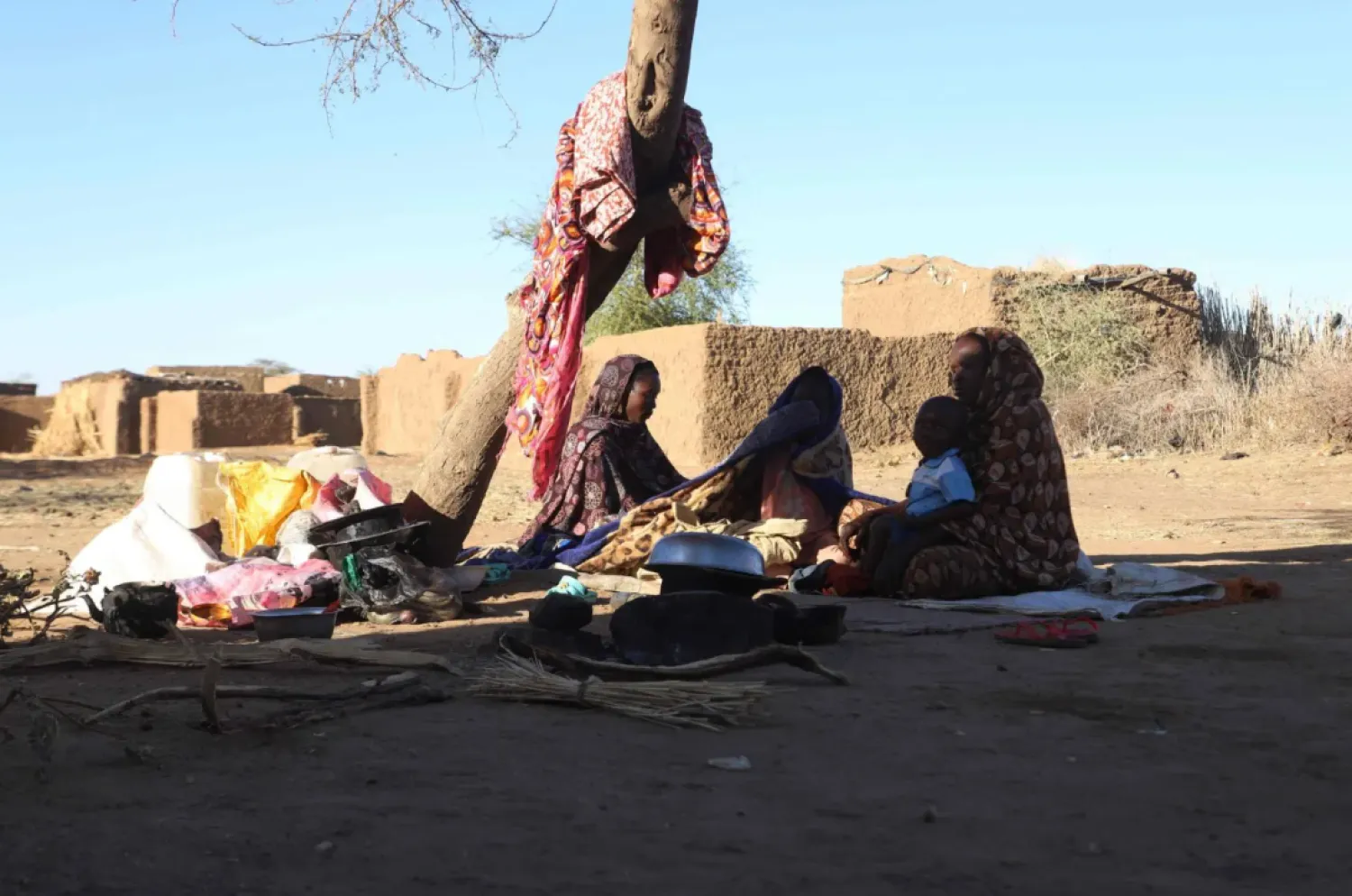
Sudanese displaced people who left El Fasher after its fall, sit in the shade in Tawila at the Rwanda camp reception point on December 17, 2025. (Photo by AFP)
TT

Atrocities in Sudan's El-Fasher Were 'Preventable Human Rights Catastrophe'

Sudanese displaced people who left El Fasher after its fall, sit in the shade in Tawila at the Rwanda camp reception point on December 17, 2025. (Photo by AFP)

The atrocities unleashed on El-Fasher in Sudan's Darfur region last October were a "preventable human rights catastrophe", the United Nations said Monday, warning they now risked being repeated in the neighbouring Kordofan region.


"My office sounded the alarm about the risk of mass atrocities in the besieged city of El-Fasher for more than a year ... but our warnings were ignored," UN rights chief Volker Turk told the Human Rights Council in Geneva.


He added that he was now "extremely concerned that these violations and abuses may be repeated in the Kordofan region".


Arab League Condemns Israel's Decisions to Alter Legal, Administrative Status of West Bank

A general view shows the opening session of the meeting of Arab foreign ministers at the Arab League Headquarters (Reuters)
TT

Arab League Condemns Israel's Decisions to Alter Legal, Administrative Status of West Bank

A general view shows the opening session of the meeting of Arab foreign ministers at the Arab League Headquarters (Reuters)

The General Secretariat of the Arab League strongly condemned decisions by Israeli occupation authorities to impose fundamental changes on the legal and administrative status of the occupied Palestinian territories, particularly in the West Bank, describing them as a dangerous escalation and a flagrant violation of international law, international legitimacy resolutions, and signed agreements, SPA reported.

In a statement, the Arab League said the measures include facilitating the confiscation of private Palestinian property and transferring planning and licensing authorities in the city of Hebron and the area surrounding the Ibrahimi Mosque to occupation authorities.

It warned of the serious repercussions of these actions on the rights of the Palestinian people and on Islamic and Christian holy sites.

The statement reaffirmed the Arab League’s firm support for the legitimate rights of the Palestinian people, foremost among them the establishment of their independent state on the June 4, 1967 borders, with East Jerusalem as its capital.