

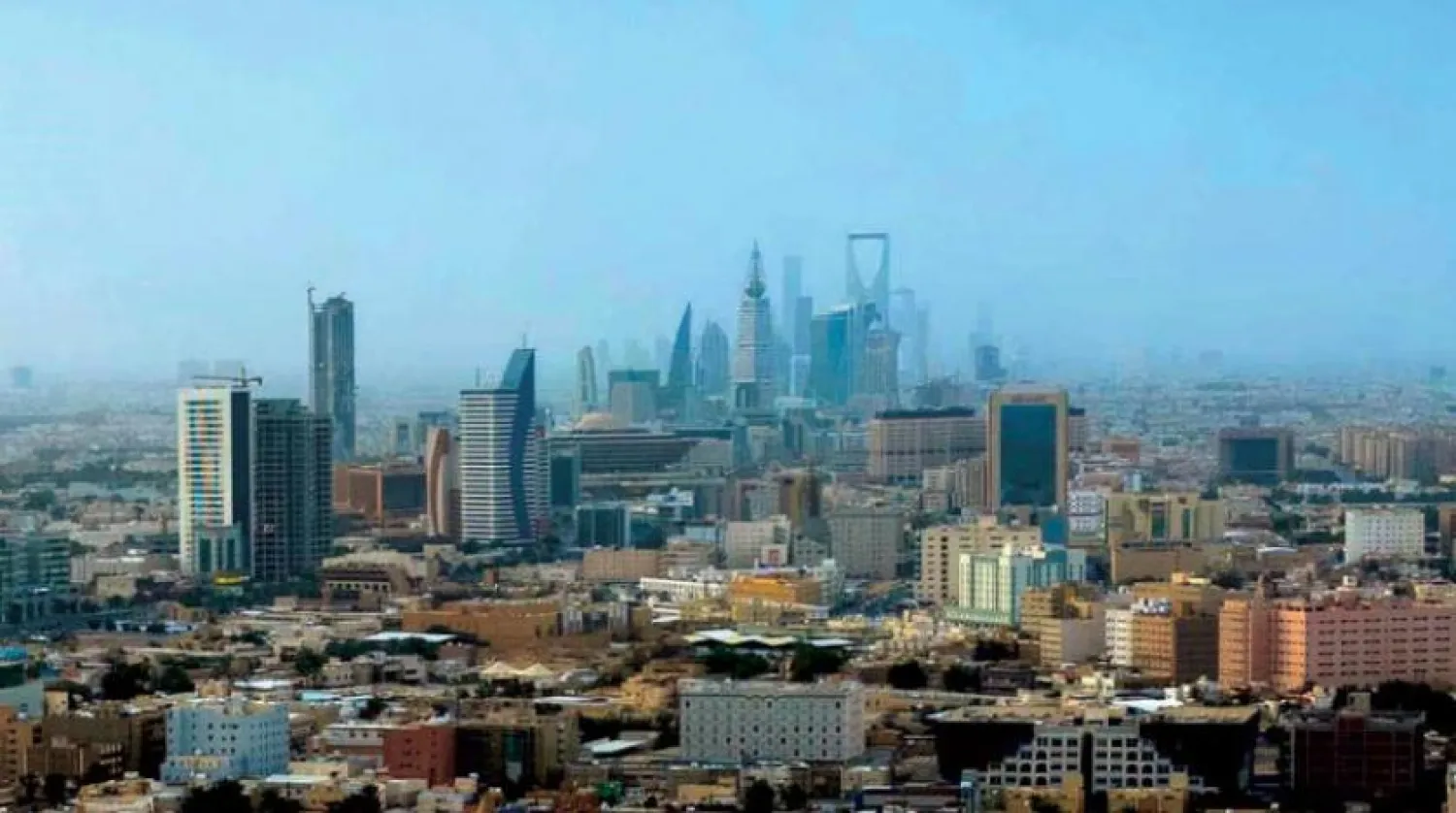

Potential Private, Public Sector Transformations to Enable Saudi Economy

The Saudi private sector is a subject of transformation and government attention (Asharq Al-Awsat)
TT

Potential Private, Public Sector Transformations to Enable Saudi Economy

The Saudi private sector is a subject of transformation and government attention (Asharq Al-Awsat)

Government officials and businessmen predicted that structural transformations will take place in the Saudi public and private sectors to shore up the Kingdom’s economy for the post-coronavirus phase.

Officials and businessmen unanimously agreed that change in the public sector should further enable the private sector to take the lead in economic development and raise productivity, freeing itself from dependence on the public sector.

These predictions were laid out in a virtual seminar held on Monday night and attended by Asharq Al-Awsat. The seminar was entitled “Empowering the Saudi economy during the pandemic” and was organized by a branch of the Saudi Finance Ministry.

It bore great optimism that the economy in the Kingdom would be on track to recovery if the current responses to the state’s treatment of the economy continue, and society interacts with raising preventive awareness in the country.

Ayman Afghani, Deputy Minister for Policies and Economic Planning at Ministry of Economy and Planning, said that optimism for recovery from the economic downturn is drawn from international indicators, especially those for major economies.

Afghani added that the crisis facing the Saudi economy is centered on the axes of declining oil prices and weak demand with COVID-19 precautionary measures.

According to the official, both factors began to recover with the closure of the national economy being lifted, suggesting growing sales and high financial withdrawals from banks.

Dr. Fahad Abdullah Aldossari, Deputy Governor for Research and International Affairs at the Saudi Arabian Monetary Authority (SAMA), revealed that despite the violent crisis in place, indicators of cash and liquidity are still in good standing. He confirmed that banking safety indicators are in good standing as well.

Bank credit, according to Aldossari, until last April recorded 12.2% growth, the highest since 2015, and reflects the banks ’continued provision of credit services, especially on mortgages.



Trump Hits Back at Canada after Retaliatory Tariffs Announcement

(COMBO) This combination of pictures created on August 22, 2026 shows US President Donald Trump in Washington, DC, on July 13, 2026 and Canadian Prime Minister Mark Carney on August 22, 2026. (Photo by SAUL LOEB and Dave Chan / AFP)
TT

Trump Hits Back at Canada after Retaliatory Tariffs Announcement

(COMBO) This combination of pictures created on August 22, 2026 shows US President Donald Trump in Washington, DC, on July 13, 2026 and Canadian Prime Minister Mark Carney on August 22, 2026. (Photo by SAUL LOEB and Dave Chan / AFP)

US President Donald Trump hit back at Canada on Sunday after Prime Minister Mark Carney announced retaliatory tariffs on the United States following a breakdown in trade negotiations.

"Canada wants the benefits of being a State, without being one!!!" Trump said in a post on Truth Social.

"They have also charged our great farmers, for many years, massive amounts of Tariffs. No more!!!" he said.

Carney said Saturday that new Canadian tariffs would take effect on September 8, notably targeting the US steel and dairy industries.

New 50-percent US tariffs impacting about $20 billion worth of goods, or 5.5 percent of Canadian exports to the US, came into force Saturday.

Trump had previously said Washington "should be able to have a deal with Canada," citing his "good relationship" with Carney.

But on Saturday, Canada's prime minister said Trump set conditions that were ultimately unacceptable even though earlier talks had been positive.

"In recent days, the United States proposed new terms that were uneconomic, unfair and undermined the net benefits for Canada, and called into question the reliability of any deal," Carney said in Ottawa.

"We cannot accept what they've offered, and we will not give what they've asked."


Alibaba Proposes Hong Kong Share Placement Worth $10 Billion

FILE PHOTO: People visit an Alibaba booth during the World Artificial Intelligence Conference in Shanghai, China July 26, 2025.  REUTERS/Go Nakamura/File Photo/File Photo
FILE PHOTO: People visit an Alibaba booth during the World Artificial Intelligence Conference in Shanghai, China July 26, 2025. REUTERS/Go Nakamura/File Photo/File Photo
TT

Alibaba Proposes Hong Kong Share Placement Worth $10 Billion

FILE PHOTO: People visit an Alibaba booth during the World Artificial Intelligence Conference in Shanghai, China July 26, 2025.  REUTERS/Go Nakamura/File Photo/File Photo
FILE PHOTO: People visit an Alibaba booth during the World Artificial Intelligence Conference in Shanghai, China July 26, 2025. REUTERS/Go Nakamura/File Photo/File Photo

China's Alibaba announced on Sunday a proposed placement of new shares in Hong Kong.

The aggregate placement consideration is HK$80 billion ($10.2 billion), the company added, according to Reuters.

Alibaba said the ⁠deal would mark ⁠the largest-ever primary follow-on offering by a Hong Kong-listed company and the biggest Regulation S ⁠equity offering on record, while ranking as the world's third-largest primary follow-on share sale this year after Alphabet and Intel.

The company said it intends to use 100% of the net ⁠proceeds from ⁠the placement to invest in its full stack AI capabilities, including expanding and enhancing its AI infrastructure.


South Korea Sends 1st Container Ship Through Arctic Route

The container ship 'Panstar Acoro,' bound for Europe via the Arctic, docks at Busan port in South Korea on August 22, 2026 (Yonhap News Agency via Reuters)
TT

South Korea Sends 1st Container Ship Through Arctic Route

The container ship 'Panstar Acoro,' bound for Europe via the Arctic, docks at Busan port in South Korea on August 22, 2026 (Yonhap News Agency via Reuters)

South Korea sent its first trial container ship through the Arctic on Saturday, as the Middle East war rattles global shipping, while environmental groups warned the route could accelerate polar ice melt.

The Middle East conflict, sparked by US-Israeli strikes on Iran in February, has roiled global shipping, sending governments and shipping firms scrambling to seek alternative routes.

Sailing from Busan New Port, the "PanStar Acro" container ship is to sail to Europe via the Arctic, testing whether a route opened by melting sea ice can be commercially viable.

"We would like to inform you that the vessel for the Arctic route trial voyage departed" at 9:30 pm (1230 GMT), Seoul's oceans ministry said in a statement sent to AFP.

The ship is headed for Felixstowe in Britain, Rotterdam in the Netherlands and Gdansk in Poland before returning, with the voyage expected to take about 45 days, according to the ministry.

The voyage follows that of the Chinese container ship "Dubai Tower", which left the eastern port city of Ningbo for Europe this month, heading north through the Bering Strait before turning west along Russia's Arctic coast.

The usual maritime route between Asia and Europe runs through the Suez Canal, but travelling through the Arctic can cut the journey by around 7,000 kilometers (4,300 miles) and about 10 days, according to the Korea Institute for International Economic Policy.

South Korea's Vice Oceans Minister Nam Jae-hon said the Arctic route was "bound to become an alternative" to Middle Eastern shipping lanes -- as geopolitical risks and technological advances make it increasingly competitive.

Marc Lanteigne, a political science professor at the Arctic University of Norway, said the voyage -- coming soon after China's "Dubai Tower" began its own Arctic journey -- showed the Northern Sea Route (NSR) was becoming normalized as a "secondary maritime transit corridor".

A successful voyage would demonstrate South Korea's interest in "developing alternative shipping sea lanes", he told AFP, with concerns that it could fall behind as Chinese firms expand regular services through the increasingly viable Arctic route.

Some experts warn South Korean ships using the Arctic route could risk breaching Western sanctions on Russia -- currently a key security ally of North Korea -- as they would receive Russian navigation and weather services involving payments, albeit small ones.

South Korea's foreign ministry declined to comment when asked by AFP about the concerns involving Russia.

The oceans ministry said this week that "consultations with key relevant countries and agencies" have been completed to "implement administrative procedures necessary" for the voyage.

Vladimir Tikhonov, Korean Studies professor at the University of Oslo, said "strictly speaking, US and EU sanctions are not international law, unlike UN sanctions".

"And with continued uncertainty in the Middle East... South Korea may have few alternatives if the Arctic route proves economically viable," he told AFP.

Lanteigne said China's Northern Sea Route ambitions were more politically driven than South Korea's, with Beijing viewing the polar regions as "strategic new frontiers", raising Western security concerns.

Meanwhile, environmental groups warned growing traffic along the shorter NSR could accelerate Arctic sea ice loss already driven by global warming.

Major carriers including CMA CGM, MSC and Hapag-Lloyd have pledged to avoid Arctic shipping routes.

The NSR is believed to be accessible only during the time of year when the ice is melted enough to allow transits without icebreakers.

"The Northern Sea Route has become increasingly viable as the Arctic warms about four times faster than the global average, leading to a sharp decline in sea ice," South Korean environmental group Paran Ocean Citizen Science Center said in a statement last year.

"But making the route commercially viable would require further warming, putting the policy at odds with efforts to combat climate change."