


Lebanese Central Bank to Inject Dollars after Night of Protests

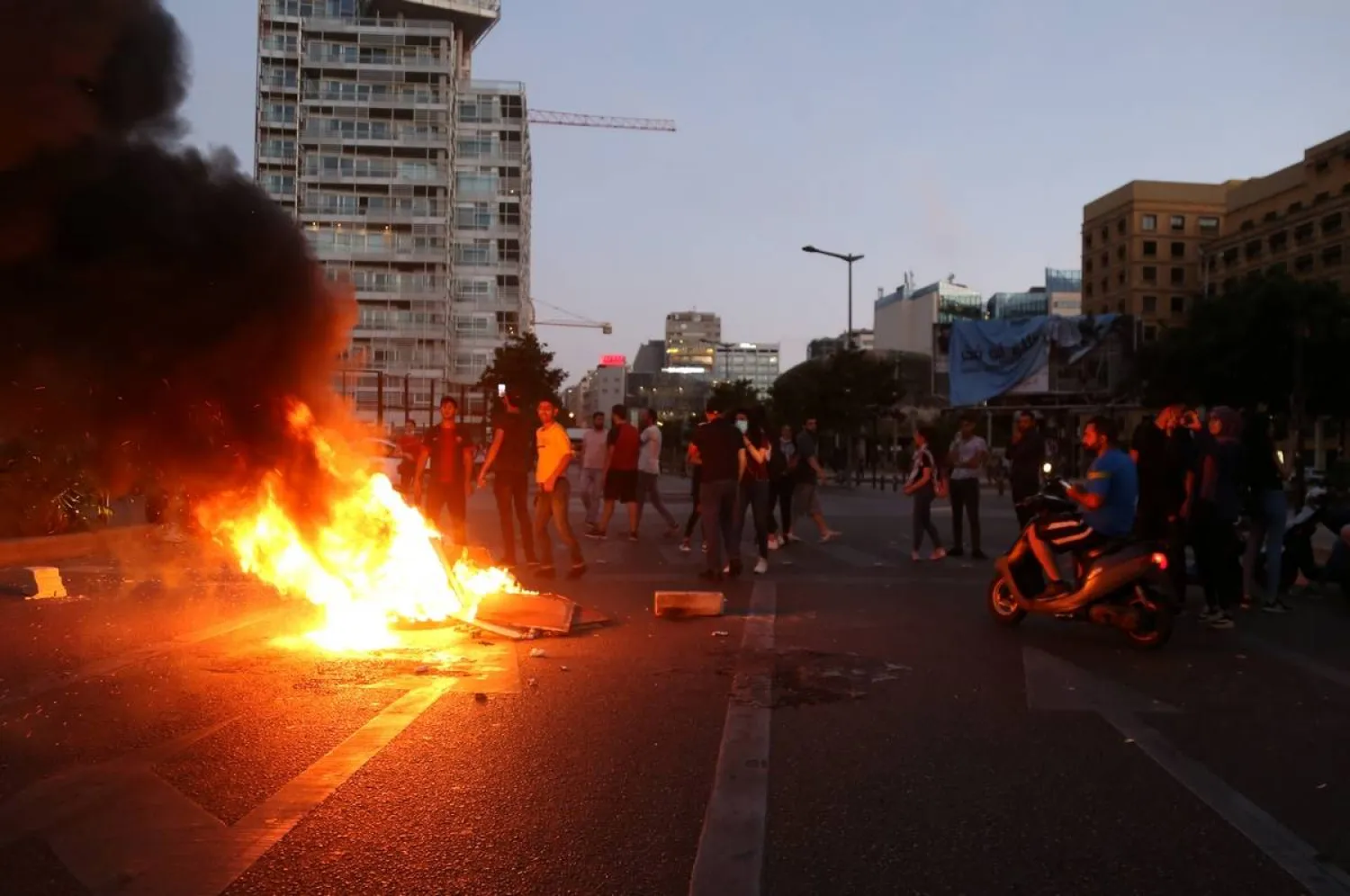
Demonstrators set fire during a protest against the collapsing Lebanese pound, in Beirut, Lebanon June 11, 2020. Reuters
TT

Lebanese Central Bank to Inject Dollars after Night of Protests

Demonstrators set fire during a protest against the collapsing Lebanese pound, in Beirut, Lebanon June 11, 2020. Reuters

Lebanon's money changers said the central bank agreed Friday to inject fresh dollars into the market to prop up the national currency a day after protesters poured into the streets over the rising dollar price.

The protests, which degenerated into attacks on several bank branches, and the tumbling of the currency prompted an emergency cabinet meeting Friday.

Prime Minister Hassan Diab chaired the meeting, also attended by Central Bank Governor Riad Salameh and representatives of the country's money changers.

Mahmoud Halawa, head of the money changers union, said Salameh promised to inject a sufficient amount of dollars into the market for importers and regular citizens.

Security forces would also crack down on the black market or any money changers selling above a set rate of 3,940 to the dollar, Halawa said.

It was not clear whether there are enough dollars available to stop the local currency depreciation. Halawa said fresh dollars would mostly come from money transfer bureaus.

Despite previous efforts to control the currency depreciation, the Lebanese pound sold for more than 6,000 to the dollar Thursday on the black market, down from 4,000 in recent days. The pound had maintained a fixed rate of 1,500 to the dollar for nearly 30 years.

The central bank late Thursday hit out at "baseless" information on social media of "exchange rates at levels far from reality, which mislead citizens".

The currency crash comes during a historic economic and financial crisis facing the country and appeared to reflect the growing shortage of foreign currency.

It also signaled panic over new US sanctions that will affect Syria in the coming days and a lack of trust in the government’s management of the crisis.

Experts say the cabinet would like to see Salameh removed from the position he has held since 1993.

Protesters accuse Salame of having encouraged a policy of increasing state borrowing over the decades that they say benefited only the country's banking and political elite.



Syria Says Sending Imported Petrol to Iraq

A drone view shows facilities at the Banias oil refinery, in Banias, Syria, April 8, 2026. (Reuters)
TT

Syria Says Sending Imported Petrol to Iraq

A drone view shows facilities at the Banias oil refinery, in Banias, Syria, April 8, 2026. (Reuters)

Syria said on Sunday that it had begun delivering imported petrol to Iraq this week, months after Baghdad began exporting its oil via Syria when the Middle East war disrupted the Strait of Hormuz.

"The Syrian Petroleum Company has begun transporting petrol imported for Iraq through the Banias oil terminal" on Syria's Mediterranean coast, state news agency SANA reported.

The move is part of "a renewable three-month agreement to secure energy supplies amid disruptions to maritime traffic through the Strait of Hormuz", it added.

The report cited Syrian Petroleum Company official Ahmed Qubbaji as saying that operations began on Thursday with a first batch of 57 tankers, with work underway to increase the number of trucks crossing the Al-Tanf land border to Iraq to 200 per day.

The Qatari firm UCC was responsible for purchasing the petrol "from various global sources", with Syria then transporting it for a fee, Qubbaji said according to the report.

The operations support "Syria's role as a corridor for importing, exporting and transporting materials and energy between regional countries", he said.

The closure of Hormuz has hit Iraqi oil exports hard, and in April Baghdad said it had begun shipping crude through Syria by truck to circumvent the strait, though the amounts are far below what used to travel by sea.

Qubbaji said that up to 1,200 Iraqi oil tankers transited Syria daily.

Syria's new authorities, who ousted longtime ruler Bashar al-Assad in December 2024, have been seeking to reboot the country's economy and rebuild its infrastructure after more than a decade of war.

Syria and Iraq are also finalizing negotiations on a contract to restore a key oil pipeline between the countries, Syrian officials have said.


US Treasury Chief Claims Successes in Isolating Iran

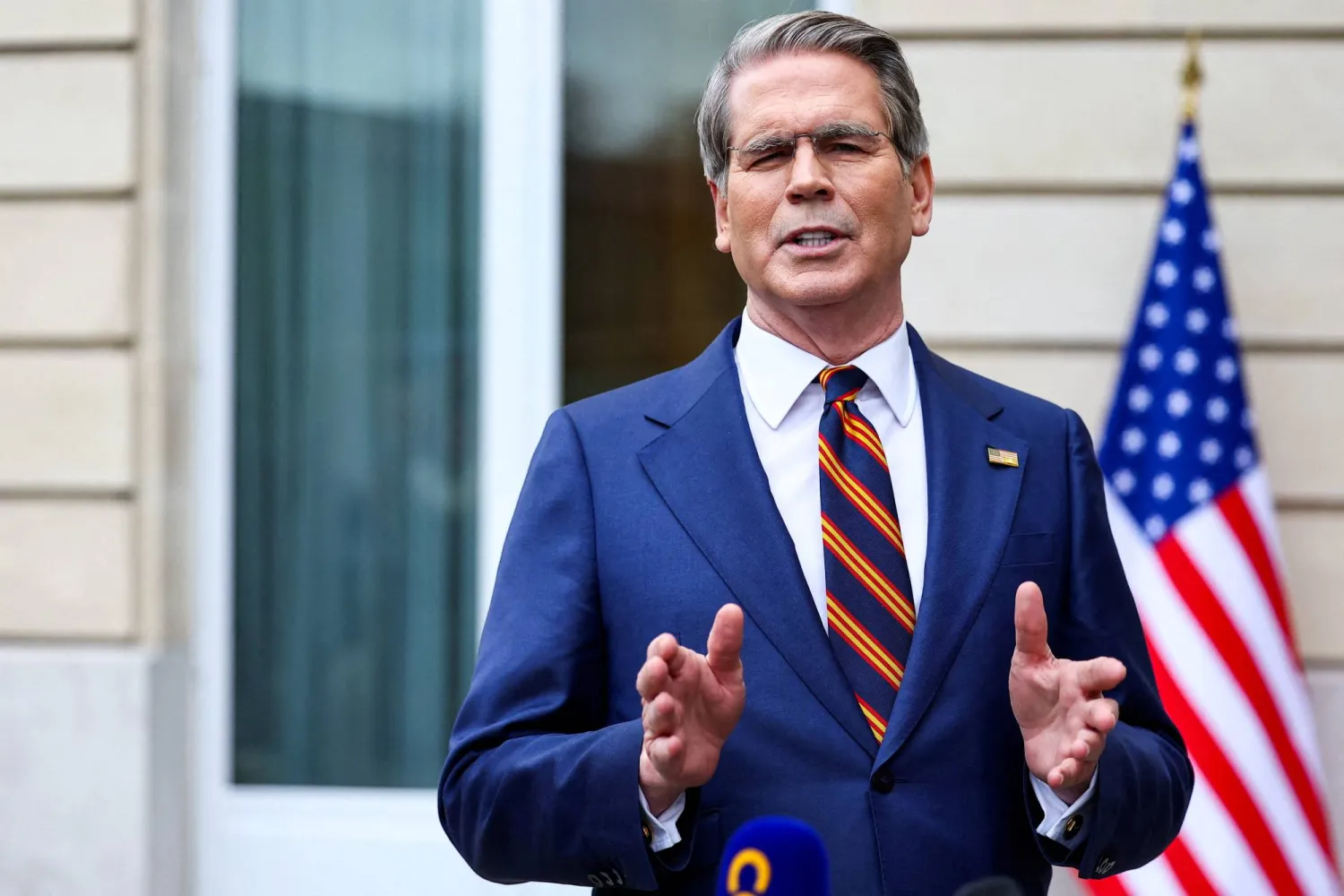
FILE PHOTO: US Treasury Secretary Scott Bessent speaks to the media after two days of meetings with a Chinese delegation, in Paris, France March 16, 2026. REUTERS/Abdul Saboor/File Photo
TT

US Treasury Chief Claims Successes in Isolating Iran

FILE PHOTO: US Treasury Secretary Scott Bessent speaks to the media after two days of meetings with a Chinese delegation, in Paris, France March 16, 2026. REUTERS/Abdul Saboor/File Photo

US Treasury Secretary Scott Bessent said on Saturday that he had sent envoys around the world to pressure countries to economically isolate Iran, hailing new restrictions targeting the country's airlines and banks.

"At my direction, teams were dispatched across the globe to engage with countries and demand action against the Iranian regime," he said on X. "These efforts are delivering results."

Bessent noted that Türkiye and Oman have halted incoming flights from private carrier Mahan Air, while the United Arab Emirates has stopped all flights by Iranian airlines.

Dubai, the UAE's commercial hub, is a major destination for Iran's carriers, with multiple daily flights, a large Iranian community and close business links.

Iran's ISNA news agency, citing officials, reported that five countries had revoked the Iranian republic's flight permits: Azerbaijan, Georgia, Iraq, Oman and the UAE.

But it said flights were still operating to China -- which is refusing to yield to US pressure -- and Russia via the two main airlines, national carrier Iran Air and Mahan.

Mahan had announced that it would no longer serve Türkiye at the request of the Turkish authorities, but flights continue several times a day in both directions, via Iran Air or smaller Iranian carriers, according to the Tehran and Istanbul airport websites.

ISNA said Afghanistan, Armenia, Belarus, Malaysia, Pakistan and Tajikistan were still also being served.

Bessent had said on Monday that all Iranian airlines "will be shut down around the world".

He also highlighted new banking restrictions.

On Wednesday, the UAE central bank blocked transactions to and from Iran by branches of Iran's Bank Melli, accusing it of violating laws on money laundering, terrorism and arms proliferation.

Last week, Türkiye revoked the license of Iran's Bank Mellat, a semi-private financial entity that has been subject to Western sanctions for years.

A Wall Street Journal article shared by Bessent said Jonathan Burke, the Treasury's assistant secretary for terrorist financing, traveled across the Middle East and Europe over two weeks to push the plan to impose what Bessent called "economic D-Day" on Tehran.

The US Treasury has held discussions with more than 50 countries, the Journal reported.


China, US Agree to $30 Billion Tariff Cut, AI Dialogue

WASHINGTON, DC - SEPTEMBER 25: US President Donald Trump (R) and President of China Xi Jinping (L) speak as they depart following a tour of the National Archives Museum on September 25, 2026 in Washington, DC. Win McNamee/Getty Images/AFP
TT

China, US Agree to $30 Billion Tariff Cut, AI Dialogue

WASHINGTON, DC - SEPTEMBER 25: US President Donald Trump (R) and President of China Xi Jinping (L) speak as they depart following a tour of the National Archives Museum on September 25, 2026 in Washington, DC. Win McNamee/Getty Images/AFP

China and the US have agreed to a $30 billion reciprocal tariff-reduction arrangement and to launch dialogue on AI, under an eight-point consensus reached during Chinese President Xi Jinping's visit to the US, China's Ministry of Foreign Affairs said.

The two sides recognized the work of their economic teams and endorsed steps including the establishment of a trade council, the tariff-reduction arrangement and an extension of outcomes from earlier talks in Kuala Lumpur, the ministry said.

The United ⁠States and China ⁠had earlier agreed to extend by two months a trade truce that was due to expire on November 10, allowing more time to work on a potentially bigger trade deal, US Treasury Secretary Scott Bessent said on Wednesday.

The leaders of ⁠the world's two largest economies ended a three-day summit that showcased personal diplomacy rather than big public breakthroughs. Xi has since landed in Beijing, Chinese state media Xinhua reported on Saturday.

On artificial intelligence, the two sides agreed to establish a dialogue to discuss the technology's risks and benefits, with the next round of discussion set for November, and to set up a communication channel for AI-related incidents, according to the ⁠ministry.

They ⁠also agreed to support each other in hosting the Asia-Pacific Economic Cooperation leaders' meeting and the Group of Twenty summit, with both leaders signaling their intention to attend the gatherings hosted by the other, Reuters reported.

On foreign policy, the leaders agreed that Iran should fulfil its commitment not to develop nuclear weapons, and that no country or entity should impose transit tolls on international waterways, the ministry said. They also recalled that China and the United States fought as allies in World War Two.