



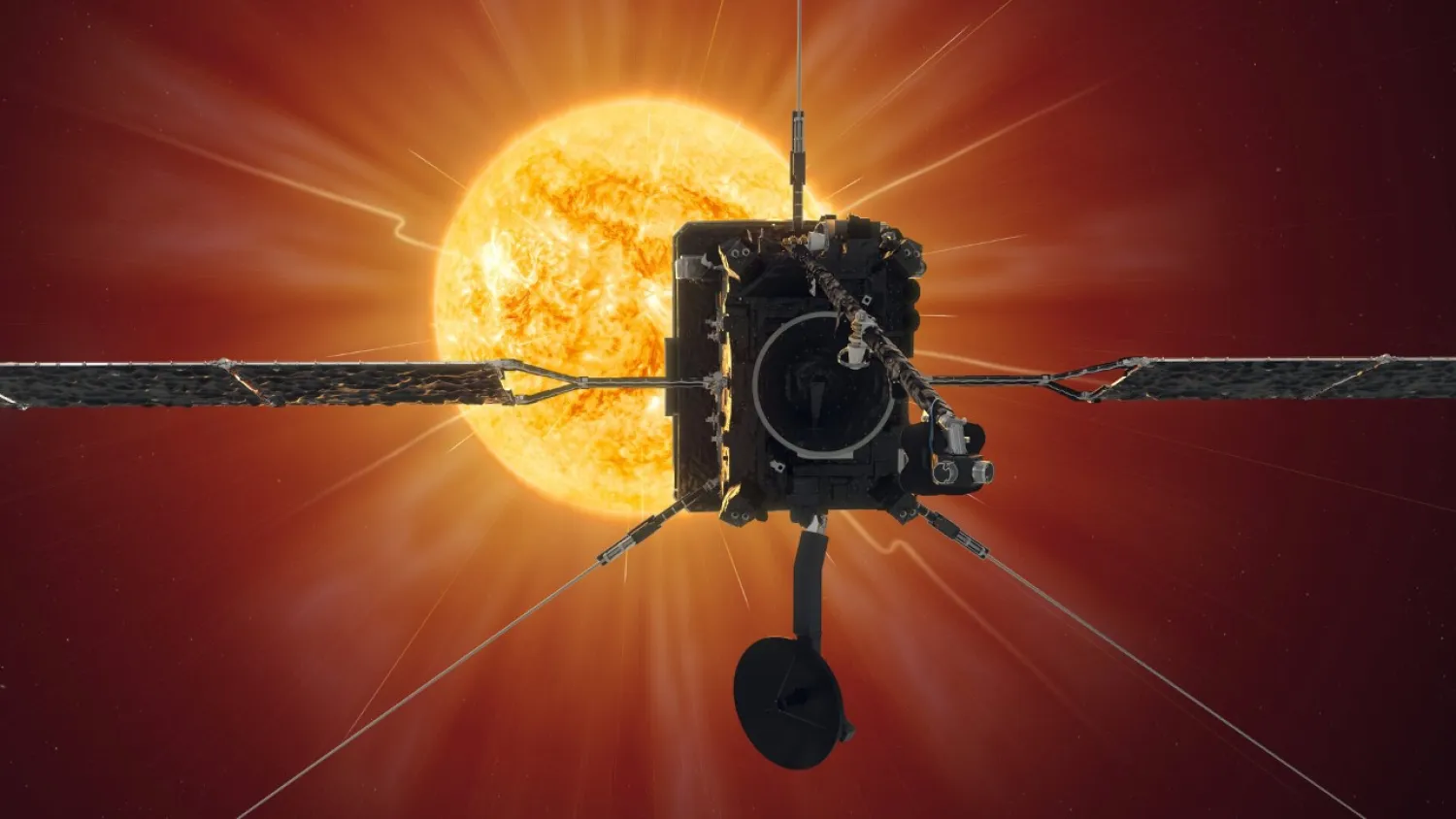

Europe's Solar Orbiter (SolO) probe made its first close pass of the Sun on Monday, tracking by at a distance of just over 77 million km. SolO, which was built in the UK and launched in February from a base in Florida, is on a mission to study solar winds charged with particles that could damage satellites.
A report by the BBC cited the scientists observing the orbiter, saying "the close pass, known as a perihelion, puts the probe between the orbits of Venus and Mercury. In the coming years, SolO will go nearer still, closing to within 43 million km of the Sun on occasions." The probe's upcoming event is passing near Venus, which would help it head in a spiral path towards the sun.
Tim Horbury, the principal investigator of the mission, said: "The next major event for SolO is a flyby of Venus. This occurs at the end of December and will see the probe track about 500,000 km above the planet's surface. The full science phase of the mission is due to start in 2021 when all 10 of SolO's instruments, including its imagers, will begin regular observations."
With six telescopes on-board, the probe will be able to capture images of the sun from an unprecedented distance, and get the first-ever proper view of its poles. The probe will also use four in-situ instruments to measure properties of the environment around it.
The data collected by SolO will be added to the data collected by the American Parker Solar Probe launched by NASA in 2018. Parker made a closer approach to the sun by 7-8 kilometers.
Although the American orbiter approached the sun at a closer distance, it lacked the direct observation techniques that can work amidst high temperatures. However, the European probe has managed to address this challenge with a protective thermal shield that would help it resist the sun's temperature of about 600 degrees Celsius.


