


Oman: New Loan Program for Businesses Affected by COVID-19

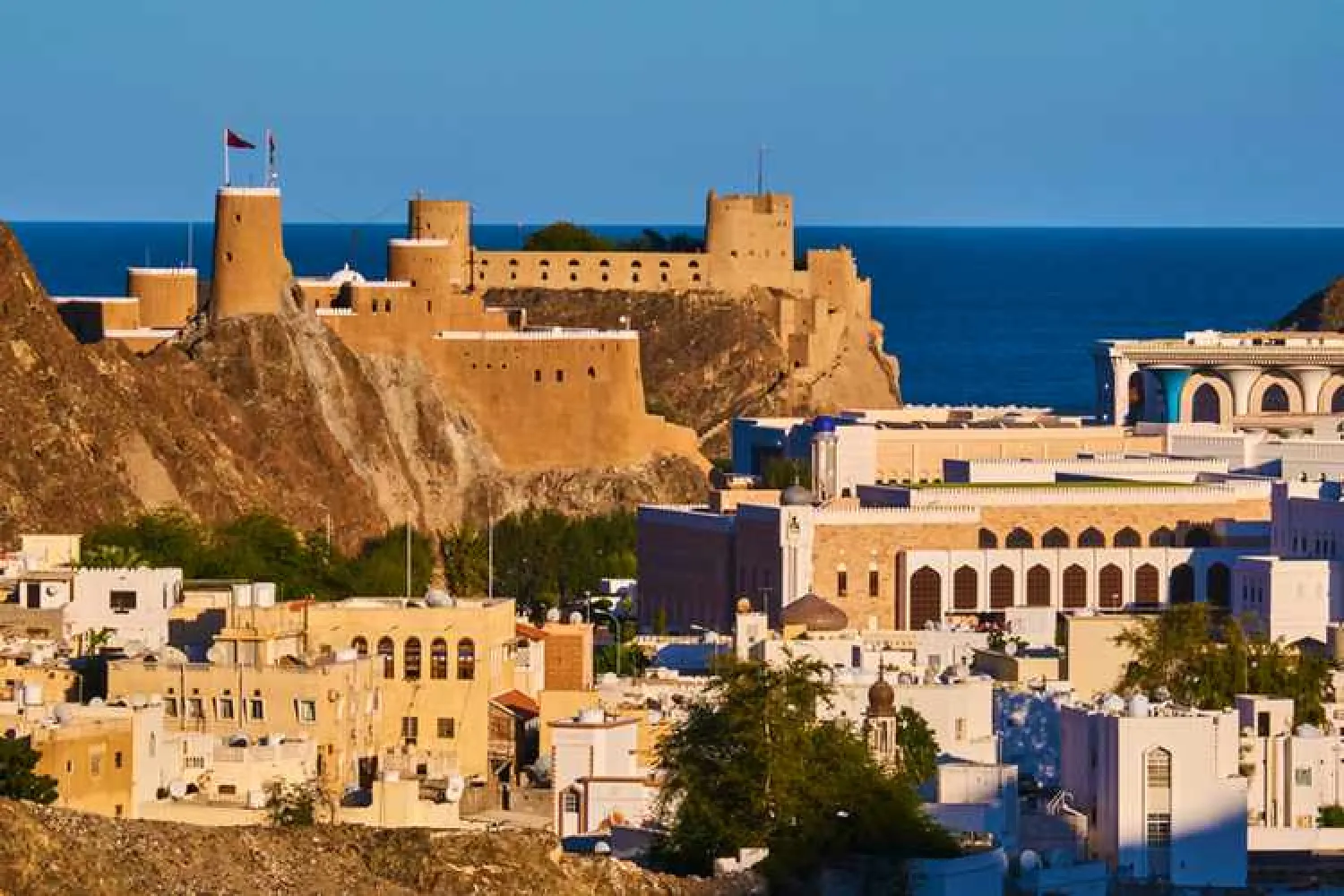
Sultanat of Oman, Muscat, Mirani fort and Al Alam Palace of Sultan Qaboos. Image used for illustrative purpose.

Gettyimages
Sultanat of Oman, Muscat, Mirani fort and Al Alam Palace of Sultan Qaboos. Image used for illustrative purpose. Gettyimages
TT

Oman: New Loan Program for Businesses Affected by COVID-19

Sultanat of Oman, Muscat, Mirani fort and Al Alam Palace of Sultan Qaboos. Image used for illustrative purpose.

Gettyimages
Sultanat of Oman, Muscat, Mirani fort and Al Alam Palace of Sultan Qaboos. Image used for illustrative purpose. Gettyimages

Oman’s ruler Haitham bin Tariq al-Said on Tuesday announced an emergency interest-free loan program for businesses most affected by the coronavirus pandemic, especially small and medium sized firms, state television reported.

The sultanate has switched to a fiscal surplus in the first four months of the year after it cut public spending amid low oil prices and the COVID-19 crisis, official figures showed.

Oman has over $20 billion in outstanding bonds rated junk by major rating agencies. However, severe cuts in public expenditure have led to a surplus of 134.2 million rials ($349.48 million) in January-April from a deficit of 133.2 million rials a year earlier, the figures released by the national statistics agency showed.

“Fiscal consolidation through expenditure rationalization and sharper non-oil revenue generation is showing up in the statistics,” said Ehsan Khoman, head of MENA research and strategy at MUFG.

Between March and April Oman’s finance ministry directed government agencies to implement several cuts to their operational and development budgets.

It reduced spending for defence and security from January to April by over 17% year on year to 838.8 million rials and development expenditure for civil ministries during the same period by nearly 48% to 171.2 million rials, the figures showed, Reuters reported.

The data may give some reassurance to investors in Oman’s debt, concerned over the slow pace of fiscal reforms and economic diversification efforts.

Potential financial support from Oman’s richer Gulf neighbors, particularly if conditional on fiscal consolidation measures, would give investors additional comfort, Khoman said.

Still, Oman faces one of the widest fiscal deficits in the region this year, estimated at over 16% of GDP by both MUFG and the International Monetary Fund.

Saudi GDP Grows 2.8% in First Quarter

The Saudi capital, Riyadh (SPA)
TT

Saudi GDP Grows 2.8% in First Quarter

The Saudi capital, Riyadh (SPA)

Saudi Arabia's real gross domestic product grew 2.8% in the first quarter, year-on-year, preliminary government estimates showed on Thursday.

Non-oil activities grew 2.8% in the quarter, and oil activities increased 2.3% from the prior-year period, the General Authority of Statistics data ⁠showed.

On a quarterly basis, growth shrank 1.5% in the three months to March 31 compared to the fourth quarter, driven by a decline in oil activities.

Oil activity decreased 7.2% from the fourth quarter, while non-oil activity was almost flat.


IMF Warns Asia to Keep Policy in Balance Amid Energy Disruptions

FILE PHOTO: A view of the International Monetary Fund (IMF) logo at its headquarters in Washington, D.C., US, November 24, 2024. REUTERS/Benoit Tessier/File Photo
TT

IMF Warns Asia to Keep Policy in Balance Amid Energy Disruptions

FILE PHOTO: A view of the International Monetary Fund (IMF) logo at its headquarters in Washington, D.C., US, November 24, 2024. REUTERS/Benoit Tessier/File Photo

Asian countries will need to keep their powder dry in preparation for future shocks even as they tackle an energy crisis caused by the Iran War, IMF Director for Asia Pacific Krishna Srinivasan said on Thursday.

With energy supplies running short due to the logjam in the Strait of Hormuz, southeast Asian economies have budgeted significant sums to cushion the impact of surging prices, and have also introduced measures to conserve energy, including work from home plans.

But Srinivasan, speaking at a media roundtable, warned countries against ramping up energy subsidies.

"If you give generalised subsidies, it's very hard to pull it back," he said, adding that countries should instead provide budget neutral ⁠and targeted fiscal ⁠support, and maintain fiscal discipline.

"In other words, cut elsewhere to support people who are being hit by the energy shock," Reuters quoted him as saying.

Srinivasan said that while some markets, such as Thailand and China, can hold off on tightening monetary policy because they are in deflationary territory, markets already above their inflation targets, including Australia, need to start now.

He also ⁠noted that some markets, such as the Philippines, have decided to tighten preemptively to anchor inflation expectations, but he added that the IMF's advice would have been to see through the shock and wait to see if inflation really picks up in a meaningful way.

"You may want to take insurance upfront or you may want to wait and see so that you don't hurt growth ... it's a very difficult balance to strike as a central bank governor," he said.

The IMF cut its global GDP outlook for 2026 to 3.1% on April 14, assuming ⁠a short-lived Middle ⁠East conflict and oil prices normalising in the second half of the year.

However, IMF chief economist Pierre-Olivier Gourinchas warned that the fund's "adverse scenario" of 2.5% growth looked increasingly likely, with continued energy disruptions and no clear path to end the conflict.

Srinivasan said that if the Strait of Hormuz remains closed beyond the next three months and oil prices stay elevated for the rest of the year, the IMF's more severe growth scenarios will become more likely.

There are still downside risks to growth, with a number of uncertainties facing the world economy, including the duration of the energy crisis and the severity of fertiliser shortages, which could create a food supply shock, he said.


Euro Zone Inflation Soars Further Above ECB Target

FILE -Clouds cover the sky over the headquarters of the European Central Bank in Frankfurt, Germany, Sept. 11, 2025. (AP Photo/Michael Probst, File)
TT

Euro Zone Inflation Soars Further Above ECB Target

FILE -Clouds cover the sky over the headquarters of the European Central Bank in Frankfurt, Germany, Sept. 11, 2025. (AP Photo/Michael Probst, File)

Euro zone inflation surged further in April on soaring energy costs, Eurostat data showed on Thursday, adding to the case for interest rate hikes, even if benign underlying price growth figures ease the urgency of any move.

Inflation in the 21 countries sharing the euro currency jumped to 3.0% this month from 2.6% in March, moving further above the European Central Bank's 2% target, with energy costs accounting for the vast majority of the increase.

A closely watched figure ⁠on underlying or 'core' ⁠inflation, which excludes volatile food and energy prices, meanwhile slowed to 2.2% from 2.3% a month earlier.

Services inflation, a stubbornly high component of the price basket over the past several years, slowed to 3.0% from 3.2% while inflation for non-energy industrial ⁠goods, a key drag on prices picked up to 0.8%.

The figures are a mixed bag for the ECB, which is meeting on Thursday and will likely keep interest rates unchanged, even if it signals that policy tightening is increasingly likely, Reuters reported.

The high headline inflation print strengthens the argument for interest rate hikes but the underlying figures suggest that the initial energy shock is not yet creating major ⁠second round effects.

The ⁠ECB is largely powerless against an energy shock but must step in if these second round effects become visible as they risk creating a hard-to-break self-sustaining inflation spiral.

This is why investors expect the ECB to hike its 2% deposit rate already in June and see at least two more moves before the end of the year.

This outlook is volatile, however, and largely depends on developments in the Iran war and oil prices, which hit a four-year-high of $124 on Thursday.