


Maghreb Migrants on the Move Amid Political Stagnation, Virus

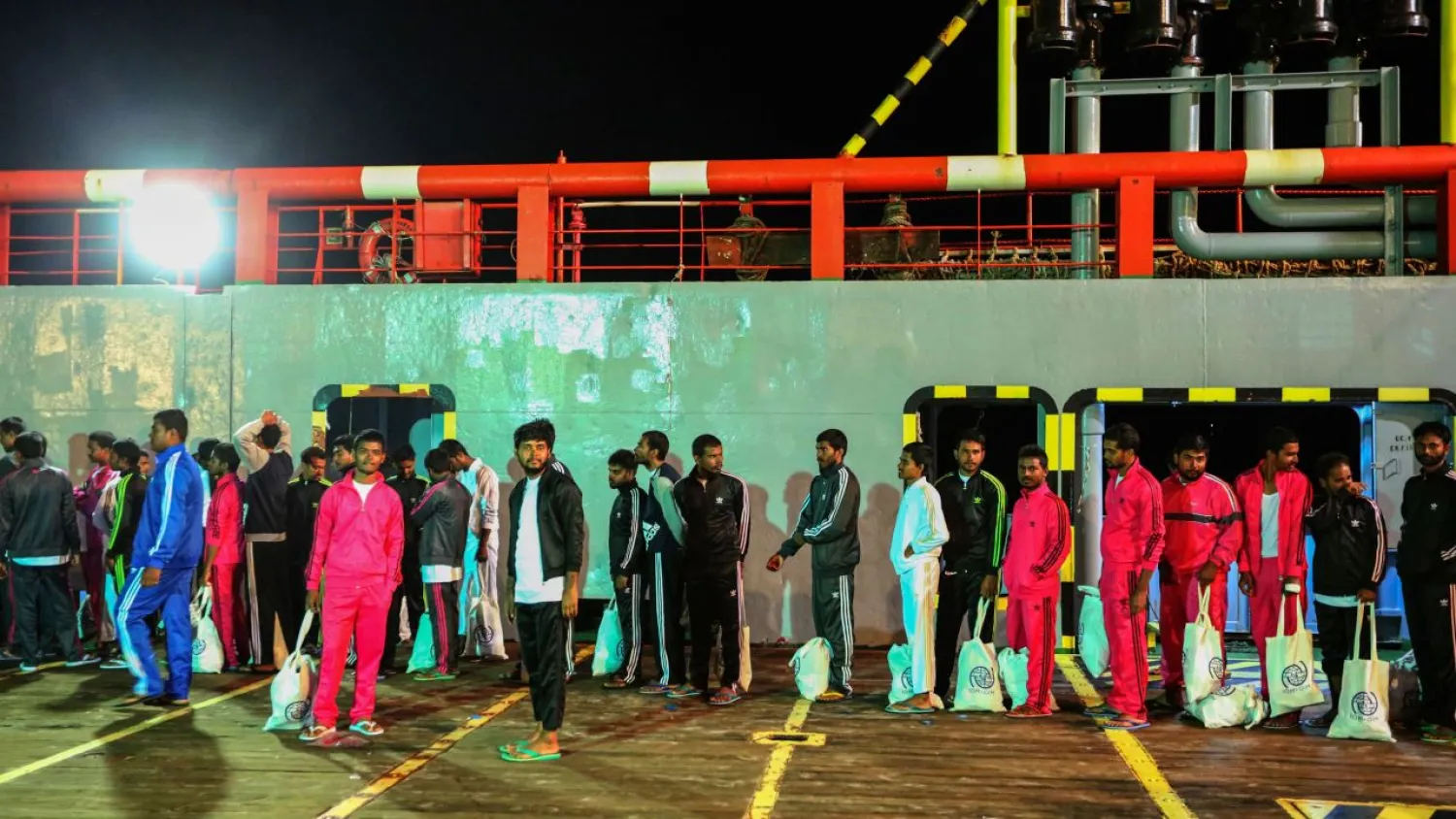
Amid the coronavirus pandemic, Algerians and Tunisians are more determined than ever to reach Europe. Here, migrants rescued in the Mediterranean arrive at Zarzis harbour in southern Tunisia | AFP
TT

Maghreb Migrants on the Move Amid Political Stagnation, Virus

Amid the coronavirus pandemic, Algerians and Tunisians are more determined than ever to reach Europe. Here, migrants rescued in the Mediterranean arrive at Zarzis harbour in southern Tunisia | AFP

"Here, I don't exist -- I die little by little," said Hamid, a young Algerian, his gaze fixed on Mediterranean waters he sees as his route to a better future.

"My only hope is to leave for Europe."

Like thousands of citizens from the Maghreb, the 28-year-old has chosen to risk his life by crossing the Mediterranean on a makeshift boat.

With the coronavirus pandemic further squeezing already scant economic opportunities, Algerians and Tunisians are more determined than ever to reach Europe.

The deadly nature of their gamble was underlined again this month when 60 people, mostly women, and children, drowned off the Tunisian coast.

But this has not put Hamid off.

An engineer by profession, he has work, but is forced to live with his parents because his salary is not enough to rent a separate apartment.

His friends Djamel and Mohamed are also set on making a seaborne bid from Annaba, a northeastern city that is a popular launchpad for illicit crossings to Europe.

The migrants are known locally as "harraga", "those who burn" -- a reference to successful travelers setting their identity papers alight upon reaching their chosen destination, to avoid repatriation.

A protest movement that started early last year and quickly toppled longtime president Abdelaziz Bouteflika had sparked young people's hopes for a better future at home.

But as the unprecedented peaceful movement has been ever more harshly repressed and the oil-dependent economy has tanked on low crude prices, illegal departures have ticked up again.

Djamel said that with people being arrested for simply "posting opinions on Facebook", making for the seas "has become a question of survival".

- 'Society regressed' -

Algerian defence ministry figures show authorities arrested 1,433 people trying to depart illegally from Algeria's shores in the first five months of this year -- more than three times the figure for the same period of 2019.

The monthly numbers of detentions dropped dramatically from 828 in January to just 16 in March, as the country's coronavirus outbreak kicked in.

But Kouceila Zerguine, a lawyer based in Annaba, is convinced that actual migrant departures from Algeria are anyway far higher than the official figures.

"You have to multiply that number by 20," because you have to account for those who actually complete their trip without being intercepted, Zerguine said.

Sociologist Mohamed Mohamedi said the Hirak protest movement had offered citizens brief "hope of shaping a life" in Algeria.

But, he said, "the return of the 'harraga' is due to the return of hopelessness".

Mahrez Bouich, a professor of philosophy and politics in Bejaia in northeastern Algeria, agreed that the lack of hoped-for changes, along with economic stagnation, were to blame.

The pandemic has "exacerbated social inequalities and injustices", Bouich said.

Despite a 2009 law that punishes migrants intercepted at sea with six months in prison (five years for smugglers), growing numbers of Algerians are attempting the crossing -- often more than once.

Aboard the boats are doctors, nurses, policemen, the unemployed, and entire families, lawyer Zerguine said, arguing that the phenomenon cannot be explained by unemployment alone.

Those who decide to leave "want to live with the times, they want more freedom and dignity".

Mohamed, the prospective migrant, said Algeria's social conservatism had overlooked young people.

"My grandparents are more open in spirit than my parents -- it's mad," he said.

"Society has regressed and I refuse to regress with it."

- 'Unemployment strangles us' -

In neighboring Tunisia, clandestine departures towards Europe quadrupled in the first five months of the year compared to 2019, according to the UN refugee agency UNHCR.

And while a growing number of migrants attempting the crossings are from West Africa, Tunisians also appear to have ever more reason to leave.

Many are disillusioned with the aftermath of the country's 2011 revolution, while the coronavirus pandemic has further crushed their economic prospects, said Khaled Tababi, a sociologist specializing in migration.

Many jobs have simply disappeared, especially in the tourism sector, he said.

Said El Ketari, an unemployed 28-year-old from the Sfax region of central-east Tunisia, stayed in Italy illegally for seven years before he was expelled in 2019.

Ever since his unwanted arrival home, he has been eyeing the chance to cross the Mediterranean again.

"Living in a foreign country hit by the pandemic is easier than living here without money, without prospects and with the unemployment that strangles us," he said.



Lebanese PM Says Premature to Talk of Any High-Level Meeting with Israel

Smoke rises as a result of an Israeli strike in the south of Lebanon, as seen from the Upper Galilee in northern Israel, 06 May 2026, amid a ceasefire between Israel and Lebanon. (EPA)
TT

Lebanese PM Says Premature to Talk of Any High-Level Meeting with Israel

Smoke rises as a result of an Israeli strike in the south of Lebanon, as seen from the Upper Galilee in northern Israel, 06 May 2026, amid a ceasefire between Israel and Lebanon. (EPA)

Lebanese Prime Minister Nawaf Salam said it is premature to talk of any high-level meeting between Lebanon and Israel, comments underlining the dim chances of one being held soon as hoped for by US President Donald Trump.

Salam, in comments reported by Lebanon's National News Agency (NNA) on Wednesday, said shoring up a ceasefire would be the basis for any new round of negotiations that might be held by Lebanese and Israeli government envoys in Washington.

Hostilities between Israel and Iran-backed Hezbollah have continued to rage in southern Lebanon despite a US-mediated ceasefire between Lebanon and Israel announced on April 16.

Since ‌Hezbollah triggered the ‌war by opening fire in support of Iran on March ‌2, ⁠the Lebanese administration ⁠led by Salam and President Joseph Aoun has initiated Beirut's highest-level contacts with Israel in decades, reflecting deep divisions between the Shiite group and its Lebanese opponents.

Washington last month hosted two meetings between the Israeli and Lebanese ambassadors to the United States. Hezbollah strongly objects to the contacts.

Announcing a three-week extension of the ceasefire on April 23, Trump said he looked forward to hosting Israeli Prime Minister Benjamin Netanyahu and Aoun in the near future, and that he ⁠saw "a great chance" the countries would reach a peace deal ‌this year.

Salam said Lebanon was not seeking "normalization with Israel, but ‌rather achieving peace".

The current circumstances "are not ripe to talk about high-level meetings," he added, according to NNA.

"Our ‌minimum demand is a timetable for Israel’s withdrawal," he said, adding that the government ‌would develop its plan to restrict weapons to state control - an effort aimed at securing Hezbollah's disarmament.

Aoun said this week the timing was not right for a meeting with Netanyahu. Lebanon "must first reach a security agreement and a halt to the Israeli attacks, before we raise the issue of a meeting ‌between us," he said.

TRADING BLOWS

Israel has occupied a so-called security zone extending as deep as 10 km (6 miles) into southern ⁠Lebanon, saying it aims ⁠to protect northern Israel from Hezbollah militants embedded in civilian areas.

Hezbollah and Israel have continued to trade blows.

Lebanon's Health Ministry said on Wednesday an Israeli airstrike killed four people including two women and an elderly man in the town of Zelaya in southern Lebanon.

The Israeli military said Hezbollah had launched explosive drones and rockets towards Israeli soldiers in southern Lebanon, injuring two Israeli soldiers.

It also said the Israeli air force intercepted a hostile aircraft before it crossed into Israel, and announced strikes on Hezbollah infrastructure in several areas in Lebanon.

More than 2,700 people have been killed in the war in Lebanon since March 2, the Health Ministry says.

The Israeli military says Hezbollah has fired hundreds of rockets and drones at Israel since March 2. Israel has announced 17 soldiers have been killed in southern Lebanon, along with two civilians in northern Israel.


EU Urged to 'Act Now' on West Bank Settlement Project

The Palestinian village of Turmus Ayya (foreground) and the Israeli settlement of Shilo (background), north of Ramallah in the Israeli-occupied West Bank, are pictured on May 6, 2026. (Photo by Zain JAAFAR / AFP)
TT

EU Urged to 'Act Now' on West Bank Settlement Project

The Palestinian village of Turmus Ayya (foreground) and the Israeli settlement of Shilo (background), north of Ramallah in the Israeli-occupied West Bank, are pictured on May 6, 2026. (Photo by Zain JAAFAR / AFP)

More than 400 former diplomats, ministers, and senior officials on Wednesday urged the European Union to "act now" against Israel's "illegal" settlements in the occupied West Bank.

The open letter comes as Israel intends to move forward with E1, a new construction project covering around 12 square kilometers (4.6 square miles) with some 3,400 housing units in the occupied West Bank.

The move would further separate east Jerusalem, occupied and annexed by Israel and predominantly inhabited by Palestinians, from the West Bank.

"The EU and its member states, together with partners, must take immediate action to deter Israel from further advancing its illegal annexation of Palestinian land in the West Bank," said the letter signed by more than 440 figures, including former EU foreign policy chief Josep Borrell and former Belgian prime minister Guy Verhofstadt.

The signatories called for targeted sanctions, such as visa bans and business restrictions, on "all those engaged in illegal settlement activity", calling for measures against those promoting or implementing the E1 scheme.

The Israeli government plans to publish an initial tender on June 1 for the construction of housing for up to 15,000 "illegal settlers", AFP quoted the letter as saying, urging the EU and its member states to "act now".

The plan has been condemned by international leaders, with UN Secretary General Antonio Guterres's spokesman saying it would pose an "existential threat" to a contiguous Palestinian state.

Excluding east Jerusalem, more than 500,000 Israelis live in the occupied West Bank in settlements that are illegal under international law, among some three million Palestinians.

In 2025, the expansion of Israeli settlements reached its highest level since at least 2017, when the United Nations began tracking data, according to a UN report.

There has been a spike in deadly attacks by Israeli settlers in the occupied West Bank since the start of the Iran war on February 28, Palestinian officials and the United Nations have said.

Israel has occupied the West Bank since 1967.


Israel Army Says Striking Hezbollah Targets across Lebanon

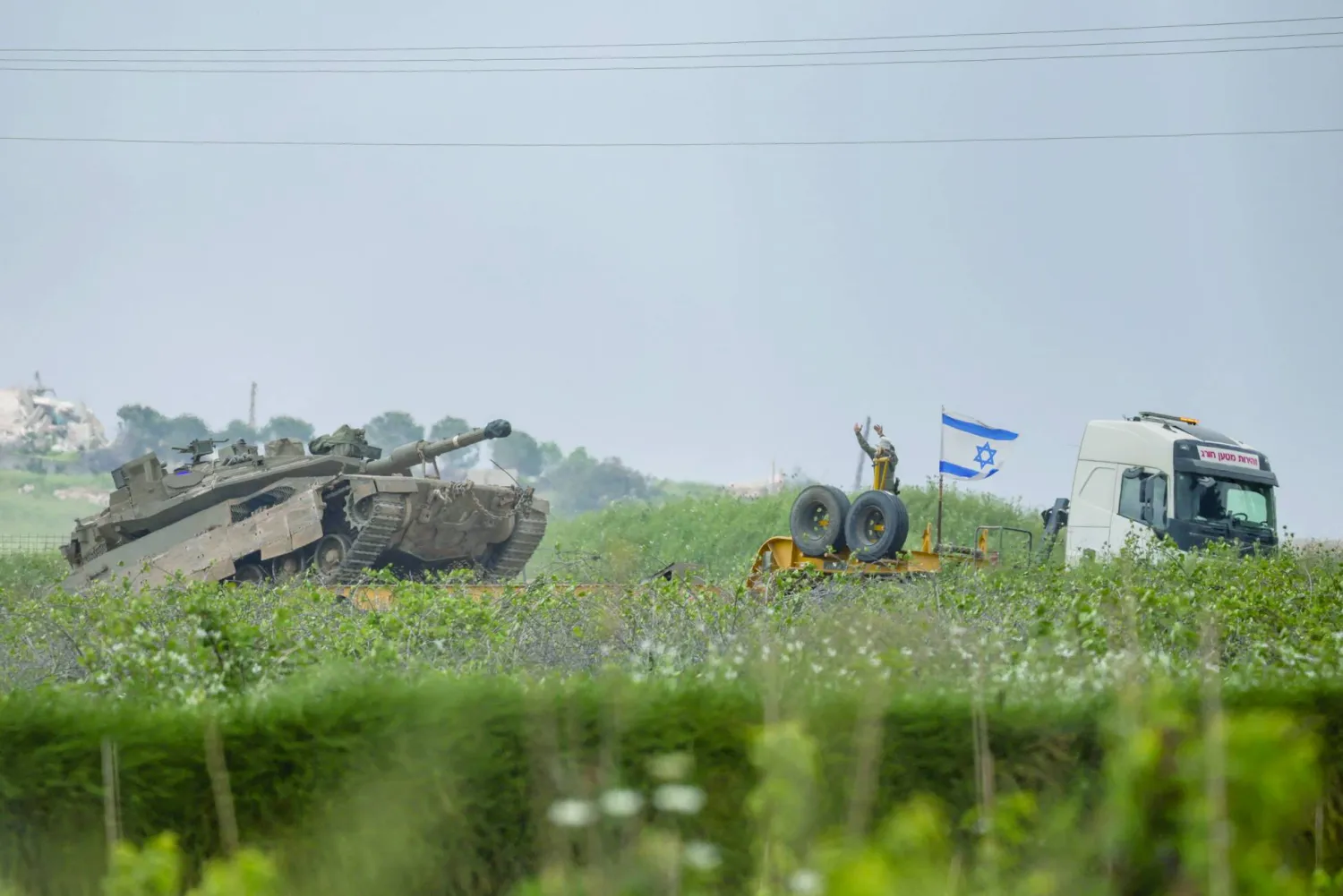
An Israeli soldier gestures next to a tank, on the Israeli side of the border with Lebanon, May 3, 2026. REUTERS/Shir Torem
TT

Israel Army Says Striking Hezbollah Targets across Lebanon

An Israeli soldier gestures next to a tank, on the Israeli side of the border with Lebanon, May 3, 2026. REUTERS/Shir Torem

Israel's army said Wednesday it had begun striking Hezbollah infrastructure in several areas of Lebanon, despite a truce with the neighboring country intended to halt fighting with the Iran-backed militant group. 

"The IDF has begun striking Hezbollah terror infrastructure sites in several areas in Lebanon," a military statement said. 

It came shortly after the army reported "several incidents" during which drones exploded near Israeli soldiers operating in Lebanon's south.  

Lebanon's health ministry said an Israeli strike in Lebanon's eastern Bekaa valley killed four people, with local media reporting the attack took place before the Israeli army issued a warning to evacuate the area along with 11 other towns. 

"An Israeli enemy raid on the town of Zellaya in West Bekaa resulted in four martyrs, including two women and an elderly man," the ministry said. 

Lebanese state media said the attack struck the house of the town's mayor, killing him and three members of his family.