


Saudi Shura Council Requests Creating Multilingual E-Platform for Economic Cities

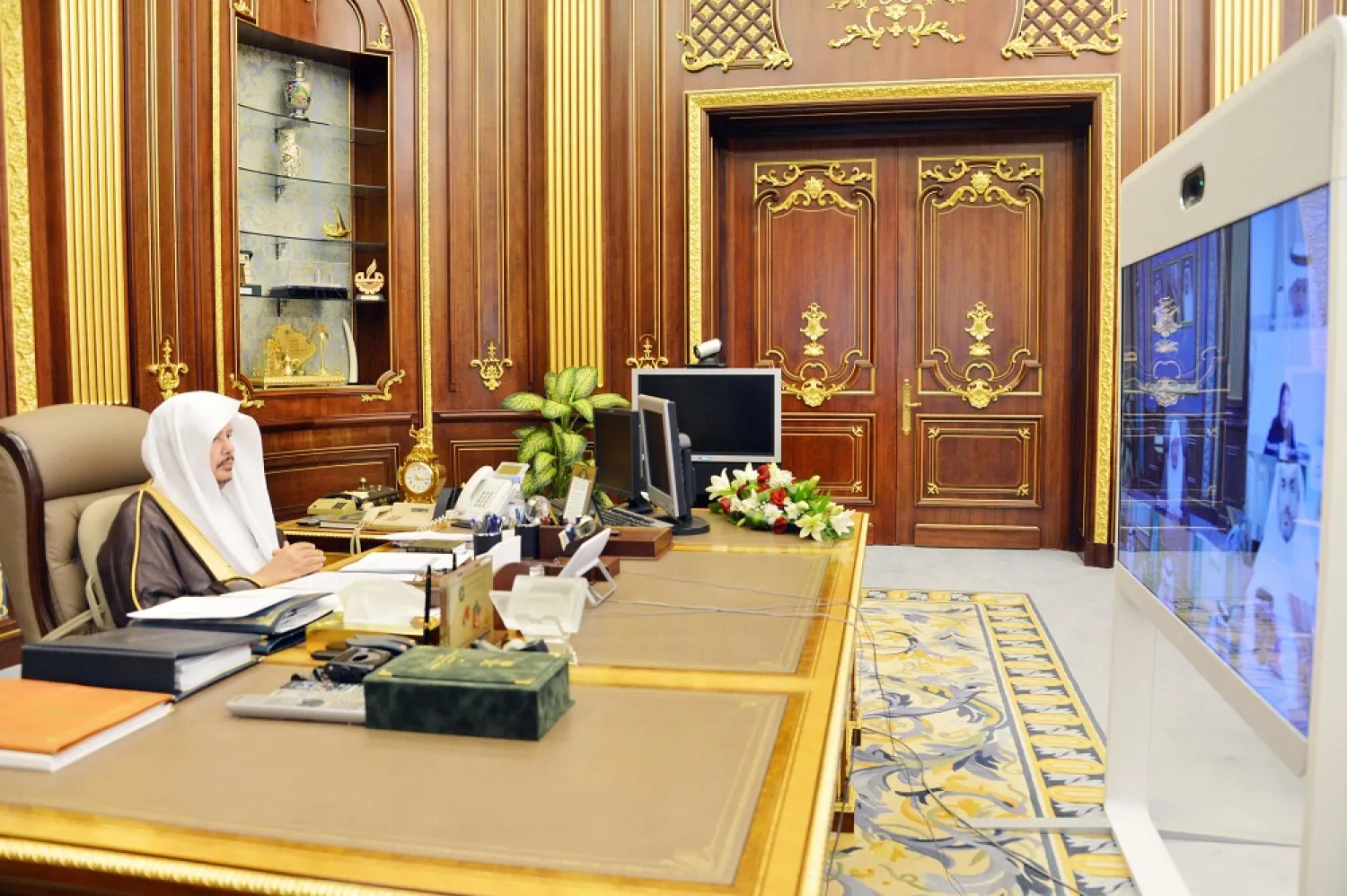
Head of the Shura Council chairs a virtual meeting for the council. (SPA)
TT

Saudi Shura Council Requests Creating Multilingual E-Platform for Economic Cities

Head of the Shura Council chairs a virtual meeting for the council. (SPA)

Saudi Arabia’s Shura Council has stressed the importance of creating a multilingual e-platform for its economic cities that provides integrated information about them.

It also highlighted the need to promote the industrial sector in the Kingdom by developing systems and legislations, offering incentives and raising levels of competitiveness with a special focus on qualitative industries and global investors.

Discussions on Monday focused on the Economic Cities and Special Zones Authority (ECZA). The Council requested the Authority to develop its legislative system and work on attracting foreign investors.

Assistant Speaker of the Shura Council Dr. Yahya al-Samaan said the Council voted on ECZA’s development of a system of regulatory and financial legislation.

“It will include more incentives and initiatives to enhance competitiveness in special economic cities and areas and attract qualitative industries and global foreign investors,” he explained.

In its decision, the Council stressed that the ECZA activate the role of the local private sector in industrial investment and increase job opportunities for citizens.

Meanwhile, it approved a project to amend the system of cooperative societies to allow them to engage important figures and contribute to increasing the efficiency of societies administratively, financially and technically and activate governance.

The Council also voted on demands for the speedy privatization of the Saudi Broadcasting Authority based on the studies accomplished in this regard and on speeding up its full independence and development of its internal regulations, in line with its tasks and objectives.

It called on the Authority to determine the needs that would enable it to be competitive in the media market, urging it to develop its cadres to the highest global standards.



US Stocks Open Higher after Trump Threatens Iran

Stock market statistics are displayed on a screen at the New York Stock Exchange (AFP)
TT

US Stocks Open Higher after Trump Threatens Iran

Stock market statistics are displayed on a screen at the New York Stock Exchange (AFP)

Wall Street stocks opened higher Monday after US President Donald Trump claimed progress in talks with Iran, even as he threatened to destroy key oil facilities on Kharg Island and to decimate the country's power infrastructure.

International benchmark Brent North Sea crude was up 2.2 percent to $115.02 per barrel on Monday morning, while the main US oil contract, West Texas Intermediate, rose 1.7 percent to $101.35, AFP reported.

All three major US indices started the week on the front foot.

About ten minutes into trading, the tech-rich Nasdaq Composite was up 0.8 percent at 21,124.23, the Dow Jones Industrial Average rose 0.9 percent at 45,566.69, and the broad-based S&P 500 also rose 0.9 percent to 6,426.20.

Art Hogan of B. Riley Wealth Management said investors "would desperately like to see an exit ramp in this war."

Still, even as Trump claims progress towards talks, he is often contradicted by Tehran and the Middle East region remains engulfed by war, with US-Israeli strikes continuing, Iran's retaliation targeting US allies in the Gulf and Israeli strikes against Lebanon expanding.

"The market's going to wake up every day and try to figure out where we are in the war with Iran and what that means for energy prices," said Hogan.

"If in fact, the president's announcement on Truth Social can be even taken a little bit seriously about negotiations going well, then the market would celebrate that."

Hogan added that markets were currently oversold and therefore "very susceptible to any good news, especially as it pertains to this war in Iran."

Monday's gains came after a series of losses last week, with the S&P 500 ending the week lower for the fifth straight week, its longest such run in four years.


Turkish Cenbank Total Reserves Fell $55 billion Since War Began

Turkish Central Bank (official website)
TT

Turkish Cenbank Total Reserves Fell $55 billion Since War Began

Turkish Central Bank (official website)

The Turkish Central Bank's total reserves fell by a hefty $22 billion last week to $155.5 billion, bringing their declines since the start of the Iran war to $55 billion, bankers said, Reuters reported.

They said the central bank sold $18 billion in foreign exchange last week, meaning its total forex sales amid the one-month war totaled $44 billion.

The central bank's net reserves fell $22.5 billion last week to $35 billion, the bankers also said.


Aluminium Prices Jump after Gulf Attacks

Aluminum is the most widely used metal after steel (X)
TT

Aluminium Prices Jump after Gulf Attacks

Aluminum is the most widely used metal after steel (X)

Aluminium prices climbed around six percent in early trading on Monday after Iran attacked two major plants in the Gulf that produce the widely used metal, raising concerns over supply disruptions.

Gains later reduced, though prices were still up 4.2 percent at $3,435 per ton on the London Metal Exchange.

"Escalation and expansion of the Middle East conflict sent crude oil and aluminium up at the open," noted Ipek Ozkardeskaya, an analyst at Swissquote Bank.

Iran's Revolutionary Guards said they launched missile and drone strikes on aluminium plants in Bahrain and the United Arab Emirates over the weekend.

The US-Israeli war on Iran and resulting closure of the Strait of Hormuz has already restricted shipments of ⁠aluminium to export markets ⁠in the United States and Europe.

Aluminium Bahrain, which runs the world's largest single-site smelter, said it was assessing the damage from the Iranian strikes. Emirates Global Aluminium, meanwhile, said its plant sustained "significant damage.”

Following sanctions on Russian aluminium over the war in Ukraine, "the Middle East became a crucial supplier to the European Union and countries including the US and Japan", analysts from ANZ bank said.

"Any further disruption to deliveries would add upward pressure on aluminium prices and premiums," they added.