

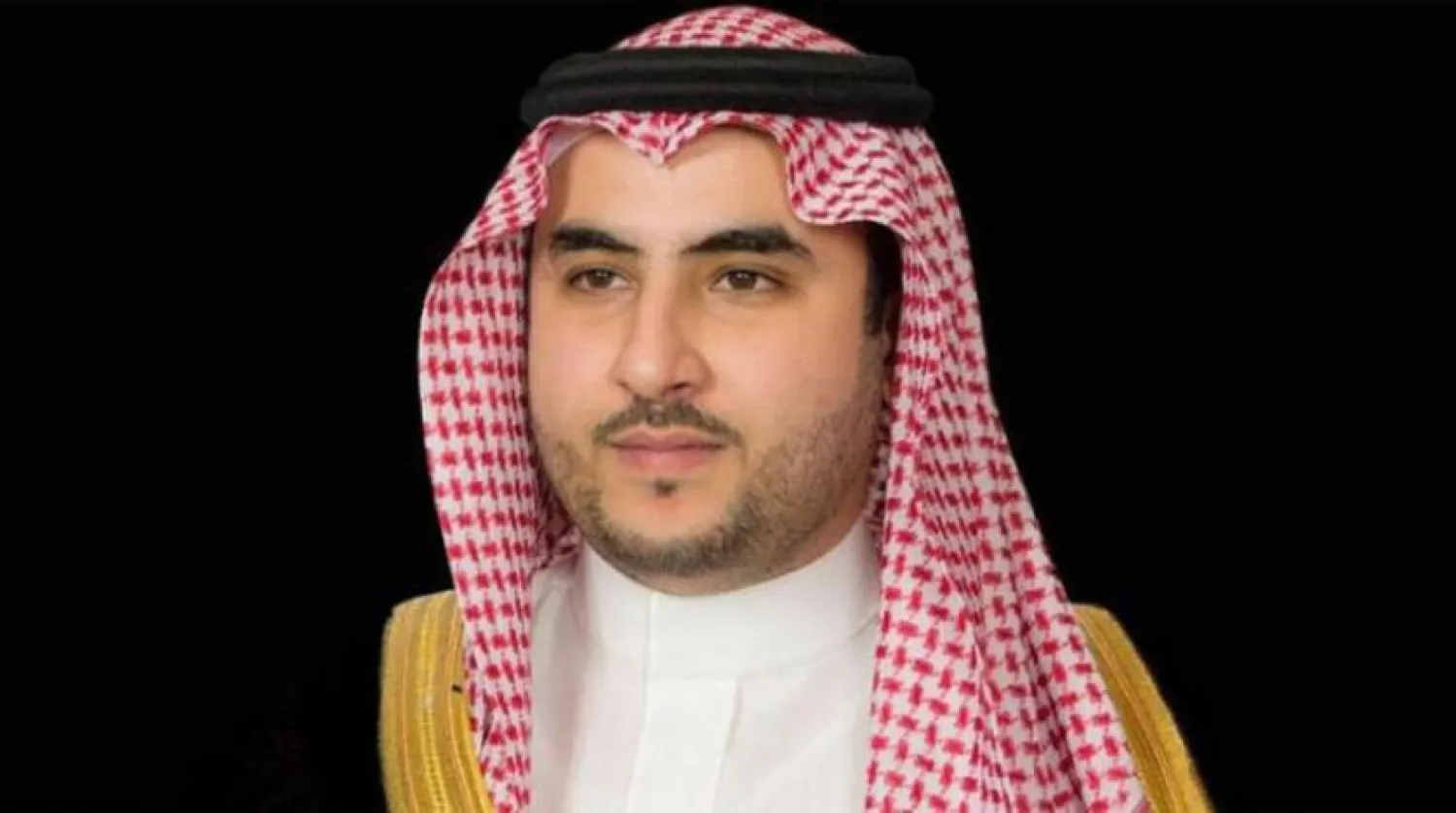

Prince Khalid Bin Salman: UN Report Illustrates Iran Regime’s Dark Vision

Saudi Arabia's Deputy Defense Minister Prince Khalid Bin Salman, Asharq Al-Awsat
TT

Prince Khalid Bin Salman: UN Report Illustrates Iran Regime’s Dark Vision

Saudi Arabia's Deputy Defense Minister Prince Khalid Bin Salman, Asharq Al-Awsat

Iranian involvement in attacks against Saudi Arabia reveals the regime’s intention for the region, said Saudi Arabia's Deputy Defense Minister Prince Khalid Bin Salman on Wednesday.

“The UN report confirming the Iranian regime's involvement in sabotage attacks on the Kingdom illustrates the regime’s dark vision for the region, while countries in our region work to promote positive relations, and provide stability and security,” Prince Khalid tweeted.

“The Kingdom's decision to request an independent UN investigation confirmed what we already knew about the Iranian regime. The international community must do its part in maintaining the arms embargo in order to end the crimes and hostility of this regime,” he added.

On Tuesday, the United Nations Security Council had discussed a report by UN Secretary-General Antonio Guterres that established that cruise missiles used in attacks on oil facilities and an international airport in Saudi Arabia last year were of “Iranian origin.”

The report included details that examined the wreckage of missiles and drones used in the attacks on Saudi oil facilities in Afif (central Saudi Arabia) in May 2019, the 2019 Abqaiq–Khurais attacks, and attacks on the Abha International Airport in June and August 2019.

The report also mentioned the implementation of UN resolution 2231, passed in 2015, regarding the nuclear deal with Iran.

Each of the US, France, Germany and the UK held Iran responsible for the attacks which targeted Saudi Aramco, and resulted in halving the production of the world’s largest crude oil exporter.

Earlier in the day, Saudi Minister of State for Foreign Affairs Adel Al-Jubeir said that the world is witnessing Iran’s growing aggressive behavior and the regime must stop its crimes.

“The United Nations report confirming Iran's involvement in the attack on our oil facilities highlights the dark picture known since 1979 about the Iranian regime, and the world today sees, hears and feels the growing aggressive behavior of this system,” Al-Jubeir said in a tweet.



Kuwait’s Military Says Air Defenses Are Responding to an Attack

A view of Kuwait City on June 2, 2026. (AFP)
TT

Kuwait’s Military Says Air Defenses Are Responding to an Attack

A view of Kuwait City on June 2, 2026. (AFP)

Kuwait’s military said on Tuesday its air defenses are responding to an attack.

The General Staff of the Kuwait Armed Forces said that explosions heard were a result of air defenses intercepting hostile attacks.

Iran has launched repeated attacks on Kuwait and other Gulf countries in recent days in response to US strikes.

The latest exchanges of fire have been triggered by Iran attacking commercial ships in the Strait of Hormuz.

There were no immediate details or reports of casualties or damage from Tuesday’s attack on Kuwait.


Arab Interior Ministers Council Condemns Houthi Terrorist Attack on Saudi Arabia's Southern Region

File photo of the Saudi flag/AAWSAT
TT

Arab Interior Ministers Council Condemns Houthi Terrorist Attack on Saudi Arabia's Southern Region

File photo of the Saudi flag/AAWSAT

The General Secretariat of the Arab Interior Ministers Council strongly condemned the terrorist attack carried out by the Houthi militia, which launched ballistic missiles toward the southern region of the Kingdom of Saudi Arabia yesterday evening.

In a statement, the secretariat condemned the deliberate criminal act, saying the Houthi militia sought to target civilians and civilian facilities, SPA reported.

The secretariat reiterated its call for firm action against such acts and for those responsible to be held accountable.

It also reaffirmed its full support for all measures taken by the Kingdom to confront these threats and safeguard its security, stability, and territorial integrity.


Saudi Arabia Affirms Its Complete Rejection of Iran's Destabilizing Behavior in the Region

Saudi Crown Prince Mohammed bin Salman bin Abdulaziz Al Saud - SPA
TT

Saudi Arabia Affirms Its Complete Rejection of Iran's Destabilizing Behavior in the Region

Saudi Crown Prince Mohammed bin Salman bin Abdulaziz Al Saud - SPA

Saudi Arabia strongly reaffirmed its categorical rejection of Iran's continued destabilizing conduct in the region and its violations of the principles of international law. This came during the Cabinet session chaired by Saudi Crown Prince and Prime Minister Prince Mohammed bin Salman, which was held on Tuesday in Jeddah.

The Crown Prince briefed the Cabinet on the contents of the phone call he received from US President Donald Trump, during which they reviewed areas of cooperation and discussed a number of regional and international issues, emphasizing their support for all efforts that contribute to achieving the region's security and stability.

He also informed the Cabinet of the results of his discussions with Prime Minister Mark Carney of Canada, which affirmed the commitment to strengthening and developing bilateral relations across all sectors, aiming for a future characterized by deeper cooperation. This cooperation is underpinned by mutual trust, close friendship, and the objectives stemming from Saudi Vision 2030 and Canada's growth agenda, which seek to build a stronger and more resilient economy for both countries, SPA reported.

The Cabinet praised the signing of memoranda of understanding during the official visit of the Canadian prime minister, which included the establishment of the Saudi-Canadian Coordination Council, cooperation in the energy sector, investment in artificial intelligence, and skills development.

It also commended the success of the Saudi Arabia-Canada Investment Forum, which resulted in the announcement of trade and investment agreements between government entities, companies, and institutions from both countries in the fields of mining, engineering, infrastructure, advanced industries, training and education, financial services, and information and communications technology.

In a statement to the Saudi Press Agency following the session, Minister of Human Resources and Social Development and Acting Minister of Media Ahmed Al-Rajhi said that after monitoring regional and international developments, the Cabinet strongly condemned Iran's repeated attacks on commercial vessels in the Strait of Hormuz, as well as on Kuwait, Bahrain, Qatar, the United Arab Emirates, Oman, and Jordan.

The Cabinet affirmed its complete rejection of Iran's continued destabilizing behavior in the region and its violations of international law, the charters of the United Nations and the Organization of Islamic Cooperation, and the principles of good neighborliness.

The Cabinet welcomed the outcomes of the meeting held in Riyadh between the Saudi and Iraqi sides, including Iraq's reaffirmation of its commitment not to allow its territory and airspace to be used as a launching pad for any acts or attacks targeting Saudi Arabia, the Gulf Cooperation Council countries, and other countries in the region. The Cabinet also commended the agreement to continue bilateral coordination in a manner that serves common interests.

The Cabinet welcomed the United States' announcement that it has begun procedures to remove the Syrian Arab Republic from the list of state sponsors of terrorism, a designation imposed in 1979, reiterating Saudi Arabia's support for the positive steps taken by the Syrian government to enhance security and stability, build state institutions, and fulfill the aspirations of its people.