


Indonesia 'Dog Doctor' Rescues Canines From Pandemic Peril

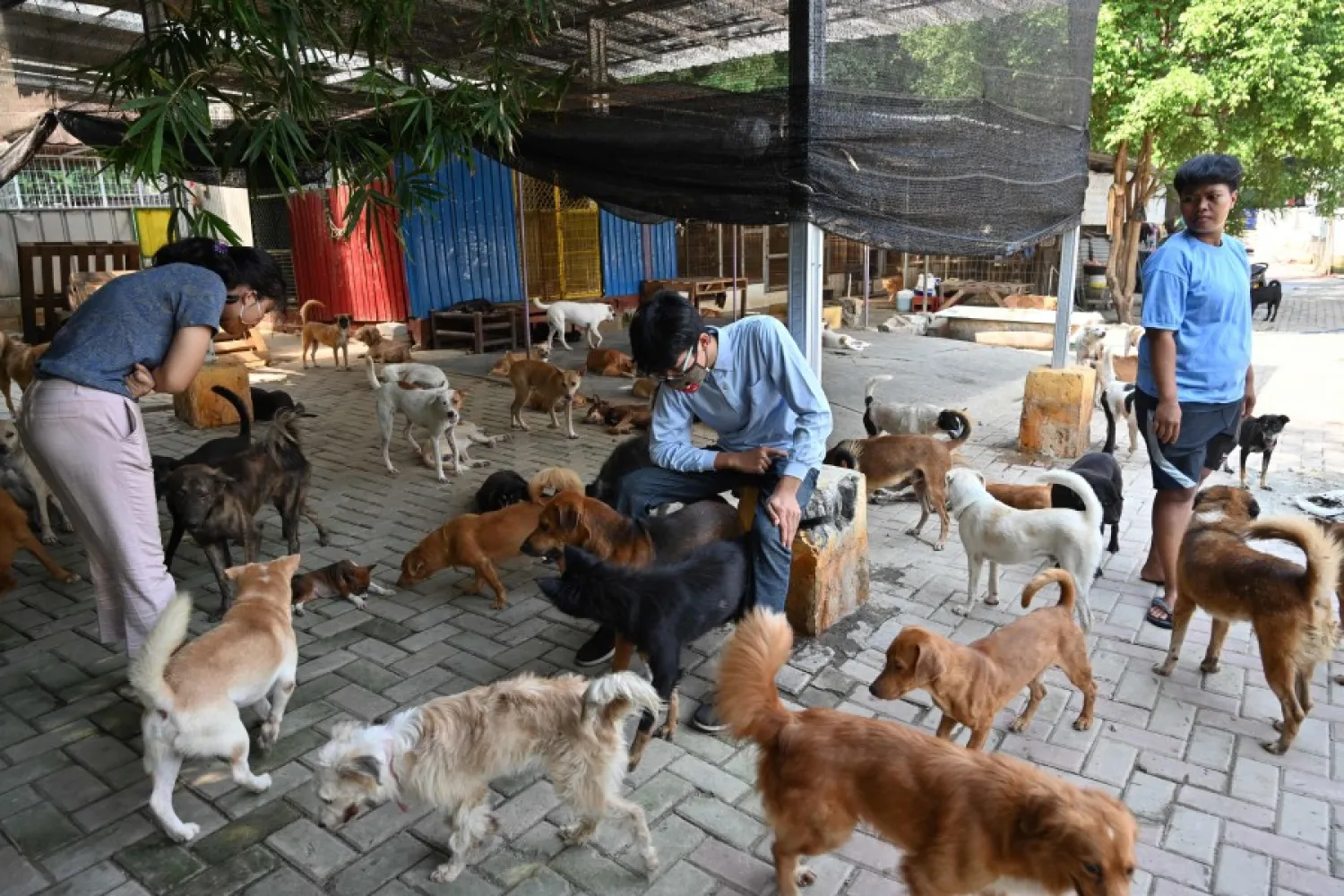
Indonesian doctor Susana Somali started confronting butchers after seeing a video of a pregnant dog about to be slaughtered | AFP
TT

Indonesia 'Dog Doctor' Rescues Canines From Pandemic Peril

Indonesian doctor Susana Somali started confronting butchers after seeing a video of a pregnant dog about to be slaughtered | AFP

Indonesian doctor Susana Somali and her staff cut tightly-bound plastic ropes off dozens of whimpering dogs rescued from the butcher's block after being sold or abandoned during the coronavirus pandemic.

Somali's sprawling Jakarta complex, home to about 1,400 canines, has become a refuge for at-risk animals as cash-strapped owners sell them into the Southeast Asian nation's controversial dog meat trade.

Mostly acting on tip-offs, Somali and her team hit the streets looking for stray dogs and butcher shops where more and more doomed animals are spending their last days howling in cramped cages.

Somali -- who juggles a day job testing COVID-19 samples at a local hospital -- started the shelter in an upscale Jakarta neighborhood more than a decade ago.

Back then, she rescued one or two dogs from a butcher each week. But that number has soared to as many as 20 in recent months as strays are snatched off the streets for their meat.

The 55-year-old mother of two negotiates with often unfriendly butchers, sometimes paying them cash or supplying other meat to secure the animals' release.

"The real battle isn't rescuing them from butchers, although that is always scary. The challenge is taking care of these dogs during the pandemic," Somali said.

- 'Tears in her eyes' -

Somali and about 30 staff at Pejaten Animal Shelter are struggling to care for a huge number of animals as donations plunge in the midst of the COVID-19 outbreak.

The money is crucial to help cover upwards of $29,000 in monthly expenses, including employee salaries and the daily cost of half a tonne of meat for the animals.

Myriad breeds, including huskies, pit bulls, and German shepherds, roam the 5,000 square meter (54,000 square foot) shelter, which Somali started in 2009.

She started confronting butchers after seeing a video of a pregnant dog about to be slaughtered.

"Someone posted images of this crying dog on social media and I saw the tears in her eyes," she said.

"That's when I became aware of the butchers."

Somali and her team rescued dozens of puppies bound for a local Korean eatery this month, but they don't always make it in time.

"I tried to reach the area but was told that the dog had already been (killed)," she said of one recent dash to a butcher's shop.

"It was a minute too late."

Animal welfare groups estimate as many as one million dogs are killed annually across Indonesia, with more than 100 restaurants in Jakarta alone serving their meat, according to government figures.

Dog is often a culinary speciality among Indonesia's non-Muslim minority groups.

- Snatched and killed -

The plight of Indonesia's dogs isn't limited to the megacity capital.

Animal welfare organization Four Paws has warned that thousands of strays in Bali were at risk of starving or being snatched by dog meat traders, as a plunge in tourism hammers the holiday island.

It is also a growing problem in other parts of Southeast Asia as traders prey on owners facing hard economic times, said Katherine Polak, a veterinarian with Four Paws.

"Animals are at a very heightened risk," she said.

"Some low-income people might be tempted to sell their pets."

For years, activists have called on the government to halt Indonesia's dog meat market -- a goal shared by Somali.

"Ending the dog meat trade may sound like a dream but everything starts from a dream," the shelter owner said.

"I'll always keep fighting."



Caffeinated Beverages May Help Protect the Brain, Study Says

A cup of coffee and a cappuccino are seen at a Juan Valdez store in Bogota, Colombia June 5, 2019. (Reuters)
TT

Caffeinated Beverages May Help Protect the Brain, Study Says

A cup of coffee and a cappuccino are seen at a Juan Valdez store in Bogota, Colombia June 5, 2019. (Reuters)

Drinking a few cups of caffeinated coffee or tea every day may help in a small way to preserve brain power and prevent dementia, researchers reported on Monday.

People with the highest daily intake of caffeinated coffee had an 18% lower risk of developing dementia compared to those with the lowest such intake, according to a study based on responses to questionnaires by 132,000 U.S. adults spanning four decades.

The study, published in JAMA, also found that the people with the highest intake had a lower rate - by nearly 2 percentage points - of ‌self-perceived memory ‌or thinking problems compared to those with ‌the ⁠lowest intake.

Results were ‌similar with caffeinated tea, but not with decaffeinated beverages, the researchers said.

While the findings are encouraging, the study does not prove caffeine helps protect the brain, they said.

The magnitude of caffeine's effect, if any, was small, and there are other better-documented ways to protect cognitive function as people age, study leader Dr. Daniel Wang ⁠of Harvard Medical School said in a statement.

Lifestyle factors linked with lower risks of ‌dementia include physical exercise, a healthy diet ‍and adequate sleep, according to previous ‍research.

"Our study suggests that caffeinated coffee or tea consumption can ‍be one piece of that puzzle," Wang said.

The findings were most pronounced in participants who consumed two to three cups of caffeinated coffee or one to two cups of caffeinated tea daily, the researchers reported.

Those who drank caffeinated coffee also showed better performance on some objective tests of cognitive function, according to the ⁠study funded by the National Institutes of Health.

Further research is needed to validate the factors and mechanisms responsible for the findings, the researchers said.

They noted that bioactive ingredients in coffee and tea such as caffeine and polyphenols have emerged as possible factors that reduce nerve cell inflammation and damage while protecting against cognitive decline.

"We also compared people with different genetic predispositions to developing dementia and saw the same results - meaning coffee or caffeine is likely equally beneficial for people with high and low genetic risk of developing ‌dementia," study coauthor Dr. Yu Zhang of the Harvard T.H. Chan School of Public Health said in a statement.


AlUla Announces Exceptional Ramadan Experiences

These programs come as part of efforts to enhance AlUla’s tourism experience - SPA
TT

AlUla Announces Exceptional Ramadan Experiences

These programs come as part of efforts to enhance AlUla’s tourism experience - SPA

AlUla Governorate is welcoming the holy month of Ramadan this year with a wide range of diverse tourism experiences that reflect the area’s distinctive character and rich cultural heritage, reinforcing its position as one of the Kingdom’s most prominent destinations to visit during the holy month.

During Ramadan, AlUla offers an integrated experience catering to different visitor preferences, including guided stargazing experiences, cultural events, and night markets, in addition to traditional dining experiences for Iftar and Suhoor, embodying the depth of AlUla’s cultural heritage and local identity.

The Ramadan programs in AlUla include a variety of standout events, such as Ramadan experiences at Maraya Hall, a cultural market, and live performances in the atmosphere of Ashar Valley, alongside heritage tours in AlUla Old Town that narrate stories of AlUla and its Ramadan customs, including the award-winning Incense Road Experience, SPA reported.

The programs also feature seasonal art exhibitions hosted across multiple cultural venues, including Design Space AlUla, the fourth edition of Desert X AlUla, and the Arduna exhibition at AlUla Oasis, in addition to experiences combining art, nature, and stargazing at Daimumah Oasis in collaboration with AlUla Manara.

Visitors are also offered tours to prominent archaeological sites, including Hegra, Dadan, and Jabal Ikmah, to explore ancient sites dating back centuries BCE and view unique rock inscriptions, as well as adventure experiences ranging from dinner and stargazing in Sharaan, hot-air balloon rides, mountain hiking trails, and safari tours.

These programs come as part of efforts to enhance AlUla’s tourism experience during the holy month of Ramadan and provide diverse options that meet visitor expectations, contributing to the growth of tourism activity and showcasing the governorate’s natural and cultural assets.


NCW Releases over 10,000 Animals under Reintroduction Programs

The releases carried out by the center over the past years included more than 80 priority wildlife species - SPA
TT

NCW Releases over 10,000 Animals under Reintroduction Programs

The releases carried out by the center over the past years included more than 80 priority wildlife species - SPA

The National Center for Wildlife (NCW) announced that the total number of wildlife animals released under its breeding and reintroduction programs for locally threatened species has exceeded 10,000 animals, an achievement reflecting the scale of the center’s sustained efforts to develop wildlife, restore ecosystems, and enhance biodiversity across various regions of the Kingdom.

The releases carried out by the center over the past years included more than 80 priority wildlife species, including reem gazelles (sand gazelles), Arabian oryx, Idmi gazelles, mountain ibex, houbara bustards, ostriches, and sandgrouse, as part of efforts aimed at supporting the recovery of natural populations of these species and enhancing their sustainability within their environmental and historical ranges, SPA reported.

CEO of NCW Dr. Mohammad Qurban noted that release operations are among the key tools for restoring ecosystems and reducing ecological imbalance, as the return of wildlife to their natural habitats contributes to protecting biodiversity and improving environmental quality, which in turn supports habitat integrity, the continuity of plant and animal components, and the enhancement of ecosystem functions over the long term.

NCW continues to implement its strategic plans to develop wildlife, protect endangered species, and enhance the efficiency of natural habitat management through expanding breeding programs, enhancing applied scientific research, building national capacities, and applying the best international practices in biodiversity management, in addition to raising environmental awareness, engaging local communities, and supporting eco-tourism, thereby contributing to achieving the objectives of the Saudi Green Initiative and Saudi Vision 2030, and the National Environment Strategy, toward thriving and sustainable wildlife, biodiversity, and ecosystems.
