

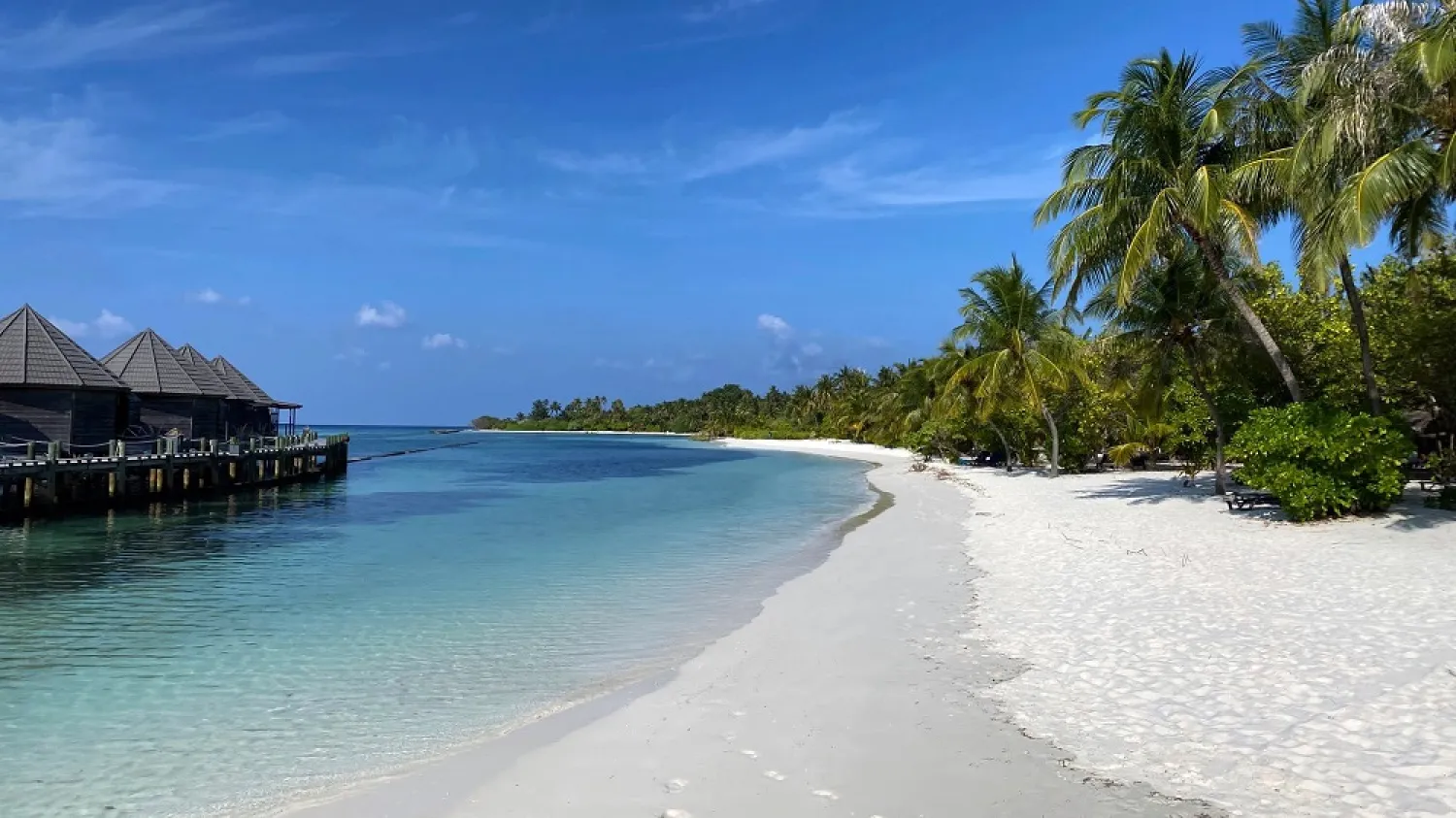

Maldives Reopens for Tourists in Push to Be a 'Virus Safe' Destination

The Maldives reopened its tourist resorts Wednesday. (AP)
TT

Maldives Reopens for Tourists in Push to Be a 'Virus Safe' Destination

The Maldives reopened its tourist resorts Wednesday. (AP)

The Maldives reopened its tourist resorts Wednesday and welcomed its first international flight in more than three months even as the Indian Ocean holiday hotspot records a steady rise in coronavirus infections.

Tourism is a major earner for the Maldives, a tropical island paradise popular with honeymooners and celebrities.

"The stronger our safety measures, the better chance we have of being hailed as a (coronavirus) safe destination," Economic Minister Fayyaz Ismail said as he welcomed the arrivals.

"I don't believe that we would need to reimpose a border lockdown."

Visitors are not required to be tested or carry virus-free certificates to enter the archipelago of 1,190 tiny coral islets.

Free tests will be offered to travelers who show symptoms of fever or coughing, the tourism ministry said.

They will also be offered a free test when they leave the Maldives.

Thirty-three out of 159 resorts in the archipelago said they would open from Wednesday, but some of them have yet to accept bookings.

So far, Qatar Airways, SriLankan Airlines, Emirates and Etihad have scheduled flights to the Maldives in July, the airport's operator said in a statement.

From Wednesday, SriLankan will operate three weekly services from Colombo, while Qatar Airways will operate a daily flight from Doha.

Emirates has scheduled flights from Dubai five times a week from Thursday until the end of August. Etihad is offering flights from Abu Dhabi bi-weekly from Saturday until July 28.

Several other airlines said they would resume flights from August, including Singapore Airlines and its regional wing SilkAir, Gulf Air, India's IndiGo and Hong Kong Airlines.

Edelweiss is planning to operate direct flights between Zurich and Male from late September, while Turkish Airlines is expected to resume flights from Istanbul via Colombo from October.

The reopening comes as the country reports a steady rise in virus cases.

The nation of 340,000 people has recorded just over 2,800 infections so far including 14 deaths.

Most of the cases have been among poor migrant laborers and locals in densely populated Male.

Tourists were stranded in the Maldives when international flights were halted from late March to combat the spread of the virus.

Most of them left by mid-April on government-organized or privately chartered flights.

The Maldives attracted a record 1.7 million foreign tourists last year, a 15 percent increase from 2018, according to the government.


AirAsia X Unveils Kuala Lumpur-Bahrain-London Route

FILE PHOTO: Planes from AirAsia are seen on the tarmac of Kuala Lumpur International Airport Terminal 2 (KLIA2) in Sepang, Malaysia, February 26, 2024. REUTERS/Hasnoor Hussain/File Photo
TT

AirAsia X Unveils Kuala Lumpur-Bahrain-London Route

FILE PHOTO: Planes from AirAsia are seen on the tarmac of Kuala Lumpur International Airport Terminal 2 (KLIA2) in Sepang, Malaysia, February 26, 2024. REUTERS/Hasnoor Hussain/File Photo

Malaysian budget carrier AirAsia X on Wednesday unveiled plans to resume flights from Kuala Lumpur to London via a new hub in Bahrain, using the extended range of narrow-body jets to stitch fresh routes alongside established carriers.

The service, due to start in June, would make Bahrain AirAsia X's first hub outside Asia, placing it within reach of busy markets in Southeast Asia, the Middle East and Europe.

It also marks a ‌return to ‌the British capital more than a decade after the airline suspended ‌non-stop ⁠flights from Kuala Lumpur ⁠and retired its Airbus A340 jets.

Co-founder Tony Fernandes said Bahrain could become a regional gateway for underserved secondary cities across Asia, Africa and Europe.

"While ... of course London is a very emotional destination for many people in Southeast Asia, the real aim is to have a bunch of A321s flying maybe 15 times a day to Bahrain," he told Reuters in an interview.

"From Bahrain, you connect to Africa and Europe with a big emphasis ⁠on creating connectivity that doesn't exist."

The move follows Asia's ‌largest low-cost carrier completing its acquisition of the short-haul ‌aviation business from parent Capital A, bringing the group's seven airlines under one umbrella.

Fernandes, also CEO ‌of Capital A, stressed the importance of the Airbus A321XLR, an extra-long-range narrow-body aircraft ‌he said would let the airline replicate its Asian low-cost model on intercontinental routes.

"That aircraft enables me to start thinking we can do what we did in Asia to Europe and Africa," he said, citing potential secondary routes such as Penang to Cologne or Prague.

AirAsia plans to ‌redeploy its larger A330s to longer routes while building up the Bahrain hub, with possible African destinations including the Maghreb region, Egypt, ⁠Morocco, Tanzania and Kenya. ⁠A Bangkok-to-Europe route is also under consideration.

Fernandes played down direct competition with Gulf carriers such as Emirates and Qatar Airways, positioning AirAsia X as a budget option aimed at a different market.

"I'm all about stimulating a new market," he said. "We've got into our little playground (of) 3 billion people, most of them have not been to Europe."


Von der Leyen: EU Must 'Tear Down Barriers' to Become 'Global Giant'

(FILES) European Commission President Ursula von der Leyen delivers a speech in Brussels, on January 22, 2026. (Photo by NICOLAS TUCAT / AFP)
TT

Von der Leyen: EU Must 'Tear Down Barriers' to Become 'Global Giant'

(FILES) European Commission President Ursula von der Leyen delivers a speech in Brussels, on January 22, 2026. (Photo by NICOLAS TUCAT / AFP)

The EU must "tear down the barriers" that prevent it from becoming a truly global economic giant, European Commission chief Ursula von der Leyen said Wednesday, ahead of leaders' talks on making the 27-nation bloc more competitive.

"Our companies need capital right now. So let's get it done this year," the commission president told EU lawmakers as she outlined key steps to bridging the gap with China and the United States.

"We have to make progress one way or the other to tear down the barriers that prevent us from being a true global giant," she said, calling the current system "fragmentation on steroids."

Reviving the moribund EU economy has taken on greater urgency in the face of geopolitical shocks, from US President Donald Trump's threats and tariffs upending the global trading to his push to seize Greenland from Denmark.

AFP said that Von der Leyen delivered her message before heading with EU leaders including France's Emmanuel Macron and Germany's Friedrich Merz to a gathering of industry executives in Antwerp, held on the eve of a summit on bolstering the bloc's economy.

A key issue identified by the EU is the fact that European companies face difficulties accessing capital to scale up, unlike their American counterparts.

To tackle this, Plan A would be to advance together as 27 states, von der Leyen said, but if they cannot reach agreement, the EU should consider "enhanced cooperation" between those countries that want to.

Von der Leyen said Europe should ramp up its competitiveness by "stepping up production" on the continent and "by expanding our network of reliable partners", pointing to the importance of signing trade agreements.

After recent deals with South American bloc Mercosur and India, she said more were on their way -- with Australia, Thailand, the Philippines and the United Arab Emirates.

One of the biggest -- and most debated -- proposals for boosting the EU's economy is to favor European firms over foreign rivals in "strategic" fields, which von der Leyen supports.

"In strategic sectors, European preference is a necessary instrument... that will contribute to strengthen Europe's own production base," she said -- while cautioning against a "one-size-fits-all" approach.

France has been spearheading the push, but some EU nations like Sweden are wary of veering into protectionism and warn Brussels against going too far.

The EU executive will also next month propose the 28th regime, also known as "EU Inc", a voluntary set of rules for businesses that would apply across the European Union and would not be linked to any particular country.

Brussels argues this would make it easier for companies to work across the EU, since the fragmented market is often blamed for why the economy is not better.

The commission is also engaged in a massive effort to cut red tape for firms, which complain EU rules make it harder to do business -- drawing accusations from critics that Brussels is watering down key legislation on climate in particular.


Saco: Saudi Retail Market Remains Promising, Digital Transformation Key to Expanding Market Share

A Saco branch in Riyadh. Asharq Al-Awsat
TT

Saco: Saudi Retail Market Remains Promising, Digital Transformation Key to Expanding Market Share

A Saco branch in Riyadh. Asharq Al-Awsat

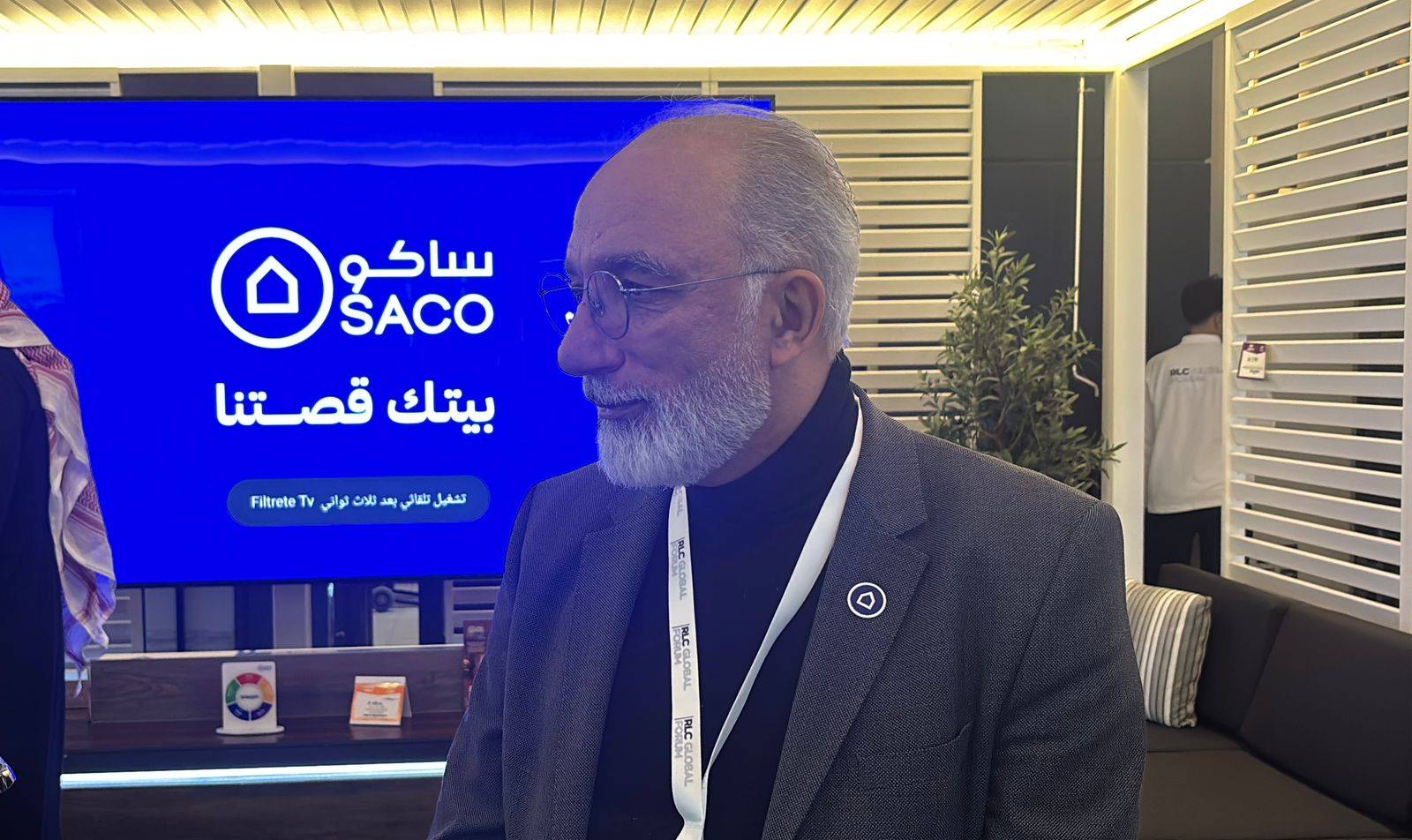
Saudi Arabia’s retail sector is undergoing deep structural changes driven by the rapid global expansion of e-commerce, prompting local companies to reassess their operational and financial strategies to remain competitive, according to Abdel-Salam Bdeir, chief executive of Saco.

Speaking to Asharq Al-Awsat on the sidelines of the RLC Global Forum 2026, Bdeir said the Saudi retail market reached an estimated SAR385 billion ($102.7 billion) in 2025. Of this total, SAR35 billion ($9.3 billion) came from domestic e-commerce, while traditional physical stores accounted for about SAR350 billion ($93.4 billion). By comparison, the market stood at roughly SAR400 billion ($106.7 billion) in 2018.

Bdeir said competition from global e-commerce platforms and intensifying price pressures are not challenges facing Saco alone, but rather the retail sector, wholesale trade, and the Saudi economy more broadly. He noted that international platforms have captured most of the sector’s growth in recent years, eroding local market share and affecting sales and employment.

Employment in the retail sector declined from more than 2 million jobs in 2016 to around 1.7 million in 2025, he stated. Purchases from global platforms exceeded SAR65 billion ($17.3 billion) in 2025, representing more than 16 percent of the Saudi retail market.

Bdeir added that the absence of customs duties on most such orders costs the state between SAR6 billion and SAR10 billion annually in lost customs revenues alone, in addition to the impact on zakat, employment, and broader economic returns.


Abdel-Salam Bdeir, chief executive of Saco (Asharq Al-Awsat)

New Strategy

In response to these challenges, Bdeir said Saco completed the repayment of all its loans in 2025, leaving the company debt-free and better positioned to manage interest-rate volatility.

He added that the company has secured financing of SAR150 million ($40 million) that has yet to be drawn, providing additional flexibility to support future investments.

Saco returned to profitability in the fourth quarter of 2024 with a margin of 16.8 percent and has remained profitable for five consecutive quarters. Bdeir attributed this performance to a successful operational restructuring that included closing underperforming branches.

Digital transformation has also gained momentum, with online sales rising from 4 percent of total revenue in 2023 to 10 percent in 2025. The Saco CEO said digital channels are recording annual growth rates exceeding 50 to 60 percent.

Cost Control and Compliance

Bdeir noted that higher logistics, diesel, and service costs have weighed on profit margins, prompting the company to renegotiate terms with delivery providers. He also stressed the importance of compliance with local quality and safety standards, noting that some global platforms do not adhere to these regulations, creating potential risks for consumers.

Founded in 1984, Saco is the Kingdom’s largest home improvement solutions provider, operating 35 stores across 19 cities, including five megastores, and offering more than 45,000 products. The company has been publicly listed since 2015 and has acquired a logistics services provider to enhance operational efficiency, while focusing on developing young Saudi talent in line with Vision 2030.

Saco’s shares were trading at around SAR 26.5 ($7.1) by the close of trading on Tuesday.

Global Forum

The RLC Global Forum serves as a key platform for senior executives and decision-makers to discuss major shifts in consumer behavior, digital innovation strategies, the future of smart retail, and pathways to sustainable growth.

The 2026 edition, held under the theme “Growth Crossroads,” took place over two days in Riyadh, reflecting Saudi Arabia’s growing role as a regional hub for retail and commercial investment.
