

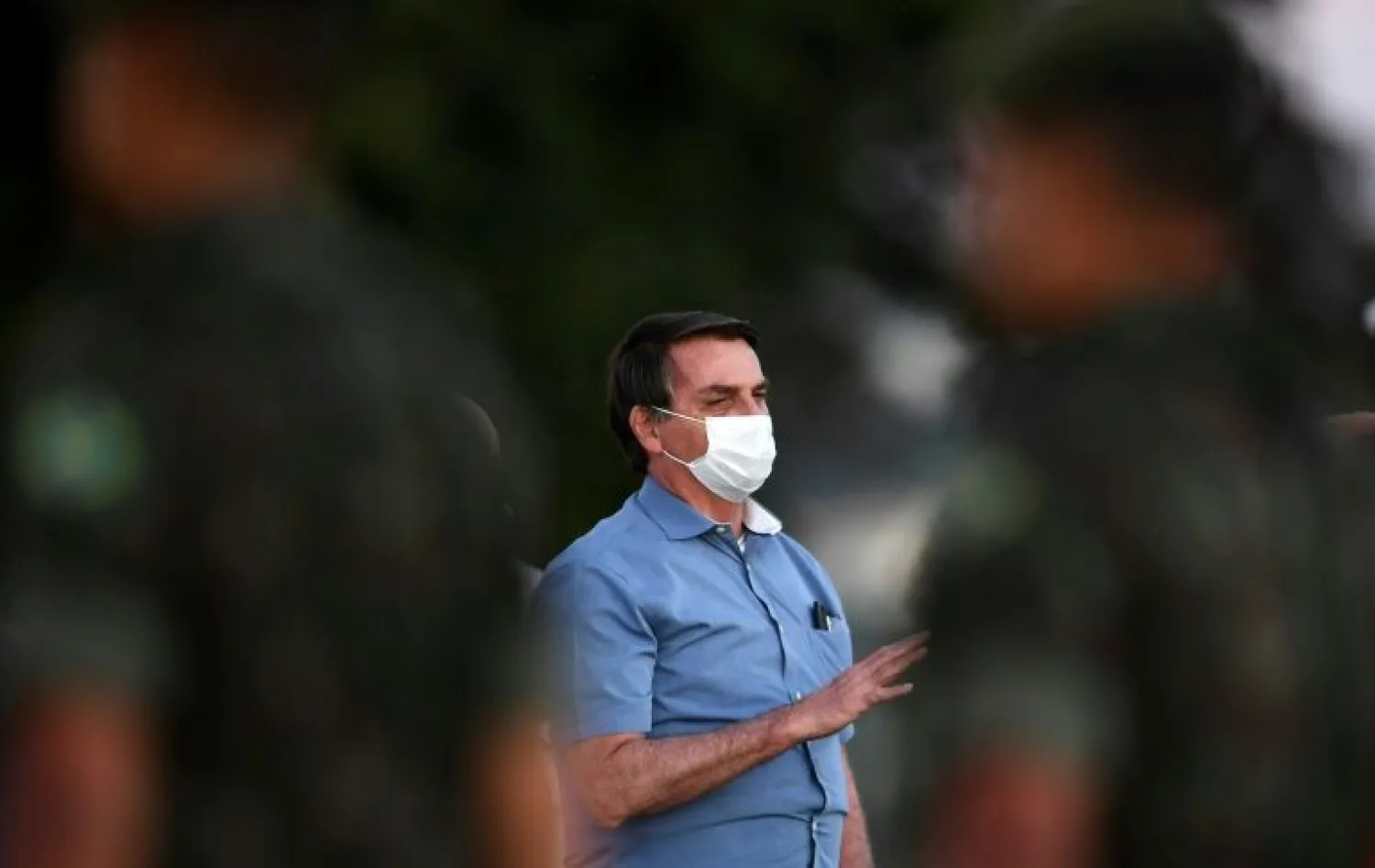

Twitter, Facebook Block Accounts of Bolsonaro Allies

16 of Brazilian President Jair Bolsonaro's allies and supporters have had their Facebook and Twitter blocked in the country | AFP
TT

Twitter, Facebook Block Accounts of Bolsonaro Allies

16 of Brazilian President Jair Bolsonaro's allies and supporters have had their Facebook and Twitter blocked in the country | AFP

Twitter and Facebook suspended the accounts Friday of 16 allies of Brazilian President Jair Bolsonaro after a Supreme Court judge ordered them blocked as part of a probe into an alleged disinformation campaign.

Tension has been soaring between the far-right leader and the court, which is investigating allegations that members of his inner circle ran a social media campaign to discredit the court, as well as slander and threaten its judges.

The two US social media giants are also facing increasing pressure to act more aggressively against hate speech and false information on their platforms.

Justice Alexandre de Moraes said in his court order -- which enforced an earlier May ruling -- the accounts must be blocked to stop "the ongoing dissemination of fake news, slanderous accusations, threats, and crimes" against the court.

The affected accounts include high-profile figures such as conservative former lawmaker Roberto Jefferson, business magnate Luciano Hang and far-right activist Sara Winter.

Visitors to their Facebook and Twitter pages in Brazil, though not other countries, saw messages indicating they were blocked.

"This content isn't available right now," read their Facebook pages.

A Twitter notice explained: "Account withheld in Brazil in response to a legal demand".

A linked message said the company "was compelled to withhold the original Tweet in response to a valid legal demand, such as a court order."

The owners of the blocked accounts reacted furiously.

Winter called the court order worthy of a "dictatorship," while Jefferson drew a comparison to Nazi Germany.


Israel Approves Emergency Military Funding as Iran War Rages

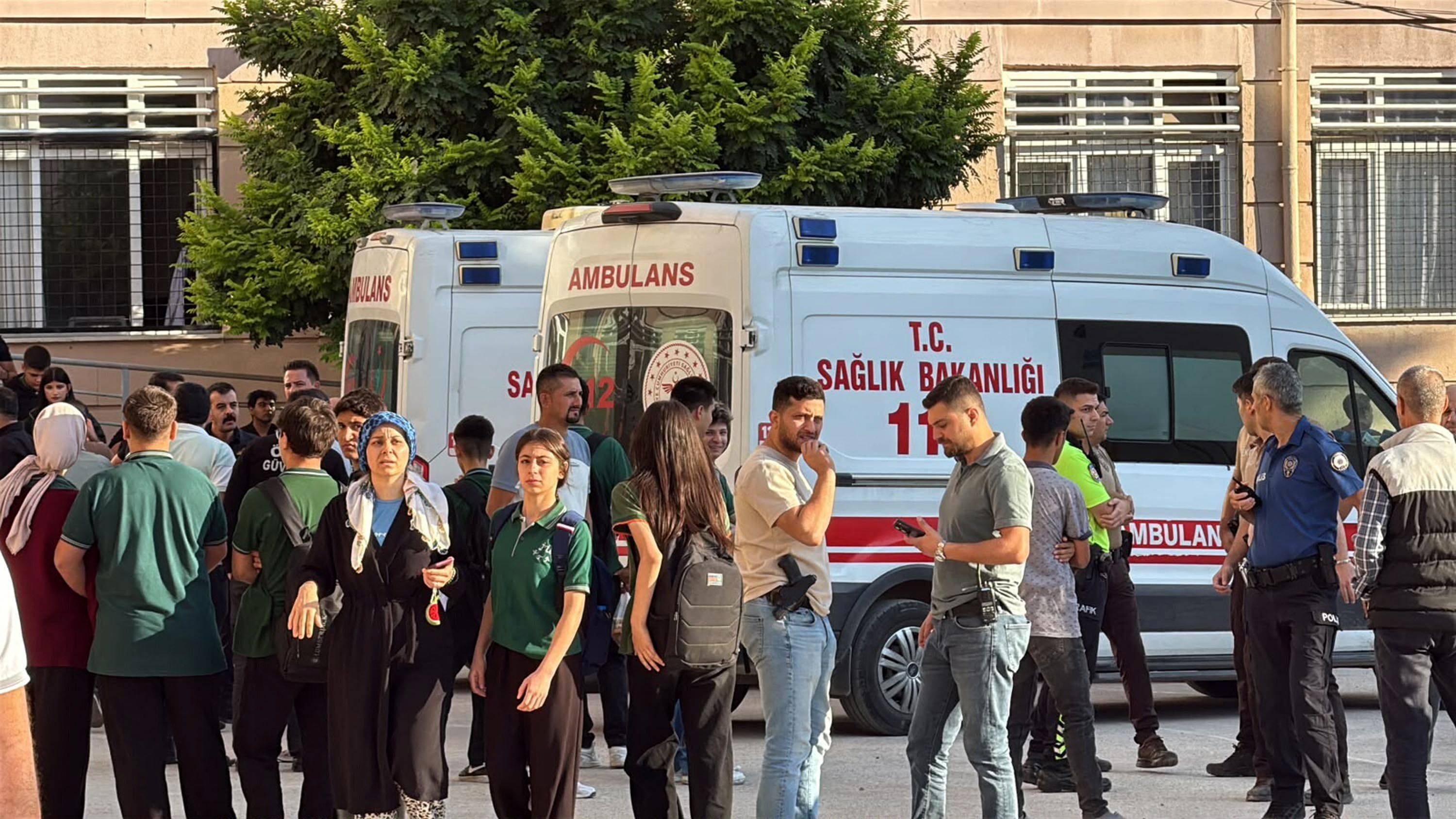
Israeli security forces check the damage to cars after a rocket strike in Holon, in the Tel Aviv District on March 15, 2026. (AFP)
TT

Israel Approves Emergency Military Funding as Iran War Rages

Israeli security forces check the damage to cars after a rocket strike in Holon, in the Tel Aviv District on March 15, 2026. (AFP)

Israel has approved an $827-million emergency budget allocation for military purchases, Israeli media reported Sunday, as the war with Iran entered its third week.

The 2.6-billion-shekel package was approved over the weekend by cabinet ministers during a telephone meeting, the daily Haaretz reported.

It will be used for "security purchases" and to address "urgent needs", it said, without providing further details.

A finance ministry document circulated to all ministers and reported by several media outlets, including Channel 12, said that "given the intensity of the fighting" the additional budget allocation was necessary.

"An urgent and immediate need has arisen to provide an operational response, including the acquisition of munitions, the procurement of advanced weapons systems and the replenishment of critical combat stocks," the document said.

The document added that the move constituted "an exceptional emergency decision intended solely to address needs arising from the conduct of the fighting".

The funds will be drawn from the state budget, totaling $222 billion and approved by the government on March 12, and expected to be adopted by the Knesset by March 31, according to the reports.

The government of Prime Minister Benjamin Netanyahu has not yet officially commented on the measure or specified what purchases the funds will cover.

Since the Israeli-US bombardments against Iran that began on February 28, Israel has been targeted daily by Iranian ballistic missile fire, which the military has mostly intercepted using its missile defense systems.

According to Haaretz, citing security officials, 250 ballistic missiles had been fired by Iran at Israel as of March 13.

Twelve people have been killed in Israel by missiles or falling debris since the start of the war, according to an AFP tally of figures given by Israeli authorities and first responders.


UK Says Vital to 'De-escalate' Middle East War

FILE PHOTO: An aerial view of the island of Qeshm, separated from the Iranian mainland by the Clarence Strait, in the Strait of Hormuz, December 10, 2023. REUTERS/Stringer/File Photo
TT

UK Says Vital to 'De-escalate' Middle East War

FILE PHOTO: An aerial view of the island of Qeshm, separated from the Iranian mainland by the Clarence Strait, in the Strait of Hormuz, December 10, 2023. REUTERS/Stringer/File Photo

A British minister on Sunday said it was essential to calm the situation in the Middle East after US President Donald Trump demanded that other nations help protect world oil supplies passing through the Strait of Hormuz.

The "plan now has to be to de-escalate the conflict", Energy Security Minister Ed Miliband told the BBC.

A spokesperson for the defense ministry said late on Saturday: "As we've said previously, we are currently discussing with our allies and partners a range of options to ensure the security of shipping in the region."


South Korea 'Closely Monitoring' Trump Call to Send Warships to Hormuz

A tanker sails in the Gulf, near the Strait of Hormuz, as seen from northern Ras al-Khaimah, near the border with Oman’s Musandam governance, amid the US-Israeli conflict with Iran, in United Arab Emirates, March 11, 2026. (Reuters)
TT

South Korea 'Closely Monitoring' Trump Call to Send Warships to Hormuz

A tanker sails in the Gulf, near the Strait of Hormuz, as seen from northern Ras al-Khaimah, near the border with Oman’s Musandam governance, amid the US-Israeli conflict with Iran, in United Arab Emirates, March 11, 2026. (Reuters)

South Korea said on Sunday it was paying close attention to US President Donald Trump's call for Seoul and other countries to send warships to help protect oil supplies passing through the Strait of Hormuz. 

Since US-Israeli forces launched a war against Iran on Feburary 28, Tehran has responded with attacks and threats that have nearly halted shipping in the strait, through which one-fifth of global oil supplies normally passes. 

After earlier vowing that the US Navy would begin escorting tankers through the waterway, Trump said on social media on Saturday that "Many Countries" would also send warships to keep it open, naming South Korea and Japan among others. 

But after a senior Japanese official said on Sunday that Tokyo maintained a high threshold for such a move, Seoul also refrained from making any explicit commitments. 

"We are closely monitoring President Trump's remarks on social media and will carefully consider the matter in close consultation with the United States," a South Korean presidential official told AFP. 

Seoul was "comprehensively considering and exploring various measures... to ensure the safety of energy transport routes", the official said. 

Like other Asian economies, South Korea relies heavily on energy imports, including through the Strait of Hormuz. 

The war has already prompted Seoul to impose a fuel price cap to ease pressure on its energy supply, the first such measure since 1997. 

Earlier on Sunday, Takayuki Kobayashi, the policy chief of Japanese Prime Minister Sanae Takaichi's ruling Liberal Democratic Party, said the bar for sending Japanese navy ships to the region under existing laws was "extremely high". 

"Legally speaking, we do not rule out the possibility, but given the current situation in which this conflict is ongoing, I believe this is something that must be considered with great caution," he said on the public broadcaster NHK's political debate program. 

Trump also mentioned China, France and Britain by name in his post, saying he hoped countries "that are affected by this artificial constraint will send Ships to the area".
