

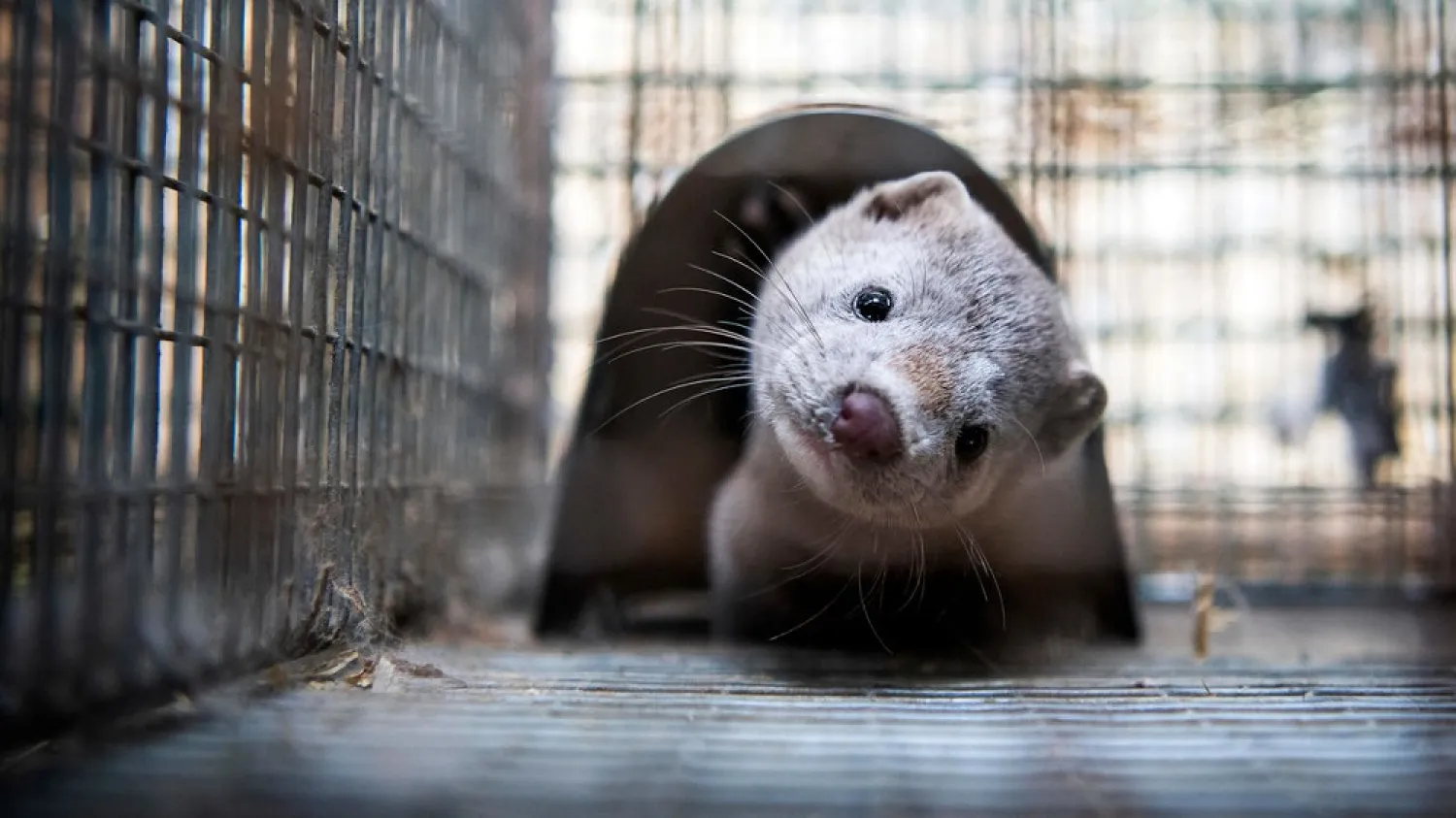

Scientists Study Coronavirus Outbreaks among Minks in Europe

Coronavirus outbreaks at mink farms in Spain and the Netherlands have scientists digging into how the animals got infected
TT

Scientists Study Coronavirus Outbreaks among Minks in Europe

Coronavirus outbreaks at mink farms in Spain and the Netherlands have scientists digging into how the animals got infected

Coronavirus outbreaks at mink farms in Spain and the Netherlands have scientists digging into how the animals got infected and if they can spread it to people.

In the meantime, authorities have killed more than 1 million minks at breeding farms in both countries as a precaution.

The virus that first infected people in China late last year came from an animal source, probably bats, and later spread from person to person, as other coronaviruses had done in the past. Some animals, including cats, tigers and dogs, have picked up the new coronavirus from people, but there hasn’t been a documented case of animals spreading it back to humans.

The outbreaks among the minks on the farms in the Netherlands and Spain likely started with infected workers, although officials aren’t certain. But it also is “plausible” that some workers later caught the virus back from the minks, the Dutch government and a researcher said, and scientists are exploring whether that was the case and how much of a threat such a spread might be.

The outbreak at the Spanish mink farm near La Puebla de Valverde, a village of 500 people, was discovered after seven of the 14 employees, including the owner, tested positive in late May, said Joaquín Olona, regional chief of agriculture and environment. Two other employees got infected even after the operation was shut down.

More than 92,000 minks were ordered killed at the farm in the Aragon region of northeastern Spain, with nine out of 10 animals estimated to have contracted the virus.

After the Dutch outbreaks began in April, professor Wim van der Poel, a veterinarian who studies viruses at Wageningen University and Research, determined that the virus strain in the animals was similar to the one circulating among humans.

“We assumed it was possible that it would be transmitted back to people again,” the virus expert said, and that's what appeared to have happened with at least two of the infected workers.

Richard Ostfeld, a researcher at the Cary Institute of Ecosystem Studies in Millbrook, New York, said that if confirmed, these would be the first known instances of animal-to-human transmission.

“With the evidence for farmed mink-to-human transmission, we definitely need to be concerned with the potential for domesticated animals that are infected to pass on their infection to us,” Ostfeld said by email.

The US Centers for Disease Control and Prevention says some coronaviruses that infect animals can be spread to humans and then spread between people, but it adds that this is rare.

Both the World Health Organization and the Paris-based World Organization for Animal Health, are studying the transmission of the virus between animals and people. Several universities and research institutes also are examining the issue.

The WHO has noted that the transmission on the mink breeding farms could have happened both ways. But WHO's Dr. Maria Van Kerkhove said at a news conference last month that such transmission was “very limited.”

“This gives us some clues about which animals may be susceptible to infection and this will help us as we learn more about the potential animal reservoir of (the virus),” she said, referring to cases in the Netherlands and Denmark, another major producer of mink fur.

While scientists think the virus originated in bats, it may have passed through another animal before infecting people. A WHO team is currently in China, planning to study the issue.

More than 1.1 million minks have been killed on 26 Dutch farms that recorded outbreaks, according to the Netherlands Food and Consumer Product Safety Authority. The government announced Thursday that minks at a 27th farm also were infected and would be killed. The Netherlands, which has some 160 mink farms, is the world’s fourth-biggest producer of the prized fur after Denmark, China and Poland, according to Wim Verhagen, director of the Dutch federation of fur farmers. Spain has 38 active mink breeding operations, most of them in northwestern Galicia.

Both Spain and the Netherlands have tightened hygiene protocols at mink farms and banned transportation of the animals and visits to the buildings where they are kept.

China, which produces about a third of the mink fur market, and the United States have not reported any virus outbreaks in minks or animals at other farms.



iRead Marathon Records over 6.5 Million Pages Read

Participants agreed that the number of pages read was not merely a numerical milestone - SPA
TT

iRead Marathon Records over 6.5 Million Pages Read

Participants agreed that the number of pages read was not merely a numerical milestone - SPA

The fifth edition of the iRead Marathon achieved a remarkable milestone, surpassing 6.5 million pages read over three consecutive days, in a cultural setting that reaffirmed reading as a collective practice with impact beyond the moment.

Hosted at the Library of the King Abdulaziz Center for World Culture (Ithra) and held in parallel with 52 libraries across 13 Arab countries, including digital libraries participating for the first time, the marathon reflected the transformation of libraries into open, inclusive spaces that transcend physical boundaries and accommodate diverse readers and formats.

Participants agreed that the number of pages read was not merely a numerical milestone, but a reflection of growing engagement and a deepening belief in reading as a daily, shared activity accessible to all, free from elitism or narrow specialization.

Pages were read in multiple languages and formats, united by a common conviction that reading remains a powerful way to build genuine connections and foster knowledge-based bonds across geographically distant yet intellectually aligned communities, SPA reported.

The marathon also underscored its humanitarian and environmental dimension, as every 100 pages read is linked to the planting of one tree, translating this edition’s outcome into a pledge of more than 65,000 trees. This simple equation connects knowledge with sustainability, turning reading into a tangible, real-world contribution.

The involvement of digital libraries marked a notable development, expanding access, strengthening engagement, and reinforcing the library’s ability to adapt to technological change without compromising its cultural role. Integrating print and digital reading added a contemporary dimension to the marathon while preserving its core spirit of gathering around the book.

With the conclusion of the iRead Marathon, the experience proved to be more than a temporary event, becoming a cultural moment that raised fundamental questions about reading’s role in shaping awareness and the capacity of cultural initiatives to create lasting impact. Three days confirmed that reading, when practiced collectively, can serve as a meeting point and the start of a longer cultural journey.


Imam Turki bin Abdullah Royal Reserve Launches Fifth Beekeeping Season

Jazan’s Annual Honey Festival - File Photo/SPA
TT

Imam Turki bin Abdullah Royal Reserve Launches Fifth Beekeeping Season

Jazan’s Annual Honey Festival - File Photo/SPA

The Imam Turki bin Abdullah Royal Nature Reserve Development Authority launched the fifth annual beekeeping season for 2026 as part of its programs to empower the local community and regulate beekeeping activities within the reserve.

The launch aligns with the authority's objectives of biodiversity conservation, the promotion of sustainable environmental practices, and the generation of economic returns for beekeepers, SPA reported.

The authority explained that this year’s beekeeping season comprises three main periods associated with spring flowers, acacia, and Sidr, with the start date of each period serving as the official deadline for submitting participation applications.

The authority encouraged all interested beekeepers to review the season details and attend the scheduled virtual meetings to ensure organized participation in accordance with the approved regulations and the specified dates for each season.


Hail Municipality Named Arab Green City For 2024-2025

The achievement establishes Hail as a leading Arab model for sustainable urban development - SPA
TT

Hail Municipality Named Arab Green City For 2024-2025

The achievement establishes Hail as a leading Arab model for sustainable urban development - SPA

The Hail Region Municipality has secured first place in the Arab Green City award for 2024-2025 at the 15th session of the Arab Towns Organization.

This recognition honors the municipality’s commitment to environmental sustainability, the expansion of green spaces, and the implementation of urban practices that elevate the quality of life, SPA reported.

The award follows a series of strategic environmental initiatives, including large-scale afforestation, the modernization of public parks, and the adoption of eco-friendly solutions to enhance the urban landscape and resource efficiency.

By aligning its projects with the sustainability goals of Saudi Vision 2030, the municipality continues to foster a healthy and safe environment for residents and visitors.

This achievement establishes Hail as a leading Arab model for sustainable urban development.