Israel Plans Settlements That Would Isolate West Bank
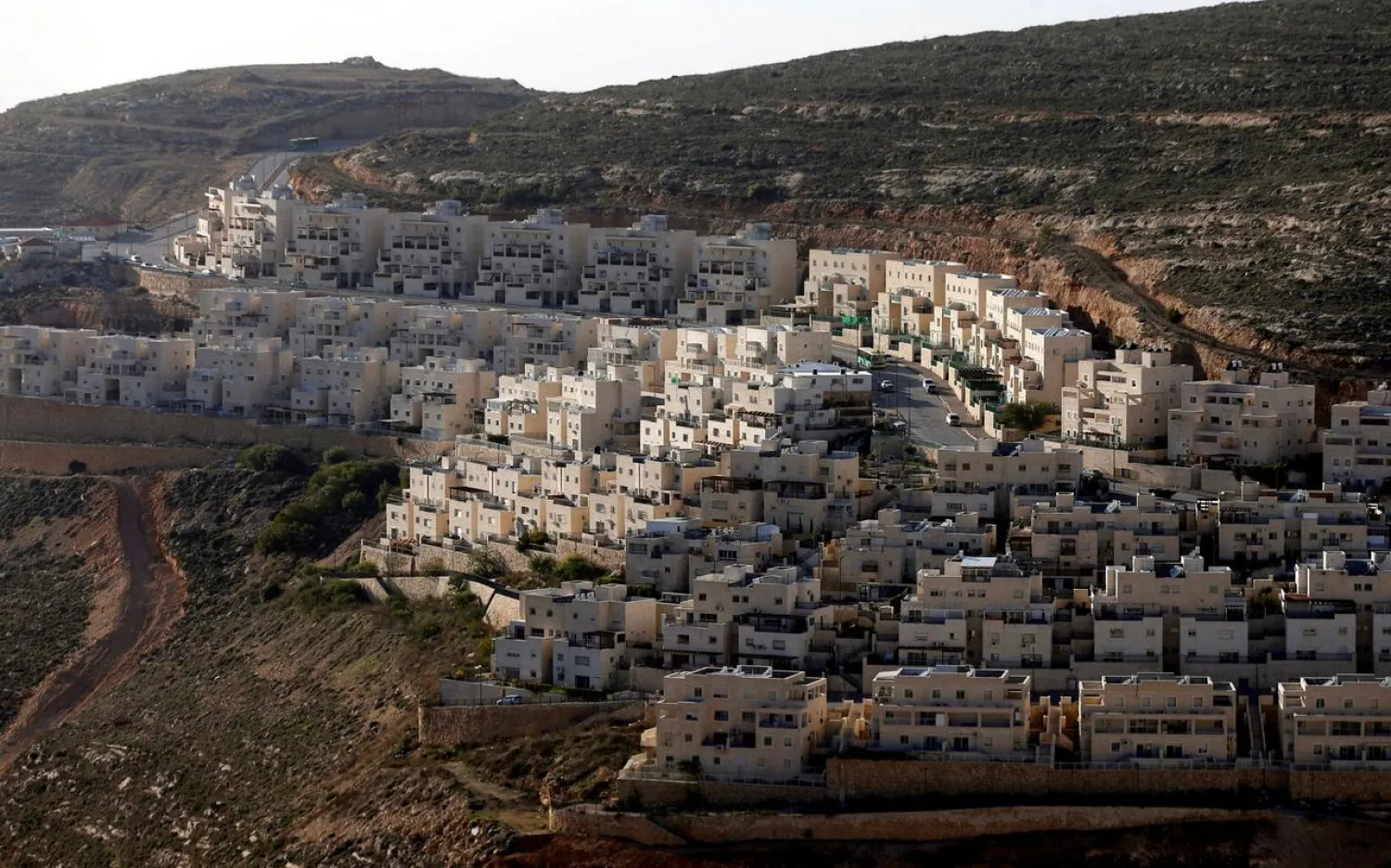
General view of houses of the Israeli settlement of Givat Ze'ev, in the occupied West Bank February 7, 2017. REUTERS/Ammar Awad/File Photo
The Palestinian Liberation Organization's (PLO) National Bureau for Defending the Land and Resisting Settlements said that the occupation's authorities announced a plan to establish a thousand new settlement units on the lands of al-Tur, Anata, al-Eizariya and abu Dis villages in occupied al-Quds, indicating that the plan will completely isolate the occupied East al-Quds area from the rest of the West Bank.
The E1 master plan was approved in 1999. It covers approximately 1,200 hectares of land – most of which Israel declared as state land in a legally dubious procedure. During the 1990s these lands were made part of the jurisdiction of the settlement of Ma'ale Adumim, so it now encompasses approximately 4,800 hectares.
The plan, known as East 1 or E-1, will cut off the northern part of the West Bank from the southern party and pose as a major obstacle to the creation of a Palestinian state.
The implementation of construction plans in E1 will create an urban bloc between Ma’ale Adumim and Jerusalem, exacerbate the isolation of East Jerusalem from the rest of the West Bank, and disrupt the territorial contiguity between the northern and southern parts of the West Bank.
According to the Palestinian Authority (PA), this project represents a threat – it warned several times that it would take steps in case Israel implemented the plan.
NGO Ir Amim revealed that this project destroys Bedouin communities that reside in East Jerusalem, and along the zone till Jordan Valley.
Fear of Another War Weighs on Lebanon amid Regional Tensionshttps://english.aawsat.com/arab-world/5332629-fear-another-war-weighs-lebanon-amid-regional-tensions
Fear of Another War Weighs on Lebanon amid Regional Tensions
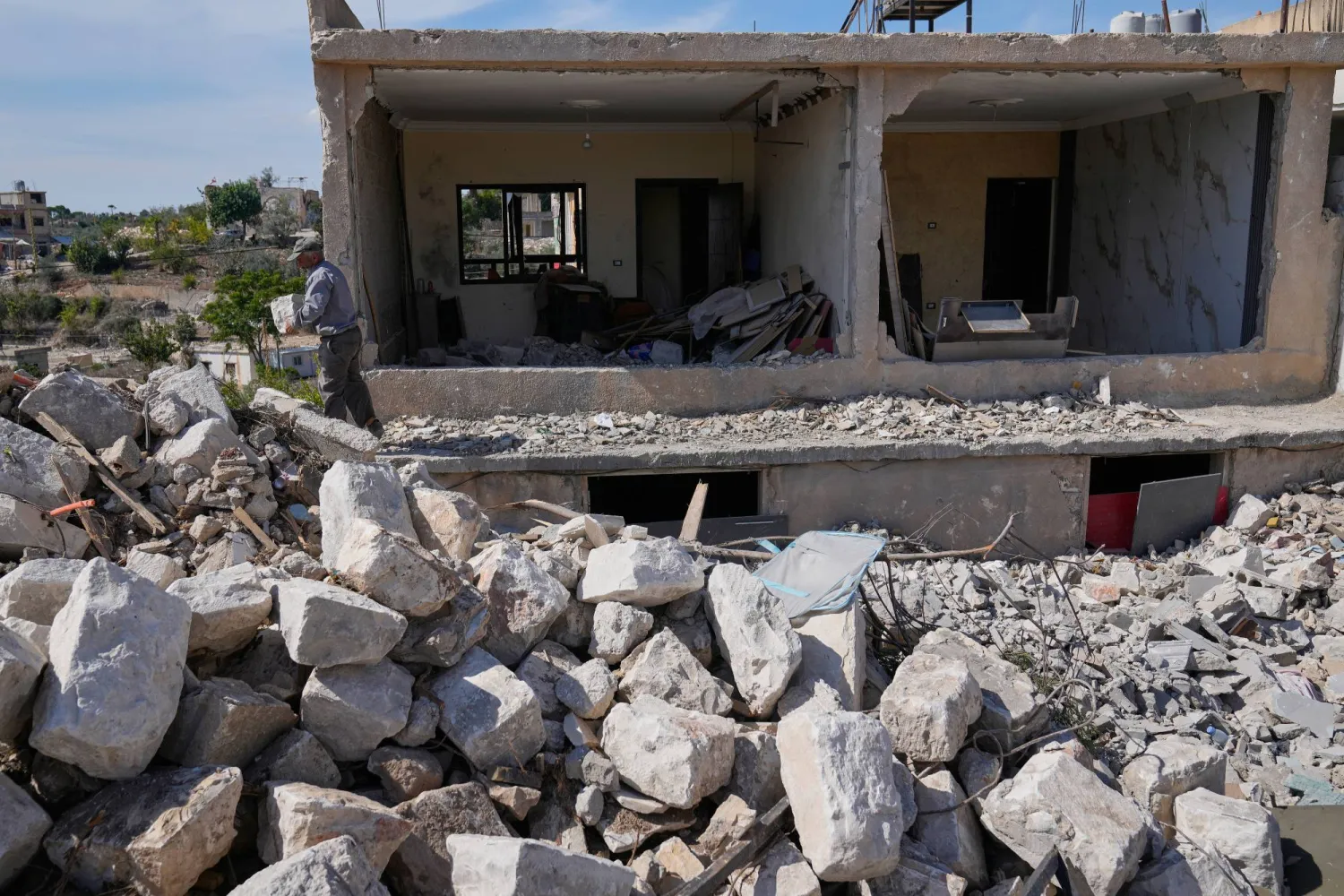
A man removes debris from his destroyed house, in Zawtar al-Gharbiyeh village, southern Lebanon, Tuesday, Oct. 20, 2026. (AP)
Lebanese people are once again confronting the possibility of war as mounting regional tensions raise fears that their country could be drawn into a wider conflict, either through Hezbollah’s involvement in a conflict involving Iran or renewed fighting with Israel.
The uncertainty is compounded by Washington’s unresolved decision on whether to resume military operations against Iran, Hezbollah’s silence over how it might respond and the Lebanese state’s inability to ensure the country remains outside the regional confrontation.
Deputy Prime Minister Tarek Mitri acknowledged “serious concerns” that a full-scale regional war could turn Lebanon into one of its battlegrounds, but cautioned that there was no concrete information pointing to such an outcome.
“We are still dealing with analysis and possibilities, not information,” he told Asharq Al-Awsat, noting that even those directly involved in mediation between Washington and Tehran lacked definitive answers.
Mitri denied that official delegations visiting Lebanon recently had advised authorities to prepare for war.
The decision to resume hostilities, he explained, would ultimately depend on US President Donald Trump, Iran’s response and Israel’s position.
“The war against Lebanon has not stopped in the first place. What we fear is that it will intensify again,” he said.
Asked about the government’s preparations for another round of fighting, Mitri pointed to its limited resources. “The state is doing everything it can on the relief front, but our capabilities are extremely limited.”
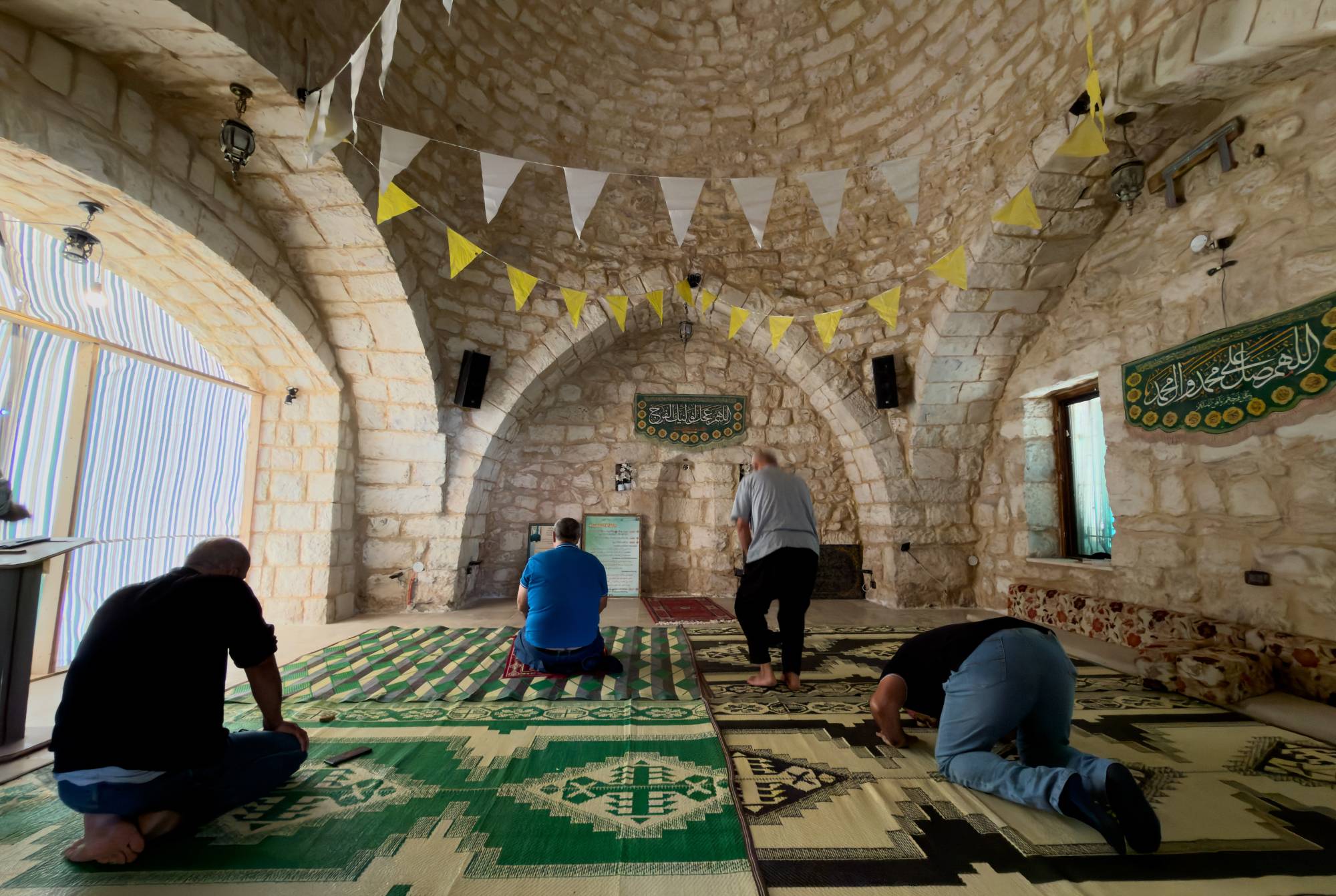
People pray inside a mosque in Zawtar al-Gharbiyeh village, southern Lebanon, Tuesday, Oct. 20, 2026. (AP)
Hezbollah remains silent
Iran-backed Hezbollah has given little indication of whether it would join a broader confrontation if Washington resumed its military campaign against Iran.
Reports suggest the group is making military and relief preparations in anticipation of renewed hostilities. Unconfirmed accounts have also said that Iran instructed Hezbollah to raise its military readiness.
Political analyst Qassem Kassir, who closely follows Hezbollah’s position, said the group had been preparing for the possibility of fresh Israeli attacks since the previous war ended.
“After every war, there is a review of what happened, lessons are drawn and preparations are made for any future confrontation,” he told Asharq Al-Awsat.
Such measures were only natural given Israel’s continuing attacks on Lebanon, he explained. But Kassir warned against drawing conclusions about Hezbollah’s intentions in the event of a US-Iranian confrontation, noting that even the likelihood of such a conflict remained uncertain.
“Even if war breaks out, many questions remain. What kind of war would it be? What would its repercussions be? How might it develop?” he wondered.
Hezbollah does not announce its decisions in advance, he explained. Its response would depend on the nature and scale of any fighting.
While preparations for different scenarios were to be expected, Kassir said there were no signs on the ground of an impending large-scale conflict.
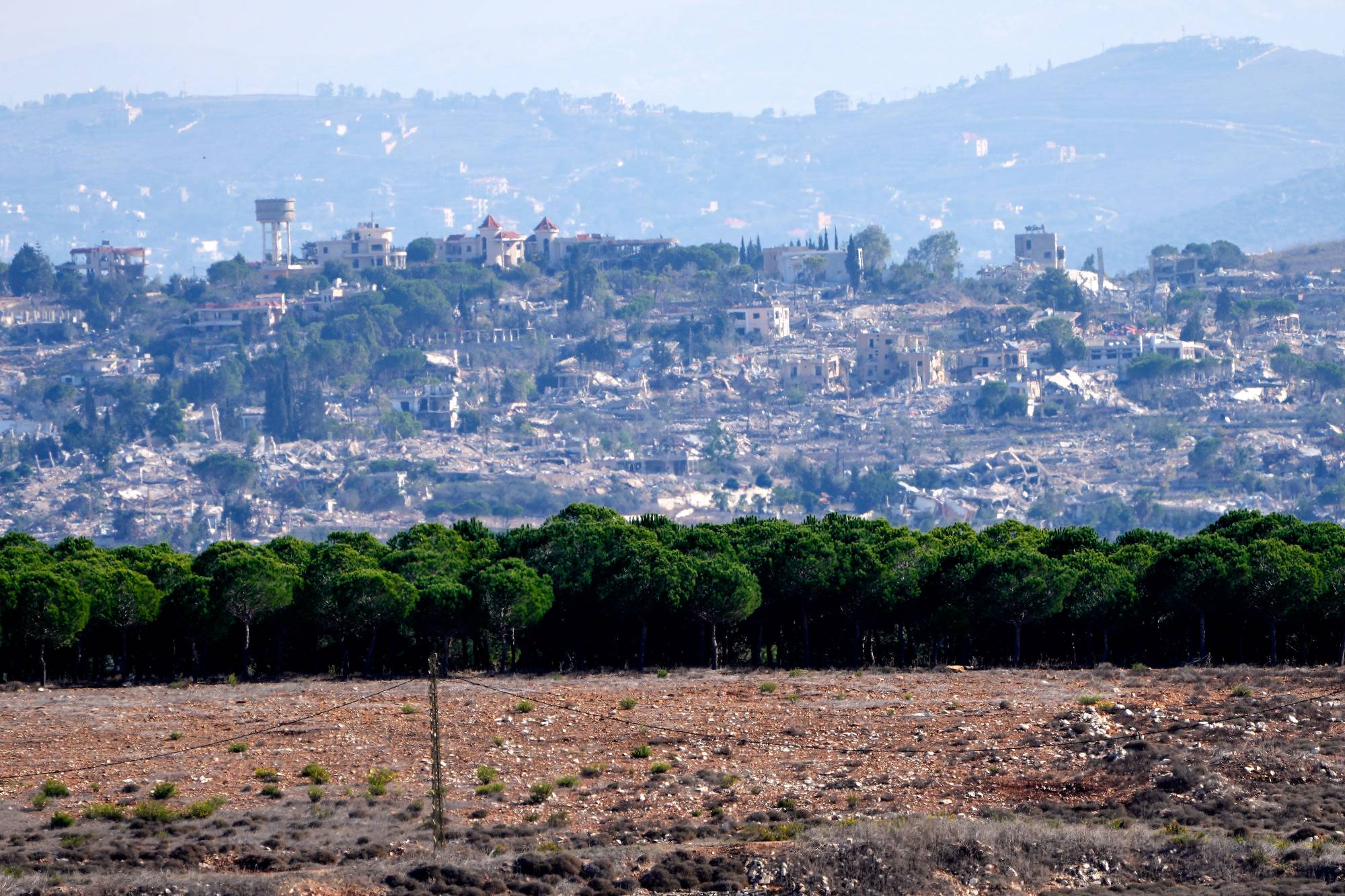
Demolished houses by Israeli forces in Kfar Tebnit village, are seen from Zawtar al-Gharbiyeh, southern Lebanon, Tuesday, Oct. 20, 2026. (AP)
Displacement fears
The anxiety is already shaping decisions among residents of South Lebanon and Beirut’s southern suburbs.
Those who can afford it continue to rent apartments in Mount Lebanon, the Iqlim al-Kharroub area and other locations considered safer when clashes between Hezbollah and Israel erupt.
For families who remain in vulnerable areas, the fear of returning to emergency shelters has become a constant concern.
Fatima M., 41, who works at a shopping center on the outskirts of Beirut’s southern suburbs, recalled taking refuge in Amchit, about 40 kilometers north of the capital, during earlier fighting.
“We are genuinely afraid of being displaced again,” she told Asharq Al-Awsat.
“I work in the southern suburbs, but the shelter where I stayed was in Amchit. We cannot endure any more tragedies or disasters. It is time for us to live in peace, like everyone else.”
Lebanon still has 63 shelters housing displaced people, including 44 educational institutions and 11 institutes and other facilities affiliated with the Education Ministry.
Ministry sources told Asharq Al-Awsat that buildings no longer used for teaching had been made available for emergency accommodation.
Political Talks Ease Tensions Over Seized Hezbollah Explosives in Lebanonhttps://english.aawsat.com/arab-world/5332626-political-talks-ease-tensions-over-seized-hezbollah-explosives-lebanon
Political Talks Ease Tensions Over Seized Hezbollah Explosives in Lebanon
Prime Minister Nawaf Salaf (The office of the Prime Minister)
Intensive political contacts ahead of Thursday’s Lebanese cabinet meeting helped defuse tensions over a shipment of Hezbollah explosives seized in Dahr al-Baydar, amid a dispute over whether the case should be referred to the country’s highest criminal court.
Justice Minister Adel Nassar has insisted on referring the case to the Judicial Council, a move opposed by Parliament Speaker Nabih Berri and Hezbollah amid concerns over its potential repercussions for Lebanon.
The dispute unfolded as President Joseph Aoun praised security agencies for their efforts to maintain order, while Prime Minister Nawaf Salam reaffirmed the state’s exclusive authority over weapons and decisions of war and peace.
“No one can impose any limits on us other than those set by law,” Salam declared, stressing that national security and public safety must take precedence.
Aoun calls for restraint
Opening the cabinet session, Aoun welcomed Berri’s position that the Lebanese Army was a “red line,” along with his commitment to civil peace, dialogue and understanding.
He described these principles as essential to protecting Lebanon amid mounting regional tensions.
“The challenges facing the region are enormous, and I hope they do not lead to escalation or an explosion,” Aoun warned.
He urged political leaders and ministers to exercise wisdom and restraint to shield Lebanon, already burdened by severe economic difficulties, from any further regional upheaval.
Salam: State monopoly on arms is nonnegotiable
Salam reiterated that the state’s monopoly on weapons and its exclusive authority to decide on war and peace were established principles no longer open to debate.
He grounded that position in Lebanon’s constitution, its laws, the Taif Agreement, UN Security Council Resolution 1701 and the November 2024 cessation-of-hostilities agreement.
Under the latter agreement, he explained, only the Lebanese Army, Internal Security Forces, General Security, State Security, Customs and municipal police are authorized to carry weapons.
Salam maintained that Hezbollah was being asked only to honor commitments it had already accepted, “nothing more, nothing less.”
He recalled that the government had instructed the army to prepare a plan to establish the state’s monopoly on arms, welcomed the plan last September and reaffirmed in March the need to complete its implementation across Lebanon.
“No one, whoever they may be, has the authority or jurisdiction to reconsider this except the Council of Ministers,” he emphasized.
Turning to explosives seized in Dahr al-Baydar and Qasr, the prime minister warned that storing or transporting weapons outside legally authorized institutions, regardless of the justification, violated the law and government decisions and endangered public safety.
Such violations warranted security investigations, judicial prosecution and the harshest penalties against those responsible, he argued.
“Nothing can take precedence over the country’s safety and the security of its citizens,” Salam declared.
Efforts to contain dispute
Nassar’s push to refer the explosives case to the Judicial Council has the backing of ministers from the Lebanese Forces and Kataeb parties.
However, reports indicated that Berri had received assurances the referral would not proceed following intensified contacts aimed at containing the disagreement.
On Wednesday evening, the speaker announced that ministers representing Hezbollah and its Shiite ally, the Amal Movement, would attend the cabinet session.
The political maneuvering came amid reports that Hezbollah could respond to a referral by mobilizing supporters in the streets.
The Judicial Council is an exceptional criminal court with jurisdiction over specified offenses, including crimes against the internal or external security of the state and certain offences that threaten public safety.
Cases do not automatically fall under its authority. Referral requires a cabinet decree issued on the justice minister’s recommendation, making the decision a politically sensitive matter within the government.
Israeli Military Says Killed Two After West Bank Shootinghttps://english.aawsat.com/arab-world/5332586-israeli-military-says-killed-two-after-west-bank-shooting
Israeli soldiers and emergency personnel gather near ambulances following a shooting attack near Yehuda Junction, near Hebron, in the occupied West Bank, Friday, Oct. 23, 2026. (AP)
TT
TT
Israeli Military Says Killed Two After West Bank Shooting
Israeli soldiers and emergency personnel gather near ambulances following a shooting attack near Yehuda Junction, near Hebron, in the occupied West Bank, Friday, Oct. 23, 2026. (AP)
Israeli troops on Friday shot dead two suspected Palestinian assailants in the West Bank after a shooting that left at least five people wounded, officials said.
Footage shared by rescuers showed a lifeless body in casual attire on the ground next to a petrol station as Israeli troops patrolled in all directions.
The Israeli military said soldiers had rushed to the Judea Junction area near the flashpoint city of Hebron after the early-morning shooting attack.
"Israeli soldiers eliminated two terrorists and continue searches in the area," it said in a statement.
The initial shooting wounded five people, two of whom were in critical condition, said Magen David Adom, Israel's emergency medical rescue service.
The incident comes as tensions soar in the West Bank, including over attacks by extremist Israeli settlers against Palestinian olive harvesters, and days ahead of Israeli elections.
لم تشترك بعد
انشئ حساباً خاصاً بك لتحصل على أخبار مخصصة لك ولتتمتع بخاصية حفظ المقالات وتتلقى نشراتنا البريدية المتنوعة