Using Technology to Serve Those Suffering in Beirut

Using Technology to Serve Those Suffering in Beirut
TT

Using Technology to Serve Those Suffering in Beirut

Using Technology to Serve Those Suffering in Beirut

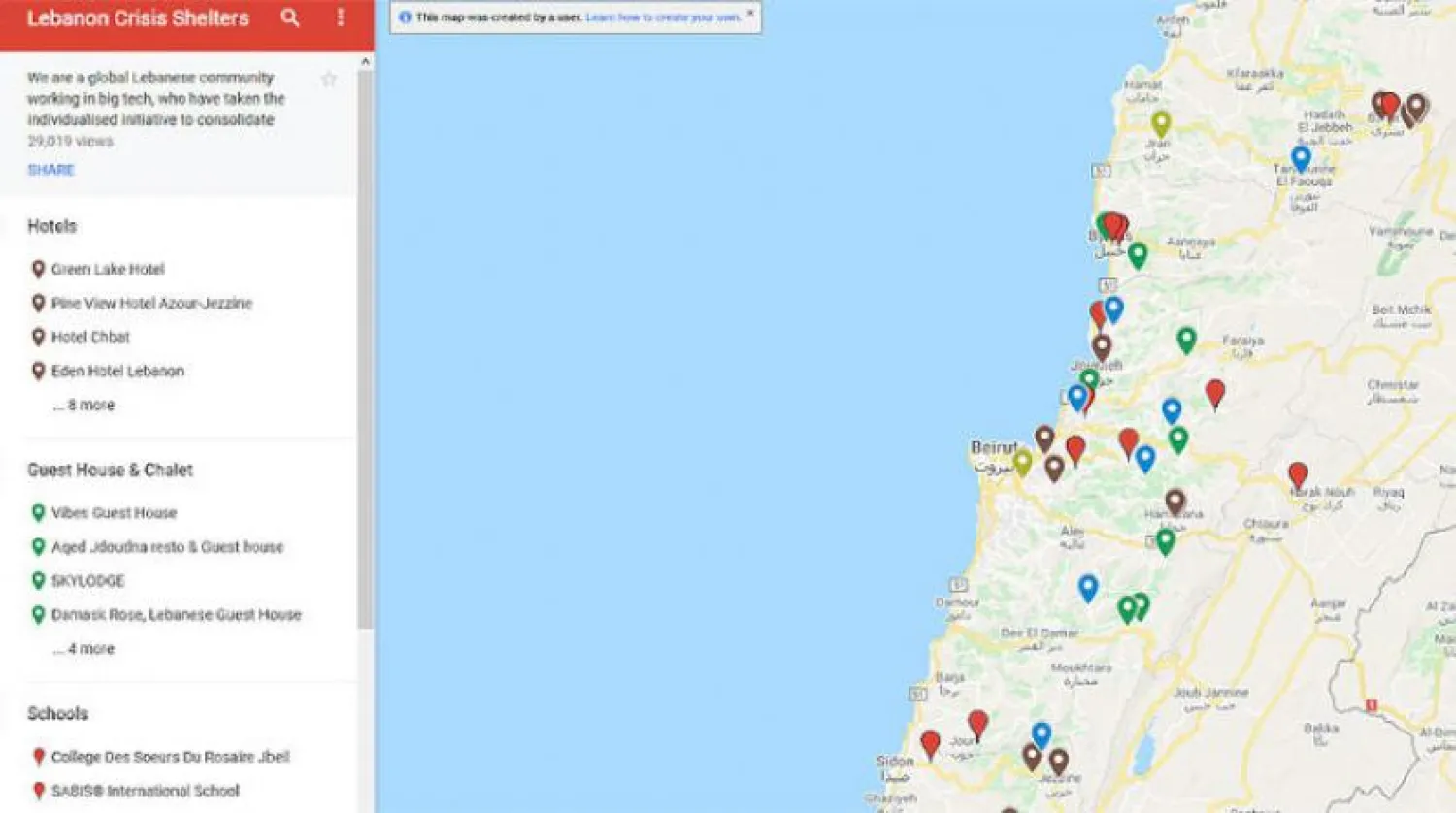
Many of Beirut’s residents continue to suffer from last Tuesday’s explosion. In response, a group from Google volunteered to develop a comprehensive directory of all hotels, guesthouses, monasteries, and schools that are ready to receive displaced families. After double checking the provided information, the locations were posted on Google Maps so that anyone can access them.

Upon accessing this map, a list of shelters and their locations will appear. When users click on one of the shelters, details such as contact information and directions appear, along with pictures of some of the places. This map is named "Lebanon Crisis Shelters" . The interactive map can be accessed at bit.ly/30FV21P.

At the time of writing, the list included 40 shelters, hotels, homes, schools, monasteries, boarding houses, and non-governmental organizations. These places are distributed throughout Lebanon, with shelters in places including Baskinta, Baabda, Roumieh, Zahle, Baalak, Hammana, Ehden, Zouk Mosbeh, Kesrouan, Adama, Sin El Fil, Bashri, Al Arz, Mansouriya, Jezzine, Balat, Alita Jbeil, Freydis El Chouf, Al Mukhles, Al Salimah, Majdal Al Moouch, Kiffan, Al Mashmousha, Khenchara, Haret Al Balan, Deek Al Mahdi, Al Salahia and Ain Dara Al Barouk. The group will add more shelter and after validating the information presented about them.

Talking about the role of technology in crises, Google offers the "SOS Alerts" feature, which aims to provide easy and quick access to essential information in times of crisis. This feature gathers information from webpages, social networks, and Google applications. It highlights them in search results pages and maps. Additional information is provided from local or international authorities, according to the type of crisis. Emergency phone numbers, maps, official pages, translations, the places where users can make blood and in-kind donations, and other essential information is provided.

Google takes several aspects into consideration, such as the state of Internet connection in the affected area, the availability of instructions from governments and various authorities, and other factors. This information is usually provided in the predominant language of the affected area, along with English. The data is displayed to users on the map of the affected area. If the user is in an area far from the affected area, only relevant information will appear when searching for information related to the crisis. As an example, users who live far from the crisis will not see emergency phone numbers, but rather links to donate. To verify the information presented, Google assigns field teams to gather information from local authorities, eyewitnesses, trusted media, and non-governmental agencies.


Sudan’s Muslim Brotherhood at a Crossroads

Ali Ahmed Karti, Secretary General of the Sudanese Islamic Movement. (Facebook)
TT

Sudan’s Muslim Brotherhood at a Crossroads

Ali Ahmed Karti, Secretary General of the Sudanese Islamic Movement. (Facebook)

Sudan is passing through an exceptionally complex phase as the war enters its fourth year and military and political alliances continue to shift at a rapid pace. With factions that have defected from the Rapid Support Forces (RSF) joining the Sudanese Armed Forces, alongside the Joint Forces of Darfur’s armed movements, the Sudan Shield Forces, and formations linked to the Islamist movement, a new balance of power is gradually emerging within the anti-RSF camp.

This evolving landscape reflects a temporary convergence of interests among actors that differ sharply in their backgrounds, objectives, and visions for Sudan’s future. While confronting the RSF remains the primary factor uniting these forces, underlying political and military differences raise serious questions about the durability of their alliance.

Sudan’s history suggests that wartime coalitions do not necessarily evolve into stable partnerships in peacetime. Instead, they often become arenas for new struggles over influence, power, and postwar arrangements. Understanding the emerging balance of forces is therefore crucial to assessing whether cooperation or confrontation will define the next phase.

In recent months, the Sudanese army has become the principal military umbrella under which a range of disparate groups operate.

The Joint Forces drawn from Darfur’s armed movements bring battlefield experience and significant combat capability. The Sudan Shield Forces have emerged as a growing tribal and military force, while former RSF members are seeking to secure a place within the new order.

Necessary alliance

This configuration has created what amounts to an “alliance of necessity.” Its members are united by a common objective — defeating the RSF — but not by a shared political project. Each faction has its own calculations regarding future power-sharing arrangements and influence.

Within this context, a central question concerns the place of Sudan’s Islamist movement in the postwar landscape.

For decades, Islamists constituted one of the most influential forces within the Sudanese state through their political, organizational, and security networks. Today, however, they no longer monopolize the instruments of power.

Many of the groups that have risen during the conflict do not subscribe to the Islamist project. Some also carry a long history of political rivalry with Islamists dating back to the era of the National Salvation regime led by ousted former President Omar al-Bashir.

This has produced a striking paradox: the broader the coalition supporting the army becomes, the smaller the Islamists’ relative weight within it. They are no longer the sole source of political backing, military support, or social mobilization. Instead, they have become one actor among several competing centers of influence, each pursuing its own interests.

Sudanese army soldiers parade in the streets of eastern Sudan's city of Gedaref on August 14, 2025 to mark the 71st anniversary of the formation of the Sudanese army. (AFP)

Mounting pressure

Signs are growing that the Islamist movement is facing increasing political pressure, both domestically and internationally.

Retired Maj. Gen. Abdel-Hadi Abdel-Basit, a strategic analyst close to Islamist circles, said the movement is confronting unprecedented challenges.

Calls have intensified for Islamists to be excluded from post-war arrangements and even held accountable for their role during decades of rule and the allegations associated with that period.

In recent months, several prominent Islamist figures were detained and later released, while National Congress Party leader Al-Numan Abdel Halim remains in custody.

These developments coincided with what many Islamists believe were externally driven pressures, including the US State Department’s designation of Sudan’s Islamist movement, the National Congress Party, and the Al-Baraa ibn Malik Battalion as terrorist organizations.

Regional and international actors have likewise called for Islamists to be excluded from any future political process.

Such positions have surfaced in consultations involving both the Quad mechanism — comprising Saudi Arabia, Egypt, the United Arab Emirates, and United States — and the Quintet mechanism, which includes the United Nations, the European Union, the African Union, the Arab League, and Intergovernmental Authority on Development (IGAD).

Civilian political forces, however, view the decline of Islamist influence primarily as a consequence of Sudan’s democratic transition rather than the war itself.

Bakri Eljack, spokesman for the democratic civilian coalition Somoud (Resilience), argued that army commander Abdel Fattah al-Burhan may be able to distance himself from the Islamists, but their influence within state institutions remains significant.

Any effort to remove them would require a broad political alliance capable of managing the next phase, he explained.

Sharif Mohamed Osman, of the Sudanese Congress Party, said the Islamist project and National Congress Party rule were rejected by the people will during the December 2018 revolution.

He noted that efforts associated with prolonging the conflict have further weakened the movement, while international pressure and sanctions have deepened its political isolation.

Yet, predictions of the Islamists’ complete demise may be premature. The movement still possesses extensive organizational networks, decades of political experience, and influence within parts of the state and society.

Even so, current trends suggest that regaining the dominant position it enjoyed during the Bashir era may be more difficult than ever before.


Can Iran Maintain its Influence in Iraq?

Iraqi Prime Minister Ali al-Zaidi meets Iranian Ambassador Mohammad Kazem Al Sadeq in Baghdad. (Government media)
TT

Can Iran Maintain its Influence in Iraq?

Iraqi Prime Minister Ali al-Zaidi meets Iranian Ambassador Mohammad Kazem Al Sadeq in Baghdad. (Government media)

Iraqi politicians are closely watching what they describe as the potential “side effects” of any future US-Iran agreement and how it could reshape the balance of power inside Iraq.

Some observers argue that a deal would likely strengthen Washington’s influence while diminishing Tehran’s leverage. Others contend that Iran could emerge from the process with a renewed and possibly more durable form of dominance in Iraq over the coming months and years.

With significant ambiguity still surrounding the US-Iran memorandum of understanding - particularly regarding Tehran’s regional proxies and allied armed groups - signals from both capitals have done little to clarify Iraq’s future position within the competing spheres of influence of the two longtime adversaries.

The US Position

Despite repeated American warnings to Baghdad against bringing factions designated on the US terrorism list into government, Washington’s broader position remains unclear.

Asked by Alhurra, the US-funded Arabic-language broadcaster, whether a US-Iran agreement would affect Iraq and whether it might weaken or strengthen armed factions, Joshua Harris, the chargé d’affaires at the US Embassy in Baghdad, declined to speculate on the outcome.
Instead, he said the priority should be an Iraqi government that places the interests of its citizens first, noting that the United States approaches foreign policy by prioritizing its own national interests.

Harris added that the foundation of a mutually beneficial partnership between Washington and Baghdad depends on the Iraqi state confronting the challenge posed by militias and ensuring that weapons remain exclusively under state control. He described this as the essential benchmark that Iraq must meet in order to deepen its partnership with the United States.

A handout photo made available by the Iraqi Prime Minister's Media Office on 17 June 2026 shows Iraqi Prime Minister Ali al-Zaidi (L) meeting with US Special Presidential Envoy for Syria and Iraq Tom Barrack (R) in Baghdad, Iraq, 15 June 2026. EPA/IRAQI PRIME MINISTER'S MEDIA OFFICE

Iran Regains Momentum

At the same time, the Iranian role appears to be returning to the level seen before the war that erupted at the end of February.

Media outlets close to Tehran report that Iranian Foreign Minister Abbas Araghchi plans to visit Baghdad soon to discuss the talks held in Switzerland and preparations for the funeral procession of Iran’s former Supreme Leader Ali Khamenei.

Earlier, Tehran Mayor Alireza Zakani announced that Khamenei’s body would be transferred in early July as part of the funeral arrangements preceding burial ceremonies.

Even amid uncertainty surrounding those plans, some observers argue that the announcement itself underscores the extent of Iran’s influence in Iraq.

The Militias Question

Although Iran-aligned factions created security challenges through their involvement in the war on Tehran’s side, Iran’s ambassador to Iraq, Mohammad Kazem Al Sadeq, recently insisted that Iran “has not asked any party to intervene because it did not need such intervention.”

The remark suggested that Iraqi armed factions volunteered to support Iran rather than acting at Tehran’s request.

On the issue of restricting weapons to state control - a matter on which Washington has adopted a notably firm position - the Iranian ambassador said it was an internal Iraqi matter and that Tehran would respect any decision taken by the Iraqi government.

At the same time, he stressed the need to understand why armed factions wish to retain their weapons and to address what he described as their concerns and fears.

The source argued that Iran has demonstrated over the past two decades that it knows precisely what it wants from Iraq, unlike what he characterized as inconsistent American policy. He predicted that this situation would continue even after any US-Iran agreement is signed.

According to the source, who requested anonymity, Iran is likely to adopt a less visible approach after an agreement, one that avoids provoking Washington while preserving its traditional influence through allied political parties and figures.

Mourners attend the funeral of members of the Iraqi armed group Kataib Hezbollah who were killed in an airstrike that targeted a PMF headquarters near the western al‑Qaim district on the Syrian border, amid the US-Israel conflict with Iran, in Baghdad, Iraq, March 2, 2026. REUTERS/Thaier Al-Suda

The Oil Card

Opponents of Iranian influence take a different view. They believe the administration of President Donald Trump is both willing and able to curb Tehran’s reach through mounting pressure on Iran and sustained influence over decision-making in Baghdad.

These groups argue that the threat of economic sanctions alone could prompt Iraqi leaders - particularly Shiite political parties - to reconsider the risks associated with continued Iranian influence.

A key factor is Iraq’s dependence on the US-controlled financial system. Revenues from Iraqi oil sales are deposited with the US Federal Reserve before being transferred back to Iraqi banks, giving Washington a powerful source of leverage over Baghdad.


Undoing the ‘Tangled Nest’ of Iran Sanctions Won’t Be Easy or Quick

A veiled Iranian woman walks past an anti-US mural, depicting an Iranian and US negotiation table, next to the former US embassy in Tehran, Iran, 22 June 2026. (EPA)
TT

Undoing the ‘Tangled Nest’ of Iran Sanctions Won’t Be Easy or Quick

A veiled Iranian woman walks past an anti-US mural, depicting an Iranian and US negotiation table, next to the former US embassy in Tehran, Iran, 22 June 2026. (EPA)

Tehran stands to gain billions of dollars from a 60-day reprieve from US sanctions announced on Monday, but unwinding more than four decades of restrictions poses legal, political and commercial challenges that could take years.

At issue is whether an interim US deal with Iran can translate into lasting economic relief, given the complexity of dismantling a sanctions regime that spans US law, international measures and private-sector risk concerns.

The United Nations, the US and the European Union have imposed sanctions and trade embargoes and have frozen assets since the late 1970s over Iran's nuclear program, human rights violations and support for armed groups around the region.

Under a 14-point memorandum of understanding signed by the US and Iran last week, Washington is to start abolishing all types of sanctions using a schedule to be forged in a final deal within 60 days, a period that can be extended.

On Monday, the US Treasury issued a temporary general license allowing the production, delivery and sale of crude oil and petrochemical and petroleum products of Iranian origin through August 21.

Removing the remaining sanctions - if it happens - would represent a stark change in US policy toward the Middle East, which has long focused on curbing ‌Iran's influence and ‌using financial pressure to weaken its theocratic government.

It would also be difficult, requiring executive action for some measures, approval ‌by ⁠Congress for others ⁠and close coordination with the UN and other countries that have imposed their own sanctions. Companies, wary after decades of restrictions, could also blunt the impact.

"You have this tangled nest of sanctions, and it's not just executive orders, it's congressional sanctions," said Juan Zarate, deputy national security adviser for combating terrorism under former President George W. Bush.

CONGRESS IS SKEPTICAL

Washington first sanctioned Iran in 1979, after revolutionary students seized the US embassy in Tehran, holding diplomats hostage.

Since then, Congress has passed half a dozen sanctions laws and presidents have issued executive orders over Iran's nuclear program and its support for groups the US deems terrorist organizations including Hamas, Hezbollah and Yemen's Houthis.

Since early 2025, the Treasury's Office of Foreign Assets Control (OFAC) has imposed sanctions on more than 1,000 people, vessels and aircraft, according to Treasury data.

Delisting thousands of entities designated for ⁠sanctions would take OFAC at least a year, said Jeremy Paner, a partner at law firm Hughes Hubbard & Reed ‌and a former US sanctions official.

President Donald Trump can rescind executive orders issued on Iran, but some ‌measures - including sanctions on Hamas and Hezbollah - are mandated by law and will have to be removed or amended by Congress, where the interim deal has already sparked sharp ‌public criticism from his fellow Republican lawmakers.

Undoing 40 years of sanctions would be difficult, added Matt Zweig, managing director of policy at FDD ‌Action, the lobbying arm of the Foundation for Defense of Democracies.

"Any attempt to comprehensively remove layer upon layer of sanctions will be like peeling back an onion - exposing the administration - not just to legal complexities but political risks," said Zweig, a former aide on the House Foreign Affairs Committee.

The license issued on Monday could be worth up to $3 billion for Iran over two months, by some estimates.

That could swell to "at least tens of billions of dollars" if made permanent, erasing a discount on Iranian oil, allowing Tehran to ‌sell to additional buyers beyond China, and increasing exports, said Edward Fishman, senior fellow at the Council on Foreign Relations. China now buys about 90% of Iranian oil, despite the sanctions.

The new license is broader than ⁠the one issued in March, calling for ⁠inclusion of not just oil and petroleum products, but also banking, insurance and transportation related to the oil trade, giving Tehran quicker access to its revenues.

"There are a number of thorny issues involved," said Stephanie Connor, a former OFAC official now a partner with law firm Holland & Knight, adding that lifting sanctions could mean funds flowing to groups the US considers a threat.

"Are we really going to let money start flowing to Iran's Revolutionary Guard Corps?" she asked, referring to the powerful paramilitary force that the US has designated a foreign terrorist organization.

WARY COMPANIES

Banks, oil firms and insurers will face evolving regulations, tougher due diligence and exposure to sanctions-evasion risks tied to Iran links with countries such as China, North Korea and Russia. They also remain subject to separate sanctions from Britain, the UN, the EU and others.

"We've kind of beaten the markets up with the risk of doing business with or through Iran, so you can't just flip a switch and say, 'Oh, now it's okay to do business with Iran,'" Zarate said.

Companies that deal with Iran would still face lawsuits from victims of attacks, who can sue investors and companies for aiding designated groups under the 2016 Justice Against Sponsors of Terrorism Act, which aides say is unlikely to be repealed.

Given such risks, companies may steer clear of working with Iran to escape legal and reputational risk as long as the Iranian government remains in power, said Brett Erickson, principal with Obsidian Risk Advisors.

"We're not going to see massive multi-billion-dollar commitments until things are far more cemented and politically stable," he said. "There's just a long way to go."