


South Africa's Poor Scramble for Anti-HIV Drugs Amid Virus

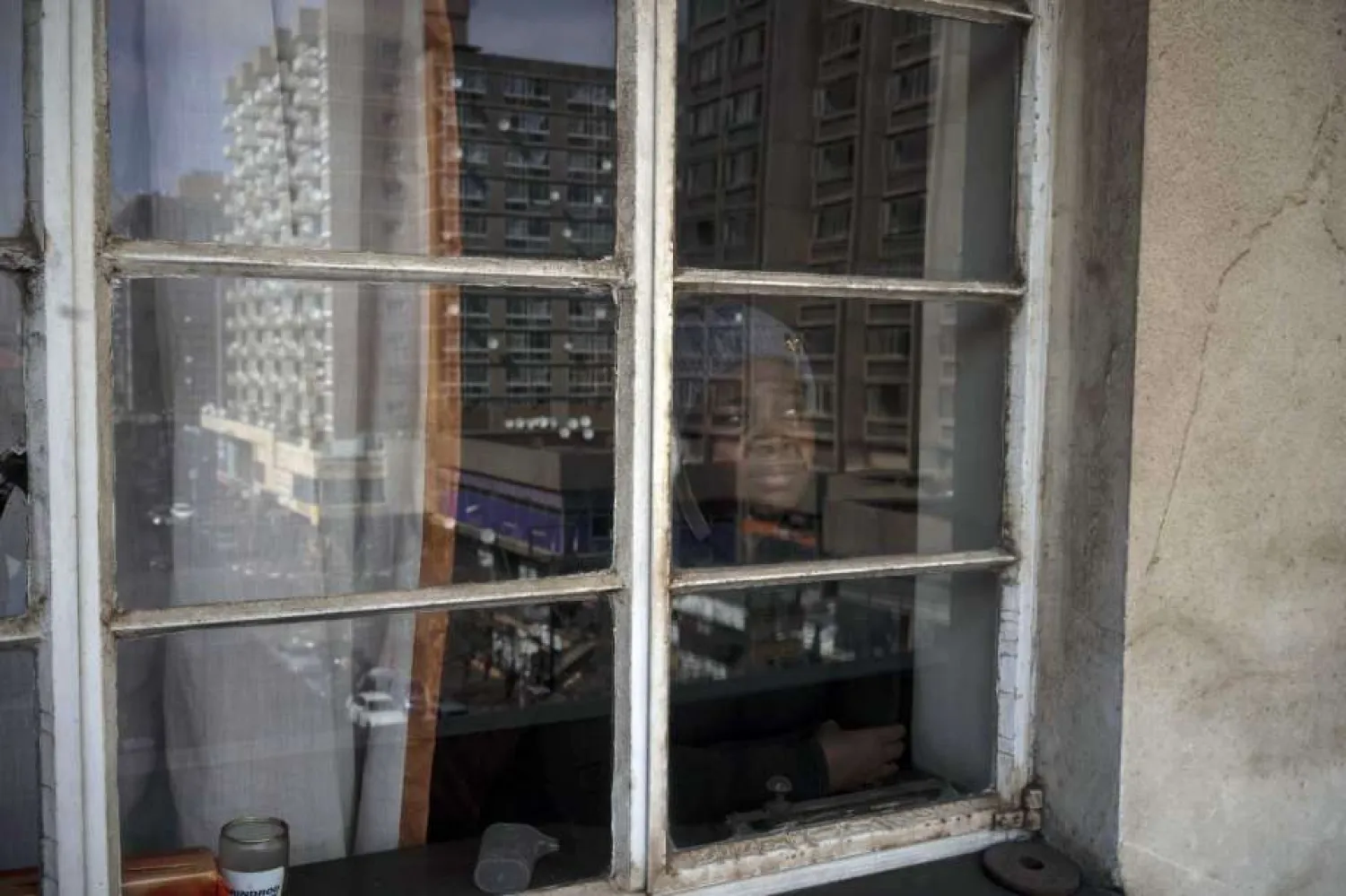
Sibongile Zulu poses for a portrait inside her home in Johannesburg, South Africa, Tuesday, July 28, 2020. Zulu is HIV positive and couldn't get her full medication for two months due to a lack of stock in government pharmacies. Across Africa and around the world, the COVID-19 pandemic has disrupted the supply of antiretroviral drugs to many of the more than 24 million people who take them, endangering their lives. An estimated 7.7 million people in South Africa are HIV positive, the largest number in the world, and 62% of them take the antiretroviral drugs that suppress the virus and prevent transmission. (AP Photo/Bram Janssen)
TT

South Africa's Poor Scramble for Anti-HIV Drugs Amid Virus

Sibongile Zulu poses for a portrait inside her home in Johannesburg, South Africa, Tuesday, July 28, 2020. Zulu is HIV positive and couldn't get her full medication for two months due to a lack of stock in government pharmacies. Across Africa and around the world, the COVID-19 pandemic has disrupted the supply of antiretroviral drugs to many of the more than 24 million people who take them, endangering their lives. An estimated 7.7 million people in South Africa are HIV positive, the largest number in the world, and 62% of them take the antiretroviral drugs that suppress the virus and prevent transmission. (AP Photo/Bram Janssen)

When her regular clinic ran out of her government-funded HIV medications amid South Africa´s COVID-19 lockdown, Sibongile Zulu panicked. A local pharmacy had the drugs for $48, but she didn´t have the money after being laid off from her office job in the shutdown to slow the spread of the coronavirus.

Desperate for the lifesaving medication, the single mother of four called a friend -- a nurse with a local charity helping people with HIV, the Sister Mura Foundation. She's one of the lucky ones: Since April, the foundation has provided Zulu with the drugs, purchased locally.

Across South Africa and around the world, the pandemic has disrupted the supply of antiretroviral drugs, endangering the lives of many of the more than 24 million people globally who take the medications that suppress the HIV virus.

In sub-Saharan Africa alone, a study by UNAIDS found that a six-month disruption of antiretroviral therapy could lead to 500,000 additional AIDS-related deaths.

The disruptions are particularly troubling in South Africa, which has 7.7 million HIV-positive people, the world's largest number, with 62% of those depending on the government's antiretroviral program, also the world´s largest. Anti-coronavirus restrictions have hindered both imports of the drugs and the local production and distribution of the medications, according to a report by UNAIDS.

In addition, many HIV patients have stopped going to the often-crowded clinics for fear of being exposed to the coronavirus. And others cannot afford the transport fares to reach clinics.

In June, UNAIDS Executive Director Winnie Byanyima said countries should "urgently make plans now to mitigate the impacts of higher costs and reduced availability of antiretroviral medicines."

"I call on countries and buyers of HIV medicines to act swiftly in order to ensure that everyone who is currently on treatment continues to be on it, saving lives and stopping new HIV infections," Byanyima said.

HIV positive people who contract COVID-19, are more than twice as likely to die from the disease as people without HIV, according to an early study of mortality rates in South Africa's Western Cape province, the country's first epicenter for the disease.

"We´re worried that we´re going to be seeing an increase in deaths in co-infections such as TB and other opportunistic infections," Dr. Nomathemba Chandiwana, an HIV research clinician, told The Associated Press.

Clinics in central Johannesburg have seen a 10% to 25% drop in people coming for HIV treatment, she said. On top of that, several clinics have had to close temporarily when nurses and doctors have become sick with COVID-19.

"Some clinics see 60 to 80 patients per day, so when one closes, for even a week, it means many people are not getting their drugs. It´s a serious threat," said Chandiwana, who works for Ezintsha, part of the University of the Witwatersrand.

COVID-19 is similarly disrupting vaccinations. The past few months have seen a 25% reduction in childhood immunizations, according to Shabir Madhi, a professor of vaccinology at the same university, who warned of possible outbreaks of measles.

The diagnosis and treatment of tuberculosis also has also been hampered by the pandemic, risking the lives of many of South Africa's neediest citizens, health experts say.

"Disruptions to these medications is a public health problem. It threatens the poor and most vulnerable," said Vinyarak Bhardwaj, deputy director of Doctors Without Borders´ program in South Africa, which has HIV programs in the Western Cape and KwaZulu-Natal provinces.

"We´re responding to this threat by helping to minimize shortages and by providing stable HIV patients with multi-month prescriptions to limit their visits to the clinics. We´re also increasing treatment advice by telephone and the internet," he said.

Reliable supplies of antiretroviral drugs are so critically important in South Africa that a monitoring program, Stop Stockouts, was created in 2013 and is closely tracking and responding to the disruptions amid the COVID-19 pandemic.

The mill town of Ngodwana in the country´s northeast, a truck stop on the highway to Mozambique, is a microcosm of South Africa´s inequality, rated as the world´s highest.

Ngodwana´s 3,500 residents are mostly Black, living in a densely packed shantytown, with limited electricity and running water. Safe distancing is nearly impossible. Years ago, the truck traffic was blamed for bringing HIV to the area; now come fears it will become a hot spot for COVID-19.

Many in Ngodwana can no longer afford to travel the 40 kilometers (25 miles) to the town of Nelspruit to get their drugs and don´t feel comfortable going to the crowded local clinic. So the Dutch-based aid group North Star Alliance set up a tented drop-in center and started home visits.

Clad in a mask, gloves and protective surgical gown, nurse Nomautanda Siduna walked through Ngodwana´s dirt streets to a mud-walled, tin-roofed home. Once inside, she quickly got to work, distributing a two-month supply of antiretroviral drugs to the HIV-positive woman, a sex-worker, and advising her how to stay as safe as possible amid the pandemic.

"You must know that with COVID out there, you must take your treatment, every day, same time, like you´re always doing," Siduna told her. "And you must use a condom when you´re sleeping with anyone."

Pretty Mkhabela, 34, said the pandemic frightens her and that she´s taking new precautions as a sex worker.

"Yes, I´m scared," Mkhabela said. "When I work with my client, I use a mask and my client also uses a mask."

Another resident, Rose Khondowa, tried to get her antiretroviral drugs by traveling to Nelspruit, but encountered only a locked gate after a COVID-19 outbreak among hospital workers caused the clinic to temporarily close. She didn´t have enough money, about $4, for a second trip.

By chance, she saw the North Star Alliance gazebo in Ngodwana and succeeded in getting a month´s supply of antiretroviral drugs.

"If I didn´t find them," she said, "I would have died."


Russia's FSB Says Ukraine's SBU Was behind Assassination Attempt on Top General

In this image made from video and provided by the Russian Defense Ministry Press Service, on June 23, 2023, Lt. Gen. Vladimir Alexeyev speaks to servicemen in an undisclosed location. (Russian Defense Ministry Press Service via AP)
TT

Russia's FSB Says Ukraine's SBU Was behind Assassination Attempt on Top General

In this image made from video and provided by the Russian Defense Ministry Press Service, on June 23, 2023, Lt. Gen. Vladimir Alexeyev speaks to servicemen in an undisclosed location. (Russian Defense Ministry Press Service via AP)

Russia's Federal Security Service said on Monday that the men suspected of shooting one of the country's most senior military intelligence officer had confessed that they were carrying out orders from the Security Service of Ukraine (SBU).

Ukraine has denied any involvement in Friday's attempted assassination of Lieutenant General Vladimir Alexeyev, deputy head of Russia's ‌GRU military ‌intelligence service. Alexeyev has regained ‌consciousness ⁠after surgery, reported Reuters.

Russia ‌said that the suspected shooter, a Ukrainian-born Russian citizen named by Moscow as Lyubomir Korba, had been questioned after he was extradited from Dubai. A suspected accomplice, Viktor Vasin, has also been questioned.

The FSB said in ⁠a statement that both Korba and Vasin had "confessed their ‌guilt" and given details ‍of the shooting which ‍they said was "committed on behalf of ‍the Security Service of Ukraine."

The FSB did not provide any evidence that Reuters was able to immediately verify. It was not possible to contact the men while they were in detention in Russia. The SBU could ⁠not be reached for immediate comment on the FSB statement.

The FSB said Korba was recruited by the SBU in August 2025 in Ternopil, western Ukraine, underwent training in Kyiv and was paid monthly in crypto-currency. For killing Alexeyev, Korba was promised $30,000 by the SBU, the FSB said.

The FSB said Polish intelligence was involved in his recruitment. ‌Poland could not be reached for immediate comment.


Venezuela's Machado Says Ally 'Kidnapped' after His Release

Venezuelan political leader Juan Pablo Guanipa gestures after their release outside Zona 7 prison in Caracas on February 8, 2026.  (Photo by Juan BARRETO / AFP)
Venezuelan political leader Juan Pablo Guanipa gestures after their release outside Zona 7 prison in Caracas on February 8, 2026. (Photo by Juan BARRETO / AFP)
TT

Venezuela's Machado Says Ally 'Kidnapped' after His Release

Venezuelan political leader Juan Pablo Guanipa gestures after their release outside Zona 7 prison in Caracas on February 8, 2026.  (Photo by Juan BARRETO / AFP)
Venezuelan political leader Juan Pablo Guanipa gestures after their release outside Zona 7 prison in Caracas on February 8, 2026. (Photo by Juan BARRETO / AFP)

Venezuela's Nobel peace laureate Maria Corina Machado said on Monday that armed men "kidnapped" a close ally shortly after his release by authorities, following ex-leader Nicolas Maduro's capture.

The country's Public Prosecutor's Office confirmed later that same day that former National Assembly vice president Juan Pablo Guanipa, 61, was again taken into custody and to be put under house arrest, arguing that he violated the conditions of his release.

Guanipa would be placed under house arrest "in order to safeguard the criminal process," the office said in a statement on Monday. The conditions of Guanipa's release have yet to be made public.

Machado claimed that her close ally had been "kidnapped" in the capital Caracas by armed men "dressed in civilian clothes" who took him away by force.

"We demand his immediate release," she wrote on social media platform X.

The arrest came after his release from prison on Sunday along with two other opposition figures, and as lawmakers prepared to vote Tuesday on a historic amnesty law covering charges used to lock up dissidents in almost three decades of socialist rule, reported AFP.

Shortly after his release, Guanipa visited several detention centers in Caracas, where he met with relatives of political prisoners and spoke to the press.

Guanipa had appeared earlier Sunday in a video posted on his X account, showing what looked like his release papers.

"Here we are, being released," Guanipa said in the video, adding that he had spent "10 months in hiding, almost nine months detained here" in Caracas.

- 'Let's go to an electoral process' -

Speaking to AFP later on Sunday, he had called on the government to respect the 2024 presidential election, which opposition candidate Edmundo Gonzalez Urrutia was widely considered to have won. Maduro claimed victory and remained in power till January.

"Let's respect it. That's the basic thing, that's the logical thing. Oh, you don't want to respect it? Then let's go to an electoral process," Guanipa said.

The opposition ally of Machado was arrested in May 2025, in connection with an alleged conspiracy to undermine legislative and regional elections that were boycotted by the opposition.

He was charged with terrorism, money laundering and incitement to violence and hatred.

Guanipa had been in hiding prior to his arrest. He was last seen in public in January 2025, when he accompanied Machado to an anti-Maduro rally.

Following Maduro's capture by US special forces on January 3, authorities have started to slowly release political prisoners. Rights groups estimate that around 700 people are still waiting to be freed.

A former Machado legal advisor, Perkins Rocha, was also freed on Sunday. So was Freddy Superlano, who once won a gubernatorial election in Barinas, a city that is the home turf of the iconic late socialist leader Hugo Chavez.

"We hugged at home," Rocha's wife Maria Constanza Cipriani wrote on X, with a photo of them.

Machado, who was awarded the 2025 Nobel Peace Prize for her efforts to advance democracy in Venezuela, had initially celebrated Guanipa's release.

"My dear Juan Pablo, counting down the minutes until I can hug you! You are a hero, and history will ALWAYS recognize it. Freedom for ALL political prisoners!!" she wrote on X on Sunday.

NGO Foro Penal said it had confirmed the release of 35 prisoners on Sunday. It said that since January 8 nearly 400 people arrested for political reasons have been freed thus far.

Lawmakers gave their initial backing to a draft amnesty last week which covered the types of crimes used to lock up dissidents during 27 years of socialist rule.

But Venezuela's largest opposition coalition denounced "serious omissions" in the proposed amnesty measures on Friday.

Meanwhile, relatives of prisoners are growing increasingly impatient for their loved ones to be freed.

Acting president Delcy Rodriguez, who was Maduro's vice president, is pushing the amnesty bill as a milestone on the path to reconciliation.

Rodriguez took power in Venezuela with the blessing of US President Donald Trump, who is eyeing American access to what are the world's largest proven oil reserves.

As part of its reforms, Rodriguez's government has taken steps towards opening up the oil industry and restoring diplomatic ties with Washington, which were severed by Maduro in 2019.


SKorea Grounds Aging Attack Choppers after Fatal Training Crash

South Korean military officials secure the site where an AH-1S Cobra attack helicopter crashed in Gapyeong, South Korea, February 9, 2026. Yonhap via REUTERS
TT

SKorea Grounds Aging Attack Choppers after Fatal Training Crash

South Korean military officials secure the site where an AH-1S Cobra attack helicopter crashed in Gapyeong, South Korea, February 9, 2026. Yonhap via REUTERS

South Korea grounded an aging fleet of military helicopters on Monday after a chopper crashed during a training exercise and killed two people on board.

The AH-1S Cobra was training for emergency landings when it "crashed due to an unidentified cause" in Gapyeong county west of Seoul, the army said in a statement.

Two service members were taken to hospital and later pronounced dead, AFP reported.

Photos in local media showed the helicopter's crumpled fuselage lying on a rocky river bank.

"Following the accident, the Army has suspended operations of all aircraft of the same model" and is investigating the cause, the forces said.

The AH-1S Cobra is a US-made, single-engine anti-tank attack helicopter.

Some of those used by South Korea's military are more than 30 years old. It is not clear how many are currently in service.

The country's defense acquisition agency said in 2022 that the Army's Cobra helicopters were "scheduled to be retired" as domestically developed light-armed choppers started flying.
