



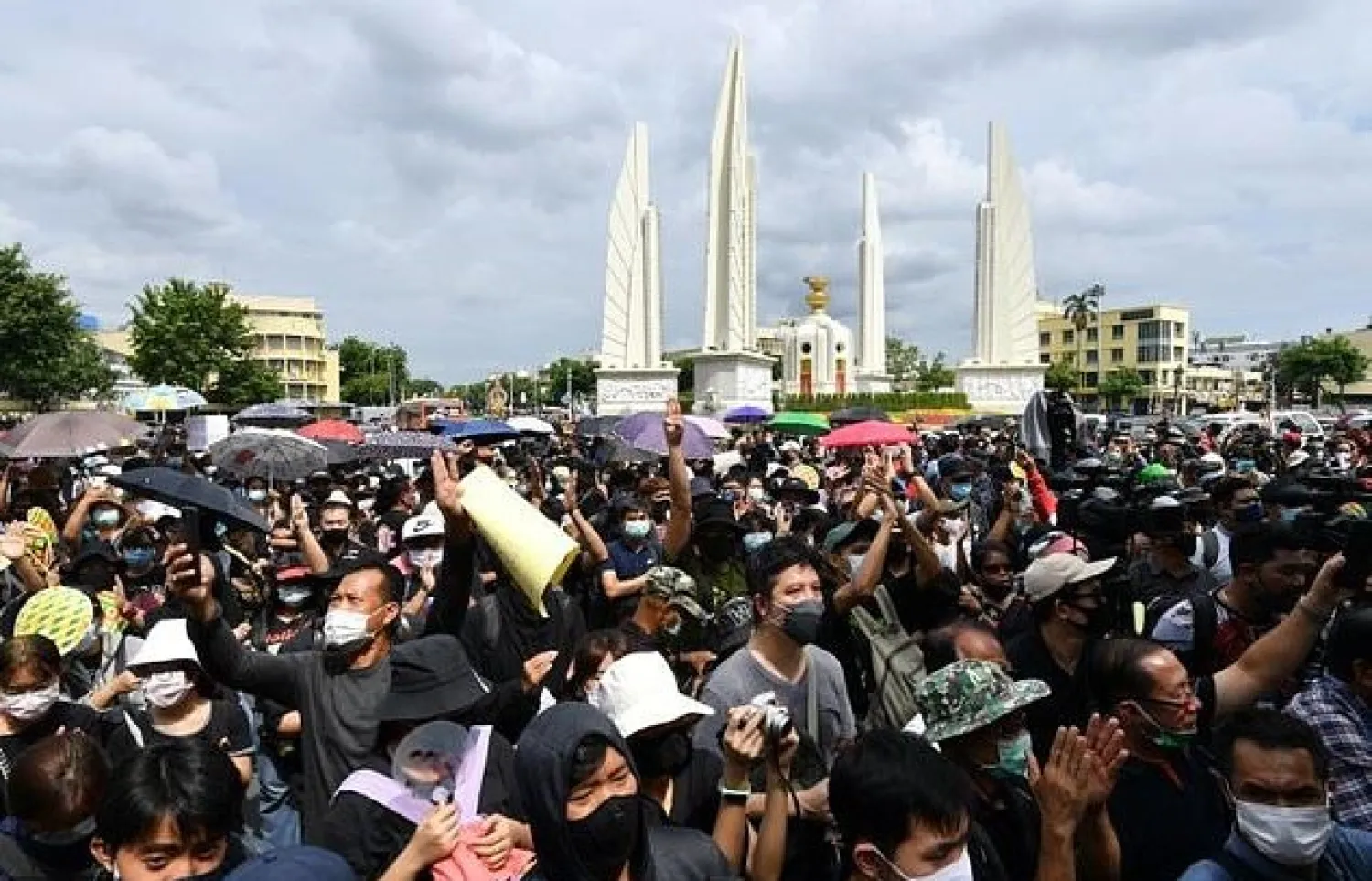

Thousands of protesters rallied against Thailand's government in Bangkok on Sunday with tensions rising in the kingdom as a pro-democracy movement gathers steam.
Thailand has seen near-daily demonstrations for the past month by student-led groups denouncing Premier Prayut Chan-O-Cha -- a former military chief who led the 2014 coup -- and his pro-establishment administration.
By Sunday afternoon, protesters -- who are demanding major democratic reforms -- had taken over the busy intersection around Bangkok's Democracy Monument, which was built to mark the 1932 revolution that ended absolutism.
"Down with the dictatorship," they chanted, many holding signs critical of Prayut's pro-military government. Others held pigeon-shaped cutouts representing peace, AFP reported.
Tensions have risen over the last two weeks with authorities arresting three activists. They were released on bail after being charged with sedition and violating coronavirus rules.
They were told not to repeat the alleged offences, but one of them -- prominent student leader Parit Chiwarak -- arrived at the protest venue on Sunday flanked by cheering supporters.
Partly inspired by the Hong Kong democracy movement, the protesters claim to be leaderless and have relied mostly on social media campaigns to draw support across the country.
"Give a deadline to dictatorship" and "let it end at our generation" were the top Twitter hashtags in Thailand on Sunday.
The protesters are demanding an overhaul of the government and a rewrite of the 2017 military-scripted constitution, which they believe skewed last year's election in favour of Prayut's military-aligned party.
A rally last week -- attended by some 4,000 demonstrators -- also called for the abolition of a law protecting Thailand's unassailable monarchy, and for a frank discussion about its role in Thailand.
During Sunday's demonstration, which drew a diverse crowd of all ages, many said they agreed with the students' demands.
"We can't let the students walk on this difficult path alone," a 68-year-old woman told AFP, declining to provide her name.
The growing discontent also comes as the kingdom goes through one of its worst economic periods since 1997 because of the coronavirus pandemic.
Millions have been left jobless, and the crisis has exposed the inequalities in the Thai economy, which is perceived to benefit the elite, pro-military establishment.


