Technical Support Unit Tops Agenda of Saudi WTO Candidate

Technical Support Unit Tops Agenda of Saudi WTO Candidate
TT

Technical Support Unit Tops Agenda of Saudi WTO Candidate

Technical Support Unit Tops Agenda of Saudi WTO Candidate

Mohammad Al-Tuwaijri, the Saudi candidate for the presidency of the World Trade Organization (WTO), revealed his intention to establish a technical support unit to enhance communication and develop solutions to the problems facing countries, pointing out that the e-commerce file must be redefined in order to cope with the emerging developments, within the framework of the organization.

Saudi Arabia has taken the organization’s reform into consideration since it assumed the presidency of the G20 in 2019, especially in light of the weak international confidence in the WTO and its slow response to radical political, economic, and social changes in the world.

Last July, 8 candidates (three Africans, two Asians, two Europeans, and a Latin American) put forward their electoral programs to assume the international position. The candidates will have until September 7 to persuade the capitals, before the next president is chosen during a special meeting in Geneva.

In recent media statements, Tuwaijri said that the world was experiencing an exceptional and unprecedented crisis, with the outbreak of COVID-19, which imposed a comprehensive change in all parts of the world.

“We are going through a very sensitive phase, and therefore the global trade system must have an effective, real, and fundamental role,” he stated.

Tuwaijri said he believed that the main role of the WTO should focus on converging viewpoints and introducing a system for measuring performance at work through devising clear mechanisms.

The Saudi candidate for the leadership of the WTO stated that there was a great convergence in the goals of the Saudi Vision 2030 and the organization’s objectives. Those include economic growth, the better use of resources, economic diversification to serve the private sector, the creation of jobs in a sustainable manner, and the 17 development goals under the umbrella of the United Nations.

On the trade war between China and the United States, Tuwaijri said that this file was among the priorities of the organization, asserting that the two countries were influential and accounted for a large percentage of global trade.

He added that the Saudi candidate enjoyed the acceptance of both sides and all other parties. He said that work within the WTO would be based on a definite plan and the efficiency of communication and cooperation between the members on the basis of the organization’s policy.

There are urgent issues that need to be brought up immediately on the organization’s table, as it is imperative to move to emerging issues such as e-commerce through a clear and effective effort, he emphasized.

Qatar Urges 'Good Faith' from Iran as Talks Renew

FILED - 16 January 2024, Switzerland, Davos: FILE PHOTO - Qatar's Prime Minister and Minister of Foreign Affairs, Mohammed Bin Abdulrahman Al Thani, speaks during a panel discussion at the World Economic Forum Annual Meeting 2024 in Davos. Photo: Jakob Polacsek/World Economic Forum/dpa
TT

Qatar Urges 'Good Faith' from Iran as Talks Renew

FILED - 16 January 2024, Switzerland, Davos: FILE PHOTO - Qatar's Prime Minister and Minister of Foreign Affairs, Mohammed Bin Abdulrahman Al Thani, speaks during a panel discussion at the World Economic Forum Annual Meeting 2024 in Davos. Photo: Jakob Polacsek/World Economic Forum/dpa

Qatar on Tuesday said Iran must show good faith with its neighbors to prevent further escalation, following renewed efforts to end the US-Iran war.

The comments came a day after senior officials from Saudi Arabia, Türkiye and Pakistan held talks with Iran in an attempt to stop the Middle East war from reigniting.

Qatari foreign ministry official Ibrahim Al-Hashmi said the region needed a new security framework to prevent further violence.

"The ball is now in Iran's court to commit to these principles and demonstrate good faith," he said.

"We have heard positive statements from the Iranian side... but they still need to demonstrate good faith, stop threatening countries of the region, and reopen the Strait of Hormuz so that all those efforts can go towards having a safe and prosperous region," he added.

Monday's talks in Tehran included Saudi Defense Minister Khalid bin Salman, Pakistan's army chief General Asim Munir and Türkiye's intelligence chief Ibrahim Kalin. Iran described them as "very good".

They followed warnings by the United States, Iran and Israel that hostilities could restart in the eight-month war, which saw Tehran strike US allies in the region including Qatar.

US-Iran mediation efforts have been led by Qatar and Pakistan. A Qatari delegation visited Tehran on Sunday, Iran's foreign ministry spokesman Esmaeil Baqaei said.

Asked for details on the Qatari visit to Tehran, Hashmi said "messages are ongoing and the exchange of ideas continues through the mediators".


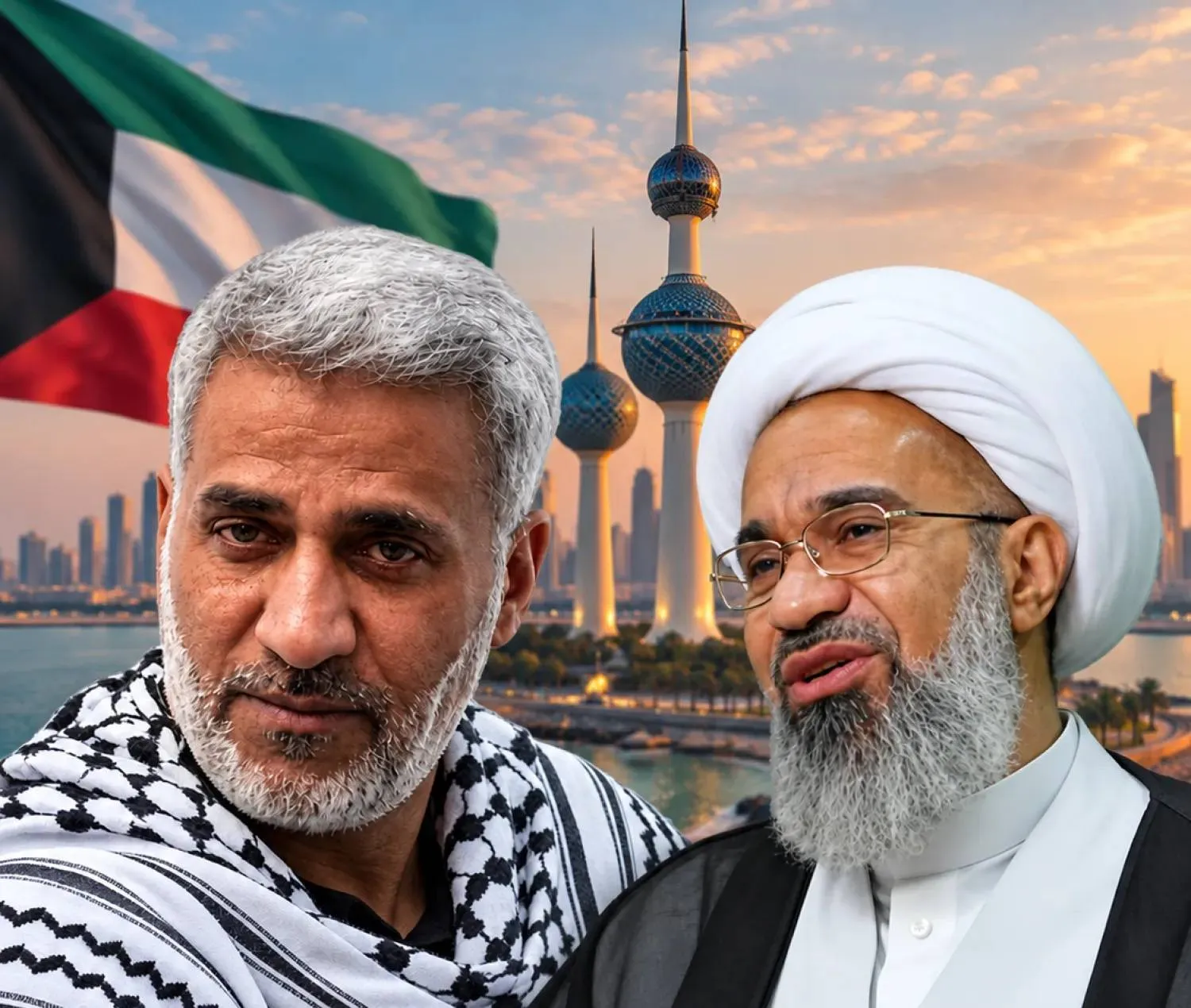
Kuwait Sentence 3 to Death for Collaborating with Iran, Plotting to Assassinate Interior Minister

Sheikh Hussein Abdullah Al-Matouq and Hassan Abdulhadi Hajieh. (Asharq Al-Awsat)
TT

Kuwait Sentence 3 to Death for Collaborating with Iran, Plotting to Assassinate Interior Minister

Sheikh Hussein Abdullah Al-Matouq and Hassan Abdulhadi Hajieh. (Asharq Al-Awsat)

The Kuwaiti Criminal Court, represented by the State Security Circuit, sentenced on Monday three defendants to death and eight others to five years in prison, in a case involving espionage for Iran and the Lebanese Hezbollah, and plotting to assassinate the Kuwaiti First Deputy Prime Minister and Minister of Interior, Sheikh Fahad Al-Yousuf, along with other state figures.

The court, presided over by Counselor Nasser Al-Badr, convicted Sheikh Hussein Abdullah Al-Matouq, Hassan Abdulhadi Hajieh and Abdulreza Haidar Dehqani, an Iranian national, with harming Kuwait's national interests, spying for foreign entities, and joining the Lebanese Hezbollah group.

The Public Prosecution charged the defendants with committing acts that would undermine the independence, unity, and territorial integrity of the country, as well as seeking and communicating with Iran and Hezbollah to carry out hostile acts against Kuwait, which included plotting to assassinate the Minister of Interior and other leading figures.

Case documents revealed that remaining defendants held meetings to plan the assassination and assigned roles among themselves. An eleventh defendant was tasked with providing the necessary equipment to execute the plot, acting under instructions from the first three defendants who received death sentences.

The court stressed that "national security is not the interest of an individual or a faction, but a right of society as a whole," adding that state sovereignty cannot be contested by a foreign power.


Saudi Leadership Offers Condolences to Chinese President over Earthquake Victims in Xizang

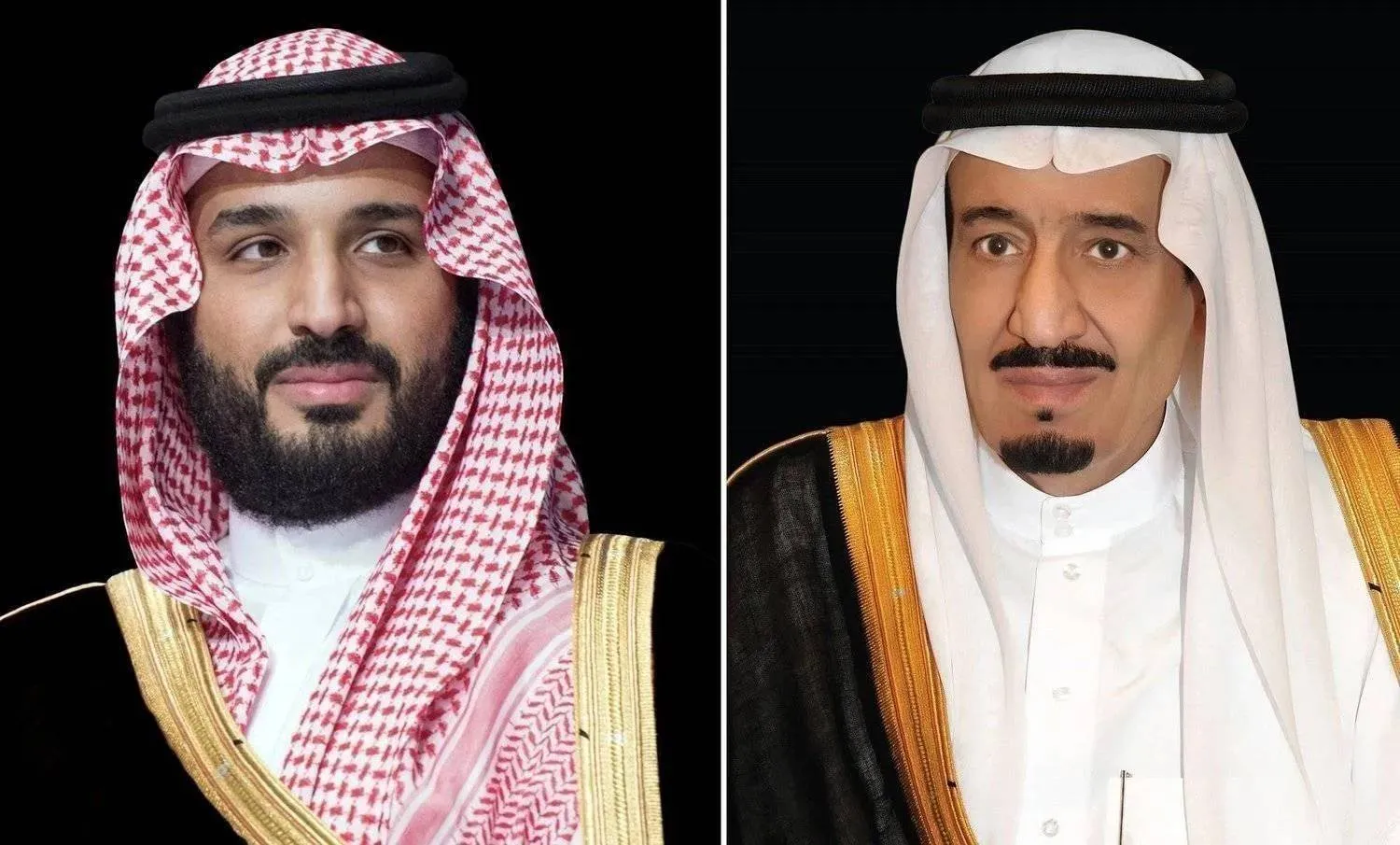
Joint photo of King Salman bin Abdulaziz Al-Saud and Saudi Crown Prince Mohammed bin Salman bin Abdulaziz Al-Saud - File Photo
TT

Saudi Leadership Offers Condolences to Chinese President over Earthquake Victims in Xizang

Joint photo of King Salman bin Abdulaziz Al-Saud and Saudi Crown Prince Mohammed bin Salman bin Abdulaziz Al-Saud - File Photo

Saudi Arabia’s leadership sent cables of condolence to China following the earthquake that struck Baqen County in the Xizang Autonomous Region, expressing sympathy over the loss of lives.

Custodian of the Two Holy Mosques King Salman bin Abdulaziz Al Saud sent a cable of condolences to Chinese President Xi Jinping, expressing his deepest sympathies to the president, the families of the victims, and the Chinese people over the deaths, injuries, and missing persons resulting from the earthquake. He also wished for the safe return of those missing and a speedy recovery for the injured.

Crown Prince and Prime Minister Mohammed bin Salman bin Abdulaziz Al Saud also sent a cable to President Xi Jinping, conveying his heartfelt condolences and wishing for the safe return of those missing and a swift recovery for the injured.