


Pandemic Tests Shopper Loyalty for Clothing Brands

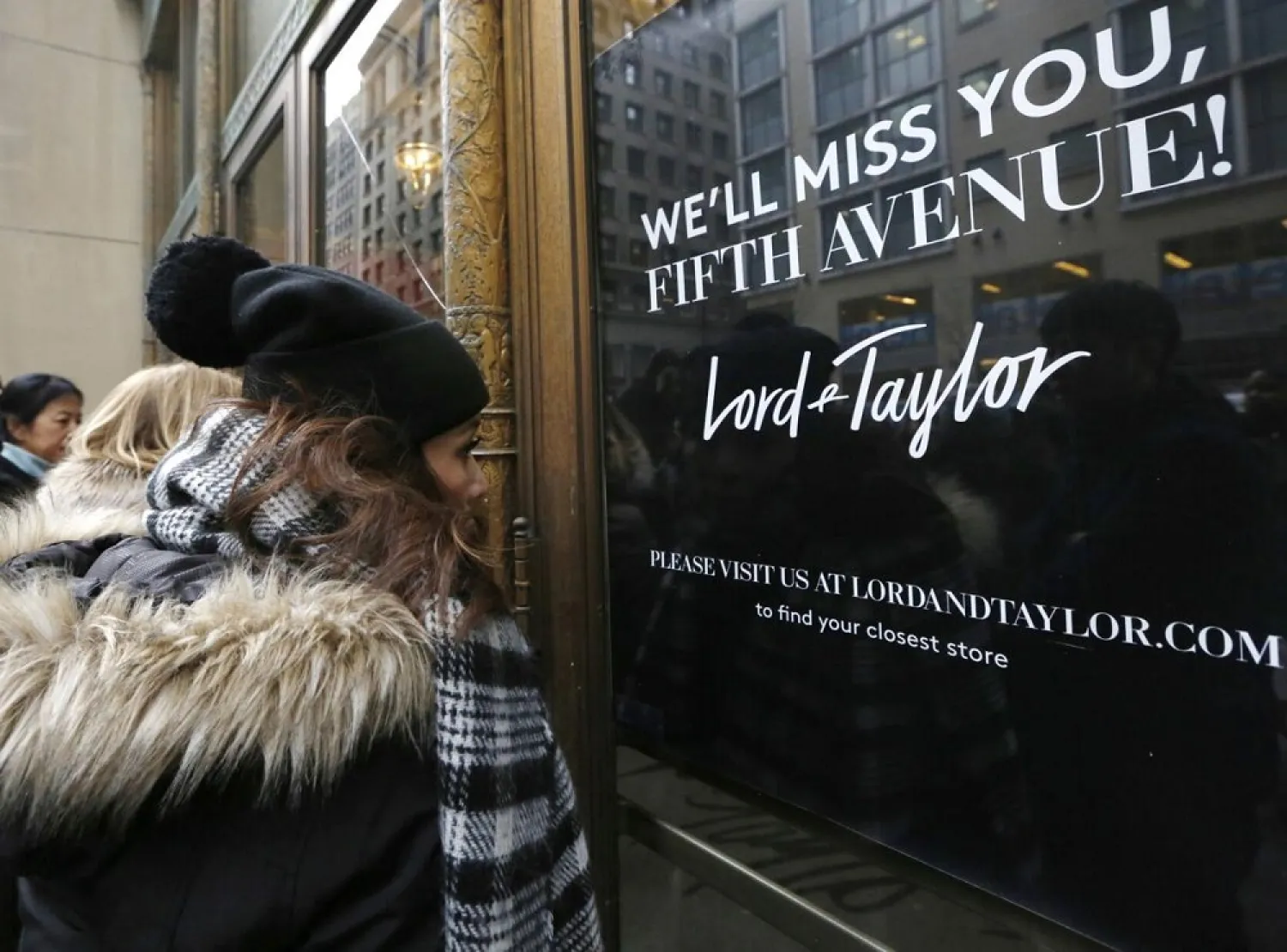
In this Jan. 2, 2019 file photo, women peer in the front door of Lord & Taylor's flagship Fifth Avenue store which closed for good, in New York. (AP)
TT

Pandemic Tests Shopper Loyalty for Clothing Brands

In this Jan. 2, 2019 file photo, women peer in the front door of Lord & Taylor's flagship Fifth Avenue store which closed for good, in New York. (AP)

When Archie Jafree heard that Lord & Taylor filed for Chapter 11 bankruptcy in early August, he was sad about the fate of the storied retailer with roots dating back to 1824.

Still, the 36-year-old northern Virginia resident acknowledged he hadn’t shopped there in months, preferring instead to go to Nordstrom and Zara, where he feels the customer service is better.

“It had good quality clothes," Jafree said of Lord & Taylor, “but they hadn’t evolved with the times.”

Many shoppers like Jafree are seeing iconic labels vanish or become mere shadows of themselves, driven in part by a pandemic that has shoved them into bankruptcy but also by changing consumer habits that put less emphasis on brand names and more emphasis on experience.

So far, more than 40 retailers have filed for Chapter 11 this year, including roughly two dozen since the pandemic. That’s more than double what was seen for all of 2019.

Lord & Taylor announced on Thursday that it was liquidating its business and closing all of its remaining stores. J.C. Penney filed for Chapter 11 in May and announced plans to permanently close nearly a third of its 846 stores.

Ann Taylor parent Ascena Retail Group said it would close all of its Catherines stores, a “significant number” of Justice stores, and a select number of Ann Taylor, Loft, Lane Bryant and Lou & Grey stores. And Brooks Brothers, which will be sold to the nation’s largest mall operator Simon Property Group and licensing firm Authentic Brands Group, will shrink to about 125 stores from more than 400.

Although loyal customers bemoan their loss, the brands have been losing favor for years because they hadn't kept up with the online buying shift and failed to stand out. The pandemic forced non-essential retailers to close this past spring in order to mitigate the spread of the coronavirus, pushing them further in peril.

Before the pandemic, shoppers were faced with an abundance of choices online and were becoming less loyal to clothing brands, particularly those that were stuck in the middle. Shoppers were also focused on getting the best deals, often waiting for merchandise to go on sale before they were willing to buy — a habit sharpened during the Great Recession.

According to a March survey by McKinsey & Co, 40% of the 2,500 shoppers polled in France, United Kingdom, Germany and US tried new brands or made new purchases with a new retailer; that number was 46% for US shoppers.

“The ability to shop and get information online taught consumers more options. Retailers have been reliant on promotions and they’ve created a monster of promiscuous shoppers,” said Steve Dennis, president and founder of SageBerry Consulting, a retail consultancy.

Now, the pandemic is testing brand loyalty even more as shoppers, worried about going to physical stores, want quicker deliveries and curbside pickup, says Robert Passikoff, president of brand research firm Brand Keys.

Amber Atherton, CEO at Zyper, which connects brands with the top 1% of their fans and enlists them to become brand ambassadors, says shoppers have been increasingly hanging out in community groups online and the pandemic just accelerated that trend. She cites Gucci’s recent collaboration with tennis mobile game Tennis Clash, where shoppers can buy exclusive Gucci outfits within the game as well as on the company's website.

To build shoppers loyalty, brands need to “create delightful experiences online,” Atherton said.

Emily McKenna, 22, a recent college graduate from Omaha, Nebraska, says she’s a big fan of Asos, an online-only clothing brand, because she likes the video feature that shows what the clothes look like on models.

She also likes shopping at the J. Crew outlet that’s about a 30-minute drive from her home, but she says she’s buying more online now because she doesn’t feel comfortable going into stores and she also sees more options for deals.

But McKenna does worry about the hallowing out of the middle-priced brands and what that means to shoppers who want quality but can’t afford luxury brands.

“I think it is sad that these brands are being wiped out, and in a way, it makes some of our dreams less attainable,” she said.

Juliana Gonzalez, 30, from Howard Beach, New York says she’s been a big fan for several years of the Loft, Ann Taylor’s lower-price division. She gets most of her clothing from the chain and is worried that they will be closing more stores as a result of the bankruptcy filing.

“It’s young and hip. And the clothes fit me,” Gonzalez said.

But even before the pandemic, she only bought the clothes at 50% off. Those discounts will be easier to come by, now that Ann Taylor's parent has declared bankruptcy.


Paris Court Rejects Bid to Suspend Shein Platform in France

A customer holds shopping bags with a Shein logo in the first physical space of Chinese online fast-fashion retailer Shein on the day of its opening inside the Le BHV Marais department store, the Bazar de l'Hotel de Ville, in Paris, France, November 5, 2025. REUTERS/Sarah Meyssonnier/File Photo
TT

Paris Court Rejects Bid to Suspend Shein Platform in France

A customer holds shopping bags with a Shein logo in the first physical space of Chinese online fast-fashion retailer Shein on the day of its opening inside the Le BHV Marais department store, the Bazar de l'Hotel de Ville, in Paris, France, November 5, 2025. REUTERS/Sarah Meyssonnier/File Photo

A Paris court on Friday rejected a government request to suspend Chinese fast-fashion platform Shein in France after authorities found illegal weapons and child-like sex dolls for sale on the fast-fashion giant’s website.

Shein welcomed the decision, saying it remains committed to strengthening its control processes in cooperation with French authorities.

“Our priority remains protecting French consumers and ensuring compliance with local laws and regulations," the company said in an emailed statement to The Associated Press.

The controversy dates to early November, when France’s consumer watchdog and Finance Ministry moved toward suspending Shein’s online marketplace after authorities said they had found childlike sex dolls and prohibited “Class A” weapons listed for sale, even as the company opened its first permanent store in Paris.

French authorities gave Shein hours to remove the items. The company responded by banning the products and largely shutting down third-party marketplace listings in France.

French officials have also asked the European Commission to examine how illegal products were able to appear on the platform under EU rules governing large online intermediaries.


Lululemon Jumps on Elliott's $1 Billion Bet Ahead of Leadership Change

FILE PHOTO: A logo is displayed inside a Lululemon outlet retail store at Bicester Village in Oxfordshire, Britain, August 21, 2024. REUTERS/Hollie Adams/File Photo
TT

Lululemon Jumps on Elliott's $1 Billion Bet Ahead of Leadership Change

FILE PHOTO: A logo is displayed inside a Lululemon outlet retail store at Bicester Village in Oxfordshire, Britain, August 21, 2024. REUTERS/Hollie Adams/File Photo

Lululemon Athletica shares rose nearly 8% in early trading on Thursday after reports Elliott Management has built a $1 billion stake in the athleisure wear maker and is working with former Ralph Lauren executive Jane Nielsen for a potential CEO role.

The Canada-based retailer said last week that Calvin McDonald will step down after nearly seven years as its top boss, sparking hopes for a leader who can reverse slowing growth and win back younger shoppers amid fierce competition from trendier players like Alo and Vuori. The stock has lost nearly half of its value this year, underscoring investor concerns over Lululemon's struggles. The company's shares were trading at $224 on Thursday.

"Elliott is famous for agitating for change. These positions aren't built overnight, so Lululemon's board probably saw this coming," said Brian Jacobsen, chief economic strategist, Annex Wealth Management.

The activist investor has been working closely for months with Nielsen, a retail veteran, a source told Reuters on Wednesday. Nielsen, who sits on the board of Cadbury parent Mondelez, has also served as finance chief at Tapestry-owned Coach.

"Lululemon is one of the most powerful brands in retail, defined by exceptional products, deeply engaged communities and significant global potential," Nielsen said in a statement to the Wall Street Journal. "I would welcome the chance to discuss this opportunity with the Lululemon board."

Elliott, Lululemon and Nielsen did not respond to Reuters requests for comment.

Analysts have said the company will need to upgrade its fabrics, use fresher designs and accelerate product launches that click with Gen Z to reclaim its "cool factor" and lure shoppers back.

With much of its sourcing tied to Asian factories facing higher import duties, Lululemon will also need to streamline its supply chain to blunt US tariff pressures and protect margins next year, analysts have said.

"Lululemon should implement fast fashions and introduce an assortment that will pull customers from Alo and Vuori - especially Gen Z customers.

Fast fashion requires a much better supply chain than is currently in use at Lululemon," said Brittain Ladd, a strategy and supply chain consultant at Florida-based Chang Robotics.

The brand's struggles have drawn sharp criticism from founder and largest individual shareholder Chip Wilson. He has also called for an urgent CEO search, led by new, independent directors with deep company knowledge to restore a product-first focus.

Wilson did not respond to a Reuters request for comment.

With a 4.3% ownership, Wilson's stake is valued at about $988 million, according to LSEG data, making Elliott one of the top shareholders in Lululemon, which is valued at nearly $25 billion.

Lululemon trades at a forward price-to-earnings ratio of 16.37, while Gap trades at 11.88 and American Eagle at 16.81, according to LSEG data.


Prada to Launch $930 ‘Made in India’ Sandals after Backlash

FILE PHOTO: Customers shop for 'Kolhapuri' sandals, an Indian ethnic footwear, at a store in New Delhi, India, June 27, 2025. REUTERS/Adnan Abidi/File Photo
TT

Prada to Launch $930 ‘Made in India’ Sandals after Backlash

FILE PHOTO: Customers shop for 'Kolhapuri' sandals, an Indian ethnic footwear, at a store in New Delhi, India, June 27, 2025. REUTERS/Adnan Abidi/File Photo

Prada will make a limited-edition collection of sandals in India inspired by the country's traditional footwear, selling each pair at around 800 euros ($930), Prada senior executive Lorenzo Bertelli told Reuters, turning a backlash over cultural appropriation into a collaboration with Indian artisans.

The Italian luxury group plans to make 2,000 pairs of the sandals in the regions of Maharashtra and Karnataka under a deal with two state-backed bodies, blending local Indian craftsmanship with Italian technology and know-how.

"We'll mix the original manufacturer's standard capabilities with our manufacturing techniques", Bertelli, who is chief marketing officer and head of corporate social responsibility, told Reuters in an interview.

The collection will go on sale in February 2026 across 40 Prada stores worldwide and online, the company said. Prada faced criticism six months ago after showing sandals resembling 12th-century Indian footwear, known as Kolhapuri chappals, at a Milan show.

Photos went viral, prompting outrage from Indian artisans and politicians. Prada later admitted its design drew from ancient Indian styles and began talks with artisan groups for collaboration.

It has now signed an agreement with Sant Rohidas Leather Industries and Charmakar Development Corporation (LIDCOM) and Dr Babu Jagjivan Ram Leather Industries Development Corporation (LIDKAR), which promote India’s leather heritage.

"We want to be a multiplier of awareness for these chappals," said Bertelli, who is the eldest son of Prada founders Miuccia Prada and Patrizio Bertelli.

A three-year partnership, whose details are still being finalized, will be set up to train local artisans. The initiative will include training programs in India and opportunities to spend short periods at Prada’s Academy in Italy.

Chappals originated in Maharashtra and Karnataka and are handcrafted by people from marginalized communities. Artisans hope the collaboration will raise incomes, attract younger generations to the trade and preserve heritage threatened by cheap imitations and declining demand.

"Once Prada endorses this craft as a luxury product, definitely the domino effect will work and result in increasing demand for the craft," said Prerna Deshbhratar, LIDCOM managing director.

Bertelli said the project and training program would cost "several million euros", adding that artisans would be fairly remunerated.