
Ivan Rakitic's Move Brings Revelry at Sevilla and Relief in Barcelona

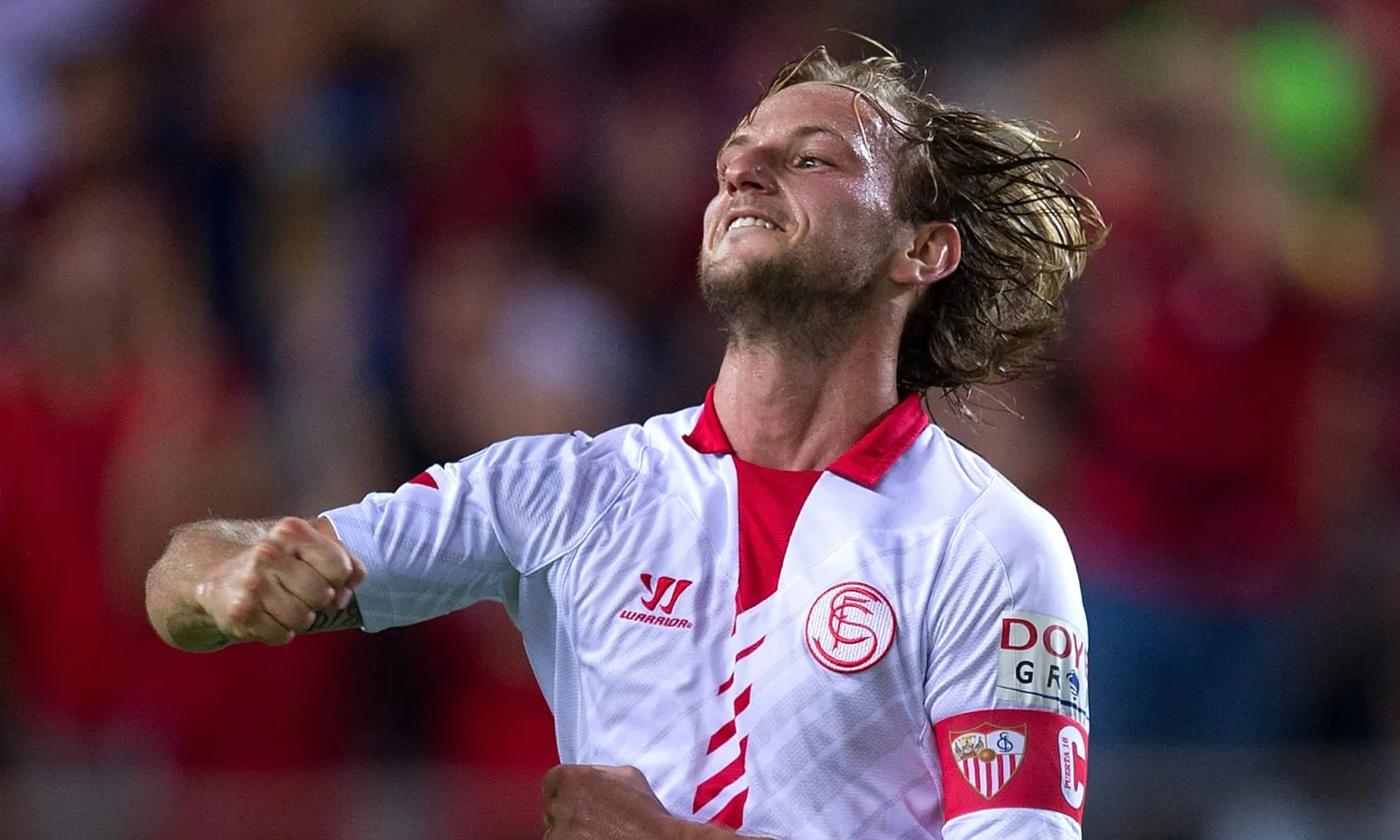
Ivan Rakitic celebrating a goal against Rayo Vallecano in September 2013, during his first spell at Sevilla. Photograph: Denis Doyle/Getty Images
TT

Ivan Rakitic's Move Brings Revelry at Sevilla and Relief in Barcelona

Ivan Rakitic celebrating a goal against Rayo Vallecano in September 2013, during his first spell at Sevilla. Photograph: Denis Doyle/Getty Images

“Bring the best robe and put it on him. Put a ring on his finger and sandals on his feet.” Better still, bring a Sevilla shirt and put his name on the back. Ivan Rakitic’s transfer to Sevilla from Barcelona was foretold with a reading from the bible, quoted by the club: Luke 15:22, the parable of the prodigal son. After six years away, the man they called sevillano has returned home and, as the father declares in the next verse of the new testament, this calls for celebration.

In Seville, that is. In Barcelona, the reaction was more like relief, some sort of resolution finally reached: at least this time they had done the right thing. A little late perhaps and with little reward, but they had. A year after Barcelona tried to force Rakitic out, using him to try to prise Neymar out of Paris and prompting him to note that he is “not a sack of potatoes”, they said farewell. Some did so more fondly than others but, take a step back, and they must see him for what he is: a man who served them so well, a central figure in the team that won it all before the end came.

Back then, Rakitic had been valued at €65m, they said; a year on, when everything must go, he has departed for €1.5m plus add-ons up to €9m, although it won’t reach that: €3m of those are virtually guaranteed and €6m is realistically as much as they can expect. It should probably have happened sooner – for him, as for so many others, 2019-2020 ultimately felt like a season too far – but Barcelona make another small saving on salary, a veteran moved on. Sevilla and Rakitic have what they wanted, a kind of giddy joy greeting the news.

Bring the fattened cow and kill it, the father said to his servants, and there was music and dancing. Read on, mind you, and it’s a little curious Sevilla should apply the parable of the prodigal son – although it is used regularly in Spain for any player welcomed home. The son has wasted his father’s wealth and lived a lost life, accused by his angry, jealous and far more conscientious brother of having “squandered property with prostitutes”. He only returns, repentant, because he is going hungry.

Rakitic, on the other hand, made the most of his time at Barcelona, since departing in 2014. “An incredible professional” according to Ernesto Valverde, there was no waste nor hint of decline until that sad, final season. From the middle of Barcelona’s midfield, he won the treble. There were three doubles, four leagues and four cups. There were 310 games and 36 goals, not that it was about them. Not even when he got the winner against Real Madrid or the opener in the 2015 Champions League final.

At Sevilla he had been a deep or creative midfielder, depending on their needs, better than the rest in both positions. At Barcelona he said if he had to run 5,000 or 10,000 meters for Lionel Messi, Neymar and Luis Suárez that’s what he would do. And so, he did. He wasn’t Xavi, whose place he had to take and at a place where footballing prejudice is powerful, but he was often all things to all teammates: narrow when they needed him to be, open when they wanted it, further forward or back as required. “One hundred per cent reliable,” Valverde called him.

Even those who didn’t much admire him, appreciated him. But it was also easy to slip into something more comfortable. No Barcelona DNA, they said, making him an easy target. Blame was often unevenly, relentlessly apportioned and something he shared with Valverde and Suárez. At a club accused of losing its religion here was a player who was profane and unprotected, unlike others. One whose level, it is true, was slipping with the rest, everything slowing over the past year or so. When he went to Seville’s April fair with his family the day after the collapse at Anfield in 2019, it didn’t help.

Barcelona tried to move him on but couldn’t. Unhappy, he spoke out, which didn’t help much. His role remained limited, if not as limited as critics demanded. There was a reason for that: coaches trusted him. A scapegoat of sorts, his presence was seen by some as symbolic of the club’s failure to address its fundamental flaws, to renew. After he came on to change the game and score the winner against Athletic in June, his first goal in 49 games, Quique Setién said he had “done a master’s”. And yet the feeling lingered that it had gone too far.

Now, he has gone too, back to where he believes he belongs. No one laments him leaving, really: it had to happen. And for him there is happiness. The first night Rakitic spent in Seville, he fell in love. He met Raquel then, ensuring he would not back out on the deal to play at the Pizjuán. She is his wife now, the mother of children he sings to sleep with the Sevilla anthem. Rakitic tells the story that when her grandfather was in hospital, he would not let doctors remove the Sevilla watch he wore. And so the most Spanish of cities became Rakitic’s home.

Briefly, Rakitic had a bar in the city. He also had the armband when the team won the Europa League – the first foreign club captain since Diego Maradona. He said he would go to Barcelona only if it suited them too. Rakitic was replaced by Éver Banega; now he replaces Banega. The money was good and they were happy for their mutual successes. He won the Champions League, they won the Europa League. He remained in contact with the sporting director, Monchi, discussing players like they were old old mates. Conversations between them became a bit more serious this summer, crystallising in his return.

Unlike the prodigal son, he hadn’t turned his back even if he left. Nor had they. The first time Rakitic faced Sevilla, supporters broke from singing their anthem to sing his name. A huge banner read: “This will always be your home. Thank you, Captain”. At the end, he approached the north end to give them his shirt; he gave them his boots and socks too, heading back with them still chanting his name. Barcelona flew to Catalonia that night; he stayed in Seville.

When Sevilla won the Europa League last month, Rakitic celebrated by filming himself leaping into a swimming pool. Now, Sevilla’s fans celebrate his return as effusively, excitement overflowing. That dive didn’t go down well in Barcelona but by then he was more out than in. He was ready to go and knew where he wanted to go, expressed in that splash landing. In an interview in the spring, he said he hoped to go to “a place where I am wanted, respected and needed and where my family and I feel good”.

A place like home, where there was music and dancing and the finest robes: a Sevilla shirt with Rakitic’s name on again.

(The Guardian)



Tottenham Hotspur Sack Head Coach Thomas Frank

(FILES) Tottenham Hotspur's Danish head coach Thomas Frank gestures on the touchline during the English Premier League football match between Burnley and Tottenham Hotspur at Turf Moor in Burnley, north-west England on January 24, 2026. (Photo by Oli SCARFF / AFP)/
TT

Tottenham Hotspur Sack Head Coach Thomas Frank

(FILES) Tottenham Hotspur's Danish head coach Thomas Frank gestures on the touchline during the English Premier League football match between Burnley and Tottenham Hotspur at Turf Moor in Burnley, north-west England on January 24, 2026. (Photo by Oli SCARFF / AFP)/

Thomas Frank was fired by Tottenham on Wednesday after only eight months in charge and with his team just five points above the relegation zone in the Premier League.

Despite leading Spurs to the round of 16 in the Champions League, Frank has overseen a desperate domestic campaign. A 2-1 loss to Newcastle on Tuesday means Spurs are still to win in the league in 2026.

“The Club has taken the decision to make a change in the Men’s Head Coach position and Thomas Frank will leave today,” Tottenham said in a statement. “Thomas was appointed in June 2025, and we have been determined to give him the time and support needed to build for the future together.

“However, results and performances have led the Board to conclude that a change at this point in the season is necessary.”

Frank’s exit means Spurs are on the lookout for a sixth head coach in less than seven years since Mauricio Pochettino departed in 2019.


Marseille Coach De Zerbi Leaves After Humiliating 5-0 Loss to PSG 

Marseille's Italian coach Roberto De Zerbi looks on from the technical area during the French Cup round of 32 football match between FC Bayeux and Olympique de Marseille (OM) at the Michel-d'Ornano Stadium in Caen on January 13, 2026. (AFP) 
TT

Marseille Coach De Zerbi Leaves After Humiliating 5-0 Loss to PSG 

Marseille's Italian coach Roberto De Zerbi looks on from the technical area during the French Cup round of 32 football match between FC Bayeux and Olympique de Marseille (OM) at the Michel-d'Ornano Stadium in Caen on January 13, 2026. (AFP) 

Marseille coach Roberto De Zerbi is leaving the French league club in the wake of a 5-0 thrashing at the hands of PSG in French soccer biggest game.

The nine-time French champions said on Wednesday that they have ended “their collaboration by mutual agreement.”

The heavy loss Sunday at the Parc des Princes restored defending champion PSG’s two-point lead over Lens after 21 rounds, with Marseille in fourth place after the humiliating defeat.

De Zerbi's exit followed another embarrassing 3-0 loss at Club Brugge two weeks ago that resulted in Marseille exiting the Champions League.

De Zerbi, who had apologized to Marseille fans after the loss against bitter rival PSG, joined Marseille in 2024 after two seasons in charge at Brighton. After tightening things up tactically in Marseille during his first season, his recent choices had left many observers puzzled.

“Following consultations involving all stakeholders in the club’s leadership — the owner, president, director of football and head coach — it was decided to opt for a change at the head of the first team,” Marseille said. “This was a collective and difficult decision, taken after thorough consideration, in the best interests of the club and in order to address the sporting challenges of the end of the season.”

De Zerbi led Marseille to a second-place finish last season. Marseille did not immediately announce a replacement for De Zerbi ahead of Saturday's league match against Strasbourg.

Since American owner Frank McCourt bought Marseille in 2016, the former powerhouse of French soccer has failed to find any form of stability, with a succession of coaches and crises that sometimes turned violent.

Marseille dominated domestic soccer in the late 1980s and early 1990s. It was the only French team to win the Champions League before PSG claimed the trophy last year. It hasn’t won its own league title since 2010.


Olympic Fans Hunt for Plushies of Mascots Milo and Tina as They Fly off Shelves 

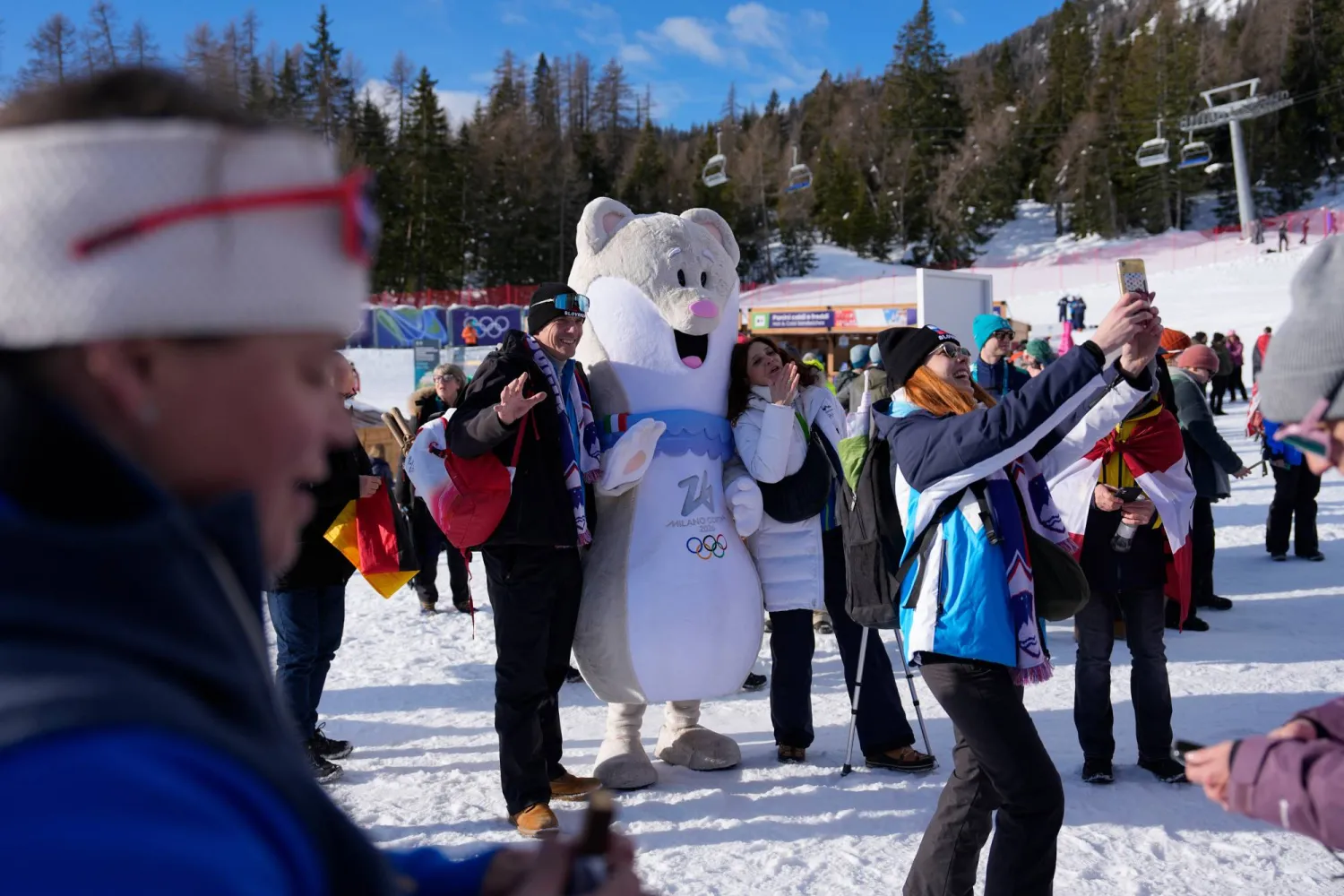
Fans take selfies with the Olympic mascot Tina at the finish area of an alpine ski, slalom portion of a women's team combined race, at the 2026 Winter Olympics, in Cortina d'Ampezzo, Italy, Tuesday, Feb. 10, 2026. (AP)
TT

Olympic Fans Hunt for Plushies of Mascots Milo and Tina as They Fly off Shelves 

Fans take selfies with the Olympic mascot Tina at the finish area of an alpine ski, slalom portion of a women's team combined race, at the 2026 Winter Olympics, in Cortina d'Ampezzo, Italy, Tuesday, Feb. 10, 2026. (AP)

For fans of the Milan Cortina Olympic mascots, the eponymous Milo and Tina, it's been nearly impossible to find a plush toy of the stoat siblings in Milan and Cortina d’Ampezzo.

Many of the official Olympics stores in the host cities are already sold out, less than a week into the Winter Games.

“I think the only way to get them is to actually win a medal,” Julia Peeler joked Tuesday in central Milan, where Tina and Milo characters posed for photos with fans.

The 38-year-old from South Carolina is on the hunt for the plushies for her niece. She's already bought some mascot pins, but she won't wear them on her lanyard. Peeler wants to avoid anyone trying to swap for them in a pin trade, a popular Olympic pastime.

Tina, short for Cortina, is the lighter-colored stoat and represents the Olympic Winter Games. Her younger brother Milo, short for Milano, is the face of the Paralympic Winter Games.

Milo was born without one paw but learned to use his tail and turn his difference into a strength, according to the Olympics website. A stoat is a small mustelid, like a weasel or an otter.

The animals adorn merchandise ranging from coffee mugs to T-shirts, but the plush toys are the most popular.

They're priced from 18 to 58 euros (about $21 to $69) and many of the major official stores in Milan, including the largest one at the iconic Duomo Cathedral, and Cortina have been cleaned out. They appeared to be sold out online Tuesday night.

Winning athletes are gifted the plush toys when they receive their gold, silver and bronze medals atop the podium.

Broadcast system engineer Jennifer Suarez got lucky Tuesday at the media center in Milan. She's been collecting mascot toys since the 2010 Vancouver Games and has been asking shops when they would restock.

“We were lucky we were just in time,” she said, clutching a tiny Tina. “They are gone right now.”

Friends Michelle Chen and Brenda Zhang were among the dozens of fans Tuesday who took photos with the characters at the fan zone in central Milan.

“They’re just so lovable and they’re always super excited at the Games, they are cheering on the crowd,” Chen, 29, said after they snapped their shots. “We just are so excited to meet them.”

The San Franciscan women are in Milan for the Olympics and their friend who is “obsessed” with the stoats asked for a plush Tina as a gift.

“They’re just so cute, and stoats are such a unique animal to be the Olympic mascot,” Zhang, 28, said.

Annie-Laurie Atkins, Peeler's friend, loves that Milo is the mascot for Paralympians.

“The Paralympics are really special to me,” she said Tuesday. “I have a lot of friends that are disabled and so having a character that also represents that is just incredible.”