


End of the Runway? Fashion World Mulls Post-COVID Future

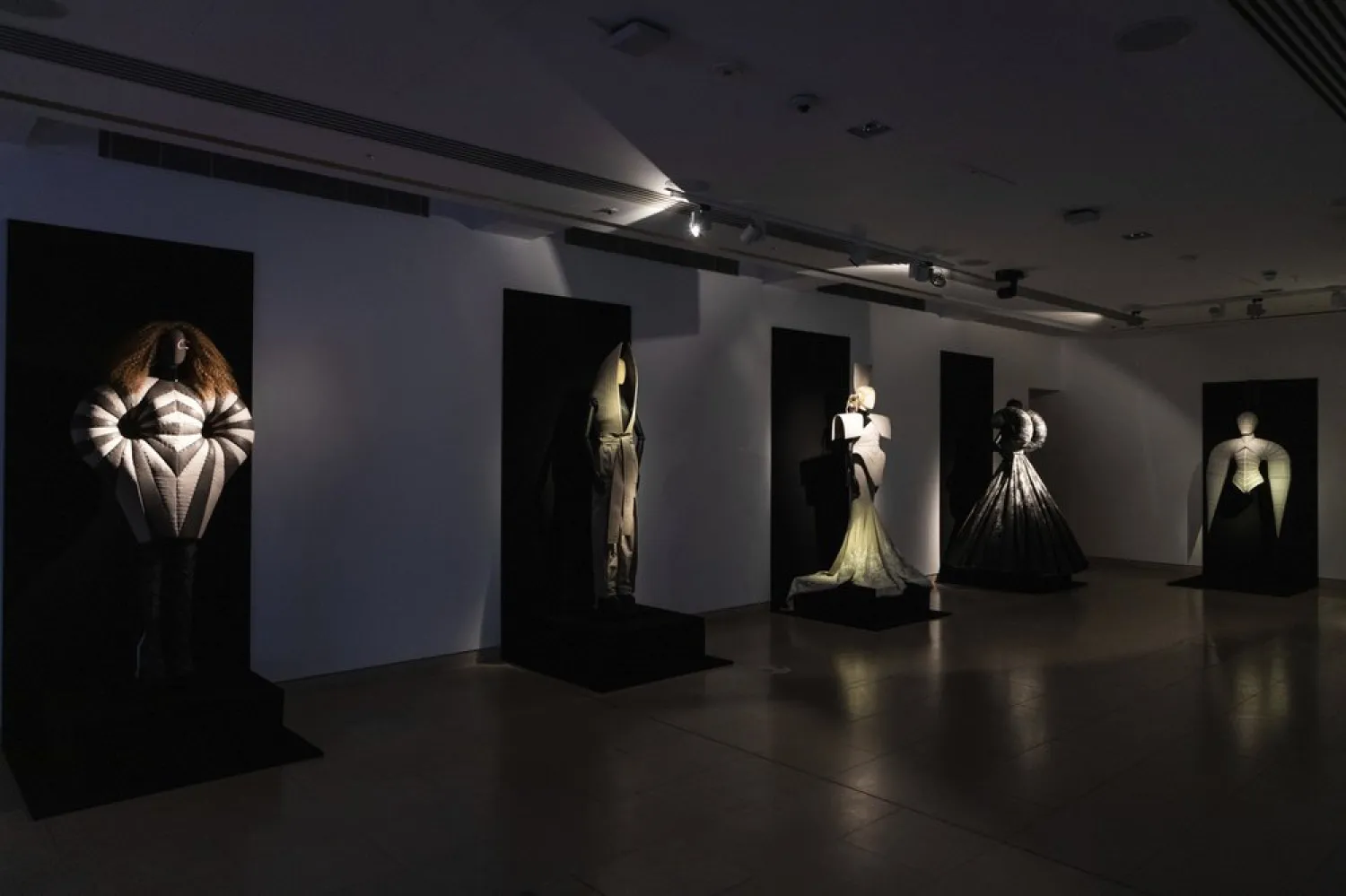
Creations by fashion designer Gareth Pugh is exhibited ahead of his London Fashion Week show in London, Wednesday, Sept. 16, 2020. (AP)
TT

End of the Runway? Fashion World Mulls Post-COVID Future

Creations by fashion designer Gareth Pugh is exhibited ahead of his London Fashion Week show in London, Wednesday, Sept. 16, 2020. (AP)

It’s the September fashion week season, and in any other year London would be abuzz with fashionistas zipping across town in Mercedes Benzes, hobnobbing with celebrities at glittering catwalk shows before sipping champagne at late-night parties.

This is no typical year, though, and London Fashion Week is decidedly less glamorous. There are all of three socially-distanced catwalk shows, with a smattering of small salon shows or invitation-only appointments offered by designers like Victoria Beckham and Christopher Kane. International buyers, editors, and models aren’t jetting in.

With most designers showing their wares online only, style in the COVID era is largely limited to streaming fashion shows on an iPad from the couch - probably with slippers in place of stilettos.

The luxury brand Burberry, which usually hosts a packed runway show complete with a red-carpet reception for A-list celebrities, decamped its models to a forest clearing Thursday for a live-streamed show with no catwalk or physical audience. Burberry shared its blend of performance art and fashion with some 42,000 viewers via Twitch, the streaming service for online gamers.

“This is not a full-blown fashion week - it’s not mass audiences. It’s very much happening in private and the scales have tipped in favor of digital,” said Caroline Rush, chief executive of the British Fashion Council, which organizes London Fashion Week.

Still, she said, it’s a step forward - albeit a small and tentative one - for the industry to regain some semblance of “the life we were living before.”

The fashion industry has been hit hard by the coronavirus pandemic, and in Europe, where countries are seeing an alarming new surge in cases, few consumers are in the mood to buy luxury bags and dresses. Nor are they likely to resume spending to pre-pandemic levels any time soon, with weddings and parties largely cancelled and big parts of the workforce staying at home. Forecasts by analysts predict global luxury goods sales could drop by 20% to 35% this year.

Many say that has forced a sharp rethink about how the business works. That includes questioning how the traditional calendar of biannual fashion weeks - always staged across New York, London, Milan and Paris - is organized, and how to leverage new technologies instead.

While the glitzy trade events are key for designers to connect with global retailers and consumers, some critics say the relentless pace of fashion weeks generate an unnecessarily huge carbon footprint - and contribute to an unsustainable cycle of over-production.

“It’s a moment of reflection in terms of shows, but also in terms of business models and environmental impact. It’s a moment to reset,” Rush said.

Even before the virus outbreak, brands had been experimenting with technology to get to broader audiences by streaming shows online. In the same way that companies in other sectors are wondering whether employees will return to offices after the pandemic, the fashion industry is questioning whether there is even a place for models strutting up and down runways.

Imran Amed, founder of the influential trade news website Business of Fashion, thinks that while there is no replacing the atmosphere of an in-person show, virtual or augmented reality will play an increasing role. Virtual reality provides an immersive 3D experience, whereas augmented reality overlays digital images on a viewer's surroundings, so that a model might be seen walking through their living room.

“For people to, say, experience a Burberry show or a Prada show or a Vuitton show in their homes using augmented reality, with the ability then to pre-order some of the things they've seen - that's where I think there may be some opportunity,” Amed said.

“I don’t think we’ll completely get rid of fashion weeks, but at the same time I think there will be new ways of showing clothes that we haven’t really seen yet,” he added. “I just don’t think we need as many shows, in as many cities, for as much of the time of the year.”

Designer Gareth Pugh, who hasn’t appeared on the London Fashion Week roster for two years, said it was an exciting time to return and stage a multimedia fashion exhibition he called “The Reconstruction” because the usual rules are out the window.

The exhibition at London auction house Christie’s showcases 13 designs that appear on mannequins, in art photographs and in a documentary. Fittingly, one of the looks features long, sinister beaked head coverings harking back to the plague masks worn during the 17th century.

Pugh is known for experimenting with fashion boundaries: his dramatic and sculptural styles, worn by the likes of Lady Gaga and Nicki Minaj, have never been geared toward the whims of the commercial market, and he ditched the runway for artsy fashion films to showcase his creative vision years before anyone did.

The pandemic is a moment for “creative problem-solvers” who are willing to bend the rules to step forward, he said.

“Right now when those established ways of doing things is questioned, and are impossible to actually implement anymore, we have to reinvent,” he said. “You don’t have to do what everybody else does. You don’t have to get 400 people in one room and show your work in that way.”


Pieter Mulier Named Creative Director of Versace

(FILES) Pieter Mulier attends the 2025 CFDA Awards at The American Museum of Natural History on November 03, 2025 in New York City. (Photo by Dimitrios Kambouris / GETTY IMAGES NORTH AMERICA / AFP)
TT

Pieter Mulier Named Creative Director of Versace

(FILES) Pieter Mulier attends the 2025 CFDA Awards at The American Museum of Natural History on November 03, 2025 in New York City. (Photo by Dimitrios Kambouris / GETTY IMAGES NORTH AMERICA / AFP)

Belgian fashion designer Pieter Mulier has been named the new creative director of the Milan fashion house Versace starting July 1, according to an announcement on Thursday from the Prada Group, which owns Versace.

Mulier is currently creative director of the French fashion house Alaïa, and was previously the right-hand man of fellow Belgian designer and Prada co-creative director Raf Simons at Calvin Klein, Jil Sander and Dior.

In his new role, Mulier will report to Versace executive chairman Lorenzo Bertelli, the designated successor to manage the family-run Prada Group. Bertelli is the son of Miuccia Prada and Prada Group chairman Patrizio Bertelli.

“We believe that he can truly unlock Versace’s full potential and that he will be able to engage in a fruitful dialogue,’’ The Associated Press quoted Lorenzo Bertelli as saying of Mulier in a statement.

Mulier takes over from Dario Vitale, who departed in December after previewing just one collection during his short-lived Versace stint.

Mulier was honored last fall by supermodel and longtime Alaïa muse Naomi Campbell at the Council of Fashion Designers of America for his work paying tribute to brand founder Azzedine Alaïa. Mulier took the creative helm in 2021, after Alaïa’s death.


Ralph Lauren’s Margin Caution Eclipses Stronger‑than‑expected Quarterly Results

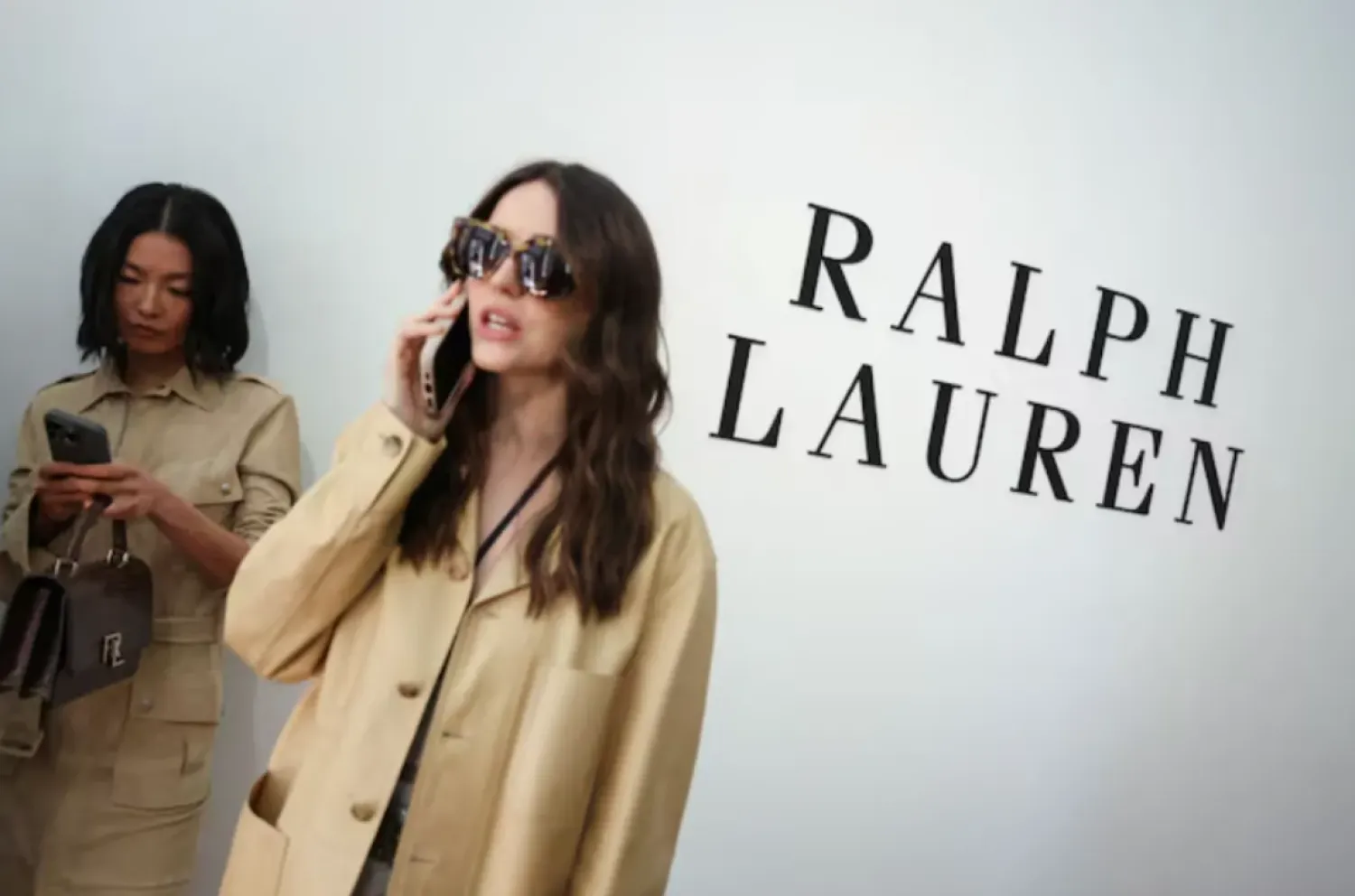
Guests wait after viewing the latest Ralph Lauren collection in New York City, US, April 17, 2025. REUTERS/Caitlin Ochs/File photo
TT

Ralph Lauren’s Margin Caution Eclipses Stronger‑than‑expected Quarterly Results

Guests wait after viewing the latest Ralph Lauren collection in New York City, US, April 17, 2025. REUTERS/Caitlin Ochs/File photo

Ralph Lauren posted third-quarter results above Wall Street estimates on Thursday, but the luxury retailer's warning of margin pressure tied to US tariffs sent its shares down nearly 6.4% in premarket trading.

The company expects fourth-quarter margins, its smallest revenue period, to shrink about 80 to 120 basis points due to higher tariff pressure and marketing spend.

Ralph Lauren, which sources its products from regions such as China, India and Vietnam, has relied on raising prices and reallocating production to regions with lower duty exposure to offset US tariff pressures, Reuters reported.

"Ralph Lauren has been able to raise prices for some time now. There is some limit on how long it can continue to do this. I think (the company's) gross margins are near peak levels," Morningstar analyst David Swartz said.

The company, which sells $148 striped linen shirts and $498 leather handbags, has tightened inventory, lifted full-price sales and refreshed core styles, boosting its appeal among wealthier and younger customers, including Gen Z.

Higher-income households are still splurging on luxury items, travel and restaurant meals, while lower- and middle-income consumers are strained by higher costs for rents and food as well as a softer job market.

The New York City-based company saw quarterly operating costs jump 12% year-on-year as it ramped up brand building efforts through sports-focused brand campaigns such as Wimbledon and the US Open tennis championship.

The luxury retailer said revenue in the quarter ended December 27 rose 12% to $2.41 billion, above analysts' estimates of a 7.9% rise to $2.31 billion, according to data compiled by LSEG.

It earned $6.22 per share, excluding items, compared to expectations of $5.81, aided by a 220 basis points increase in margins and an 18% rise in average unit retail across its direct-to-consumer channel.

Ralph Lauren now expects fiscal 2026 revenue to rise in the high single to low double digits on a constant currency basis, up from its prior forecast of a 5% to 7% growth.


Saudi Fashion Commission, Kering Launch 'Kering Generation Award X MENA'

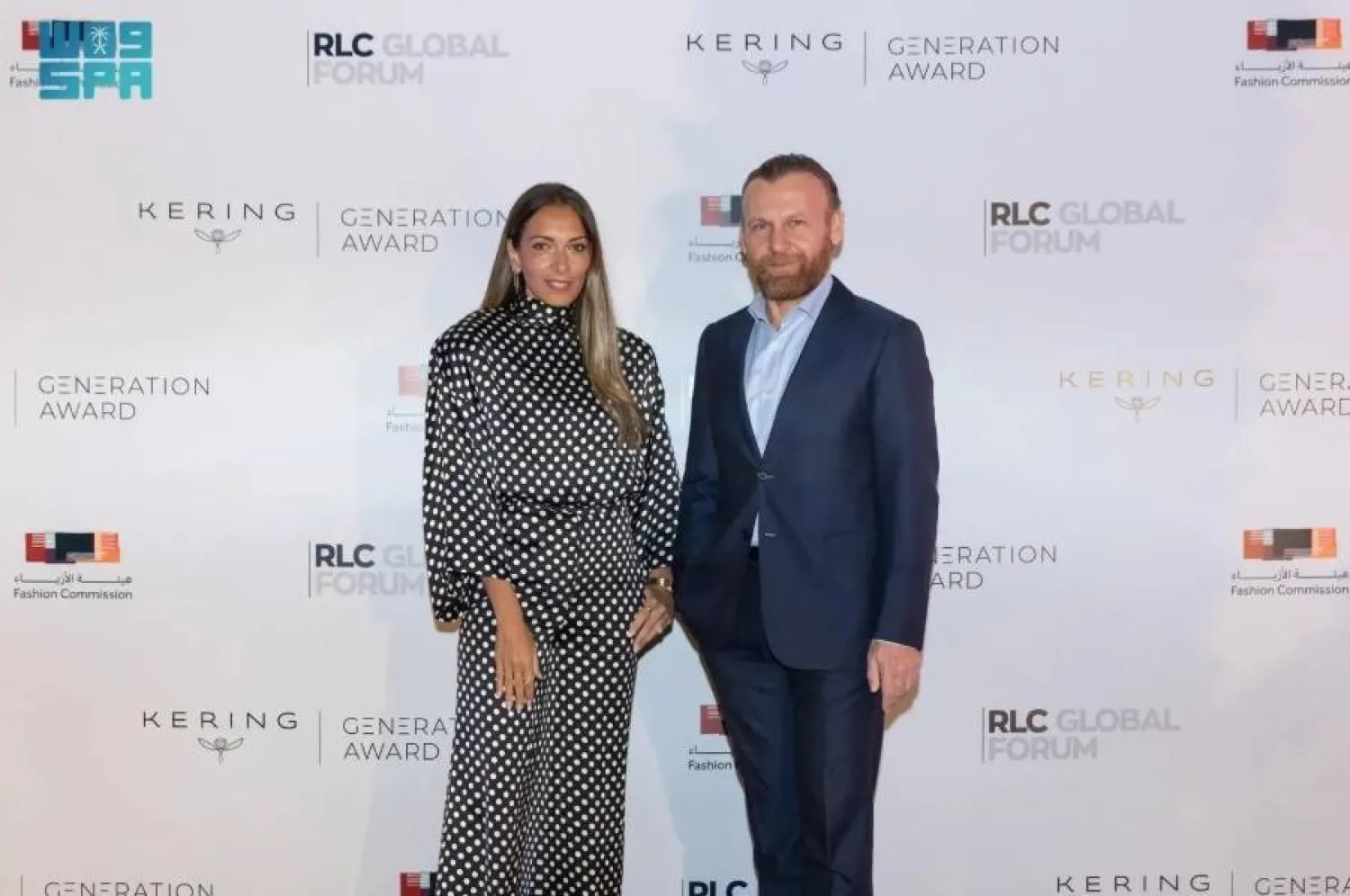
This year's award builds on the strong success of the 2025 award, which attracted more than 500 applications, shortlisted 21 finalists, and recognized three winners. SPA
TT

Saudi Fashion Commission, Kering Launch 'Kering Generation Award X MENA'

This year's award builds on the strong success of the 2025 award, which attracted more than 500 applications, shortlisted 21 finalists, and recognized three winners. SPA

Saudi Arabia’s Fashion Commission and global luxury group Kering have launched the "Kering Generation Award X MENA" across the Middle East and North Africa (MENA) for 2026.

The announcement was made on Tuesday during the opening of the RLC Global Forum, hosted at the French Embassy in Riyadh.

This year's award builds on the strong success of the 2025 award, which attracted more than 500 applications, shortlisted 21 finalists, and recognized three winners.

Participants benefited from mentorship programs, workshops, and opportunities to strengthen their global presence. Building on this momentum, the 2026 program seeks to expand its impact across the MENA region.

The 2026 award focuses on four key areas of sustainable fashion: innovation in regenerative materials and clean production, circular design and sustainable business models, nature conservation and animal welfare, and consumer awareness and cultural engagement.

The program targets startups across the MENA region that operate in, or positively influence, the sustainable fashion sector, provided they demonstrate innovation capabilities and the ability to deliver measurable sustainability outcomes.