


Richest 1%'s Emissions Twice That of Poorest 50%: Analysis

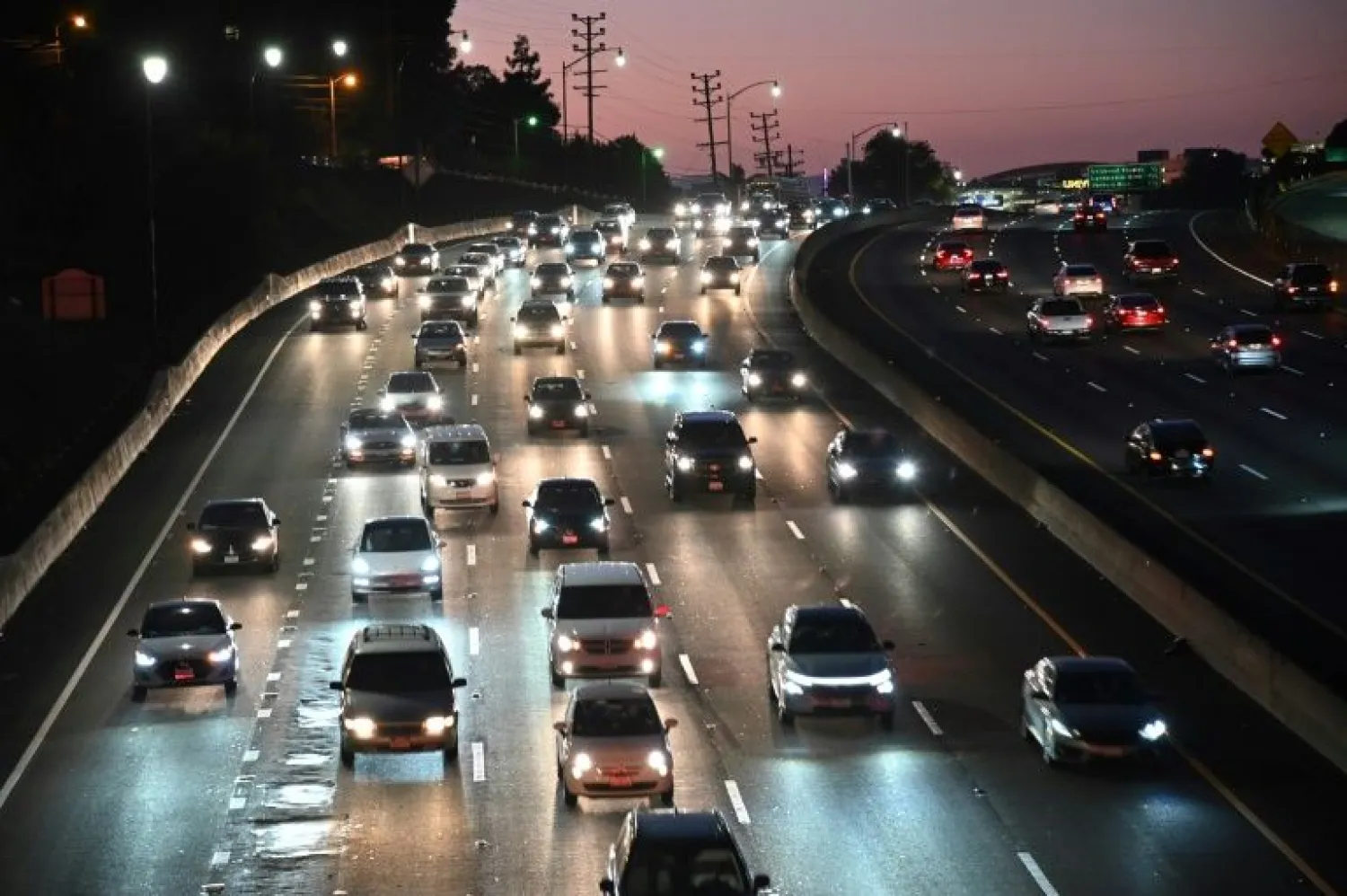
The analysis showed richer nations had depleted nearly a third of Earth's carbon budge since 1990 | AFP
TT

Richest 1%'s Emissions Twice That of Poorest 50%: Analysis

The analysis showed richer nations had depleted nearly a third of Earth's carbon budge since 1990 | AFP

The richest one percent of people are responsible for more than twice as much carbon pollution as the poorest half of the world's population -- 3.1 billion people -- new research showed Monday.

Despite a sharp decrease in carbon emissions due to the pandemic, the world remains on pace to warm several degrees this century, threatening poor and developing nations with the full gamut of natural disasters and displacements.

An analysis led by Oxfam showed that between 1990 and 2015, when annual emissions ballooned 60 percent, rich nations were responsible for depleting nearly a third of Earth's carbon budget.

The carbon budget is the limit of cumulative greenhouse gas emissions mankind may produce before rendering catastrophic temperature rises unavoidable.

Just 63 million people -- the "one percent" -- took up nine percent of the carbon budget since 1990, research conducted for Oxfam by the Stockholm Environment Institute found.

Highlighting an ever-widening "carbon inequality", the analysis said the growth rate of the one percent's emissions was three times that of the poorest half of humanity.

"It's not just that extreme economic inequality is divisive in our societies, it's not just that it slows the rate of poverty reduction," Tim Gore, head of policy, advocacy and research, told AFP.

"But there is also a third cost which is that it depletes the carbon budget solely for the purpose of the already affluent growing their consumption."

"And that of course has the worse impacts on the poorest and least responsible," Gore added.

The 2015 Paris climate deal commits nations to limit global temperature rise to "well below" two degrees Celsius above pre-industrial levels.

But emissions have continued to rise since then, and several analyses have warned that without a thoroughly re-tooled global economy prioritizing green growth, the pollutions savings due to Covid-19 will have an insignificant mitigating impact on climate change.

With just 1C of warming so far, Earth is already battling more frequent and intense wildfires, droughts, and superstorms rendered more powerful by rising seas.

Gore said governments must put the twin challenges of climate change and inequality at the heart of any Covid-19 recovery plan.

"It's clear that the carbon intensive and highly unequal model of economic growth over the last 20-30 years has not benefited the poorest half of humanity," he said.

"It's a false dichotomy to suggest that we have to choose between economic growth and (fixing) the climate crisis."

Commenting on the Oxfam report, Hindou Oumarou Ibrahim, an environment activist and president of the Association for Indigenous Women and Peoples of Chad, said that climate change could not be tackled without prioritizing economic equality.

"My indigenous peoples have long borne the brunt of environmental destruction," said Ibrahim.

"Now is the time to listen, to integrate our knowledge, and to prioritize saving nature to save ourselves."



Iran Strikes Hard Line on US Talks, Saying Tehran's Power Comes From Saying 'No'

Traffic moves through a street in Tehran on February 7, 2026. (Photo by ATTA KENARE / AFP)
TT

Iran Strikes Hard Line on US Talks, Saying Tehran's Power Comes From Saying 'No'

Traffic moves through a street in Tehran on February 7, 2026. (Photo by ATTA KENARE / AFP)

Iran's top diplomat insisted Sunday that Tehran's strength came from its ability to “say no to the great powers," striking a maximalist position just after negotiations with the United States over its nuclear program and in the wake of nationwide protests.

Foreign Minister Abbas Araghchi, speaking to diplomats at a summit in Tehran, signaled that Iran would stick to its position that it must be able to enrich uranium — a major point of contention with President Donald Trump, who bombed Iranian atomic sites in June during the 12-day Iran-Israel war.

Iran will never surrender the right to enrich uranium, even if war "is imposed on us,” he noted.

"Iran has paid a very heavy price for its peaceful nuclear program and for uranium enrichment." 

Israeli Prime Minister Benjamin Netanyahu is expected to travel to Washington this week, with Iran expected to be the major subject of discussion, his office said.

While Iranian President Masoud Pezeshkian praised the talks Friday in Oman with the Americans as “a step forward,” Araghchi's remarks show the challenge ahead. Already, the US moved the aircraft carrier USS Abraham Lincoln, ships and warplanes to the Middle East to pressure Iran into an agreement and have the firepower necessary to strike the Islamic Republic should Trump choose to do so, according to The AP news.

“I believe the secret of the Islamic Republic of Iran’s power lies in its ability to stand against bullying, domination and pressures from others," Araghchi said.

"They fear our atomic bomb, while we are not pursuing an atomic bomb. Our atomic bomb is the power to say no to the great powers. The secret of the Islamic Republic’s power is in the power to say no to the powers.”

‘Atomic bomb’ as rhetorical device Araghchi's choice to explicitly use an “atomic bomb” as a rhetorical device likely wasn't accidental. While Iran has long maintained its nuclear program is peaceful, the West and the International Atomic Energy Agency say Tehran had an organized military program to seek the bomb up until 2003.

Iran had been enriching uranium up to 60% purity, a short, technical step to weapons-grade levels of 90%, the only non-weapons state to do so. Iranian officials in recent years had also been increasingly threatening that Tehran could seek the bomb, even while its diplomats have pointed to Iranian Supreme Leader Ali Khamenei’s preachings as a binding fatwa, or religious edict, that Iran wouldn’t build one.

Pezeshkian, who ordered Araghchi to pursue talks with the Americans after likely getting Khamenei's blessing, also wrote on X on Sunday about the talks.

“The Iran-US talks, held through the follow-up efforts of friendly governments in the region, were a step forward,” the president wrote. “Dialogue has always been our strategy for peaceful resolution. ... The Iranian nation has always responded to respect with respect, but it does not tolerate the language of force.”

It remains unclear when and where, or if, there will be a second round of talks. Trump, after the talks Friday, offered few details but said: “Iran looks like they want to make a deal very badly — as they should.”

Aircraft carrier in the Arabian Sea During Friday's talks, US Navy Adm. Brad Cooper, the head of the American military's Central Command, was in Oman. Cooper's presence was apparently an intentional reminder to Iran about US military power in the region. Cooper later accompanied US special envoy Steve Witkoff and Jared Kushner, Trump's son-in-law, to the Lincoln out in the Arabian Sea after the indirect negotiations.

Araghchi appeared to be taking the threat of an American military strike seriously, as many worried Iranians have in recent weeks. He noted that after multiple rounds of talks last year, the US “attacked us in the midst of negotiations."

“If you take a step back (in negotiations), it is not clear up to where it will go,” Araghchi said.


Russia: Man Suspected of Shooting Top General Detained in Dubai

An investigator works outside a residential building where the assassination attempt on Russian Lieutenant General Vladimir Alexeyev took place in Moscow, Russia February 6, 2026. REUTERS/Anastasia Barashkova
TT

Russia: Man Suspected of Shooting Top General Detained in Dubai

An investigator works outside a residential building where the assassination attempt on Russian Lieutenant General Vladimir Alexeyev took place in Moscow, Russia February 6, 2026. REUTERS/Anastasia Barashkova

Russia's Federal Security Service (FSB) said on Sunday that the man suspected of shooting top Russian military intelligence officer Vladimir Alexeyev in Moscow has been detained in Dubai and handed over to Russia.

Lieutenant General Vladimir Alexeyev, deputy head of the GRU, ⁠Russia's military intelligence arm, was shot several times in an apartment block in Moscow on Friday, investigators said. He underwent surgery after the shooting, Russian media ⁠said.

The FSB said a Russian citizen named Lyubomir Korba was detained in Dubai on suspicion of carrying out the shooting.

Russian Foreign Minister Sergei Lavrov accused Ukraine of being behind the assassination attempt, which he said was designed to sabotage peace talks. ⁠Ukraine said it had nothing to do with the shooting.

Alexeyev's boss, Admiral Igor Kostyukov, the head of the GRU, has been leading Russia's delegation in negotiations with Ukraine in Abu Dhabi on security-related aspects of a potential peace deal.


Factory Explosion Kills 8 in Northern China

Employees work on an electric vehicle (EV) production line at the Volkswagen Anhui factory in Hefei, Anhui province, China, February 4, 2026. REUTERS/Florence Lo
TT

Factory Explosion Kills 8 in Northern China

Employees work on an electric vehicle (EV) production line at the Volkswagen Anhui factory in Hefei, Anhui province, China, February 4, 2026. REUTERS/Florence Lo

An explosion at a biotech factory in northern China has killed eight people, Chinese state media reported Sunday, increasing the total number of fatalities by one.

State news agency Xinhua had previously reported that seven people died and one person was missing after the Saturday morning explosion at the Jiapeng biotech company in Shanxi province, citing local authorities.

Later, Xinhua said eight were dead, adding that the firm's legal representative had been taken into custody.

The company is located in Shanyin County, about 400 kilometers west of Beijing, AFP reported.

Xinhua said clean-up operations were ongoing, noting that reporters observed dark yellow smoke emanating from the site of the explosion.

Authorities have established a team to investigate the cause of the blast, the report added.

Industrial accidents are common in China due to lax safety standards.
In late January, an explosion at a steel factory in the neighboring province of Inner Mongolia left at least nine people dead.