


Saudi to Gradually Resume 'Umrah' Pilgrimage From October 4

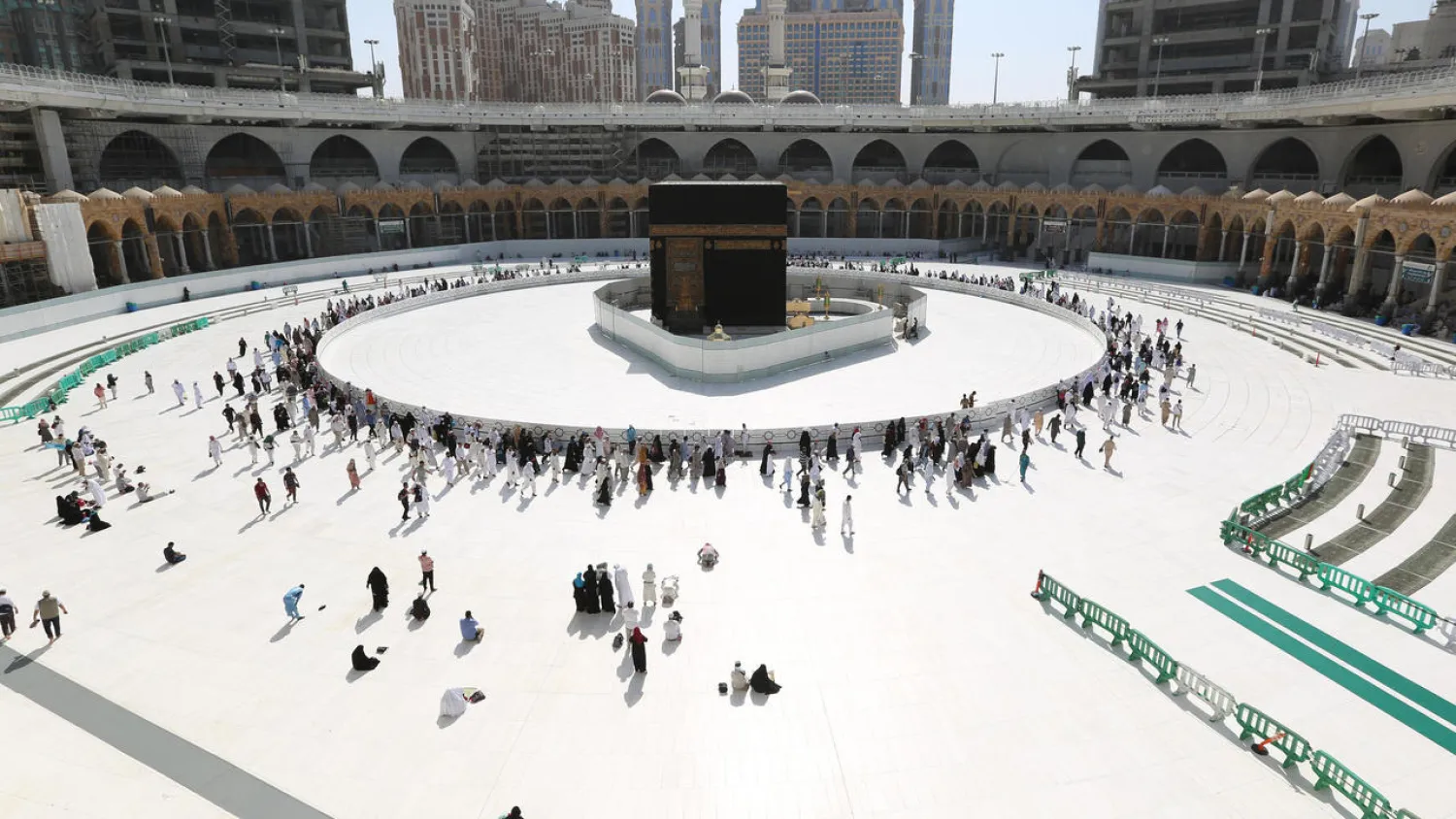
The kingdom suspended the umrah in March and later scaled back the annual hajj due to  the coronavirus pandemic | AFP
The kingdom suspended the umrah in March and later scaled back the annual hajj due to the coronavirus pandemic | AFP
TT

Saudi to Gradually Resume 'Umrah' Pilgrimage From October 4

The kingdom suspended the umrah in March and later scaled back the annual hajj due to  the coronavirus pandemic | AFP
The kingdom suspended the umrah in March and later scaled back the annual hajj due to the coronavirus pandemic | AFP

Saudi Arabia will gradually resume the year-round umrah pilgrimage for Muslims from October 4, the interior ministry said Tuesday, seven months after it was suspended because of the coronavirus pandemic.

The kingdom had suspended the umrah in March and later scaled back the annual hajj amid fears that the coronavirus could spread to Islam's holiest sites.

In the first stage, "6,000 citizens and residents within the kingdom will be allowed to perform the umrah per day from October 4", the ministry said in a statement published by the official Saudi Press Agency.

Visitors from outside the kingdom will be permitted from November 1, when umrah's capacity will be raised to 20,000 pilgrims per day, the ministry added.

The umrah, which refers to the Islamic pilgrimage to Makkah that can be undertaken at any time of year, usually attracts millions of Muslims from across the globe each year.

The ministry said umrah would be allowed to resume at full "natural capacity" once the threat of the pandemic is eliminated.

The decision to resume umrah was in response to the "aspirations of Muslims home and abroad" to perform the ritual and visit the holy sites, the ministry added.

The decision comes after the kingdom organized the smallest hajj in modern history in late July, with only up to 10,000 Muslims allowed to take part in total -- a far cry from the 2.5 million who participated last year.

Health authorities said no coronavirus cases were reported at the holy sites during the hajj, one of the five pillars of Islam and a must for able-bodied Muslims at least once in their lifetime.

Hajj pilgrims circled the sacred Kaaba -- a cubic structure inside Mecca's Grand Mosque towards which Muslims around the world pray -- along socially distant paths.

The pilgrims were also subjected to regular temperature checks and required to go into mandatory quarantine after the ritual.

- 'Double efforts' -

King Salman, the kingdom's 84-year-old ruler, said holding the hajj in the shadow of the pandemic required "double efforts" by Saudi authorities.

The hajj and umrah pilgrimages are a massive logistical challenge, with colossal crowds cramming into relatively small holy sites, making them vulnerable to contagion.

The kingdom has sought to contain a spike in infections, which have now risen to more than 330,000 cases -- the highest in the Gulf -- and over 4,500 deaths.

But Saudi Arabia has also reported a high rate of recoveries, which surpassed 312,000 on Tuesday.

Last week, Saudi Arabia partially lifted its suspension on international flights, six months after travel curbs were imposed due to the pandemic.

The government hopes to welcome 30 million pilgrims to the kingdom annually by 2030.


Saudi and Guatemalan FMs Discuss Bilateral Ties

The Saudi Minister of Foreign Affairs met on Sunday with his Guatemalan counterpart in Riyadh. SPA
TT

Saudi and Guatemalan FMs Discuss Bilateral Ties

The Saudi Minister of Foreign Affairs met on Sunday with his Guatemalan counterpart in Riyadh. SPA

Saudi Minister of Foreign Affairs Prince Faisal bin Farhan bin Abdullah met on Sunday with his Guatemalan counterpart Carlos Ramiro Martínez in Riyadh.

During the meeting, they reviewed bilateral relations and discussed developments of mutual interest.


Faisal bin Farhan, Barrack Discuss Developments in Syria

The Saudi Minister of Foreign Affairs Prince met on Sunday with the US Special Envoy for Syria in Riyadh.(SPA)
TT

Faisal bin Farhan, Barrack Discuss Developments in Syria

The Saudi Minister of Foreign Affairs Prince met on Sunday with the US Special Envoy for Syria in Riyadh.(SPA)

Saudi Minister of Foreign Affairs Prince Faisal bin Farhan bin Abdullah met on Sunday with US Special Envoy for Syria Tom Barrack in Riyadh.

During the meeting, they reviewed developments in Syria.


GCC Secretary-General Condemns Attack on WFP Aid Convoy in Sudan's North Kordofan

Secretary General of the Gulf Cooperation Council Jasem Mohamed Albudaiwi. GCC
TT

GCC Secretary-General Condemns Attack on WFP Aid Convoy in Sudan's North Kordofan

Secretary General of the Gulf Cooperation Council Jasem Mohamed Albudaiwi. GCC

Secretary-General of the Gulf Cooperation Council (GCC) Jasem Albudaiwi has expressed his condemnation regarding the targeting of a World Food Program (WFP) aid convoy in the North Kordofan State in Sudan.

He characterized this assault as a grave violation of international humanitarian law and an unacceptable transgression of the rules and norms that safeguard humanitarian operations, SPA reported.

"The targeting of relief convoys and humanitarian workers is a reprehensible act that obstructs the delivery of vital assistance to those affected," he said, adding that such actions exacerbate the suffering of civilians, particularly given the dire humanitarian conditions currently prevailing in Sudan.

Albudaiwi also referenced the statement of the GCC Supreme Council’s 46th Session, which reaffirmed support for peace-building efforts aimed at preserving Sudan’s security, stability, and sovereignty.

The statement also underscored the commitment to political efforts to reach a ceasefire and achieve a political transition in Sudan through the establishment of an independent civilian government, fulfilling the Sudanese people’s aspirations for peace, growth, and stability.
