Tunisia: Appointment of Former Regime Figures Ignites Political Differences

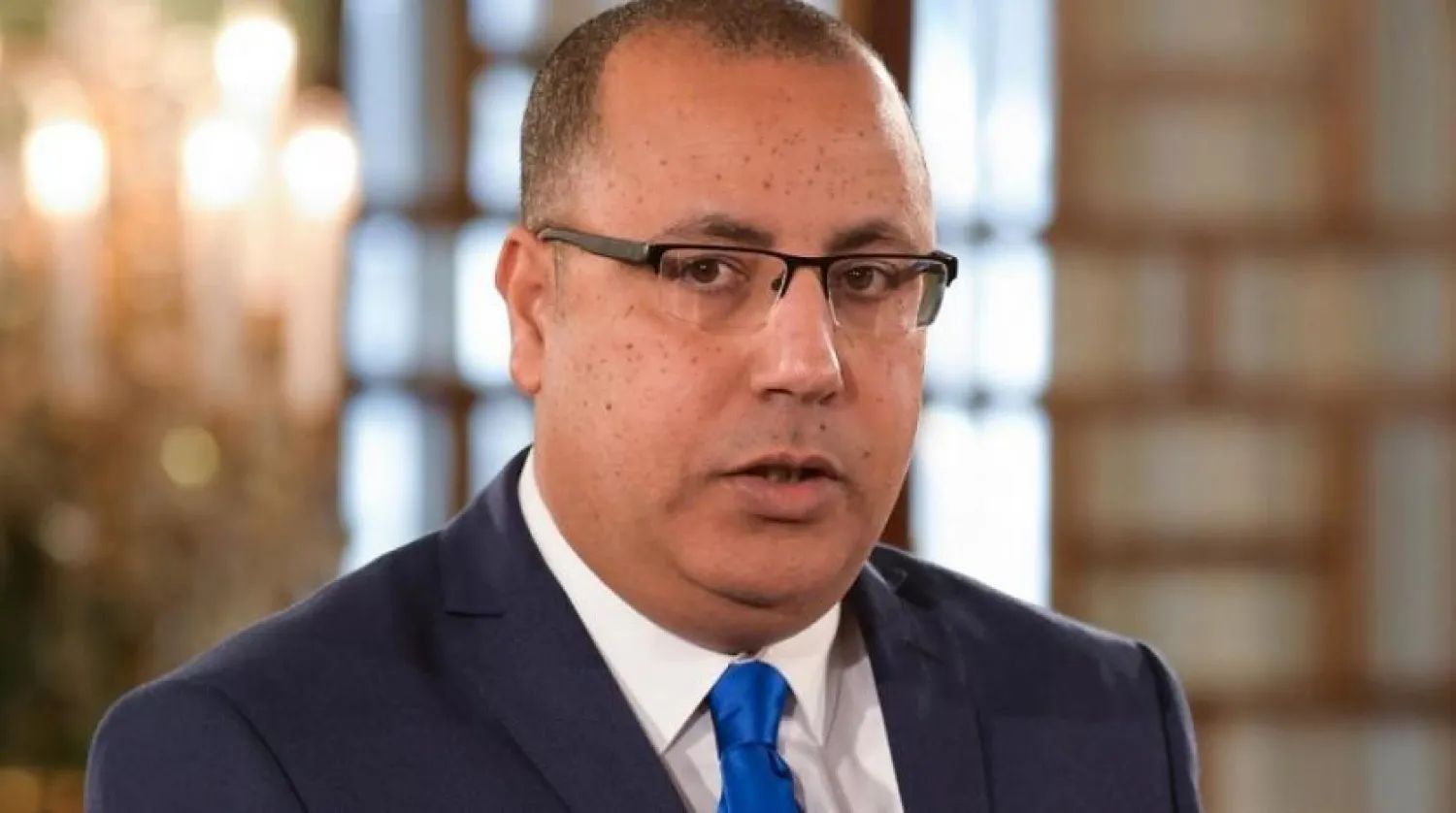
Tunisian Prime Minister-designate Hichem Mechichi. AFP file photo
TT

Tunisia: Appointment of Former Regime Figures Ignites Political Differences

Tunisian Prime Minister-designate Hichem Mechichi. AFP file photo

A meeting held between Tunisian President Kais Saied and Prime Minister Hichem Mechichi on Thursday has sparked criticism about “tense ties” between them.

The president has recently revealed serious differences on appointments of high-ranking officials linked to the former regime.

Saied rejected the appointments made by the PM, saying he should have garnered political consensus on the names of the officials.

Figures whom the people revolted against should not return to power, he said, especially that they remain under judicial investigation.

However, according to observers, Saied overstepped his constitutional powers by interfering in the authorities granted to the prime minister, namely the right to appoint his advisers without the president’s consent.

Ayad Loumi, a Heart of Tunisia official, slammed Saied’s comments on the appointments as “unacceptable,” and rejected to deprive the country from competent figures.

Tunisia’s National People's Movement accused Mechichi of turning the cabinet of experts into a government of politicians.

The appointment of new advisors at the office of the prime minister was a negative indicator, it said.

Haikal al-Makki, a member of the National People's Movement, expressed objection to the appointments, deeming them as ethically and politically unacceptable.


Arab League Condemns Israel's Decisions to Alter Legal, Administrative Status of West Bank

A general view shows the opening session of the meeting of Arab foreign ministers at the Arab League Headquarters (Reuters)
TT

Arab League Condemns Israel's Decisions to Alter Legal, Administrative Status of West Bank

A general view shows the opening session of the meeting of Arab foreign ministers at the Arab League Headquarters (Reuters)

The General Secretariat of the Arab League strongly condemned decisions by Israeli occupation authorities to impose fundamental changes on the legal and administrative status of the occupied Palestinian territories, particularly in the West Bank, describing them as a dangerous escalation and a flagrant violation of international law, international legitimacy resolutions, and signed agreements, SPA reported.

In a statement, the Arab League said the measures include facilitating the confiscation of private Palestinian property and transferring planning and licensing authorities in the city of Hebron and the area surrounding the Ibrahimi Mosque to occupation authorities.

It warned of the serious repercussions of these actions on the rights of the Palestinian people and on Islamic and Christian holy sites.

The statement reaffirmed the Arab League’s firm support for the legitimate rights of the Palestinian people, foremost among them the establishment of their independent state on the June 4, 1967 borders, with East Jerusalem as its capital.


UN: 53 Migrants Dead or Missing in Shipwreck Off Libya

(FILES) Migrants sit on board a RHIB (Rigid inflatable boat) after being evacuated by crew members of the “Ocean Viking” rescue ship from the oil tanker the 'Maridive 703' in the search-and-rescue zone of the international waters between Malta and Tunisia, on December 31, 2025. (Photo by Sameer Al-DOUMY / AFP)
TT

UN: 53 Migrants Dead or Missing in Shipwreck Off Libya

(FILES) Migrants sit on board a RHIB (Rigid inflatable boat) after being evacuated by crew members of the “Ocean Viking” rescue ship from the oil tanker the 'Maridive 703' in the search-and-rescue zone of the international waters between Malta and Tunisia, on December 31, 2025. (Photo by Sameer Al-DOUMY / AFP)

The UN migration agency on Monday said 53 people were dead or missing after a boat capsized in the Mediterranean Sea off the Libyan coast. Only two survivors were rescued.

The International Organization for Migration said the boat overturned north of Zuwara on Friday.

"Only two Nigerian women were rescued during a search-and-rescue operation by Libyan authorities," the IOM said in a statement, adding that one of the survivors said she lost her husband and the other said "she lost her two babies in the tragedy.”

According to AFP, the IOM said its teams provided the two survivors with emergency medical care upon disembarkation.

"According to survivor accounts, the boat -- carrying migrants and refugees of African nationalities departed from Al-Zawiya, Libya, at around 11:00 pm on February 5. Approximately six hours later, it capsized after taking on water," the agency said.

"IOM mourns the loss of life in yet another deadly incident along the Central Mediterranean route."

The Geneva-based agency said trafficking and smuggling networks were exploiting migrants along the route from north Africa to southern Europe, profiting from dangerous crossings in unseaworthy boats while exposing people to "severe abuse.”

It called for stronger international cooperation to tackle the networks, alongside safe and regular migration pathways to reduce risks and save lives.


Eight Muslim Countries Condemn Israel’s ‘Illegal’ West Bank Control Measures

 Israeli soldiers stand guard during a weekly settlers' tour in Hebron, in the Israeli-occupied West Bank, February 7, 2026. (Reuters)
Israeli soldiers stand guard during a weekly settlers' tour in Hebron, in the Israeli-occupied West Bank, February 7, 2026. (Reuters)
TT

Eight Muslim Countries Condemn Israel’s ‘Illegal’ West Bank Control Measures

 Israeli soldiers stand guard during a weekly settlers' tour in Hebron, in the Israeli-occupied West Bank, February 7, 2026. (Reuters)
Israeli soldiers stand guard during a weekly settlers' tour in Hebron, in the Israeli-occupied West Bank, February 7, 2026. (Reuters)

Saudi Arabia and seven other Muslim countries on Monday condemned new Israeli measures to tighten control of the West Bank and pave the way for more settlements on the occupied Palestinian territory.

Saudi Arabia, Jordan, the UAE, Qatar, Indonesia, Pakistan, Egypt and Türkiye "condemned in the strongest terms the illegal Israeli decisions and measures aimed at imposing unlawful Israeli sovereignty", a Saudi Foreign Ministry statement said.

Israel's security cabinet approved a series of steps on Sunday that would make it easier for settlers in the occupied West Bank to buy land while granting Israeli authorities more enforcement powers over Palestinians, Israeli media reported.

The West Bank is among the territories that the Palestinians seek for a future independent state. Much of it is under Israeli military control, with limited Palestinian self-rule in some areas run by the Palestinian Authority (PA).

Citing statements by Finance Minister Bezalel Smotrich and Defense Minister Israel ‌Katz, Israeli ‌news sites Ynet and Haaretz said ‌the ⁠measures included scrapping ‌decades-old regulations that prevent Jewish private citizens buying land in the West Bank.

They were also reported to include allowing Israeli authorities to administer some religious sites, and expand supervision and enforcement in areas under PA administration in matters of environmental hazards, water offences and damage to archaeological sites.

Palestinian President Mahmoud Abbas said ⁠the new measures were dangerous, illegal and tantamount to de-facto annexation.

The Israeli ministers ‌did not immediately respond to requests for ‍comment.

The new measures come three ‍days before Prime Minister Benjamin Netanyahu is scheduled to ‍meet in Washington with US President Donald Trump.

In his statement, Abbas urged Trump and the UN Security Council to intervene.

Jordan’s foreign ministry condemned the decision, which it said was “aimed at imposing illegal Israeli sovereignty” and entrenching settlements. The Hamas group called on Palestinians in the West Bank to “intensify the confrontation with the occupation and its settlers.”

Trump has ruled out Israeli annexation of the West Bank, but his administration has not sought to curb Israel's accelerated settlement building, which the Palestinians say denies them a potential state ⁠by eating away at its territory.

Netanyahu, who is facing an election later this year, deems the establishment of any Palestinian state a security threat.

His ruling coalition includes many pro-settler members who want Israel to annex the West Bank, land captured in the 1967 Middle East war to which Israel cites biblical and historical ties.

The United Nations' highest court said in a non-binding advisory opinion in 2024 that Israel's occupation of Palestinian territories and settlements there is illegal and should ‌be ended as soon as possible. Israel disputes this view.

The West Bank is divided between an Israeli-controlled section where settlements are located and sections equaling 40% of the territory where the Palestinian Authority has autonomy.

Palestinians are not permitted to sell land privately to Israelis. Settlers can buy homes on land controlled by Israel’s government.

More than 700,000 Israelis live in the occupied West Bank and east Jerusalem, territories captured by Israel in 1967 from Jordan and sought by the Palestinians for a future state. The international community overwhelmingly considers Israeli settlement construction in these areas to be illegal and an obstacle to peace.

Smotrich, previously a firebrand settler leader and now finance minister, has been granted cabinet-level authority over settlement policies and vowed to double the settler population in the West Bank.

In December, Israel’s Cabinet approved a proposal for 19 new Jewish settlements in the West Bank as the government pushes ahead with a construction binge that further threatens the possibility of a Palestinian state. And Israel has cleared the final hurdle before starting construction on a contentious settlement project near Jerusalem that would effectively cut the West Bank in two, according to a government tender reported in January.