


Sheikh Nawaf al-Ahmed al-Sabah: A Security Figure, Reformer

Sheikh Nawaf al-Ahmed al-Sabah. AP
TT

Sheikh Nawaf al-Ahmed al-Sabah: A Security Figure, Reformer

Sheikh Nawaf al-Ahmed al-Sabah. AP

Sheikh Nawaf al-Ahmad al-Jaber al-Sabah has been appointed the 16th Emir of Kuwait.

The newly assigned Emir of Kuwait is the sixth son of the 10th Ruler from the Al Sabah dynasty, Sheikh Ahmad Al-Jaber Al-Sabah, who ruled Kuwait from 1921 to 1950.

A half-brother to two of the gulf state’s rulers, Sheikh Nawaf al-Ahmad was born on June 25, 1937 and was raised in Dasman Palace. He received his early education in different Kuwaiti schools.

He assumed his first governmental position on February 21, 1961 as governor of Hawalli Governorate, until March 19, 1978, when he was appointed Minister of Interior for ten years.

Sheikh Nawaf al-Ahmad is credited for shaping the modern administration at the Kuwaiti Interior Ministry. He assumed responsibility for the ministry over two periods, the first from March 1978 to January 1988, and the second from 2003 to 2006.

He is behind modernizing the interior ministry’s security institution in a way that meets security challenges the country faces.

On January 26, 1988, he was appointed the country’s Minister of Defense and served in this position until 1992.

Following the liberation of Kuwait from an Iraqi invasion, Sheikh Nawaf al-Ahmad was appointed as the acting Minister of Labor and Social Affairs in April 1991. Between 1994 and 2003, Sheikh Nawaf al-Ahmad was appointed the deputy chief of the National Guard.

In 2003 he returned to his former post as Interior Minister and served that office until 2006, when he was designated Crown Prince.

With the ascendance of the late Sheikh Sabah Al-Ahmad Al-Jaber Al-Sabah to the leadership of Kuwait on 29 January 2006, an Emiri Decree was issued on 7 February 2006, officially appointing Sheikh Nawaf al-Ahmad as the Crown Prince.

Kuwait’s National Assembly approved the designation on February 20, 2006.

Sheikh Nawaf al-Ahmad is married to Sharifa Sulaiman Al-Jasem, and has four sons and a daughter.

Weighing in on the corruption file in Kuwait, he pointed out on August 23 that royal family members are not above the law where the fight against corruption is concerned.

In a televised address to the public, Sheikh Nawaf al-Ahmad said “no offender will escape punishment”.

“Members of the Royal Family are a part of the Kuwaiti people, and the same laws apply to them. Whoever makes a mistake bears responsibility for that mistake,” he added.


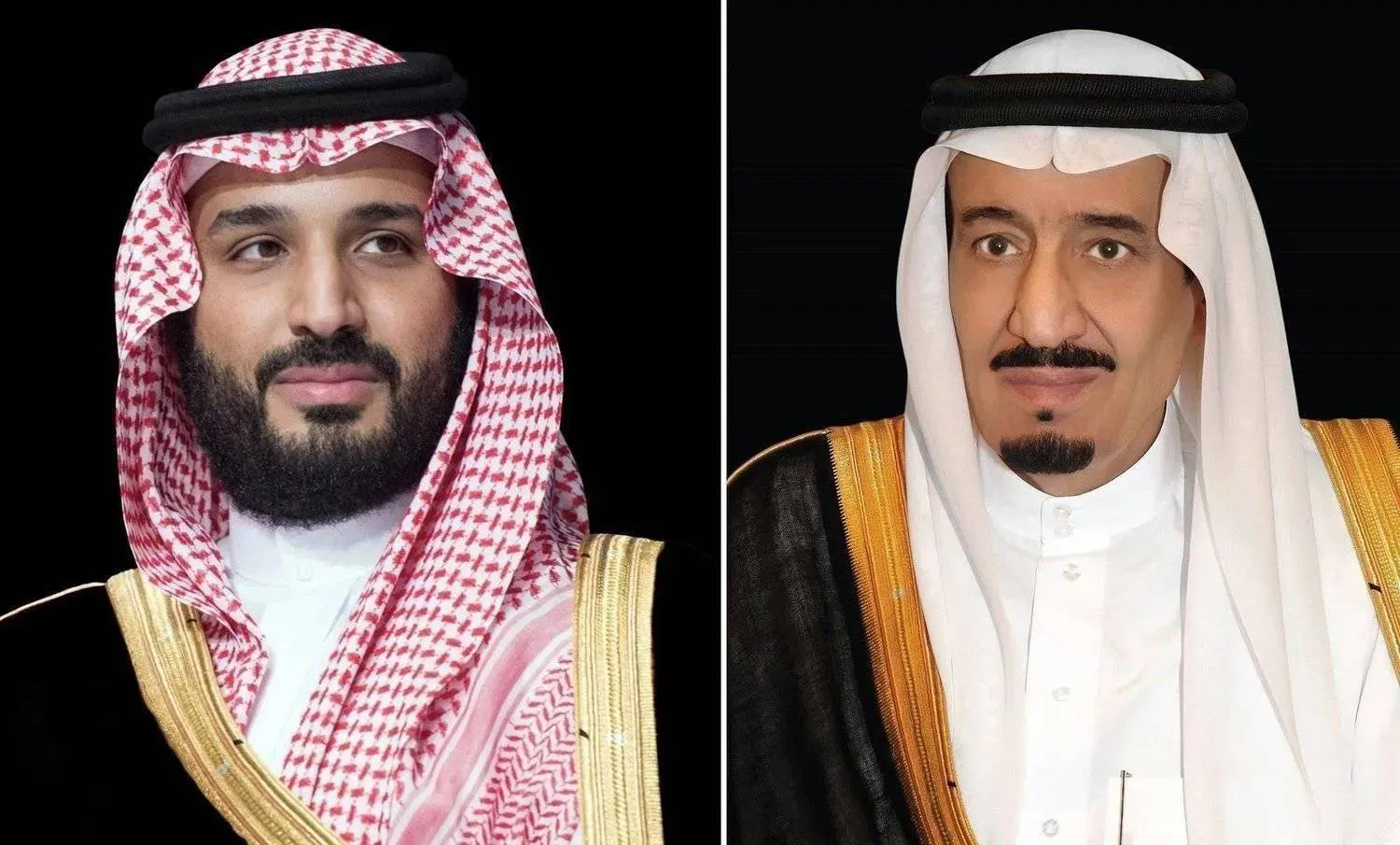

KSrelief Implements Volunteer General Surgery Medical Project in Gaza Strip

This project is an extension of the volunteer medical initiatives provided by the Kingdom of Saudi Arabia through its humanitarian arm, KSrelief - SPA
TT

KSrelief Implements Volunteer General Surgery Medical Project in Gaza Strip

This project is an extension of the volunteer medical initiatives provided by the Kingdom of Saudi Arabia through its humanitarian arm, KSrelief - SPA

The King Salman Humanitarian Aid and Relief Center (KSrelief) is implementing a volunteer general surgery medical project at Al-Ahli Arab Hospital in the Gaza Strip, running from December 5 to 31.

Since the start of the campaign, the KSrelief volunteer medical team has performed 150 surgical operations, all of which were successful. In addition, 300 people benefited from medical examinations and outpatient clinic services, SPA reported.

This project is an extension of the volunteer medical initiatives provided by the Kingdom of Saudi Arabia through its humanitarian arm, KSrelief, to assist countries and communities in need, as well as those affected worldwide.


Over 68 Million Visitors to Two Holy Mosques during Jumada Al Akhira

The authority uses advanced sensor technology to monitor the number of worshippers and pilgrims among visitors at the main entrances - SPA
TT

Over 68 Million Visitors to Two Holy Mosques during Jumada Al Akhira

The authority uses advanced sensor technology to monitor the number of worshippers and pilgrims among visitors at the main entrances - SPA

The General Authority for the Care of the Affairs of the Grand Mosque and the Prophet’s Mosque announced that the total number of worshippers and visitors to the Two Holy Mosques during Jumada Al Akhira 1447 AH reached 68,741,853.

The authority said that the number of worshippers at the Grand Mosque totaled 30,016,073, including 94,776 worshippers in Hijr Ismail (Al-Hateem), while the number of Umrah performers reached 11,863,477, SPA reported.

It noted that the number of worshippers at the Prophet’s Mosque during the same month reached 23,116,271, including 1,319,653 worshippers in Al-Rawdah Al-Sharifa. Meanwhile, 2,331,603 visitors greeted the Prophet and his two companions.

The authority uses advanced sensor technology to monitor the number of worshippers and pilgrims among visitors at the main entrances of the Grand Mosque and the Prophet’s Mosque.

This step aims to enhance operational efficiency by monitoring flows and crowds, empowering relevant authorities to manage crowds in partnership with associated entities better.


Saudi Arabia Urges Yemen’s STC to 'Urgently’ Withdraw from Hadhramaut and al-Mahra

Saudi Arabia Urges Yemen’s STC to 'Urgently’ Withdraw from Hadhramaut and al-Mahra
TT

Saudi Arabia Urges Yemen’s STC to 'Urgently’ Withdraw from Hadhramaut and al-Mahra

Saudi Arabia Urges Yemen’s STC to 'Urgently’ Withdraw from Hadhramaut and al-Mahra

The Saudi Ministry of Foreign Affairs issued a statement on Thursday expressing concern over the recent military movements witnessed in the governorates of Hadhramaut and al-Mahra.

It noted that “the actions carried out by the Southern Transitional Council were taken unilaterally, without the approval of the Presidential Leadership Council or coordination with the coalition leadership”.

The Kingdom described the moves as an “unjustified escalation” that has harmed the interests of the Yemeni people across all segments of society, undermined the Southern cause, and weakened the coalition’s efforts.

The Kingdom further emphasized that, in recent months, it has focused on maintaining unity and has undertaken intensive efforts to reach peaceful solutions to address the situation in the two governorates, as part of its ongoing endeavors to restore stability.

The statement added that these efforts were “coordinated with the brethren United Arab Emirates, the Chairman of the Presidential Leadership Council, and the Yemeni government to contain the situation”.

It said that a “joint Saudi–Emirati military team was dispatched to coordinate with the Southern Transitional Council in Aden, ensuring the withdrawal of its forces from the two governorates and the handover of camps to the National Shield Forces and local authorities under the coalition’s supervision”.

The Foreign Ministry stressed that efforts are still underway to restore the situation to its previous state, expressing the Kingdom’s hope that the public interest will prevail and that the Southern Transitional Council will take the initiative to de-escalate tensions and urgently and peacefully withdraw its forces from the two governorates.

Saudi Arabia also underscored the importance of cooperation among all Yemeni forces and components, exercising restraint, and avoiding actions that could undermine security and stability.

The Kingdom reiterated its position that the “Southern cause is a just issue with historical and social dimensions and can only be resolved through dialogue that brings all Yemeni parties together at one table, within a comprehensive political process that ensures a lasting solution in Yemen”.

The statement concluded by affirming the Kingdom’s “support for the Chairman and members of the Presidential Leadership Council and the Yemeni government, in a manner that achieves security, stability, development, and peace in the sisterly Republic of Yemen”.