
Clothes Mountains Build Up as Recycling Breaks Down

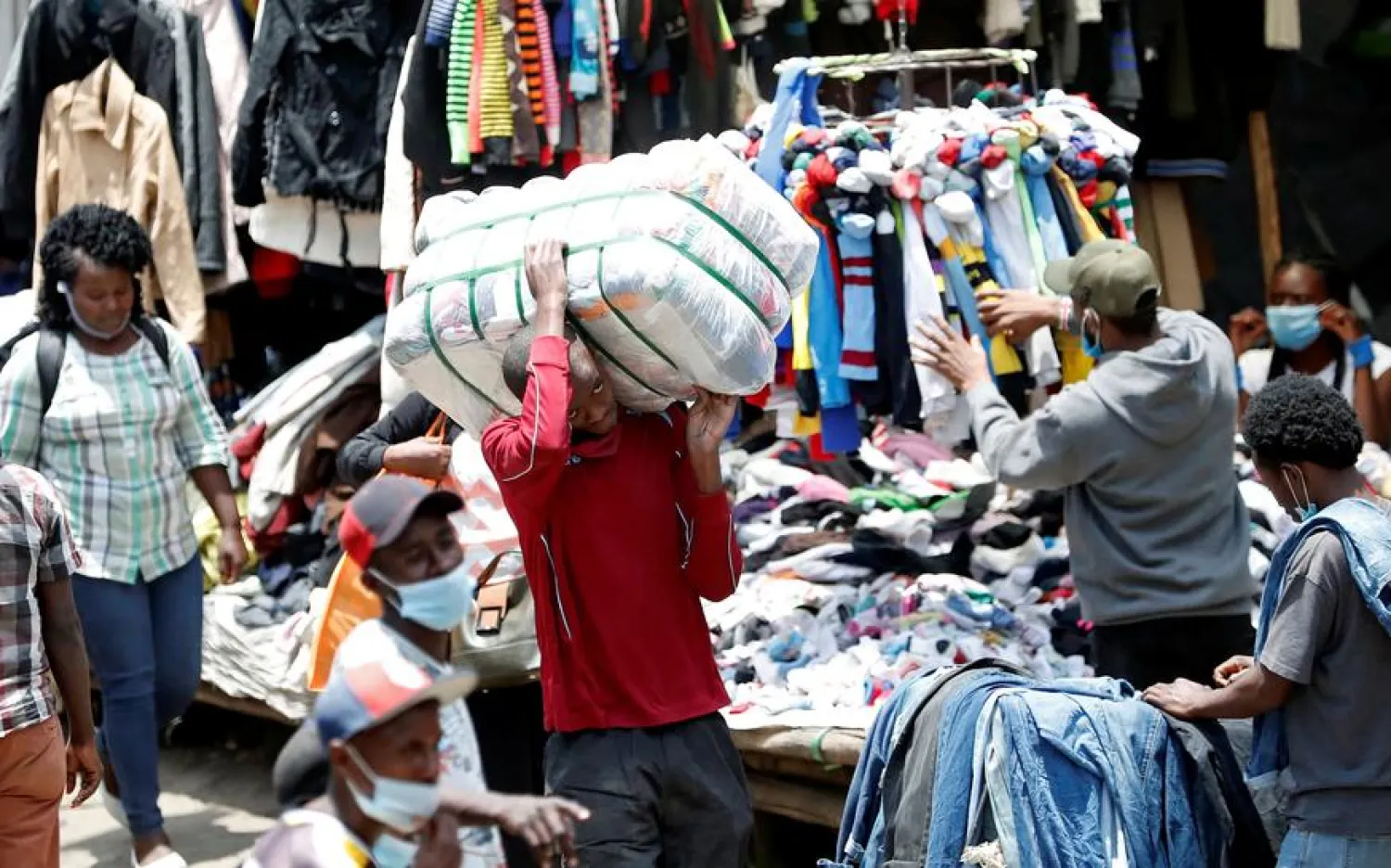
A worker carries a bale of imported second-hand clothes past displayed apparel, amid the coronavirus disease (COVID-19) outbreak at the Gikomba market in Nairobi, Kenya September 18, 2020. REUTERS/Thomas Mukoya
TT

Clothes Mountains Build Up as Recycling Breaks Down

A worker carries a bale of imported second-hand clothes past displayed apparel, amid the coronavirus disease (COVID-19) outbreak at the Gikomba market in Nairobi, Kenya September 18, 2020. REUTERS/Thomas Mukoya

Clothes recycling is the pressure-release valve of fast fashion, and it’s breaking under COVID-19 curbs.

The multi-billion-dollar trade in second-hand clothing helps prevent the global fashion industry’s growing pile of waste going straight to landfill, while keeping wardrobes clear for next season’s designs. But it’s facing a crisis.

Exporters are struggling, as are traders and customers in often poorer nations from Africa to Eastern Europe and Latin America who rely on a steady supply of used clothes, Reuters reported.

From London to Los Angeles, many thrift shops and clothing banks outside stores and on streets have been deluged with more clothes than could be sold on, leading to mountains of garments building up in sorting warehouses.

Since the COVID-19 pandemic began early this year, textile recyclers and exporters have had to cut their prices to shift stock as lockdown measures restrict movement and business slows in end markets abroad. For many, it’s no longer commercially viable and they can’t afford to move merchandise.

“We are reaching the point where our warehouses are completely full,” Antonio de Carvalho, boss of a textile recycling company in Stourbridge, central England, wrote to a client in June, asking for a price cut for clothes he collects.

De Carvalho pays towns for clothing collected in his containers then sells it on at profit to traders overseas.

Since May, he said, the price he has been able to charge overseas buyers had dropped from 570 pounds ($726) a tonne to 400 pounds, making it hard for his company, Green World Recycling, to cover the costs of collecting and storing items.

Buyers were also asking to increase the credit periods before they had to pay from 15 days to 45-60 days, adding to cash-flow problems, de Carvalho wrote.

“We are losing ... a huge amount of money, making a big loss for the operation.”

De Carvalho’s experience is mirrored across the sector, suggesting that, even once the pandemic passes, the battered trade could take a long time to recover.

Recyclers are removing clothes banks from streets, reducing the number of times they are emptied per week and looking at laying off workers to conserve cash, according to Reuters interviews with 16 market players in Britain, the United States, Germany and the Netherlands.

At the same time, in a bleak irony for such firms, donations have mounted as people stuck at home clear out their wardrobes - a boon in normal times.

“This is unlike any other recession in a century,” said Jackie King, executive director of US trade body the Secondary Materials and Recycled Textiles Association (SMART).

“I would anticipate there will be companies going out of business.”

The retreat of recyclers is having far-reaching consequences for an industry that has seen an annual average of more than $4 billion of used clothing exported globally over the five years to 2019, according to UN /trade data.

According to Reuters, large-scale commercial trade in second-hand clothing from Europe and the US to emerging markets took off in a big way in the 1990s due to growing African and Eastern European demand for Western fashion.

Such demand has provided a badly needed release value for a booming fashion market, where clothing production has approximately doubled over the past 15 years, according to sustainability charity the Ellen MacArthur Foundation.

The fashion industry is the second-biggest consumer of water and is responsible for up to 10% of global carbon emissions - more than all international flights and maritime shipping combined, the UN’s environment program said in March 2019.

Meanwhile, clothes account for a massive, and growing, pile of waste that ends up in landfills.

In Britain, shoppers buy more clothes per person than any other country in Europe, amounting to some five times more than what they bought in the 1980s, according to a 2019 UK parliamentary report by the Environmental Audit Committee.

About 300,000 tonnes of clothing goes to landfill or incineration per year, the report said.

The United States produces just under 17 million US tons (15.4 tonnes) of textile waste per year, according to the Environmental Protection Agency - equivalent to around 29 billion pairs of jeans. Two-thirds of this ends up in landfills.

Many fashion retailers, including Zara owner Inditex and H&M, encourage shoppers to bring unwanted textiles to their stores for collection and, in the case of H&M, even offer discounts on new purchases in exchange.

Only a small proportion of clothes collected by Inditex end up for sale in international markets, a company spokesman said. H&M said clothing collected in its stores was processed by I:CO, a unit of German textile recycling company Soex.

“The whole problem is just getting bigger,” said Anna Smith, a doctoral researcher at King’s College London looking at a so-called circular economic system, which aims to eliminate waste.

“People are consuming more and more.”


Ralph Lauren’s Fall 2026 Collection a Mix of Romantic Adventure with Metallic Flair 

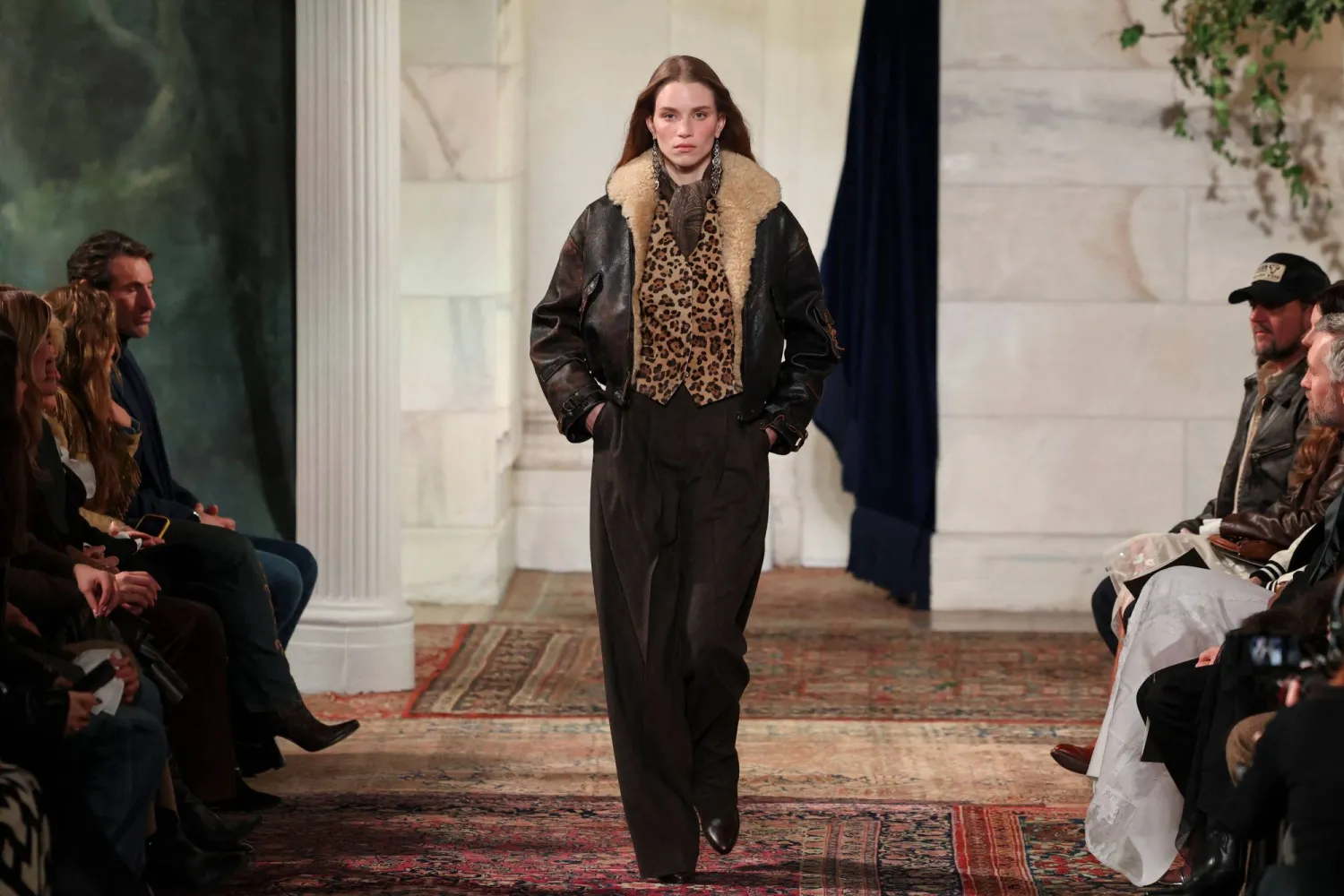
A model walks the runway during the Ralph Lauren Fall 2026 Collection fashion show in New York, on February 10, 2026. (AFP)
TT

Ralph Lauren’s Fall 2026 Collection a Mix of Romantic Adventure with Metallic Flair 

A model walks the runway during the Ralph Lauren Fall 2026 Collection fashion show in New York, on February 10, 2026. (AFP)

With more than 50 years in fashion, Ralph Lauren is still looking for adventure. Lauren took his celebrity guests on an adventure into the English countryside Tuesday for his fall 2026 runway show.

Set amid the beaux arts architecture of the Clock Tower building in Manhattan, Lauren delivered a stylish take on softness and strength, pairing luxurious earth-toned rich fabrics with metallic detailing for his latest collection.

Lauren’s ethereal models with their hair flowing behind them strutted on opulent rugs as celebrity guests including actor Anne Hathaway, singer Lana Del Rey and actor Lili Reinhart looked on from antique style chairs; a romantic painted landscape canvas filled the walls surrounding them.

In his show notes, Lauren described his muse as a woman whose style is not defined by time.

“I love the adventure of fashion,” Ralph Lauren wrote, adding his fall collection “is inspired by that kind of renegade spirit and the confidence of the woman who will wear it in her own personal way — to tell her own story.”

The 86-year-old designer has never been one to follow trends but drive them. At Tuesday’s show, accessories added a modern flair from leather gloves paired with a knit off-the-shoulder dress to shimmering silver detailing.

Supermodel Gigi Hadid opened the show in a wool corseted top and maxi skirt accentuated with a silver waist chain. Other models walked the runway with silver belt chains and metallic brooches that stood in an edgy contrast to Lauren’s romantic Victorian tops and tailored jackets. Lauren pinned metallic glimmering brooches to lush wool cloaks that were elegantly draped over models’ shoulders in a show of strength.

In a modern twist on Joan of Arc, Lauren designed a chain mail top that delicately peeked out from underneath one model’s tweed jacket. Lauren complemented the look with a printed scarf and leather pants.

“There were several looks that had this beautiful chain mail kind of detailing,” actor Ariana DeBose told The Associated Press. “What a way to give a woman beautiful armor.”

Even with his contemporary additions, Lauren’s collection still included his signature touches from his riding boots, exquisite tailoring and elegant high neck blouses.

Lauren’s brand is an American staple that continues to prevail in an ever-changing industry. As part of his enduring legacy, Lauren was once again tapped to design the uniforms for Team USA at the Olympic Winter Games in Milan, marking his sixth time designing for the games.

“From being in Italy with the greatest athletes in the world and then coming here to New York City to put on a fashion show that’s so elegant, it’s two different sides of Ralph Lauren and two different sides of what an American company can do to reach the world,” David Lauren, the company's chief branding and innovation officer, said.


Kering’s Fourth-Quarter Sales Fall Less Than Expected as Gucci Slide Continues

The logo of French luxury group Kering is seen at Kering headquarters in Paris, France, February 13, 2023. (Reuters)
TT

Kering’s Fourth-Quarter Sales Fall Less Than Expected as Gucci Slide Continues

The logo of French luxury group Kering is seen at Kering headquarters in Paris, France, February 13, 2023. (Reuters)

Kering reported on Tuesday a slightly smaller-than-expected drop in fourth-quarter sales, as investors await details of CEO Luca de Meo's plans ​to revive the Gucci owner's flagging fortunes.

Sales reached 3.9 billion euros ($4.64 billion), down 3% from the previous year when adjusted for currency swings. That beat analysts' consensus forecast for a 5% drop, according to Visible Alpha.

The revenue drop was 10% at Italian flagship label Gucci, which accounts for most of Kering's profits, versus analyst expectations of a 12% decline.

It ‌was the brand's ‌10th straight quarter of revenue ‌decline.

Finance ⁠Chief ​Armelle ‌Poulou told journalists Gucci saw some improvement at the end of last year in "almost all regions", helped by newly introduced products and handbag sales.

Grappling with weak sales since the maximalist styles of Gucci's former star designer Alessandro Michele fell out of fashion in 2022, Kering has faced heightened investor scrutiny over its high ⁠debt and declining profitability.

Free cash from operations fell by 35% last year ‌when excluding one-off payments from real estate ‍sales, reaching 2.3 billion euros, Kering ‍said.

"For Kering, it's really about (restoring) the broad desirability globally," said ‍JPMorgan analyst Chiara Battistini.

Facing an uncertain business outlook, the group, which also owns Gucci Balenciaga, Bottega Veneta and Yves Saint Laurent, further reduced its store network by 75 boutiques with further closures planned, Poulou said.

The ​earnings underscored the steep challenges Kering faces to catch up with peers even though its shares have ⁠risen around 50% since de Meo's appointment was announced last June.

"2025 did not reflect Kering's true potential or the strength of our brands, but it enabled us to lay the foundations for our future recovery," said Poulou.

Kering's annual operating income reached 1.63 billion euros, less than a third of its 2022 level. Kering's operating profit margin fell to 11% group-wide and 16% at Gucci, down from 28% and 36% three years earlier.

By contrast, LVMH delivered a 22% margin last year amid ‌a broader luxury slowdown, with its leather and fashion division - home to Louis Vuitton and Dior - hitting 35%.


Pieter Mulier Named Creative Director of Versace

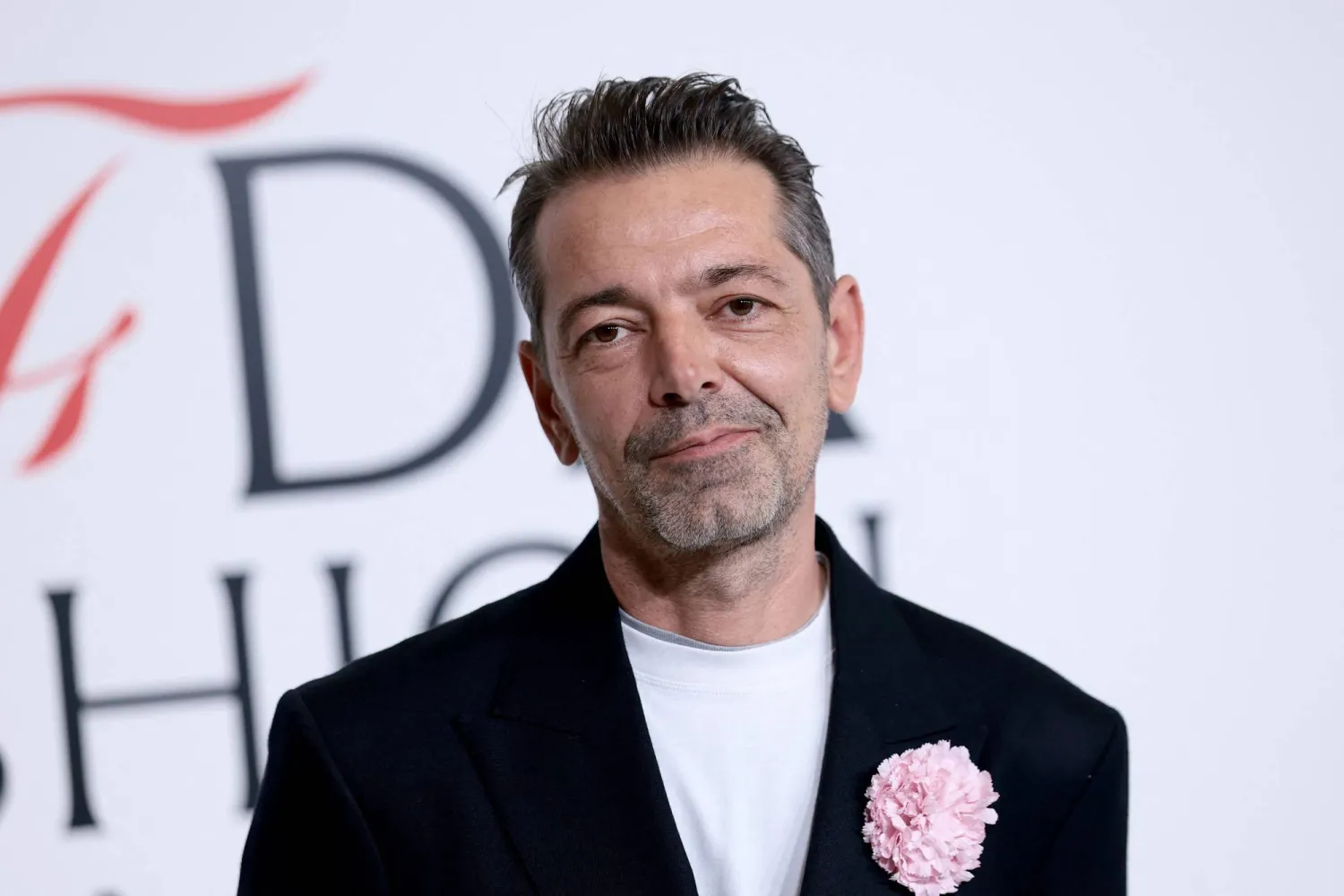
(FILES) Pieter Mulier attends the 2025 CFDA Awards at The American Museum of Natural History on November 03, 2025 in New York City. (Photo by Dimitrios Kambouris / GETTY IMAGES NORTH AMERICA / AFP)
TT

Pieter Mulier Named Creative Director of Versace

(FILES) Pieter Mulier attends the 2025 CFDA Awards at The American Museum of Natural History on November 03, 2025 in New York City. (Photo by Dimitrios Kambouris / GETTY IMAGES NORTH AMERICA / AFP)

Belgian fashion designer Pieter Mulier has been named the new creative director of the Milan fashion house Versace starting July 1, according to an announcement on Thursday from the Prada Group, which owns Versace.

Mulier is currently creative director of the French fashion house Alaïa, and was previously the right-hand man of fellow Belgian designer and Prada co-creative director Raf Simons at Calvin Klein, Jil Sander and Dior.

In his new role, Mulier will report to Versace executive chairman Lorenzo Bertelli, the designated successor to manage the family-run Prada Group. Bertelli is the son of Miuccia Prada and Prada Group chairman Patrizio Bertelli.

“We believe that he can truly unlock Versace’s full potential and that he will be able to engage in a fruitful dialogue,’’ The Associated Press quoted Lorenzo Bertelli as saying of Mulier in a statement.

Mulier takes over from Dario Vitale, who departed in December after previewing just one collection during his short-lived Versace stint.

Mulier was honored last fall by supermodel and longtime Alaïa muse Naomi Campbell at the Council of Fashion Designers of America for his work paying tribute to brand founder Azzedine Alaïa. Mulier took the creative helm in 2021, after Alaïa’s death.