EBRD Expects Turkey’s Economy to Contract by 3.5% in 2020

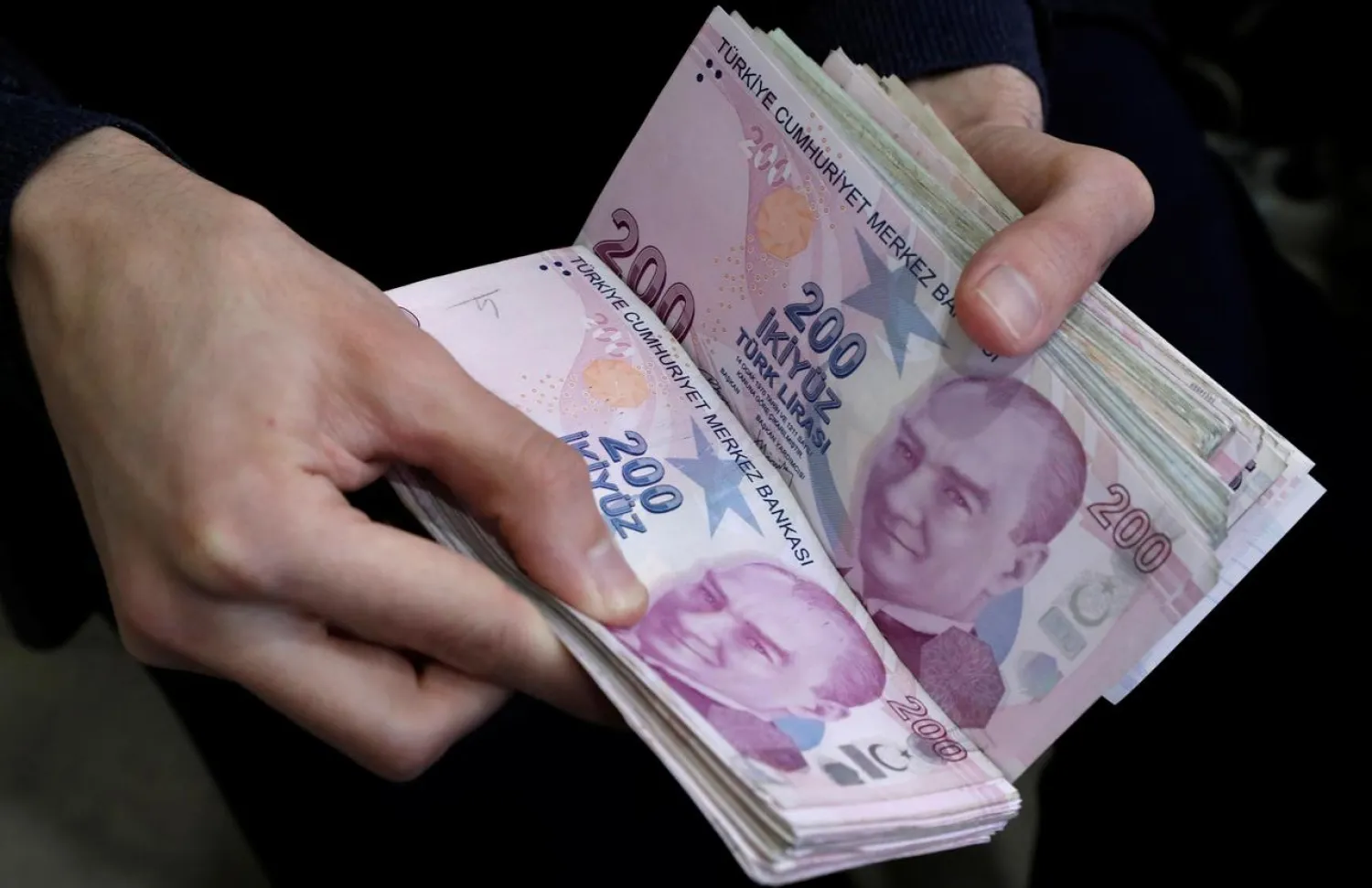
A merchant counts Turkish lira banknotes at the Grand Bazaar in Istanbul, Turkey, March 29, 2019. REUTERS/Murad Sezer
TT

EBRD Expects Turkey’s Economy to Contract by 3.5% in 2020

A merchant counts Turkish lira banknotes at the Grand Bazaar in Istanbul, Turkey, March 29, 2019. REUTERS/Murad Sezer

The European Bank for Reconstruction and Development (EBRD) expects Turkey’s economy to contract by 3.5% this year.

The EBRD, whose investments in Turkey have totaled 12.5 billion euro ($14.7 billion) in 325 projects, on Thursday slightly downgraded its forecast for next year to 5% gross domestic product (GDP) growth from 6%.

The projections are in line with other analysts and are more bearish than that of Turkey’s Finance Ministry, which this week said it expects 0.3% growth this year despite fallout from the coronavirus pandemic, which hammered exports and the key tourism sector.

The central bank unexpectedly raised interest rates last week by 200 basis points to address double-digit inflation and a record low lira. Though the currency kept falling this week, the EBRD does not expect any more monetary tightening.

Turkey’s monetary policy rate is 10.25%, still below annual inflation which is near 12%. The lira touched a record low of 7.85 versus the dollar on Tuesday and is among the world’s worst performers this year, down nearly 25%.

In its report, the EBRD said it expects GDP per capita in Turkey to return to 2019 levels by the end of 2022.


PIF Forum Yields $16 Bn in MoUs

Raid Ismail, head of direct investments for the Middle East and North Africa at the Public Investment Fund, speaks during a session (X)
TT

PIF Forum Yields $16 Bn in MoUs

Raid Ismail, head of direct investments for the Middle East and North Africa at the Public Investment Fund, speaks during a session (X)

Saudi Arabia’s Public Investment Fund (PIF) closed the fourth edition of its Private Sector Forum with a slate of deals that underscored its growing pull with investors, announcing the signing of more than 135 memorandums of understanding worth over 60 billion riyals (about $16 billion).

The agreements reflect rising confidence in the Saudi business climate and the fund’s ability to generate high-quality investment opportunities that attract both local and foreign capital.

The forum’s final day opened with a discussion on flexibility, risk reduction, and innovative financing, focusing on how to turn strategies into bankable projects and investment opportunities that can draw in the private sector and deepen its role in the economy.

Speakers highlighted the fund’s central role in enabling and developing strategic sectors, investing in large-scale projects that help create a more attractive business environment.

These efforts aim to strengthen participation by the domestic private sector, including small and medium-sized enterprises, while also drawing foreign investment.

In a session on the Saudi sovereign approach to value creation, Raid Ismail, head of direct investments for the Middle East and North Africa at PIF, outlined the “Fund Way” methodology launched in 2019 to boost economic value across portfolio companies.

The approach is built on independent governance and a clear operating framework.

Ismail said the fund remains focused on delivering economic and social impact and sustainable growth across all its investments.

He traced PIF’s investment journey, from selecting priority sectors and forming partnerships with the private sector, to establishing companies, strengthening their governance and operational efficiency, and ultimately exiting investments.

Artificial intelligence featured prominently in the discussions. Tareq Amin, chief executive of Humain, said the company’s approach to AI applications is rooted in rethinking how problems are solved and how organizations prepare for the future.

He noted that Saudi Arabia has strong AI infrastructure, suitable human capital, and ample energy resources, and highlighted the generative AI operating systems and applications the company is developing.

Another panel focused on local content and its impact on the private sector, stressing the importance of building high-quality local content to support a strong national economy, accelerate diversification, and sustain growth.

The discussion also highlighted Saudi Arabia’s efforts to develop policies and regulations that encourage higher local content.

Panelists said increasing local content helps raise the private sector’s contribution to gross domestic product, reduce reliance on foreign supply chains, develop national industries and products, improve competitiveness, expand into new markets, and create jobs.

The session also highlighted PIF’s role in boosting local content through a range of programs and initiatives, including the Musahama local content development program, contractor financing, the industrial accelerator, supplier development, the private sector platform, and the Musahama design competition.

Spending by the fund and its portfolio companies on local content exceeded 590 billion riyals between 2020 and 2024.

Financing solutions were another key theme, with discussions on how to develop funding tools aligned with Saudi Arabia’s economic growth and ensure access to finance for large projects, small and medium-sized enterprises, and entrepreneurs.

Over the past five years, PIF has helped unlock priority strategic sectors across the kingdom.

It invested about 750 billion riyals domestically in new projects between 2021 and 2025. It contributed a cumulative 910 billion riyals ($242.6 billion) to Saudi Arabia’s real non-oil GDP between 2021 and 2024, accounting for around 10% of non-oil GDP in 2024.

The fourth edition of the forum builds on the momentum of previous years. Attendance has tripled since 2023, rising from 4,000 participants to 12,000 in 2025, while the number of exhibition booths by PIF portfolio companies more than doubled to over 100.



Iraq Seeks Saudi Firm List to Streamline Iraqi Exports

Jadidat Arar border crossing, the logistics gateway between Saudi Arabia and Iraq (SPA)
TT

Iraq Seeks Saudi Firm List to Streamline Iraqi Exports

Jadidat Arar border crossing, the logistics gateway between Saudi Arabia and Iraq (SPA)

The Iraqi government is moving to tighten the framework for exporting its goods to Saudi Arabia by compiling a list of Saudi companies interested in importing Iraqi products, a step aimed at streamlining trade procedures and boosting shipments to the kingdom.

The list will be circulated to all relevant Iraqi authorities and used as a reference in the export process, according to the information.

Trade between the two countries remains heavily tilted in Saudi Arabia’s favor. In 2024, Saudi exports to Iraq reached 6.5 billion riyals ($1.7 billion), while imports from Iraq totaled 180.4 million riyals ($48.1 million), resulting in a trade surplus of 6.3 billion riyals ($1.6 billion).

Saudi Arabia’s General Authority for Foreign Trade has informed the Saudi private sector of a request from Iraqi authorities to provide a list of companies willing to import goods from Iraq.

Push to raise Iraqi exports

The Iraqi government has also asked for details on Saudi market requirements and standards, seeking clarity that would allow it to set specifications for products, goods, and services and, in turn, increase its exports to the kingdom.

Fuel products, oils, and mineral waxes accounted for the largest share of Iraqi exports to Saudi Arabia at 49.1%. Aluminum and aluminum products accounted for 32.7%, while pulp from wood or other fibrous cellulosic materials accounted for 7.3%. The remaining share was spread across other goods and services.

Overall trade between Saudi Arabia and Iraq continues to expand in both volume and diversity, with Saudi exports clearly dominant. Both sides have stepped up efforts to ease trade flows and improve infrastructure to support more sustainable growth.

Border bottleneck eased

As part of its efforts to smooth access for Saudi products to regional markets, the General Authority for Foreign Trade recently stepped in to resolve a technical and logistical issue that had been hampering Saudi exporters at the Jadidat Arar border crossing with Iraq.

The intervention was aimed at safeguarding export flows through the only land route linking the two countries, which has grown in importance after an 81.3% rise in truck traffic in the first half of 2024.

The authority resolved a dispute over the Iraqi side’s refusal to accept electronic authentication of documents, reaffirming its commitment to strengthening trade ties with Baghdad.

The issue had been flagged as a recurring obstacle for Saudi companies exporting to Iraq via the crossing, prompting swift action by the authority to clear the backlog and ease private sector access to the Iraqi market.

Strategic gateway

Opened in 2020, the Jadidat Arar crossing is the sole economic and logistics gateway between Saudi Arabia and Iraq. It has played a key role in cutting export costs by 15% and reducing shipping times to less than 48 hours.

The Arar Chamber of Commerce said in a recent statistical report that total truck movements, arrivals, and departures combined reached about 33,300 in the first half of 2024.

By comparison, the number of trucks stood at about 4,084 in the first half of 2021, rose to 12,954 in the same period of 2022, and increased further to 18,729 in the first half of 2023.


Saudi Industry Minister Explores Localization Opportunities with Airbus Helicopters

Saudi Minister of Industry and Mineral Resources Bandar Alkhorayef and other officials during the meeting. (SPA)
TT

Saudi Industry Minister Explores Localization Opportunities with Airbus Helicopters

Saudi Minister of Industry and Mineral Resources Bandar Alkhorayef and other officials during the meeting. (SPA)

Saudi Minister of Industry and Mineral Resources Bandar Alkhorayef held talks Airbus Helicopters CEO Bruno Even on the sidelines of the World Defense Show 2026 in Riyadh to discuss joint opportunities for localizing aerospace industries and their supply chains in the Kingdom.

The meeting reviewed ways to strengthen industrial cooperation and expand strategic partnership opportunities in the localization of aircraft and helicopter manufacturing in Saudi Arabia, said a ministry statement on Tuesday.

It addressed ongoing efforts to localize the production of aluminum panels and titanium processing to support the requirements of the aerospace sector.

The talks underscored the importance of developing enabling models that attract Airbus Helicopters’ global suppliers and facilitate the establishment or expansion of their operations in the Kingdom, contributing to the resilience and sustainability of global aviation supply chains.

Separately, Alkhorayef met with leaders of the Technology Equipment Trading Establishment, which specializes in military industries. They discussed opportunities to localize defense industries in the Kingdom, the enablers supporting local content development, and initiatives to boost national capabilities in military manufacturing.