



'Dramatic' Global Rise in Laws Defending Rights of Nature

Nature is declining globally at rates unprecedented in human history, leaving a million species now at risk of extinction, some within decades. REUTERS/Darrin Zammit Lupi
TT

'Dramatic' Global Rise in Laws Defending Rights of Nature

Nature is declining globally at rates unprecedented in human history, leaving a million species now at risk of extinction, some within decades. REUTERS/Darrin Zammit Lupi

From Bolivia to New Zealand, rivers and ecosystems in at least 14 countries have won the legal right to exist and flourish, as a new way of safeguarding nature gains steam, US environmental groups said on Thursday.

Rights of nature laws, allowing residents to sue over harm on behalf of lakes and reefs, have seen "a dramatic increase" in the last dozen years, said the Earth Law Center, International Rivers, and the Cyrus R. Vance Center for International Justice.

"This is a new area of rights, but it's also a growing movement," Monti Aguirre, Latin America coordinator with International Rivers, told the Thomson Reuters Foundation.

World leaders held the United Nations' first biodiversity summit on Wednesday to build support for a new agreement to protect 30% of the planet's land and seas by 2030, set to be negotiated in China next May.

Separately, more than 60 leaders signed a Pledge for Nature on Monday committing to reverse global loss of biodiversity by 2030, including clamping down on marine pollution and deforestation.

Without action, 30% to 50% of all species could be lost by 2050, threatening economic and social prosperity, a report by The Nature Conservancy charity said this month.

Lawmakers have been implementing rights of nature, which are rooted in indigenous thought, through laws, judicial decisions, constitutional amendments, and United Nations resolutions in countries including Ecuador, Bangladesh, Uganda and Australia.

"We see these efforts not as isolated events, but part of something larger," Simon Davis-Cohen, a researcher with the Community Environmental Legal Defense Fund, a US nonprofit which supports the global growth of rights of nature laws.

This new legal route to protect the planet - overriding the long-held human right to harm - bring fresh arguments to court, rally communities, and shift local politics, he said.

Davis-Cohen criticized Thursday's report for failing to focus on the need to empower local authorities, saying strengthening local decision-making was "instrumental" to achieving stronger environmental law.

That question of local decision-making is playing out in Florida, which "has suffered greatly from the failure of our regulatory system to protect our waterways," said Chuck O'Neal of advocacy group Speak Up Wekiva, named after a local river.

Several Florida counties are seeking to recognize rights of nature, and residents of one of the largest, Orange County, will vote in a local referendum on the issue in November.

If passed, the law would recognize that all waterbodies in Orange County have a right to exist, flow and maintain a healthy ecosystem, and enable residents to sue over these issues.

Yet the effort is already in court, after the state government in June barred local jurisdictions from recognizing rights of nature, prompting O'Neal and others to sue.

A decision is expected after the Nov 3. election, said O'Neal, Speak Up Wekiva's president.

Neither the Florida Department of Environmental Protection nor the office of Florida's Governor Ron DeSantis responded to requests for comment.



China FM Tells Russia’s Lavrov Willing to Work to ‘De-Escalate’ Mideast War

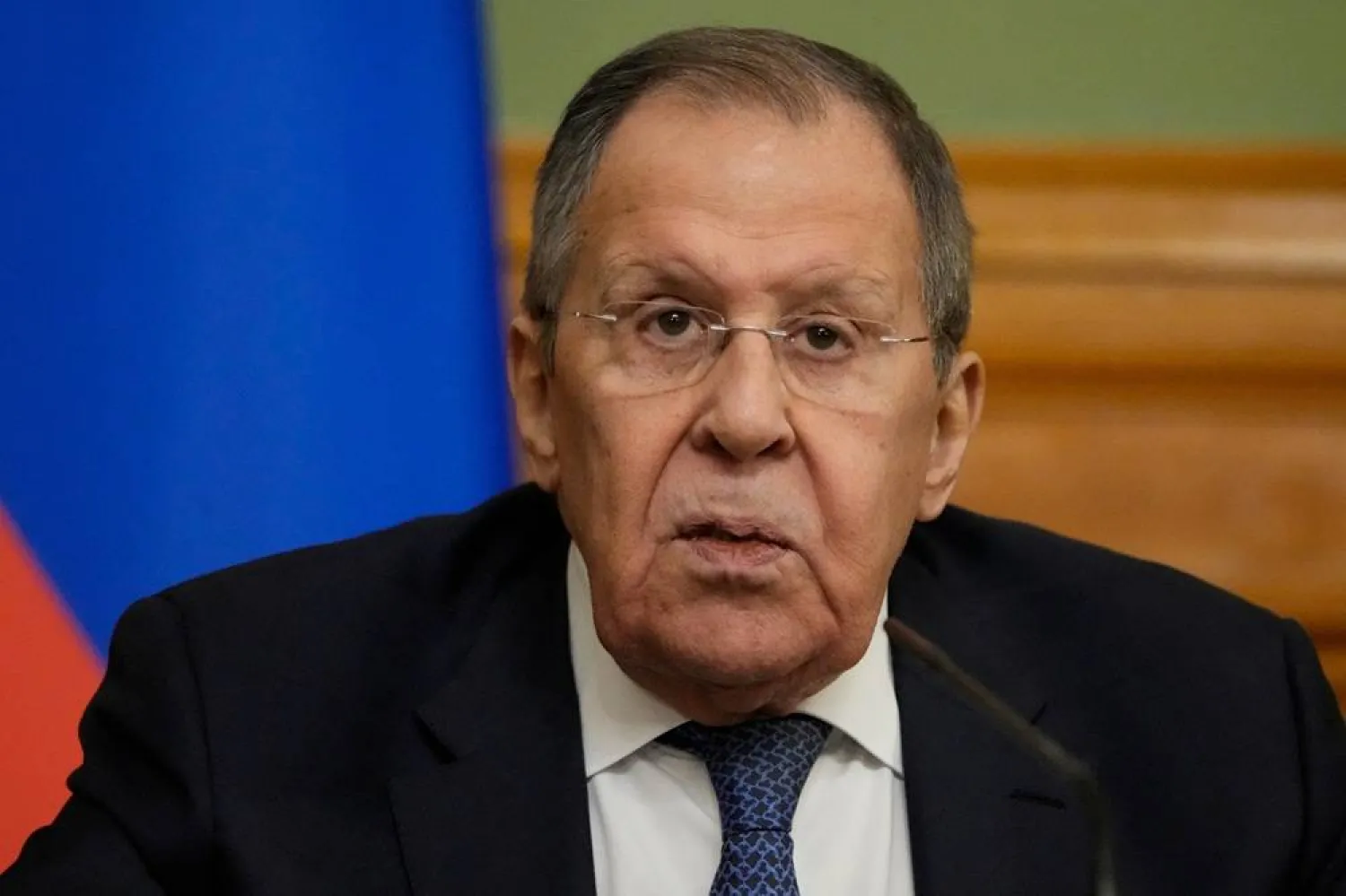
 Russian Foreign Minister Sergei Lavrov speaks during a joint news conference with Egyptian Foreign Minister Badr Abdelatty following their meeting in Moscow, Russia April 3, 2026. (Pavel Bednyakov/Pool via Reuters)
Russian Foreign Minister Sergei Lavrov speaks during a joint news conference with Egyptian Foreign Minister Badr Abdelatty following their meeting in Moscow, Russia April 3, 2026. (Pavel Bednyakov/Pool via Reuters)
TT

China FM Tells Russia’s Lavrov Willing to Work to ‘De-Escalate’ Mideast War

 Russian Foreign Minister Sergei Lavrov speaks during a joint news conference with Egyptian Foreign Minister Badr Abdelatty following their meeting in Moscow, Russia April 3, 2026. (Pavel Bednyakov/Pool via Reuters)
Russian Foreign Minister Sergei Lavrov speaks during a joint news conference with Egyptian Foreign Minister Badr Abdelatty following their meeting in Moscow, Russia April 3, 2026. (Pavel Bednyakov/Pool via Reuters)

China's top diplomat told his Russian counterpart on Sunday that he is willing to work together to "de-escalate" the war in the Middle East, Beijing's state media reported.

Wang Yi told Russian Foreign Minister Sergei Lavrov in a phone call that "China and Russia should uphold fairness on major issues of principle", state news agency Xinhua said, noting that the call came at Lavrov's request.

Wang said that "the situation in the Middle East is still deteriorating and fighting is escalating", Xinhua reported.

He also reiterated China's call for an "immediate ceasefire" to the fighting triggered by US-Israeli strikes against Iran that began on February 28.

"China is willing to continue cooperating with Russia in the UN Security Council, communicating promptly on major issues and making efforts to de-escalate the situation and maintain regional peace and stability and global security," Xinhua quoted Wang as saying.

Beijing and Moscow are close economic and political partners, and the relationship has deepened further since Russia's 2022 invasion of Ukraine.


Migrants Missing after Mediterranean Capsize: NGOs

Hellenic coast guard performs SAR operation, following migrant's boat collision with coast guard off the Aegean island of Chios, near Mersinidi, Greece, February 4, 2026. REUTERS
TT

Migrants Missing after Mediterranean Capsize: NGOs

Hellenic coast guard performs SAR operation, following migrant's boat collision with coast guard off the Aegean island of Chios, near Mersinidi, Greece, February 4, 2026. REUTERS

Dozens of people are missing after a migrant boat capsized in the central Mediterranean, the NGOs Mediterranea Saving Humans and Sea-Watch said Sunday on social media.

Two people died and 32 were rescued from the boat, which had left Libya on Saturday afternoon with around 105 people on board, according to Mediterranea Saving Humans, AFP reported.

"Tragic Easter shipwreck. 32 survivors, two bodies recovered and more than 70 people missing," the NGO wrote on X, adding that the boat capsized in a search-and-rescue zone handled by Libyan authorities.

Sea-Watch said two commercial ships saved the survivors and took them to the Italian island of Lampedusa.

An aerial video it posted showed two men clinging to the hull of the capsized vessel, and the approach of one of the commercial ships.

Mediterranea Saving Humans said the accident was "the consequence of policies by European governments that refuse to open safe and legal pathways" for migrants.

Lampedusa is a key entry point for migrants crossing the Mediterranean from North Africa to Europe.

Since the start of 2026, at least 683 migrants have lost their lives or gone missing on attempts to cross the sea, according to the UN's migration agency IOM.

According to the Italian government, 6,175 migrants arrived on Italian territory over the same period.


Trump Vows Strikes on Iran’s Power Plants, Bridges if Strait of Hormuz isn't Reopened

ABD Başkanı Donald Trump (Reuters)
TT

Trump Vows Strikes on Iran’s Power Plants, Bridges if Strait of Hormuz isn't Reopened

ABD Başkanı Donald Trump (Reuters)

US President Donald Trump has promised strikes on Iran’s power plants and bridges on Tuesday, restating his threat to attack civilian infrastructure if the Strait of Hormuz isn’t reopened.

In an expletive-laden post Sunday morning, Trump promised the “crazy bastards” would be “living in Hell” if the waterway isn’t opened to marine traffic, The AP news reported.

Trump had previously threatened strikes two weeks ago, but extended the deadline for Iran to reopen the waterway twice, claiming there were positive signs in negotiations with the Iranians. But there have been few public signs of progress in a diplomatic off-ramp to the war.