Houthis Commit Series of Violations against Education Sector

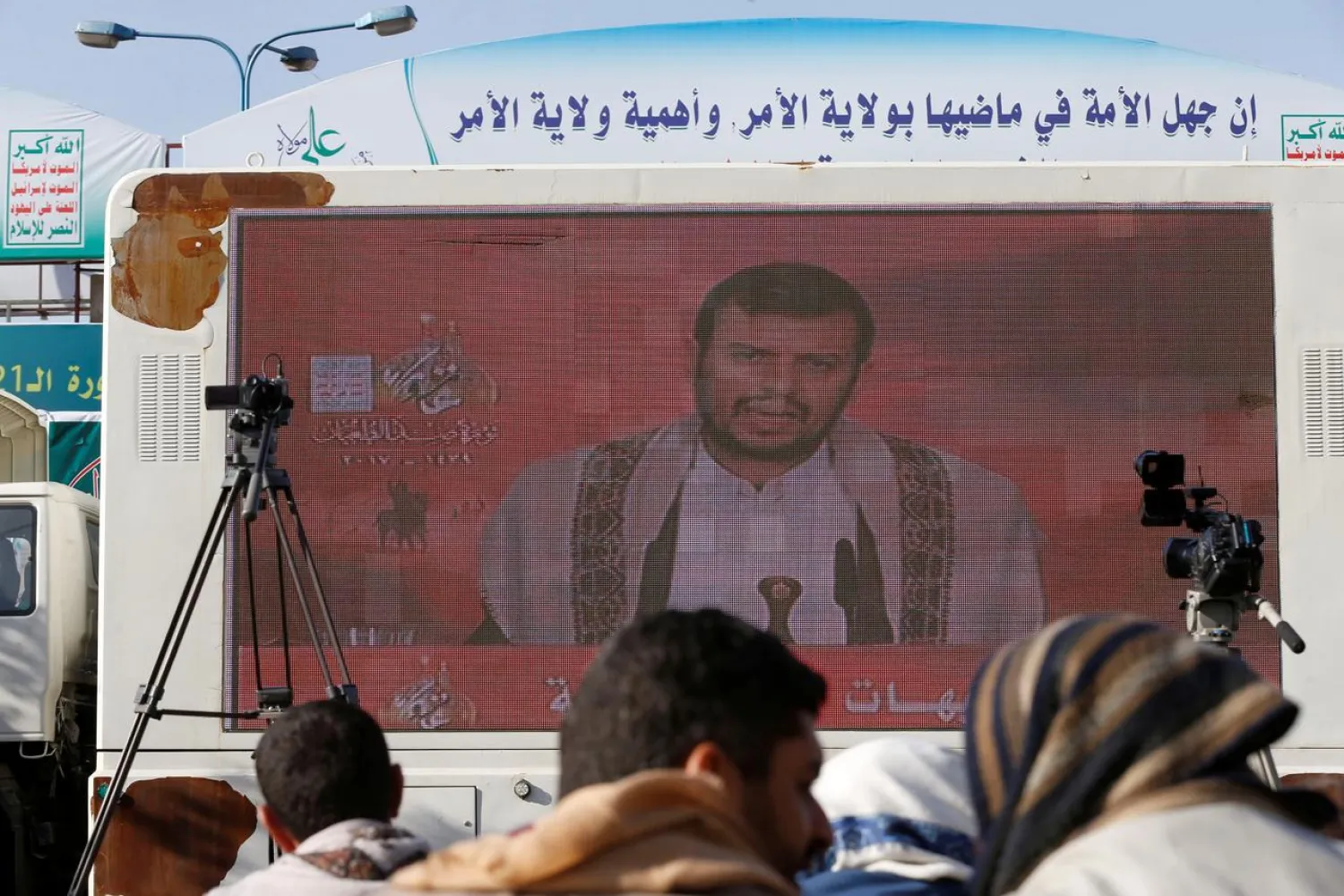
Leader of the Houthi movement, Abdul-Malik al-Houthi, addresses supporters via a screen in Sanaa, Yemen September 30, 2017. REUTERS/Khaled Abdulla
TT

Houthis Commit Series of Violations against Education Sector

Leader of the Houthi movement, Abdul-Malik al-Houthi, addresses supporters via a screen in Sanaa, Yemen September 30, 2017. REUTERS/Khaled Abdulla

Houthi militias in Yemen are pressing on with their project to transform the war-torn country’s education institutions into centers that aid with the indoctrination of generations into Iran-inspired ideology.

Schools are being exploited to recruit young children, teachers, and academics and deploy them to battlefronts.

Over the last week, Houthis have staged a score of violations against the education sector in areas under their control.

The group introduced arbitrary amendments to curricula that glorify Houthi ideals. More so, a campaign of Houthi-staged arrests and kidnappings targeted students and teachers.

Education sector sources, speaking under the condition of anonymity, said that the adjustments introduced to the curricula are in line with the group's project to adapt the educational process and use it as a tool to spread ideas that are intrusive to Yemeni society.

Footage circulated on social media gave a peek into the newly-amended books which now include lessons glorifying the anniversary of the Houthi coup that took place on September 21, 2014.

The new-fangled lessons also hold the Houthi leader’s claims to the right to divine rule as fact.

The militias had previously made several amendments to the curriculum, the last of which was an amendment of the history course for the sixth grade.

In that amendment, Houthis integrated a chapter featuring a biography of the founder of the Houthi dynasty in Yemen.

Other biographies belonging to ancestors of the group’s leader Abdul-Malik Badreddin al-Houthi, who ruled Yemen, were also introduced in the amendment.

Yemeni educators who spoke to Asharq Al-Awsat warned that the amendments will produce a narrow-minded generation that is held captive by an obscurest ideology that is not compatible with modern-day life and principles of coexistence.

As for kidnappings persistently committed against students and educators, local sources in Sanaa told Asharq Al-Awsat that Houthi gunmen aboard three vehicles last week kidnapped 30 students, most of them children, in the Sanhan district.


Iraqi President Nominates Ali Al-Zaidi as PM-Designate

 Iraqi Prime Minister-designate Ali al-Zaidi attends the meeting of the Coordination Framework political bloc in Baghdad, Iraq, Monday, April 27, 2026. (Iraqi Presidency Office via AP)
Iraqi Prime Minister-designate Ali al-Zaidi attends the meeting of the Coordination Framework political bloc in Baghdad, Iraq, Monday, April 27, 2026. (Iraqi Presidency Office via AP)
TT

Iraqi President Nominates Ali Al-Zaidi as PM-Designate

 Iraqi Prime Minister-designate Ali al-Zaidi attends the meeting of the Coordination Framework political bloc in Baghdad, Iraq, Monday, April 27, 2026. (Iraqi Presidency Office via AP)
Iraqi Prime Minister-designate Ali al-Zaidi attends the meeting of the Coordination Framework political bloc in Baghdad, Iraq, Monday, April 27, 2026. (Iraqi Presidency Office via AP)

Iraq's newly elected president nominated businessman Ali al-Zaidi as the country's prime minister-designate on Monday, after the country's leaders yielded to US pressure not to support the bid of a former premier close to Iran.

The Coordination Framework, an alliance of Shiite factions with varying links to Iran, had initially backed powerbroker Nouri al-Maliki to become the country's next premier, but an ultimatum by US President Donald Trump left Iraqi leaders looking elsewhere.

For weeks, they were locked in intense discussions to settle the question and avoid punitive measures after Trump threatened in January to cut all support for Iraq if two-time ex-premier Maliki, who has close ties to Iran, returned to power.

"President Nizar Amedi has tasked Ali al-Zaidi, the candidate of the largest parliamentary bloc, with forming the new government," the presidency said in a statement.

Zaidi will now have 30 days to form a government -- a daunting task in a country where constitutional deadlines are rarely respected.

The announcement came shortly after the Coordination Framework endorsed Zaidi as its candidate.

The alliance also praised "the historic and responsible stance" of Maliki and caretaker Prime Minister Mohammed Shia al-Sudani "for withdrawing" their candidacies.

Yasser al-Maliki, the head of Maliki's parliamentary bloc, congratulated the PM-designate and said "we will support him" in his mission to form a government.

Following the 2003 invasion that overthrew former ruler Saddam Hussein, the US has held major sway in Iraq.

But the invasion has also paved the way for the US' archenemy Iran in the country's halls of power.

Since then, the country's leaders have struggled to balance relations between Washington and Tehran.

- 'Has the tools' -

By convention, a Shiite holds the powerful post of prime minister, the parliament speaker is a Sunni, and the largely ceremonial presidency goes to a Kurd.

Seen as a compromise figure, Zaidi is little known in political circles.

He is a businessman, banker and owner of a television channel, and has never held a government post.

If he succeeds in forming a government, Zaidi will become Iraq's youngest prime minister at the age of 40.

Political analyst Hamzeh Hadad said it appeared that Zaidi "has the tools" as a banker and TV channel owner "to help him sway people and politicians".

His nomination also "allows the Coordination Framework to claim they are abiding by the constitutional timeline," whether he ends up forming a government or not.

In recent years, and after decades of conflicts, oil-rich Iraq has begun to enjoy some stability, yet its politics remain volatile, shaped not only by internal disputes but also by regional dynamics.

- Regional war -

The new nomination came against the backdrop of a regional war ignited by a joint US-Israeli attack on Iran.

Iraq was dragged into the Middle East conflict, with strikes targeting both US interests and Tehran-backed groups in the country.

During the war, Iraqi leaders scaled back their talks to settle the premiership question, and only resumed them intensively a few days after a fragile US-Iran ceasefire took effect on April 8.

Iraq's new premier will be expected to address Washington's longstanding demand that Baghdad disarm Iran-backed groups, which the US has designated as terrorist organizations.

From the onset of the war, these groups targeted US interests in Iraq and the broader region.

The new PM will also need to repair Iraq's relations with Gulf countries, which have protested attacks by Tehran-backed groups on their territory during the war.

Zaidi will have to address Iraq's many economic woes, particularly after the sharp drop of income caused by disruption in the Strait of Hormuz, given that oil exports make up some 90 percent of the country's budget revenues.


Israel PM Says Hezbollah Rockets, Drones Need Further Military Action

03 March 2020, Israel, Tel Aviv: Israeli Prime Minister Benjamin Netanyahu delivers an address. (dpa)
TT

Israel PM Says Hezbollah Rockets, Drones Need Further Military Action

03 March 2020, Israel, Tel Aviv: Israeli Prime Minister Benjamin Netanyahu delivers an address. (dpa)

Israeli Prime Minister Benjamin Netanyahu on Monday said rockets and drones possessed by Iran-backed Hezbollah group remained a key threat that demanded further military action by Israel's army in Lebanon. 

Israel and Hezbollah have traded blame over violations of the fragile 10-day ceasefire in Lebanon agreed earlier this month, which has since been extended, and attacks by both sides have continued. 

"There are still two central threats from Hezbollah: the 122mm rockets and the drones. This demands a combination of operational and technological activity," Netanyahu said in a statement. 

"They have about 10 percent of the missiles they had at the start of the war. But these still trouble the residents of the north," he added. 

"We are carrying out strikes now, both within the security zone and north of it, and north of the Litani River," he said, reiterating Israel's right to do so under its agreement "with the US and the Lebanese government". 

Hezbollah drew Lebanon into the Middle East war on March 2 by firing rockets towards Israel to avenge the killing of Iranian supreme leader Ali Khamenei in US-Israeli strikes. 

Lebanon and Israel's US ambassadors met twice in Washington over the past weeks, the first meetings of their kind in decades, for discussions that were categorically rejected by Hezbollah. 


Lebanon's Aoun: We Won't Accept Humiliating Deal with Israel...Taking Country to War is 'Treason'

A photograph released by the Lebanese Presidency on April 17, 2026, shows Lebanon's President Joseph Aoun delivering a televised address to the Lebanese people from the Baabda Presidential Palace, east of the capital Beirut.  (Photo by Lebanese Presidency / AFP)
A photograph released by the Lebanese Presidency on April 17, 2026, shows Lebanon's President Joseph Aoun delivering a televised address to the Lebanese people from the Baabda Presidential Palace, east of the capital Beirut. (Photo by Lebanese Presidency / AFP)
TT

Lebanon's Aoun: We Won't Accept Humiliating Deal with Israel...Taking Country to War is 'Treason'

A photograph released by the Lebanese Presidency on April 17, 2026, shows Lebanon's President Joseph Aoun delivering a televised address to the Lebanese people from the Baabda Presidential Palace, east of the capital Beirut.  (Photo by Lebanese Presidency / AFP)
A photograph released by the Lebanese Presidency on April 17, 2026, shows Lebanon's President Joseph Aoun delivering a televised address to the Lebanese people from the Baabda Presidential Palace, east of the capital Beirut. (Photo by Lebanese Presidency / AFP)

Lebanese President Joseph Aoun said Monday that direct negotiations with Israel were aimed at ending the conflict with Hezbollah, while accusing those who drew Lebanon into war of "treason" in an implicit rebuke to the Iran-backed armed group.

"My goal is to reach an end to the state of war with Israel, similar to the armistice agreement" of 1949, Aoun said in a statement, adding that "I assure you that I will not accept reaching a humiliating agreement".

"Those who dragged us into war in Lebanon are now holding us accountable because we made the decision to go to negotiations... What we are doing is not treason. Rather, treason is committed by those who take their country to war to achieve foreign interests," he said.

Earlier on Monday, Hezbollah Secretary-General Naim Qassem reaffirmed his party’s rejection of direct negotiations by the Lebanese authorities with Israel, describing them as a “grave sin,” and warning that such a step would plunge the country into a “cycle of instability.”

In a statement carried by the group’s media outlets, Qassem said: “We categorically reject direct negotiations. Those in power should know that their conduct will not benefit Lebanon, nor will it benefit them.”

He added that it is the authorities’ responsibility “to roll back their grave missteps that place Lebanon in a cycle of instability. They are responsible for halting direct negotiations with the Israeli enemy and adopting indirect ones.”

Qassem added: “These direct negotiations and their outcomes are, to us, as if they do not exist, and they do not concern us in any way.” He stressed: “We will continue our defensive resistance to protect Lebanon and its people... We will respond to Israeli aggression and confront it,” underscoring that “no matter how much the enemy threatens, we will not retreat, bow, or be defeated.”

Following the outbreak of the latest war between Israel and Hezbollah, which began on March 2, the Lebanese and Israeli ambassadors in Washington held two rounds of direct talks, the first between the two countries in decades. After the first round, US President Donald Trump announced a ceasefire that took effect on April 17 for a period of 10 days, before later announcing a three-week extension after the second round of talks.

Lebanese authorities have repeatedly stated that the US-sponsored negotiations aim to end the war, secure Israel’s withdrawal from southern Lebanon, and enable displaced residents to return to their areas, after the fighting displaced more than one million people.

Despite the ceasefire, Israel continues to carry out air and artillery strikes, particularly in southern Lebanon, while its forces conduct widespread demolition and blasting operations in many border towns, where it has announced the establishment of a “yellow line” separating dozens of villages from the rest of Lebanese territory.

At least 2,509 people have been killed and 7,755 injured in Lebanon as a result of Israeli attacks since the start of the war on March 2, according to the Health Ministry.