


Sisi Warns of Wicked Ambitions, Threats Facing Egypt

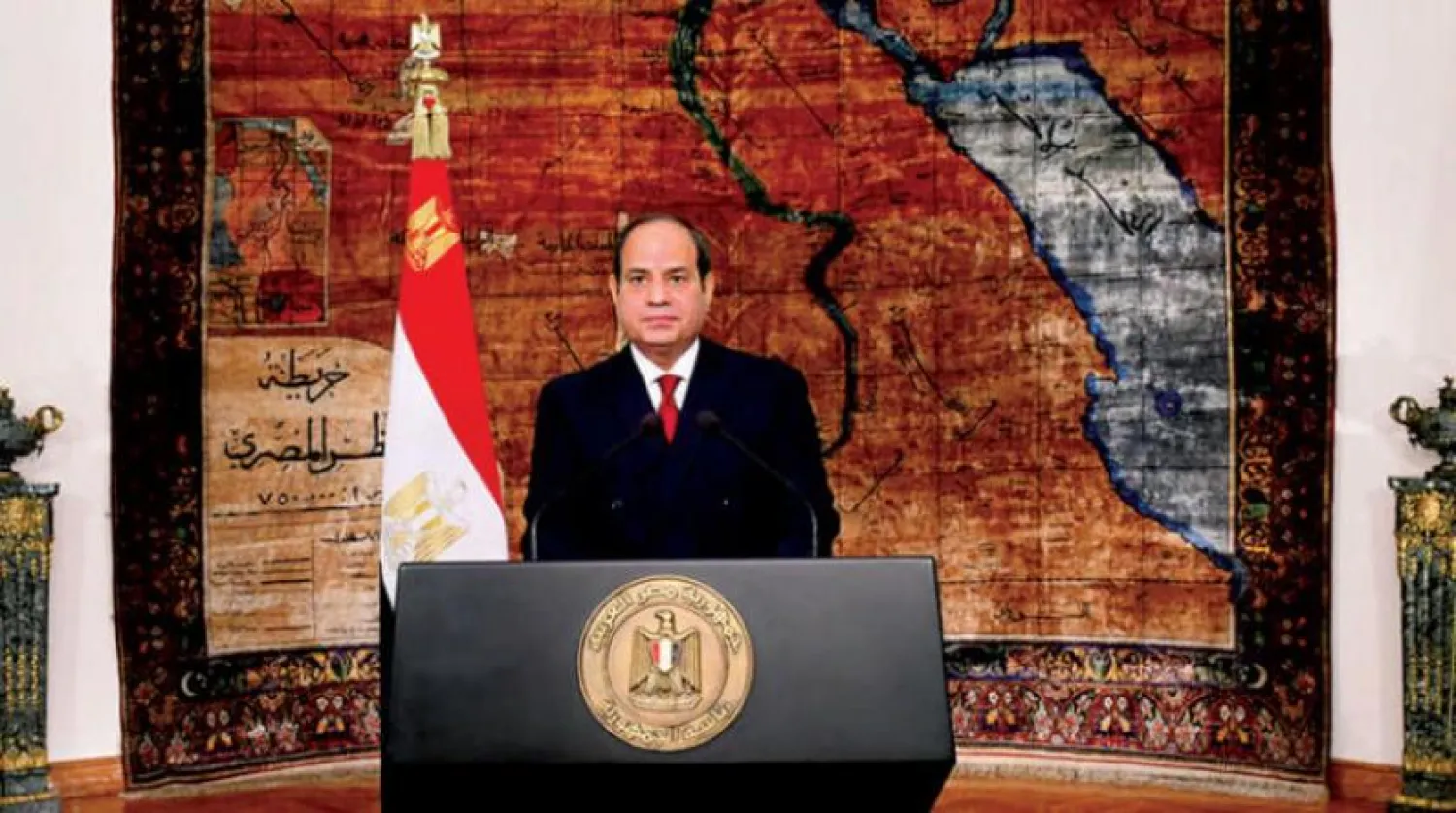
Egyptian President Abdel Fattah Al-Sisi | Photo: Egyptian presidency.
TT

Sisi Warns of Wicked Ambitions, Threats Facing Egypt

Egyptian President Abdel Fattah Al-Sisi | Photo: Egyptian presidency.

Egypt’s President Abdel Fattah Al-Sisi said, on Tuesday, that wicked designs and threats against Egypt will never stop and will never decrease, even if their nature changes. He stressed the importance of saving people from the dangers of uncalculated political delusions.

In a televised speech marking the 47th anniversary of the 6 October War 1973, Sisi said that Egypt’s achievements over the years to maintain security and stability have been remarkable, and are well known around the world.

He, however, warned against the greedy ambitions and threats eyeing Egypt.

Sisi added that maintaining the security of a large country such as Egypt, particularly as it lies in a difficult region and unstable world, is evidence of the Egyptian people’s uniqueness and solidity.

He also said that it reflected the ability of the armed forces and state institutions to undertake such a mission and progress towards sustainable development.

He vowed to continue the work towards preserving national dignity and advancing construction, development, reconstruction, and peace.

“The great October victory taught us that the Egyptian nation is always able to rise up for its rights ... We also learned that the Egyptian people do not waste their land and are able to protect it,” Sisi said.

"The glorious October war was not just a military battle in which Egypt fought and achieved its greatest victory; it was, however, a real test for the Egyptian people's ability to make the dream come true,” he noted.

The president said the victory's anniversary Egypt celebrates “is reminiscent of the people's struggle for thousands of years.”

“Inspired by the sublimity of its past, Egypt has drawn a rightful path to follow in order to achieve its desired goals and the people's broad hopes,” he said.

In recent weeks, Egypt witnessed staged protests in some villages on the outskirts of Cairo following a call by the Muslim Brotherhood to demonstrate.


Israel Army Says Struck Hezbollah Targets in ‘Several Areas’ of Lebanon

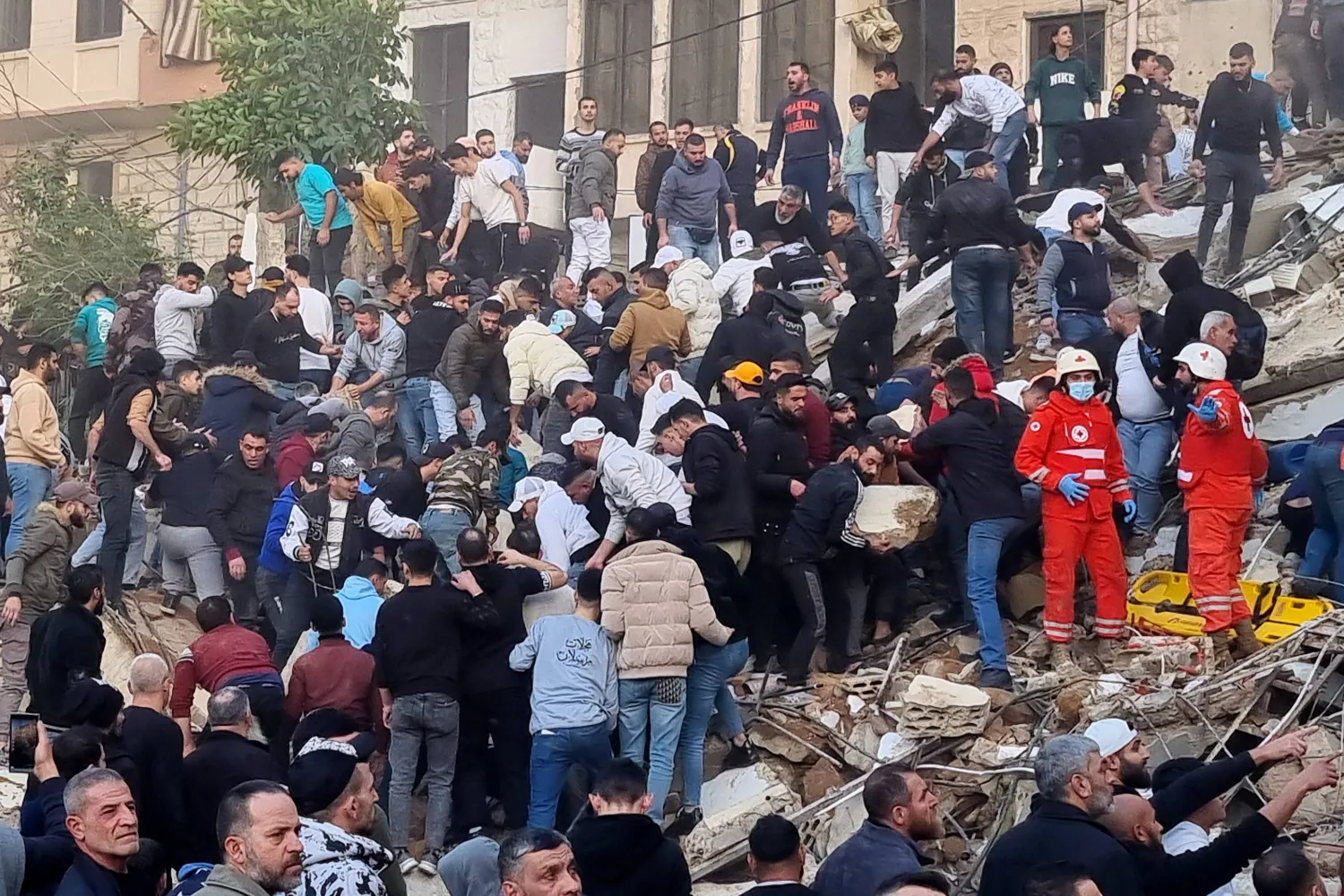
Lebanese army soldiers and paramedics inspect the wreckage of a car that was targeted in an Israeli airstrike in the town of Qanarit, near the coastal city of Sidon in southern Lebanon on January 8, 2026. (AFP)
TT

Israel Army Says Struck Hezbollah Targets in ‘Several Areas’ of Lebanon

Lebanese army soldiers and paramedics inspect the wreckage of a car that was targeted in an Israeli airstrike in the town of Qanarit, near the coastal city of Sidon in southern Lebanon on January 8, 2026. (AFP)

Israel's military said it struck Hezbollah targets in several areas of Lebanon on Friday, a day after the Lebanese army said it had completed the first phase of its plan to disarm the group in the south.

Under heavy US pressure and amid fears of expanded Israeli strikes, Lebanon has committed to disarming the Iran-backed group, which was weakened by more than a year of hostilities with Israel including two months of all-out war that ended with a November 2024 ceasefire.

Despite the truce, Israel has kept up regular strikes in Lebanon, usually saying it is targeting Hezbollah sites and operatives, and has maintained troops in five south Lebanon areas it deems strategic, accusing the group of rearming.

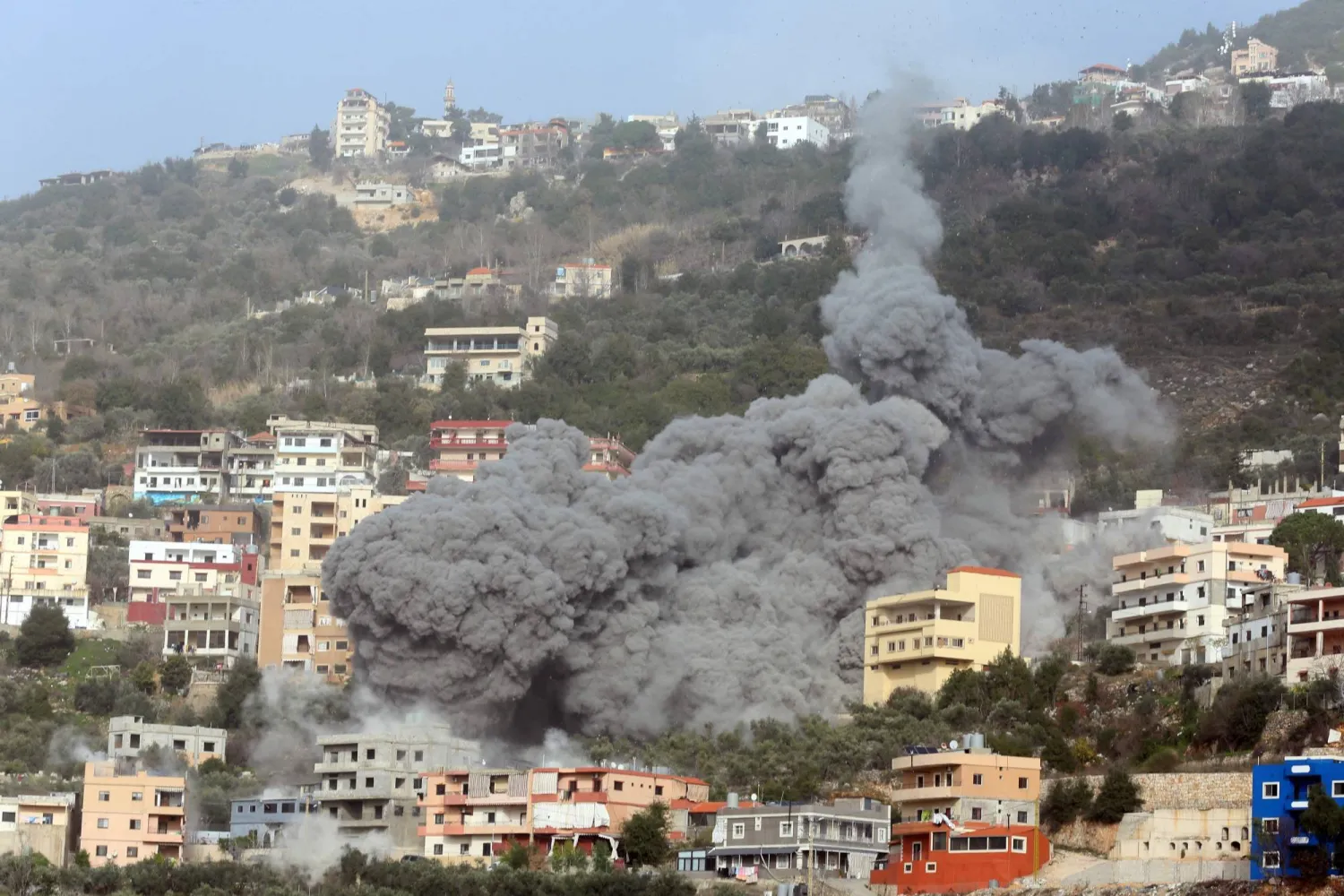
In a statement on Friday, the Israeli military said it struck "several areas in Lebanon", targeting "weapons storage facilities and a weapons production site that were used for the rehabilitation and military build-up of the Hezbollah terrorist organization".

"Additionally, several launch sites and rocket launchers, along with military structures, were struck," it added.

Lebanese official news agency NNA reported strikes on southern Lebanon in areas far from the border, as well as in the eastern Bekaa area where Hezbollah has a strong presence.
No casualties were immediately reported.

"The targets that were struck, and Hezbollah's reestablishment activity in these sites, constitute a violation of the understandings between Israel and Lebanon, and pose a threat to the State of Israel," the military statement said.

Lebanon's army said Thursday it had "achieved the objectives of the first phase" of its plan to disarm Hezbollah, covering the area south of the Litani River -- around 30 kilometers (20 miles) from the Israeli border -- with the intention to extend it to the rest of the country.
Israel said the efforts were encouraging but not enough.

"The ceasefire agreement... states clearly, Hezbollah must be fully disarmed," the office of Prime Minister Benjamin Netanyahu said in a statement.

"Efforts made toward this end by the Lebanese government and the Lebanese armed forces are an encouraging beginning, but they are far from sufficient," it added.

Lebanese official media said a strike on Thursday killed one person near the southern city of Sidon, as Israel's army said it targeted a Hezbollah operative.

Under the ceasefire, Hezbollah was to withdraw its forces north of the Litani River and have its military infrastructure dismantled in the evacuated areas.

The group has refused to surrender its weapons.


Yemen's STC to Dissolve Itself

Soldiers are seen outside the headquarters of the Southern Transitional Council in Aden, Yemen. (Reuters)
TT

Yemen's STC to Dissolve Itself

Soldiers are seen outside the headquarters of the Southern Transitional Council in Aden, Yemen. (Reuters)

Yemen's Southern Transitional Council and its institutions will be dismantled effective Friday.

The move paves the way for participation in the southern Yemen dialogue that will be hosted by Riyadh.

In a statement, members of the STC said the council had not achieved its desired goals. They added that they did not take part in the decision to carry out unilateral military moves in the eastern Hadhramaut and al-Mahra governorates.

They said the actions there had "harmed the Southern Cause."

Vice President of Yemen's Presidential Leadership Council (PLC) Abdul Rahman Al-Mahrami, also known as Abou Zaraa, and PLC member Ahmed Said bin Braik were present at the STC meeting.

The statement called on various officials and figures to join the dialogue, hoping that the Riyadh conference would "come up with a vision to resolve the Southern Cause."

It also expressed its gratitude to Saudi Arabia for hosting the conference.


Hundreds in Somalia’s Capital Protest Israel’s Recognition of Breakaway Territory of Somaliland

People protest against Israel’s recognition of the self-declared Republic of Somaliland in Mogadishu, Somalia, Thursday, Jan. 8, 2026. (AP)
TT

Hundreds in Somalia’s Capital Protest Israel’s Recognition of Breakaway Territory of Somaliland

People protest against Israel’s recognition of the self-declared Republic of Somaliland in Mogadishu, Somalia, Thursday, Jan. 8, 2026. (AP)

Hundreds of demonstrators gathered in Somalia’s capital to protest Israel’s recognition of the self-declared Republic of Somaliland, waving Somali flags and chanting patriotic songs in a show of national unity.

The protest on Thursday night took place at Taleh Square in downtown Mogadishu, where the crowds condemned Israel’s move as a violation of sovereignty and territorial integrity in the east African country. Demonstrators carried placards rejecting what they described as foreign interference in Somalia’s internal affairs.

The rally came two weeks after Israel announced that it recognized Somaliland as an independent and sovereign nation — and two days after Israel’s foreign minister visited Hargeisa, the Somaliland capital. On his visit, Foreign Minister Gideon Saar said that Israel would soon open an embassy and appoint an ambassador.

Thursday night's demonstration was the third such event since Israel recognized Somaliland on Dec. 26.

“We are protesting against the division of our country,” demonstrator Said Gedi said. “This is against the sovereignty, independence and territorial integrity of Somalia, and we hope Somalia will stand united.”

Another protester, Abdirahman Abdulkadir, said that the demonstration was meant to send a message of unity.

“Somalia cannot be divided,” he said. “We are united by one religion, one culture and the same heritage.”

The demonstration coincided with a televised address by President Hassan Sheikh Mohamud, who strongly rejected Israel’s decision and urged dialogue between Somaliland’s leaders and the federal government in Mogadishu.

“I want to make it clear once again that the Republic of Somalia is a sovereign and united country,” Mohamud said. “Its territory cannot be divided or ceded by any letter written by Israel or signed by (Israeli Prime Minister Benjamin) Netanyahu.”

Mohamud warned that the dispute could undermine Somalia’s political stability, economic recovery and development if not handled carefully. He urged Somaliland’s leadership to aim for talks, saying successful secessions elsewhere usually happened through political agreements. He cited examples including South Sudan, which became independent of Sudan in 2011.

Israel has no historical, cultural or economic ties with Somalia, he said.

Somaliland, a former British protectorate, declared independence from Somalia in 1991 following the collapse of the central government. Despite maintaining its own institutions and relative stability, it had never been recognized by a UN member state.

More than 20 mostly Middle Eastern or African countries and the Organization of Islamic Cooperation rejected Israel’s move.

Egyptian Foreign Minister Badr Abdelatty said Tuesday that Israeli recognition of Somaliland was a “dangerous precedent that threatens regional and international peace and security.”

US and Israeli officials told The Associated Press last year that Israel had approached Somaliland about taking in Palestinians from Gaza as part of US President Donald Trump’s plan at the time to resettle the territory’s population. Somalia's foreign ministry says such a proposal has neither been discussed nor considered.

Washington has since abandoned that plan, and the US State Department says it continues to recognize the territorial integrity of Somalia, “which includes the territory of Somaliland.”