


The Time Has Come to Give Black Footballers Mentors They Can Believe in

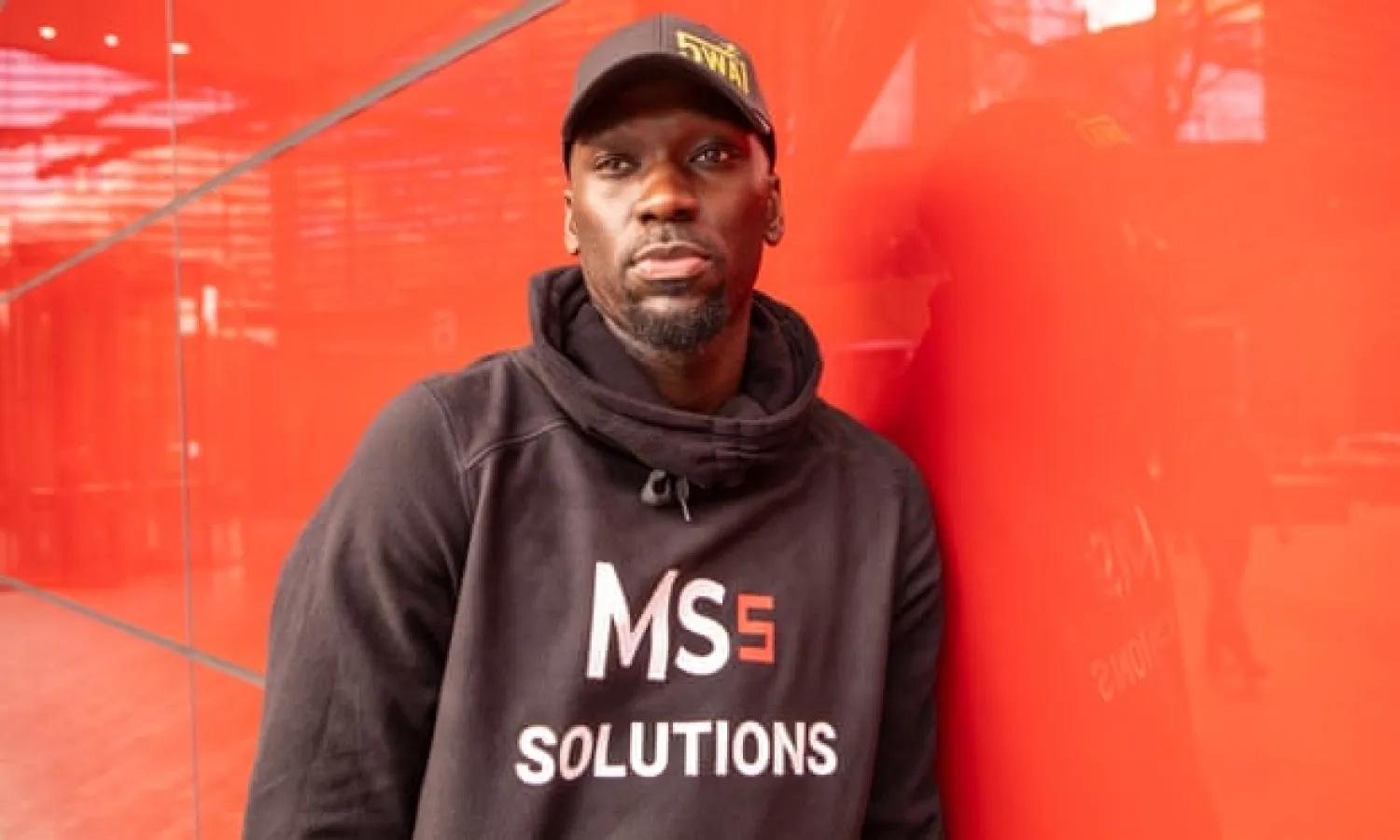
 Moses Swaibu is an English former professional footballer and now heads a youth charity called ‘MS5 Solutions’. Photograph: Antonio Olmos/The Guardian
Moses Swaibu is an English former professional footballer and now heads a youth charity called ‘MS5 Solutions’. Photograph: Antonio Olmos/The Guardian
TT

The Time Has Come to Give Black Footballers Mentors They Can Believe in

 Moses Swaibu is an English former professional footballer and now heads a youth charity called ‘MS5 Solutions’. Photograph: Antonio Olmos/The Guardian
Moses Swaibu is an English former professional footballer and now heads a youth charity called ‘MS5 Solutions’. Photograph: Antonio Olmos/The Guardian

Close your eyes and picture growing up in poverty with a lack of opportunities. Even with your eyes open, it’s difficult to understand if you’ve never witnessed it or gone through this yourself.

Growing up in south London, I always wanted to be a footballer. But maybe that was because besides a career in music, that was the only measure of wealth and success in our community – you never saw black people on television otherwise. A lack of male role models at home and in wider society able to provide guidance and teach you the fundamentals as a young boy or girl was and is an issue too.

I was lucky enough to become a professional with Crystal Palace before moving to Lincoln. But what happens to the 99% that leave academies and eventually fall out of the game without having a plan B in terms of another career path to follow? The streets will welcome you with both arms if you don’t have any alternative and are looking for a quick way to earn money.

People who end up taking that route are bound by brotherhoods that end up being your safety net. Last year, one of my friend’s brothers was killed on the street and that is something you can never escape if you come from that kind of background – even if you end up playing for one of the biggest clubs in the world you are still only a phone call away from bad news.

When I was a professional, some players with the same background as me were given labels because of their lives off the pitch. If you have come from a single-parent family it will always be harder to learn about authority and sometimes I think clubs don’t know how to deal with the issues. I’ll always remember one teammate who came into training one day and told the manager that some people had fired a gun at his house the night before. He was just told to go home and forget about it but really should have been given some kind of support. Now he is serving a 15-year prison sentence, so you can see how quickly things can spiral out of control.

In 2014, Michael Boateng and I were convicted of conspiracy to commit bribery relating to match-fixing and given lifetime bans from football. I also served four months of a 16-month sentence in prison and acknowledge that I made mistakes, even if after two trials the courts found no matches were actually fixed.

Since coming out of prison, I’ve been running workshops instigated jointly by the PFA, the Football Association and the Premier League as part of the FA’s integrity program which are compulsory for top-flight academies. Everyone working at the Premier League’s integrity and educational departments is white, as are the majority of the staff members. But how many are able to go into clubs and have the effect that I can? The young players only listen to me because they can relate to what I have been through.

It’s the same at the FA and PFA – how many black, Asian and other minorities who are able to relate culturally and communicate are working in their integrity departments? In order to better understand and fully empower diversity, inclusion needs to be spread across each and every sector. If football has a unique power to effect change and improve lives then why does nothing change in the boardrooms?

Black players are also always stereotyped with this idea that we are strong or can run fast and I think that is down to society but also the lack of representation in the higher levels of the game. We are now living in a generation where young people are more advanced than when I was growing up but doors are still kept shut for black, Asian and other minorities. Young black England internationals are thriving in the Premier League and beyond but you rarely hear the importance and emergence of black agents who have pioneered and broken barriers to keep young aspiring footballers on the correct path.

The media certainly has to take part of the blame. I’ve lost count of the amount of times I’ve picked up a newspaper or read something online over the past few years which has contributed to that negative stereotype. Given the number of people who read what are some of the country’s biggest publications every day, it’s probably no surprise so many feel empowered to express their racist views on social media or at a match.

By no means is this a cry for sympathy – more a harsh reality about growing up and seeing the only environment we know. But how is society and football able to understand what black players are going through with racism and discrimination if there’s a lack of communication with those who can make changes?

It’s taken a global tragedy for society to recognize finally the issues on race and equality, with football players taking a leading role. Hopefully now those in charge of the country will start to take note as well.

The Guardian Sport


Hakimi, Salah and Osimhen Head Star-packed AFCON Last-16 Cast

Morocco's Achraf Hakimi gestures during the Africa Cup of Nations group A soccer match between Zambia and Morocco in Rabat, Morocco, Sunday, Dec. 28, 2025. (AP Photo/Themba Hadebe)
TT

Hakimi, Salah and Osimhen Head Star-packed AFCON Last-16 Cast

Morocco's Achraf Hakimi gestures during the Africa Cup of Nations group A soccer match between Zambia and Morocco in Rabat, Morocco, Sunday, Dec. 28, 2025. (AP Photo/Themba Hadebe)

A star-studded cast led by Achraf Hakimi, Mohamed Salah and Victor Osimhen switch to knockout fare from Saturday, when the Africa Cup of Nations resumes in Morocco.

Paris Saint-Germain defender Hakimi was crowned 2025 African player of the year in November. Liverpool attacker Salah and Galatasaray striker Osimhen were the runners-up.

After 36 matches spread across six groups, the 16 survivors from 24 hopefuls clash in eight second-round matches over four days.

Fit-again Hakimi is set to lead title favorites Morocco against Tanzania, Salah will captain Egypt against Benin and Osimhen-inspired Nigeria tackle Mozambique.

AFP Sport looks at the match-ups that will determine which nations advance to the quarter-finals, and move one step closer to a record $10 million (8.5 million euros) first prize.

Senegal v Sudan

Veteran Sadio Mane and Paris Saint-Germain 17-year-old Ibrahim Mbaye, in two appearances off the bench, have been among the stars as 2022 champions Senegal confirmed why they are among the favorites by winning Group D. Sudan, representing a country ravaged by civil war since 2023, reached the second round despite failing to score. Their only Group F win, against Equatorial Guinea, came via an own goal.

Mali v Tunisia

"If we carry on playing like this we will not go much further," warned Belgium-born Mali coach Tom Saintfiet after three Group A draws. Tunisia did well to hold Morocco, but were woeful against Nigeria until they trailed by three goals. The Carthage Eagles then scored twice and came close to equalizing.

Morocco v Tanzania

A mismatch on paper as Morocco, whose only previous title came 50 years ago, are 101 places above Tanzania in the world rankings. The east Africans ended a 45-year wait to get past the first round thanks to two draws. Morocco boast a potent strike force of Brahim Diaz from Real Madrid and Ayoub El Kaabi of Olympiacos. They have scored three goals each to share the Golden Boot lead with Algerian Riyad Mahrez.

South Africa v Cameroon

South Africa debuted in the AFCON 30 years ago by hammering Cameroon 3-0 in Johannesburg. It should be much closer when they meet a second time with only four places separating them in the world rankings. In pursuit of goals, South Africa will look to Oswin Appollis and Lyle Foster while 19-year-old Christian Kofane struck a stunning match-winner for Cameroon against Mozambique.

Egypt v Benin

Struggling to score for Liverpool this season, Salah has regained his appetite for goals in southern Morocco. He claimed match winners against Zimbabwe and South Africa to win Group B. Benin celebrated their first AFCON win 25 years after debuting by edging Botswana. The Cheetahs are a compact, spirited outfit led by veteran striker Steve Mounie, but lack punch up front.

Nigeria v Mozambique

Livewire Osimhen is a huge aerial threat and could have scored hat-tricks against Tanzania and Tunisia in Group C, but managed just one goal. Fellow former African player of the year Ademola Lookman has also impressed. Mozambique lost 3-0 in their previous AFCON meeting with the Super Eagles 16 years ago. It is likely to be tighter this time with striker Geny Catamo posing a threat for the Mambas (snakes).

Algeria v DR Congo

The clash of two former champions is potentially the match of the round. It is the only tie involving two European coaches -- Bosnian Vladimir Petkovic and Frenchman Sebastien Desabre. Algeria and Nigeria were the only teams to win all three group matches. Former Manchester City winger Mahrez has been an inspirational captain while scoring three times.

Ivory Coast v Burkina Faso

This is the only match featuring nations from the same region. Burkina Faso and defending champions Ivory Coast share a border in west Africa. Manchester United winger Amad Diallo was the only winner of two player-of-the-match awards in the group stage. The Ivorian now face impressive Burkinabe defenders Edmond Tapsoba and Issoufou Dayo.


After Waiting 36 Years, French Soccer Fans Finally Have a Capital City Derby again as PSG Faces PFC

Fireworks explode as Paris Saint-Germain's players parade on a bus on the Champs-Elysees avenue in Paris on June 1, 2025, a day after PSG won the 2025 UEFA Champions League final football match against Inter Milan in Munich. (AFP)
TT

After Waiting 36 Years, French Soccer Fans Finally Have a Capital City Derby again as PSG Faces PFC

Fireworks explode as Paris Saint-Germain's players parade on a bus on the Champs-Elysees avenue in Paris on June 1, 2025, a day after PSG won the 2025 UEFA Champions League final football match against Inter Milan in Munich. (AFP)

It's taken quite some time, but the first capital city derby in French men's league soccer since 1990 takes place on Sunday when Paris Saint-Germain hosts Paris FC.

A very local derby, too, with PSG's Parc des Princes stadium literally across the street from PFC's new home ground — 44 meters away according to the Paris City Hall website.

After winning promotion last season, Paris FC changed stadium and now plays at Stade Jean-Bouin, which traditionally held rugby matches.

Sunday's contest pits the defending French and European champion against a side struggling in the top tier. PFC has lost half its games, and was 14th in the 18-team league heading into this weekend's 17th round.

PFC's top scorer this season is skillful midfielder Ilan Kebbal with six goals, more than any PSG player. But he is away with Algeria at the Africa Cup of Nations.

PSG has coped with injuries to star forwards Ousmane Dembélé and Désiré Doué this season. That might have affected results because, for a change, PSG is not top but in second spot behind surprise leader Lens. Heading into Sunday's derby, PSG had already lost two league games, as many defeats as all last season.

While PSG has won a record 13 French league titles and 16 French Cups, PFC's trophy cabinet is bare. The PFC men's team has never won the league or even a cup.

Paris FC's takeover late last year by France's richest family, the Arnaults of luxury empire LVMH, promised to spice up Ligue 1.

Paris FC owner Antoine Arnault is the son of billionaire Bernard Arnault, and the family's cash input will prove crucial to the chances of PFC becoming a serious rival to PSG. Antoine used to be a PSG season-ticket holder and enjoys a cordial relationship with PSG president Nasser Al-Khelaïfi.

Before this season, PSG’s previous city rival was Matra Racing, which became Racing Paris 1 and beat PSG in the last men’s league derby in Paris in 1990. Antoine won't have to wait so long for another derby, because PSG is hosting PFC in the French Cup's last 32 on Jan. 12.

Fleeting rivalries, stadium shares

Parisian soccer history can be a bit confusing.

Paris FC men's team was created in 1969 and merged with Stade Saint-Germain to form Paris Saint-Germain, or PSG, in 1970.

The merger ended abruptly in 1972 with PSG losing its professional status and PFC staying in division 1, and playing at Parc des Princes. PSG kept the name and returned to play at the stadium in 1974 after winning promotion back to the top flight, coinciding with PFC's relegation.

Matra Racing was only briefly on the scene.

Matra spent a few seasons in the French top flight — sharing the Parc des Princes stadium — but the club faded after French media baron Jean-Luc Lagardère withdrew his backing in 1989. Matra was relegated the following year, when it was called Racing Paris 1, despite beating PSG in the derby.

Red Star's ambition

There may be more local derbies in the capital next season, with Red Star chasing promotion from Ligue 2.

Red Star is based in the northern suburbs of Paris and is second in Ligue 2. The team has long been respected for being close to its working-class fans in the Saint-Ouen-sur-Seine suburb.

Home games are played at the 5,600-capacity Stade Bauer, which has stands selling food right outside the entrance gates. Red Star’s down-to-earth image has remained the same for decades, with the club becoming increasingly trendy and attracting a new section of fans appreciating its old-school ways.

Plans are in place to increase capacity to 10,000 next year and the club says it hopes to have 80% of homegrown local players in the first team by 2030.

Founded in 1897, Red Star is among the oldest clubs in France. It has a famous founder in Jules Rimet, the longest-serving president in FIFA history (1921-54), and the World Cup trophy was named after him.

Red Star's period of success was after World War I, with the club winning four French Cups in the 1920s.


Tsitsipas Considered Quitting Tennis during Injury-hit 2025

29 December 2025, Australia, Melbourne: A general view of Rod Laver Arena after crews complete line-marking and painting of the Melbourne sign and court at Rod Laver Arena during preparations for the 2026 Australian Open tennis tournament at Melbourne Park. Photo: James Ross/AAP/dpa
TT

Tsitsipas Considered Quitting Tennis during Injury-hit 2025

29 December 2025, Australia, Melbourne: A general view of Rod Laver Arena after crews complete line-marking and painting of the Melbourne sign and court at Rod Laver Arena during preparations for the 2026 Australian Open tennis tournament at Melbourne Park. Photo: James Ross/AAP/dpa

Stefanos Tsitsipas said on Thursday he seriously considered retiring from tennis in the depths of a struggle with serious back pain during much of the 2025 season.

But the former world number three, now ranked 36th after playing just two Davis Cup matches since a second-round exit at the US Open, said his ongoing medical treatment appeared to be paying dividends.

"I'm most excited to see how my actual training responds with regard to my back," the 27-year-old said as he prepared to open his 2026 campaign for Greece at the mixed-teams United Cup in Perth, Australia.

"My biggest concern was if I could finish a match," added the 2023 Australian Open finalist, who said the injury haunted him "for the last six or eight months".

"I would ask: 'Can I play another match without pain?'"

"I got really scared after the US Open loss (to Germany's Daniel Altmaier). I could not walk for two days. That's when you reconsider the future of your career."

According to AFP, Tsitsipas said that after various medical consultations he was now satisfied with his current care plan.

"My biggest win for 2026 would be to not have to worry about finishing matches," he said, adding that he completed five weeks of off-season training without pain.

"It makes great feedback knowing you had a pre-season without pain -- I hope it stays that way. I want to deliver for 2026 and the United Cup.

"I put in the work. The most important thing is full belief that I can come back to where I was. I will try everything to do that."

Greece have become regulars in the four-year history of the United Cup, played in Perth and Sydney, with fellow comeback hopeful Maria Sakkari, also a former world number three, joining Tsitsipas in the team.

"We are here again, with a good team and great spirit. We are prepared for war -- we are Greek. We're going big," Tsitsipas said.

Greece are grouped with Naomi Osaka's Japan and the Emma Raducanu-led Britain.
