


MENA Committed Gas Investments Hold Steady in 2020

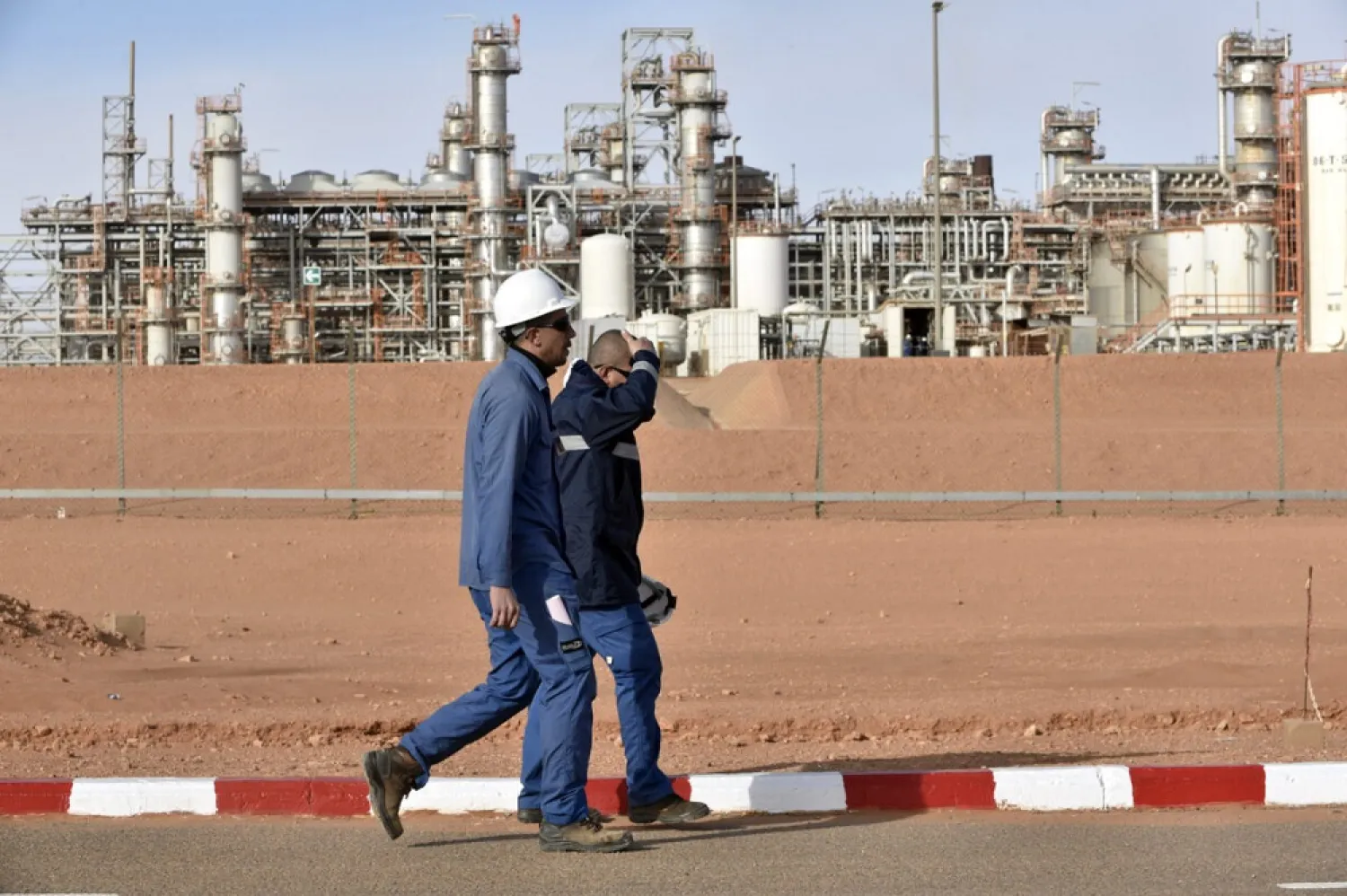
Two orkers seen walking at the gas plant in In Amenas, Algeria on January 16, 2018. (Getty Images)
TT

MENA Committed Gas Investments Hold Steady in 2020

Two orkers seen walking at the gas plant in In Amenas, Algeria on January 16, 2018. (Getty Images)

Middle East and North Africa committed gas investments held steady while planned gas investments reach USD126 billion, a 29 percent jump compared to last year, due to the increasing interest in clean energy projects.

The Arab Petroleum Investments Corporation (APICORP), a multilateral development financial institution, released its MENA Gas & Petrochemicals Investments Outlook 2020-2024 on the MENA region’s planned and committed investments for the period 2020 to 2024.

This year is witnessing one of the biggest gas demand shocks on record, with a year-on-year (y-o-y) reduction of 4 percent globally. This stands in stark contrast to 2019, which was a record year for liquefied natural gas (LNG) Final Investment Decisions (FIDs).

The 2020 global crisis is expected to reduce the annual growth rate for global gas demand during 2020-24 to 1.5 percent compared to the pre-COVID-19 estimate of 1.8 percent.

Despite the global demand shock, the MENA region’s committed gas investments held steady compared to last year. Planned investments meanwhile increased by 29 percent to reach USD126 billion mainly due to the strong ongoing regional gas drive for cleaner power generation and improved monetization as a feedstock for the industrial and petrochemicals sectors.

Notably, the petrochemicals sector witnessed a y-o-y increase of USD4 billion in planned projects compared to last year’s outlook, while committed projects decreased by USD13 billion due to the completion of several projects in 2019.

The share of government investments in committed and planned gas projects (92 percent) is higher than it is in the petrochemicals sector (72 percent). Given the increasing size of projects, such investments typically rely on a 70:30 or 80:20 debt/equity ratio.

Dr. Ahmed Ali Attiga, chief executive officer, APICORP, commented: “The decrease in gas demand has put fiscal pressures on government and private sectors alike, and we expect a few committed projects to continue facing strong headwinds in terms of payments, supply chain issues and potential project delays. Overcoming these challenges will undoubtedly require strong policy support from governments, as well as enhanced collaboration between the private and public sector.”

Dr. Leila R. Benali, chief economist, strategy, energy economics and sustainability, APICORP, added: “The impact of COVID-19 on MENA gas demand and the petrochemicals sector will accelerate the industrial share of domestic demand. As outlined in our MENA Gas & Petrochemicals Investments Outlook 2020-2024, gas demand is expected to grow by approximately 3.8 percent-4 percent on average in MENA compared to 6 percent in 2019.

This downward revision is due to slower GDP growth and industrial output, the effect of price reforms, nuclear power projects coming online and increased share of renewables. Additionally, a prolonged depression of LNG prices will put further pressure on a few LNG exporters in the region during a time when pipeline exports were already taking a hit.”

The integration of the downstream value chain is expected to continue in the region, in conjunction with Asia. Saudi Arabia, Iran, and Iraq leading the way in terms of committed gas investments. This is driven by the gas-to-power development drive in both Saudi Arabia and Iraq, as well as Iran’s South Pars program and petrochemicals feed.

The UAE has allocated USD22 billion to the country’s continued gas development masterplan realization, which includes unconventional and sour gas development.

In terms of committed petrochemicals investments, Egypt tops the region, followed by Iran and Saudi Arabia, owed to the localization of specialty chemical industries and feedstocks import substitution.



Morocco to Open Two Deepwater Ports in 2026 and 2028, Minister Says

A general view of Tanger Med Port, on the Strait of Gibraltar, east of Tangier, Morocco June 6, 2024. (Reuters)
TT

Morocco to Open Two Deepwater Ports in 2026 and 2028, Minister Says

A general view of Tanger Med Port, on the Strait of Gibraltar, east of Tangier, Morocco June 6, 2024. (Reuters)

Morocco will open a new deepwater Mediterranean port next year and another on the Atlantic in 2028, Equipment and Water minister Nizar Baraka said, as the North African country aims to replicate the success of Africa's largest port, Tanger Med.

Nador West Med, under construction on the Mediterranean, is scheduled to be operational in the second half of 2026, Baraka told Reuters in an interview.

It will offer 800 hectares for industrial activity, with plans to expand to 5,000 hectares, surpassing Tanger Med's industrial zones, he said.

The port will also host Morocco's first liquefied natural gas (LNG) terminal - a floating storage and regasification unit (FSRU) - linked by a pipeline to industrial hubs in the northwest, as Morocco pushes investments in natural gas and renewable energy to reduce dependence on coal.

Further south on the Atlantic coast, Morocco is building a $1 billion port in Dakhla, in the disputed Western Sahara region.

The facility will be surrounded by 1,600 hectares for industrial activities and 5,200 hectares for farmland irrigated by desalinated water, Baraka said.

"The port will be ready in 2028 and will be Morocco's deepest at 23 meters," Baraka said. Such depth would support heavy industries focused on processing raw materials from Sahel countries, he said.

Officials have marketed Dakhla as a gateway for landlocked Sahel nations to global trade.

Both Nador and Dakhla ports will include quays dedicated to exporting green hydrogen once production begins, Baraka said.

Nador and Dakhla would be Morocco's third and fourth deepwater ports after Tanger Med and Jorf Lasfar, an energy, bulk cargo and phosphates exports port on the Atlantic.

By 2024, industrial zones near Tanger Med hosted 1,400 firms employing 130,000 people across sectors including automotive, aeronautics, textiles, agri-food and renewable energy, official figures show.

Morocco is also considering building a port in Tan-Tan on the Atlantic in partnership with green hydrogen investors, Baraka said. "We are conducting studies to decide the appropriate size of the port," Baraka said.


Saudi Arabia, Qatar Sign High-Speed Railway Project Implementation Agreement

The project is slated for completion in six years, utilizing the latest railway technologies and smart engineering to ensure safe and seamless operation and to adhere to the highest international standards of quality and safety - SPA
TT

Saudi Arabia, Qatar Sign High-Speed Railway Project Implementation Agreement

The project is slated for completion in six years, utilizing the latest railway technologies and smart engineering to ensure safe and seamless operation and to adhere to the highest international standards of quality and safety - SPA

Prince Mohammed bin Salman bin Abdulaziz Al Saud, Crown Prince and Prime Minister, and Emir of the State of Qatar Sheikh Tamim bin Hamad Al Thani witnessed the signing of an agreement to implement a high-speed electric passenger railway project connecting the Kingdom of Saudi Arabia and the State of Qatar, a step reflecting the deep-rooted fraternal and historical relations between the two countries.

The agreement was signed by Minister of Transport and Logistic Services Saleh Al-Jasser and Minister of Transport of Qatar Sheikh Mohammed bin Abdulla bin Mohammed Al Thani within the framework of the Saudi-Qatari Coordination Council, representing a strategic step aimed at enhancing cooperation, developmental integration, and sustainable development, and demonstrating a shared commitment to regional prosperity, SPA reported.

The high-speed railway line spans 785 kilometers, strategically connecting the capital cities of Riyadh and Doha, and will pass through key stations including Hofuf and Dammam, while also linking King Salman International Airport and Hamad International Airport.

The train will form a new artery for rapid and sustainable transportation, improving the regional travel experience with speeds exceeding 300 kilometers per hour, reducing travel time between the two capitals to approximately two hours, significantly enhancing mobility, boosting trade and tourism, and improving quality of life.

The project is slated for completion in six years, utilizing the latest railway technologies and smart engineering to ensure safe and seamless operation and to adhere to the highest international standards of quality and safety.

It is expected to have an economic impact of nearly SAR115 billion on the GDP of both countries, serve over 10 million passengers annually, and create more than 30,000 direct and indirect jobs.

The high-speed railway will also contribute to environmental sustainability by reducing carbon emissions and supporting the transition to more efficient and innovative transportation patterns for smart and sustainable mobility in the region.

This makes the rail line one of the most important strategic projects supporting regional development and strengthening connectivity and integration among the Gulf Cooperation Council countries.


Türkiye's Pegasus Airlines Acquires Biggest Czech Airline, Smartwings, in a Deal Worth $180 million

A passenger plane of the ‘Pegasus’ airline lands at the ‘Stuttgart Airport’ in Stuttgart, Germany, Wednesday, May 3, 2023. (Bernd Weissbrod/dpa via AP, File)
TT

Türkiye's Pegasus Airlines Acquires Biggest Czech Airline, Smartwings, in a Deal Worth $180 million

A passenger plane of the ‘Pegasus’ airline lands at the ‘Stuttgart Airport’ in Stuttgart, Germany, Wednesday, May 3, 2023. (Bernd Weissbrod/dpa via AP, File)

Türkiye's Pegasus Airlines said on Monday it has signed an agreement to acquire the biggest Czech airline, Smartwings, along with its owner, Czech Airlines, from Prague City Air.

Pegasus said the deal, which is worth 154 million euros (almost $180 million) was a “step forward in our continued global growth journey,” Reuters reported.

The process of transferring the ownership of Czech Airlines should be completed in 12 months, Smartwings spokeswoman Vladimíra Dufková said.

Smartwings currently operates regular, charter and private flights to some 80 destinations with almost 50 planes. The airline previously negotiated a takeover by Polish national carrier LOT but that fell through over the weekend after Pegasus filed a rival bid.

Pegasus, a low cost carrier, that was established in 1990. It says it operates flights to 153 destinations in 54 countries.