Lebanon: New Withdrawal Limits on Local Currency Stir Confusion

FILE PHOTO: Lebanese pound banknotes are seen at a currency exchange shop in Beirut, Lebanon June 15, 2020. REUTERS/Mohamed Azakir
TT

Lebanon: New Withdrawal Limits on Local Currency Stir Confusion

FILE PHOTO: Lebanese pound banknotes are seen at a currency exchange shop in Beirut, Lebanon June 15, 2020. REUTERS/Mohamed Azakir

News circulated on Wednesday about limits set by banks for cash withdrawals on Lebanese pounds of up to LBP2 million per month, which is equivalent to around USD250 in the parallel market.

For extra spending, depositors will be allowed to use their electronic cards, which also have limits that vary according to the nature of the bank account.

More than 300,000 public sector employees have their full salaries transferred from the Central Bank to their bank accounts at the end of each month.

The same applies to the private sector, where workers have been suffering from reduced pay of up to 50 percent.

In both sectors, employees have a tendency to withdraw all their salaries to meet their basic needs on one hand, and ahead of possible decline in the currency’s exchange rate and its purchasing power on the other.

Sources told Asharq Al-Awsat that in response to the new regulations imposed by Banque du Liban (BDL), some bank administrations have given verbal instructions to their branches to set new limits on withdrawals in lira not exceeding LBP2 million per month, regardless of the amount available in the depositor’s current account.

However, BDL Governor Riad Salameh was swift to deny fixing a limit. He stressed that the mechanism adopted by the central bank was aimed at setting limits for banks to withdraw from their current accounts at the BDL.

When these limits are exceeded, the required amounts are deducted from the banks’ frozen accounts, he added.

In remarks to Asharq Al-Awsat, a banker noticed an explicit discrepancy in the new regulation.

He said that while the governor has denied setting limits on depositor accounts, the withdrawal limits imposed on the banks would force them to apply the same regulations on their customers.

“Current LBP accounts belonging to banks are insufficient to meet the daily demands for LBP,” he explained.

“Any technical measure to control liquidity will be ineffective and have limited and temporary effects,” the banker stated, adding: “Putting new pressure on the already deteriorating monetary system will generate bad and unwanted repercussions on people's livelihoods.”


Saudi Arabia Ranks First Globally in Digital Government Services

The Digital Government Forum (SPA)
TT

Saudi Arabia Ranks First Globally in Digital Government Services

The Digital Government Forum (SPA)

Saudi Arabia achieved a new historic milestone, ranking first globally in the Online Services Index (OSI) and securing a rank among the world’s top five countries in the United Nations E-Government Development Index (EGDI), thereby exceeding the Saudi Vision 2030 target four years ahead of schedule.

Saudi Arabia also ranked first globally in the Telecommunications Infrastructure Index (TII), the Participation and Engagement Index (PE), and the E-Government Infrastructure Index (EGI), while Riyadh ranked first in the Local Online Services Index (LOSI), according to the UN report, which assessed 194 countries.

Minister of Communications and Information Technology and Chairman of the Board of Directors of the Digital Government Authority Abdullah Alswaha extended his deepest gratitude and appreciation to Custodian of the Two Holy Mosques King Salman bin Abdulaziz Al Saud and Prince Mohammed bin Salman bin Abdulaziz Al Saud, Saudi Crown Prince and Prime Minister, for the unlimited support provided to the digital economy.

He said that this global achievement is the result of Saudi Vision 2030, which has made technology and innovation key drivers of development, global competitiveness, and contributions to shaping the future.

‏Governor of the Digital Government Authority Ahmed bin Mohammed Alsuwaiyan expressed his profound gratitude and appreciation to the wise leadership for the continued support of the digital government ecosystem.

He affirmed that this significant achievement reflects the maturity of digital transformation and the integration of efforts among government agencies, demonstrating Saudi Arabia’s progress in developing integrated, proactive, and human-centric digital government services.

He pointed out that Saudi citizens are essential partners in this transformation and that their aspirations and needs have been, and continue to be, the primary driving force behind the development of government services and the utilization of artificial intelligence and emerging technologies to enhance service quality and accessibility, thereby improving quality of life and delivering a more efficient and reliable digital experience.

This achievement builds on the transformation journey undertaken by the digital government ecosystem since the establishment of the Digital Government Authority in 2021 to lead and regulate digital transformation through the development of policies, legislation, and standards, promoting the adoption of innovative and integrated digital solutions, and improving government spending efficiency.

These efforts contribute to enhancing competitiveness, facilitating business activities, developing digital capabilities and skills, and advancing government services to higher levels of efficiency, quality, and proactivity.

Since the Crown Prince launched Saudi Vision 2030 on April 25, 2016, the Vision has used the UN EGDI to measure progress toward its goal of placing Saudi Arabia among the world’s top five countries in digital government.

Published every two years for 25 years and covering 194 countries, the index is one of the most prominent measures of government development worldwide.

Saudi Arabia’s rise from 52nd in 2018 to fourth in 2026 reflects the scale of its digital government transformation and the Vision’s impact on government efficiency and the beneficiary experience.


Trump, Xi and Putin's Pledge to Boost Refined Oil Product Supplies Faces Implementation Hurdles

(L-R) Russian President Vladimir Putin, Chinese President Xi Jinping and US President Donald Trump pose for a group photo before a trilateral meeting on the sidelines of the Asia-Pacific Economic Cooperation (APEC) summit at the Qilin Shanzhuang State Residence in Shenzhen, China, 19 November 2026.  EPA
(L-R) Russian President Vladimir Putin, Chinese President Xi Jinping and US President Donald Trump pose for a group photo before a trilateral meeting on the sidelines of the Asia-Pacific Economic Cooperation (APEC) summit at the Qilin Shanzhuang State Residence in Shenzhen, China, 19 November 2026. EPA
TT

Trump, Xi and Putin's Pledge to Boost Refined Oil Product Supplies Faces Implementation Hurdles

(L-R) Russian President Vladimir Putin, Chinese President Xi Jinping and US President Donald Trump pose for a group photo before a trilateral meeting on the sidelines of the Asia-Pacific Economic Cooperation (APEC) summit at the Qilin Shanzhuang State Residence in Shenzhen, China, 19 November 2026.  EPA
(L-R) Russian President Vladimir Putin, Chinese President Xi Jinping and US President Donald Trump pose for a group photo before a trilateral meeting on the sidelines of the Asia-Pacific Economic Cooperation (APEC) summit at the Qilin Shanzhuang State Residence in Shenzhen, China, 19 November 2026. EPA

The path ahead for the United States, China and Russia to increase supplies of refined petroleum products appears far more complicated than the pledge announced by the three countries following a meeting of their leaders on the sidelines of the Asia-Pacific Economic Cooperation (APEC) summit might suggest.

While Washington, Beijing and Moscow agreed to increase production and supply of these products to global markets, refining industry data reveal different constraints facing each country. These range from high refinery utilization rates in the United States and declining crude processing in China to damage sustained by Russian refineries as a result of the war in Ukraine.

Refined petroleum products are produced by processing crude oil at refineries, where it is separated into different components and further processed into fuels and materials used in transportation, industry and power generation.

The main products include gasoline for cars, diesel used by trucks, other vehicles and industrial equipment, jet fuel, heating oil and liquefied petroleum gases such as propane and butane, as well as naphtha used in petrochemical production.

The importance of these products varies across markets. Some are directly linked to transportation, while others are used in heating, manufacturing and chemical production.

Increasing their supply therefore does not necessarily mean producing more crude oil. It requires sufficient crude availability and the ability of refineries to process it into the specific products markets need.

For US President Donald Trump, the issue extends beyond energy market considerations. Lowering energy and fuel prices has been one of his key economic pledges.

Gasoline prices directly affect household spending, while diesel costs influence the transportation of goods and the operation of commercial and industrial activities.

Higher fuel prices can increase living costs and fuel inflationary pressures, making stable energy supplies and prices an important economic and political priority for the US administration.

However, Washington also faces constraints on its ability to rapidly increase refined product output, with American refineries already operating at high utilization rates.

The joint statement issued after the meeting said the three countries "plan to increase the production and supply of refined petroleum products for the benefit of all nations," reaffirming the importance of stable energy flows.

However, the announcement included no specific production targets, timetable or implementation mechanisms, leaving its actual market impact dependent on each country's ability to increase output or redirect existing supplies.

The significance of the pledge lies in the involvement of three major players in the energy market. The United States and Russia are among the world's largest oil producers, while China is the biggest crude importer.

Yet differences in their refining sectors mean their ability to increase supplies varies considerably.

Refined product output depends not only on refining capacity but also on crude availability, economically viable refining margins, sufficient inventories, domestic demand and regulatory restrictions.

United States: Refineries Operating Near Capacity

In the United States, the scope for increasing refined product output in the near term appears limited, with refineries already operating at high utilization rates.

Data from the US Energy Information Administration (EIA) showed that refineries processed approximately 16.9 million barrels of crude per day during the week ended November 13, operating at 95.7% of capacity.

That high utilization rate leaves little room for a rapid increase in crude processing without additional capacity or changes in operating conditions.

Gasoline production averaged approximately 9.4 million barrels per day, while distillate output, which includes diesel and heating oil, reached 5.2 million barrels per day.

Meanwhile, commercial crude inventories rose by 3.4 million barrels to 417.8 million barrels. Gasoline stocks increased by 5.2 million barrels, while distillate inventories grew by 1.6 million barrels.

Despite the increases in gasoline and distillate stocks, this does not necessarily mean US refineries have significant room to raise production.

Inventories represent quantities held in storage and are influenced by production, imports, consumption and exports, while refinery operating capacity determines how much additional fuel can be produced.

With refinery utilization already at 95.7%, the scope for increasing crude throughput in the short term remains limited.

This constraint is particularly significant because distillate inventories, including diesel and heating oil, remain approximately 7% below their five-year average for this time of year, despite the weekly increase.

As a result, the United States may be better positioned to contribute to the pledge through inventory management, adjustments to trade flows and operational improvements rather than a substantial and immediate increase in refinery output.

China: Increasing Supplies Starts With Crude Purchases

China faces a different challenge. Although it has a vast refining industry, increasing refined product output requires securing sufficient crude oil supplies, while October data indicate a decline in refinery activity.

According to data reported by Reuters, Chinese refineries processed approximately 58.3 million metric tons of crude in October, equivalent to around 13.7 million barrels per day, down 8.1% from a year earlier and 2% from September.

Crude throughput during the first 10 months of the year also fell 6.9% year on year to 571.9 million metric tons.

The decline suggests that China has yet to enter a period of sustained expansion in refining activity, despite increases in refined petroleum product exports during certain months.

Exports rose 12.7% year on year in August to 6.01 million metric tons, before jumping 39.4% in September, with diesel shipments reaching their highest level in more than three years after Beijing eased export restrictions introduced in March.

However, higher exports do not necessarily indicate increased production. They may result from inventory drawdowns, the redirection of supplies previously intended for the domestic market or adjustments to export quotas.

China's ability to increase supplies sustainably remains dependent on higher crude imports, domestic demand, refinery profit margins and regulatory decisions governing exports.

China is particularly important to the trilateral pledge because it may have greater scope to increase refined petroleum product output than the United States, where refineries are already operating at high utilization rates.

However, realizing that potential would require Chinese refineries to purchase and process larger volumes of crude, a trend that is not yet evident in the latest data.

Russia: War Limits Refinery Output and Export Capacity

In Russia, the constraints are more closely linked to the consequences of the war in Ukraine, as refineries have repeatedly come under drone attacks, disrupting production units and reducing the volume of fuel available for export.

Industry sources cited by Reuters on November 18 said Ukrainian drone attacks since late October had reduced crude processing at Russian refineries by approximately 45%, to around 400,000 metric tons per day, equivalent to roughly 3 million barrels per day, compared with more than 700,000 metric tons per day at the end of October.

The attacks have disrupted or halted operations at 15 of Russia's 35 major refineries, up from nine in the middle of the previous week.

The refineries targeted have a combined nominal capacity of approximately 500,000 metric tons per day, representing 54% of Russia's total primary refining capacity of around 930,000 metric tons per day.

Nevertheless, the sources said average crude processing in November remained above 500,000 metric tons per day, approximately 5% to 10% below September and October levels.

This reflects the difference between the sharp decline in recent daily processing volumes and the average recorded over the month.

The developments are part of a broader contraction in Russian refining activity.

According to an analysis published by the International Energy Agency (IEA) in September, crude throughput at Russian refineries fell to 3.8 million barrels per day in June, its lowest level in more than 20 years and approximately 30% below the level recorded a year earlier.

The agency estimated that gasoline output had declined 20% from 2025 levels, while diesel production had fallen by nearly 30%, prompting Russian authorities to impose restrictions on fuel exports to protect domestic supplies.

The decline in refining activity has also affected exports of petroleum products.

Russian seaborne exports of refined products fell 11% month on month and 42% year on year in September to approximately 1.075 million barrels per day, according to data reported by S&P Global.

Figures from the Kyiv School of Economics (KSE) also showed that Russian petroleum product exports stood at approximately 1.05 million barrels per day in September, down 7% from August and around 53% below the 2025 average.

These figures suggest that Russia may be able to redirect more crude oil toward exports when its refineries are disrupted, but it cannot easily convert those volumes into refined products such as diesel and gasoline, which global markets need.

Lower fuel production also puts pressure on domestic supplies and limits Moscow's ability to increase refined product exports while its oil infrastructure remains under repeated attack.

Against this backdrop, one analyst suggested that the call to increase refined petroleum product supplies could also send an indirect message to Kyiv to stop targeting Russian refineries, allowing Moscow to restore some of its production capacity.

However, this remains an interpretation of the initiative rather than an explicitly stated objective in the joint declaration issued by the three countries.

The announcement did not trigger a significant change in oil prices, with Brent crude futures trading just below $92 a barrel in London on Thursday morning.

The muted market reaction reflects caution over the pledge, given the absence of quantitative targets or concrete implementation commitments that would allow traders to estimate how much additional supply could become available and when it might reach the market.

Ultimately, the effectiveness of the pledge depends not merely on the three countries agreeing on the importance of stable energy supplies, but on their ability to deliver additional volumes of refined petroleum products.

Until implementation plans become clear, the announcement's impact on global supplies will remain impossible to quantify.


Regular Earnings Calls Reshape Relations Between Saudi Companies and Investors

The Capital Market Authority approved the public offering of units in the Albilad CSOP MSCI Hong Kong China Equity ETF in Saudi Arabia (Turki Al-Aqili).
TT

Regular Earnings Calls Reshape Relations Between Saudi Companies and Investors

The Capital Market Authority approved the public offering of units in the Albilad CSOP MSCI Hong Kong China Equity ETF in Saudi Arabia (Turki Al-Aqili).

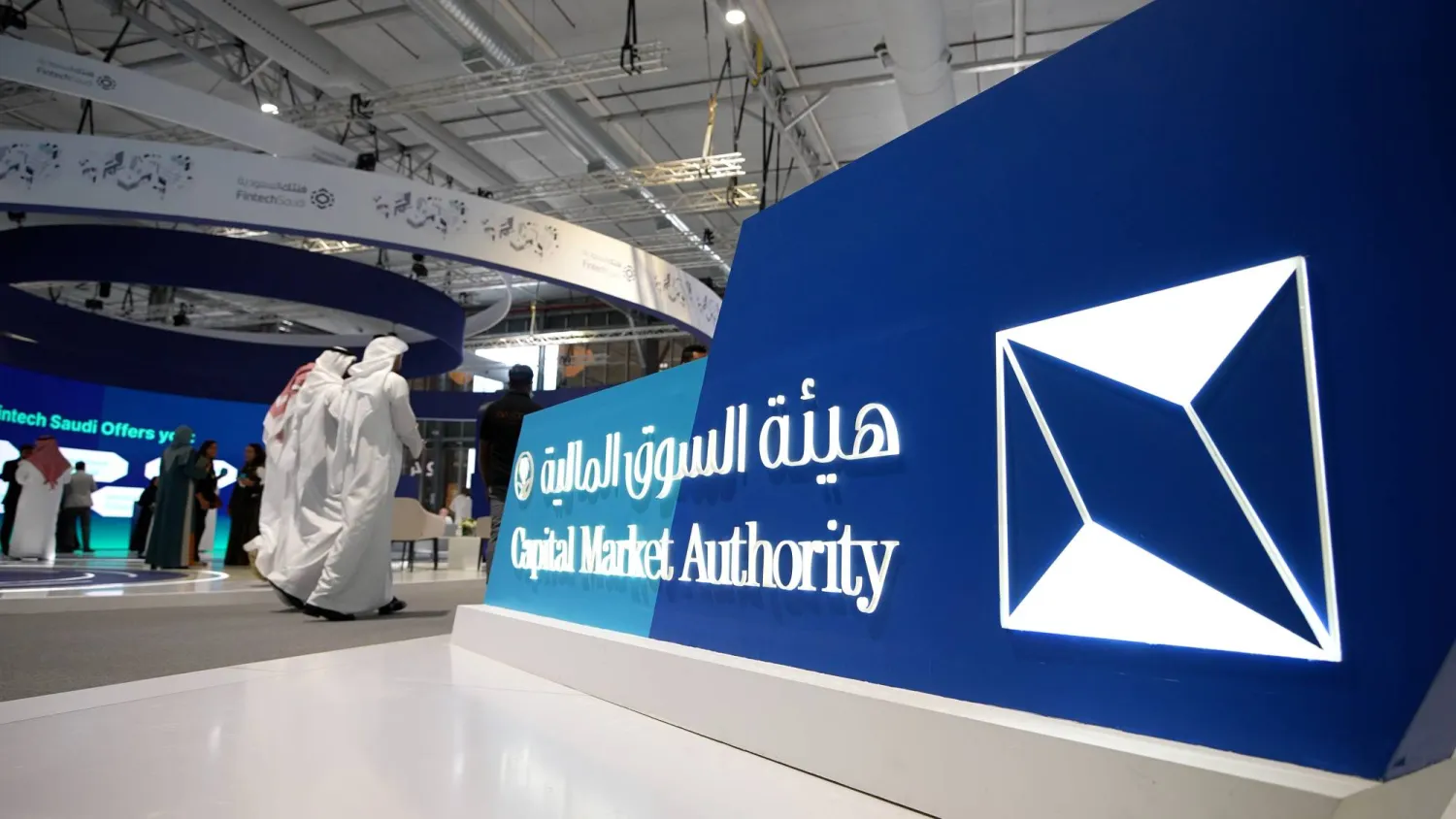
Saudi Arabia's Capital Market Authority (CMA) has required companies listed on the Main Market to hold at least two public earnings calls annually with investors and analysts, in a move aimed at strengthening transparency and disclosure and expanding investor access to information on corporate performance and future plans.

The new rules will take effect with the announcement of annual financial statements for 2026, according to a circular issued by the CMA on Thursday following a board decision.

The regulations aim to establish regular communication between listed companies, investors and financial analysts while improving the quality of information available to assess corporate performance.

The decision transforms earnings calls from a voluntary practice adopted by some companies into a regulatory requirement for all Main Market-listed firms. It also strengthens executive management's accountability for explaining financial results and discussing the factors affecting performance with shareholders and analysts.

Disclosure and Transparency

Financial analyst Abdullah Al-Hammad told Asharq Al-Awsat that the decision reflects the growing maturity and depth of the Saudi stock market and the evolution of its investor base, particularly the increasing participation of institutional investors.

He said these developments call for stronger disclosure and transparency practices to enable investors to make informed decisions based on reliable information and facts.

Al-Hammad added that giving individual investors opportunities to learn more about companies' operations, discuss financial results and ask questions would positively influence their investment behavior.

He said greater access to information would encourage investment decisions based on company fundamentals rather than speculation and expectations, helping promote a culture of saving and long-term investment while protecting retail investors' capital.

Financial Statements

Dr. Hussein Al-Attas described the decision as an important step toward developing Saudi Arabia's capital market and strengthening transparency, disclosure and corporate governance among listed companies.

Speaking to Asharq Al-Awsat, he said publishing financial statements, while essential, does not provide investors with a complete picture of a company's performance.

Investors also need to understand the factors driving profit growth or declines, the sustainability of financial results, the impact of operational and financing developments, and management's plans and expectations for the coming periods.

Al-Attas said the decision's significance lies in making communication between companies and investors a regular institutional practice rather than an optional initiative undertaken by individual firms.

He noted that requiring the participation of either the chief executive officer or chief financial officer, along with discussions of future expectations, challenges and opportunities, would make these meetings more valuable and strengthen executive management's accountability to shareholders.

He said the expected benefits include narrowing the information gap between companies and investors, improving market pricing efficiency and increasing confidence in published information and disclosures.

These improvements, he added, would make the Saudi capital market more attractive to domestic and foreign investors, support its continued development and bring its practices closer to advanced international capital market standards.

Retail Investors

According to Al-Attas, retail investors are among the main beneficiaries of the new regulations, as they will gain opportunities to communicate directly with company management and better understand the factors affecting financial performance.

They will also be able to ask questions about revenue, profits, costs, debt and cash flows, as well as earnings sustainability, dividend distributions and future growth plans.

He noted that requiring companies to publish presentations and full recordings of earnings calls within three hours of their conclusion would ensure that information is available to all investors and promote fair access.

Al-Attas stressed that the regulations' success would depend on the substance of the discussions, the transparency of management's responses, the clarity of future guidance and investors' ability to obtain meaningful information that helps them evaluate companies.

Such practices, he said, would encourage investment decisions based on analysis rather than rumors and unsupported expectations.

Earnings Call Requirements

Under the new regulations, listed companies must hold two earnings calls annually, the first following the announcement of annual financial results and the second after the publication of interim financial statements for the second quarter.

The meetings must take place within five business days of the relevant financial announcements and after the close of the trading session.

Companies must announce the meetings in advance and ensure the participation of at least the chief executive officer or chief financial officer.

Discussions must cover financial results, future expectations, challenges and opportunities, while providing investors and analysts with an opportunity to ask questions.

Companies must also publish presentations and complete recordings of the meetings on their websites within three hours of their conclusion to ensure equal access to information.

Regulatory Reforms Under Al-Sudairi

The decision forms part of a series of regulatory reforms introduced since Mazen Al-Sudairi was appointed Chairman of the Capital Market Authority in August.

The measures have included new rules governing trading and investment in overseas markets, alongside improvements to initial public offering (IPO) practices.

On October 29, the CMA approved a maximum ratio of algorithmic trading orders to executed orders for each trader in every security listed on the Main Market, seeking to regulate automated trading activity.

The authority also adopted new rules governing how capital market institutions deal with clients in foreign markets, including a requirement for an initial margin of at least 50% of the transaction value.

On November 2, the CMA approved provisions aimed at improving IPO practices, including requiring issuing companies to disclose forecasts of their financial performance, providing investors with additional information to assess companies before their shares are listed.

Three other regulatory proposals remain under review or public consultation.

These include enhancing disclosure requirements for investment funds, strengthening financial performance disclosures in the management discussion section of board reports, and amendments aimed at improving corporate governance and empowering shareholders.

The public consultation period for the final proposal will remain open until November 28.