


Premier League's Spending Spree Ignores Financial Crunch on Horizon

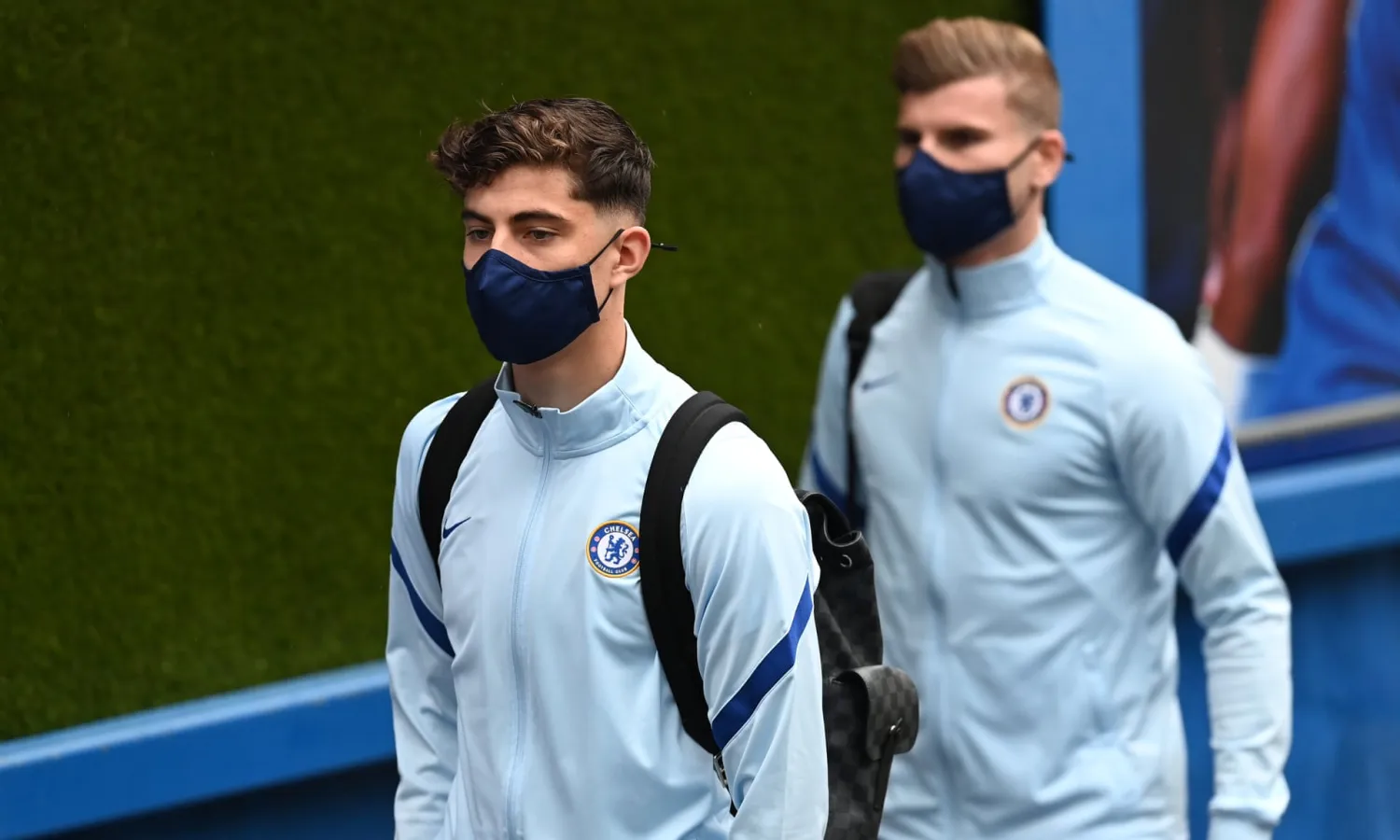
Kai Havertz (£72m) and Timo Werner (£47.5m) were big-money arrivals at Chelsea over the summer transfer window. Photograph: Darren Walsh/Chelsea FC/Getty Images
TT

Premier League's Spending Spree Ignores Financial Crunch on Horizon

Kai Havertz (£72m) and Timo Werner (£47.5m) were big-money arrivals at Chelsea over the summer transfer window. Photograph: Darren Walsh/Chelsea FC/Getty Images

To contemplate Premier League clubs’ transfer window mega-spending, even in the best of times, is a time-honored exercise in being flabbergasted, in shaking of heads that the game has gone, the world has gone mad. And however much English football still must do and decide upon as its teams’ shouts echo in the depths of its empty grounds, everybody can agree on one thing: these are not the best of times.

The £1.45bn spending on new players, mostly from overseas, is only 11% less than Premier League clubs spent in the far-off, carefree summer of last year, when this pandemic life could not have been imagined and had barely been conjured up in dystopian fiction. Roman Abramovich’s Chelsea have helped themselves more hungrily than the rest, spending a net £152m now they are unrestrained by their Fifa transfer ban. But still, Manchester City spent a combined £105m on two defenders, Rúben Dias and Nathan Aké, Arsenal £45m on Thomas Partey from Atlético Madrid, Liverpool paid Wolves £41m for Diogo Jota and so on, down the list with 28 purchases costing £20m or more.

Unknowable and never-to-be-declared millions will have been paid to agents for being the “intermediaries” – now the official football term, recognizing they act for the clubs as well as the players; the Portuguese deal orchestrator Jorge Mendes probably chief among them.

It does not need saying that all this money has been spent in a grim, still barely believable health crisis, and its consequential hammering of normal life, social activity and football club gates. Within the game, even as the millions are paid and new stars given their run-outs to fake crowd excitement noise, all the talk is of financial alarm.

The EFL has it much worse of course, deprived of income from people deprived of their supporting experience, and with no vast TV deals that really pay the bills. While the Premier League and Championship got 2019-20 done in the end, League One and League Two and all leagues below them cut short their seasons because they could not afford to play. The pyramid is no more economically viable now.

The EFL chairman, Rick Parry, has for months maintained a figure of £250m as the cost of a rescue fund for last season and this, but the Premier League clubs have done all this spending on the latest fine players from Europe without a pound of that yet forthcoming. It is the easiest argument in football to run a finger down the Premier League’s most expensive signings this summer and find that just the top five would cover the shortfall for all 72 clubs of the Football League: Kai Havertz (£72m), Dias (£64.3m), Ben Chilwell (£50m), Timo Werner (£47.5m) and Partey (£45m).

Yet despite all this lavish acquisition, and the £8.65bn 2019-22 TV deals still being by far the richest in world football, the Premier League makes no secret of its own financial crunch, as it presses the government to allow some crowds back.

The figures are big and obvious: £300m paid in rebates to TV companies nationally and internationally for the disruptions and artificialities of last season, with probably more to come this season; a projected £700m lost if supporters are not allowed back all season. The collapse of the record-breaking TV deal in China, £175m lost this season and replaced with just a £10m upfront fee plus a subscription sharing arrangement, is just a little extra losses chucked in the pit.

In that context, clubs spending £1.2bn, £880m net, on players and their new wage bills looks like the latest, barmiest installment of a series running since the First Division clubs of the Football League broke away in 1992 to form the Premier League. But the reaction from the EFL is generally, perhaps surprisingly, muted. Parry, the first Premier League chief executive and one of the breakaway’s architects, is a commercial football man, so he recognizes that top clubs will buy players.

The solution is anyway more structural and deeper than pointing a futile finger at the latest spending; really, it has been unchanged for 28 years. The call for a rescue has prompted a rerun of dreary questions about whether the Premier League clubs even owe the EFL support. But that argument is not clever, it is just a negation of the game’s history and fabric, and the sporting fact that the football pyramid is connected and a glory to celebrate. The disruptive breakaway has always needed repair, and the mad gap between the divisions to be narrowed.

For those who assume the big clubs have no interest in that, there are some surprises around. Ed Woodward of Manchester United is understood to have proposed the Premier League borrow £1bn, given historically negligible interest rates, of which £300m could be available to the EFL, and the idea had some support, but the league centrally did not progress it. The game needs putting back together again, principally by the Premier League bringing the EFL into its TV deals in future, and if that can happen, the top clubs will have to support it. This is D-day, so if not now, when?

(The Guardian)


Grealish’s Season Over After Undergoing Foot Surgery

 Football - Premier League - Aston Villa v Everton - Villa Park, Birmingham, Britain - January 18, 2026 Everton's Jack Grealish shoots at goal as Aston Villa's Lamare Bogarde and Ezri Konsa react. (Action Images via Reuters)
Football - Premier League - Aston Villa v Everton - Villa Park, Birmingham, Britain - January 18, 2026 Everton's Jack Grealish shoots at goal as Aston Villa's Lamare Bogarde and Ezri Konsa react. (Action Images via Reuters)
TT

Grealish’s Season Over After Undergoing Foot Surgery

 Football - Premier League - Aston Villa v Everton - Villa Park, Birmingham, Britain - January 18, 2026 Everton's Jack Grealish shoots at goal as Aston Villa's Lamare Bogarde and Ezri Konsa react. (Action Images via Reuters)
Football - Premier League - Aston Villa v Everton - Villa Park, Birmingham, Britain - January 18, 2026 Everton's Jack Grealish shoots at goal as Aston Villa's Lamare Bogarde and Ezri Konsa react. (Action Images via Reuters)

Everton midfielder Jack Grealish has confirmed his season is over after undergoing surgery on ​a stress fracture in his foot, dealing a major blow to his hopes of making England's squad for the World Cup.

The 30-year-old, who is on loan from Manchester City, suffered the ‌injury during ‌Everton's 1-0 Premier ‌League ⁠win ​against ‌Aston Villa last month.

Grealish made 22 appearances in all competitions for Everton this season, scoring twice and providing six assists, and his form had prompted suggestions he could ⁠earn a recall to the national ‌side.

"Didn't want the season ‍to end like ‍this but that's football, gutted," ‍he posted on social media.

"Surgery done and now all focus on getting back fit. I know for sure ​I will come back fitter, stronger and better than before."

Grealish, ⁠who won three Premier League titles, the Champions League and the FA Cup with City, made his last appearance for England in October 2024 under caretaker manager Lee Carsley.

The World Cup will take place from June 11 to July 19 in Canada, Mexico, ‌and the United States.


Robot Dogs to Help Mexican Police at 2026 World Cup

This handout picture released by Municipality of Guadalupe shows robot dogs designed to help Mexican police tackle crime during the World Cup, unveiled by the city council of Guadalupe, Nuevo Leon state, Mexico on February 9, 2026.  (Handout / Municipality of Guadalupe / AFP) 
TT

Robot Dogs to Help Mexican Police at 2026 World Cup

This handout picture released by Municipality of Guadalupe shows robot dogs designed to help Mexican police tackle crime during the World Cup, unveiled by the city council of Guadalupe, Nuevo Leon state, Mexico on February 9, 2026.  (Handout / Municipality of Guadalupe / AFP) 

A pack of robot dogs will help Mexican police tackle crime during the 2026 World Cup this summer, authorities said Monday.

The four-legged robots are designed to enter dangerous areas and broadcast live video back to security forces, who can watch before taking action during the football tournament.

The global spectacle, which will take place from June 11 to July 19, is being hosted by Mexico alongside the United States and Canada.

The animaloid robots were acquired for 2.5 million pesos ($145,000) by the city council of Guadalupe, part of the Monterrey metro area, which will host one of the World Cup venues.

A video released by the local government shows one of the robots walking on four legs through an abandoned building and climbing stairs, though with some difficulty.

The robo-hound can be seen transmitting live images to a group of police officers walking stealthily behind it.

In the demonstration the canine robot encounters an armed man and orders him to drop his gun using a loudspeaker.

The purpose of the robot dogs is "to support police officers with initial intervention... to protect the physical safety of officers," said Guadalupe mayor Hector Garcia.

They will be deployed "in case of any altercation," he added.

BBVA Stadium, which will be known as Estadio Monterrey during the tournament, will host four matches.


Serena Williams Listed as Eligible to Return to Tennis on February 22

Tennis - US Open - Flushing Meadows, New York, United States - September 2, 2022 Serena Williams of the US after losing her third round match against Australia's Ajla Tomljanovic. (Reuters)
TT

Serena Williams Listed as Eligible to Return to Tennis on February 22

Tennis - US Open - Flushing Meadows, New York, United States - September 2, 2022 Serena Williams of the US after losing her third round match against Australia's Ajla Tomljanovic. (Reuters)

Serena Williams has been listed as eligible to return to ​tennis from February 22 by the sport's drug-testing body (ITIA), though it remains unclear whether the 23-times Grand Slam champion will make a ‌stunning comeback ‌to the ‌women's ⁠tour.

The ​44-year-old ‌raised eyebrows late last year after rejoining the tennis anti-doping testing pool, though she denied at the time the move ⁠signaled she was preparing to ‌return to the ‍sport she ‍dominated for nearly two ‍decades.

She reignited speculation last month when she deflected questions about a possible return ​during an appearance on NBC's "Today" show.

The Women's Tennis ⁠Association did not immediately respond to a request for comment outside normal business hours.

Williams, who won her last Grand Slam singles title in 2017, has not competed since the 2022 US Open.
