


Disputes over US Elections Impact World Zionist Congress in Jerusalem

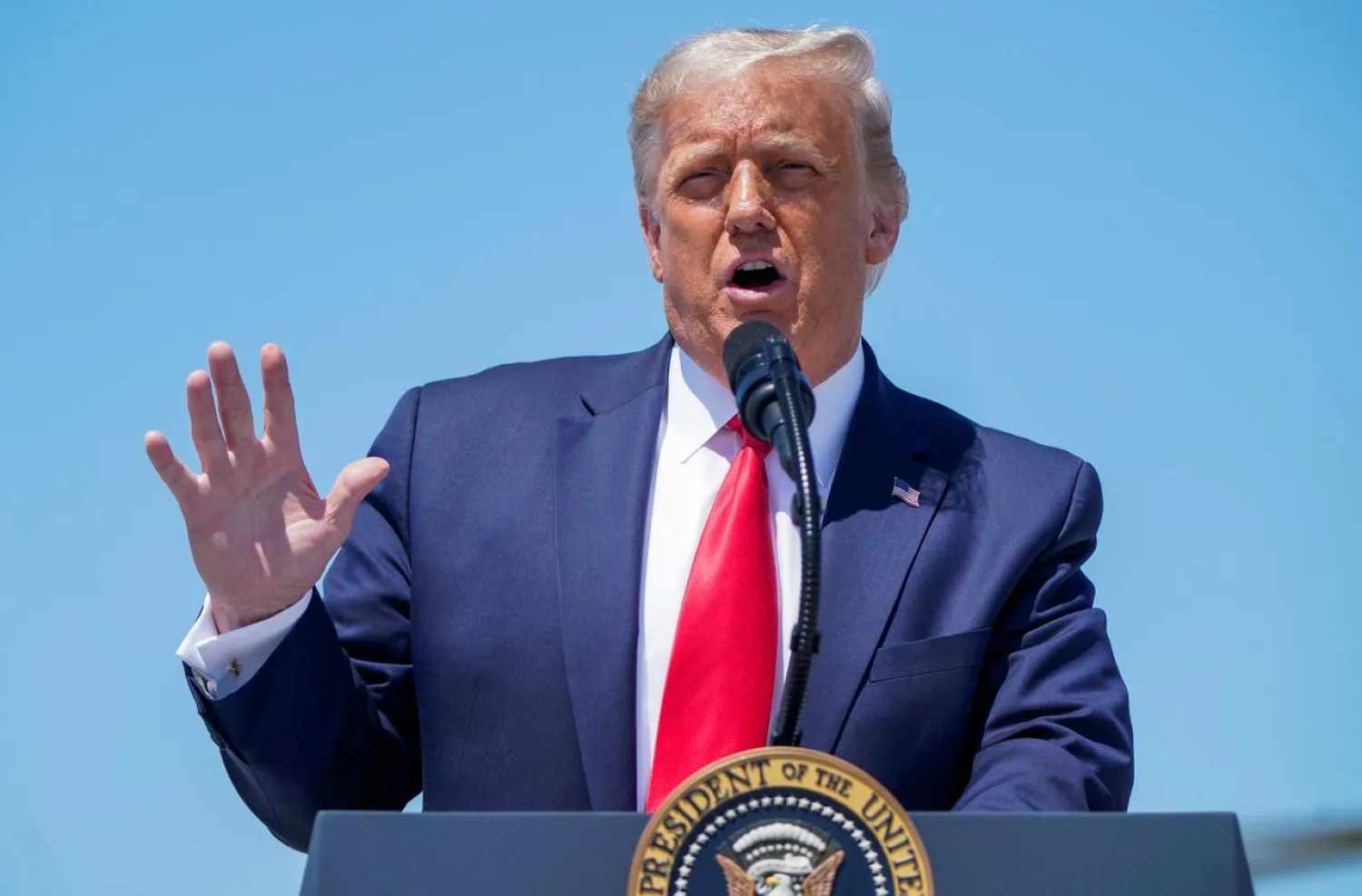
U.S. President Donald Trump addresses supporters gathered to greet him on the airport tarmac during his arrival at Burke Lakefront Airport in Cleveland, Ohio, US, August 6, 2020. REUTERS/Joshua Roberts
TT

Disputes over US Elections Impact World Zionist Congress in Jerusalem

U.S. President Donald Trump addresses supporters gathered to greet him on the airport tarmac during his arrival at Burke Lakefront Airport in Cleveland, Ohio, US, August 6, 2020. REUTERS/Joshua Roberts

Disputes between Jews in Israel and the United States are growing, complicating the voting process at the 38th World Zionist Congress, which kicked off on Tuesday via a global virtual platform in West Jerusalem.

A 2020 survey of Jews in the United States showed that the majority of Israelis (64 percent) support US President Donald Trump in the upcoming presidential elections.

However, Democratic presidential nominee Joe Biden’s popularity is expanding among Jews in the US, with almost three out of four American Jews supporting him, according to a prominent source in the American Jewish Committee (AJC).

The most recent polls showed that the rate of Jews who support Biden jumped to 75 percent from 67 percent in mid-September, while Trump’s supporters fell from 30 percent during the same period to 22 percent.

Trump’s overwhelming support for the Israeli policy, his recognition of Jerusalem as the capital of Israel, and the transfer of the US embassy from Tel Aviv to West Jerusalem have all made him more popular in Israel.

Yet, American Jews believe that if elected, Biden would handle several key issues facing the US better than Trump, with 75 percent saying he would fight anti-Semitism better than the incumbent, who only received 22 percent of votes in this regard.

According to an American Jewish official in Tel Aviv, American Jews have taken this stance not only because they historically belong to the Democratic camp but also because they are convinced Trump would likely oppose Israel in the future, just as strongly as he supports it today.

But Trump’s supporters reject this argument and are convinced that the US President belongs to a clear ideological current in the American right-wing.

The US elections are one of several controversial issues being discussed by Jewish leaderships at the World Zionist Congress.

These differences were evident in the Preparatory Committee for the Congress.

A group of representatives of the American, British and French Jewish organizations threatened to boycott the congress if its organizers didn’t respond to their demands to “preserve political balances within the World Zionist Organization.”

The Congress was established in 1897 by Theodor Herzl as the supreme organ of the Zionist Organization (ZO) and its legislative authority.

Its members meet about every five years, and the WZC has become the overall supreme ideological and policy-making body of the Zionist movement.

The delegates and the bodies they form at the WZC determine the leadership and influence the policies of Israel’s National Institutions: The World Zionist Organization (WZO), the Jewish Agency for Israel (JAFI), Jewish National Fund-Keren Kayemet LeIsrael (JNF) and Keren Hayesod – which together allocate nearly $1 billion annually in funding in support of Israel and Jewish communities around the world.

The new congress includes 750 delegates, 38 percent of whom will vote in Israel, 29 percent in the United States and the rest form the Jewish community across the world.



Top Trump Iran Negotiator Says Visits US Aircraft Carrier in Middle East

US Special Envoy Steve Witkoff delivers a press conference upon the signing of the declaration on deploying post-ceasefire force in Ukraine, during the so-called "Coalition of the Willing" summit, at the Elysee Palace in Paris, France, January 6, 2026. (Reuters)
TT

Top Trump Iran Negotiator Says Visits US Aircraft Carrier in Middle East

US Special Envoy Steve Witkoff delivers a press conference upon the signing of the declaration on deploying post-ceasefire force in Ukraine, during the so-called "Coalition of the Willing" summit, at the Elysee Palace in Paris, France, January 6, 2026. (Reuters)

US President Donald Trump's lead Iran negotiator Steve Witkoff on Saturday said he visited the USS Abraham Lincoln aircraft carrier currently in the Arabian Sea, with Washington and Tehran due to hold further talks soon.

"Today, Adm. Brad Cooper, Commander of US Naval Forces Central Command, Jared Kushner, and I met with the brave sailors and Marines aboard the USS Abraham Lincoln, her strike group, and Carrier Air Wing 9 who are keeping us safe and upholding President Trump's message of peace through strength," said Witkoff in a social media post.

Iranian Foreign Minister Abbas Araghchi said on Saturday he hoped talks with the United States would resume soon, while reiterating Tehran's red lines and warning against any American attack.


Israel’s Netanyahu Expected to Meet Trump in US on Wednesday and Discuss Iran

Israeli Prime Minister Benjamin Netanyahu delivers a speech during a special session to mark the 77th anniversary of the Knesset's establishment and the 60th anniversary of the dedication of the current building at the Knesset, the Israeli parliament, in Jerusalem, 02 February 2026. (EPA)
TT

Israel’s Netanyahu Expected to Meet Trump in US on Wednesday and Discuss Iran

Israeli Prime Minister Benjamin Netanyahu delivers a speech during a special session to mark the 77th anniversary of the Knesset's establishment and the 60th anniversary of the dedication of the current building at the Knesset, the Israeli parliament, in Jerusalem, 02 February 2026. (EPA)

Israeli Prime Minister Benjamin Netanyahu is expected to meet US President Donald Trump on Wednesday in Washington, where they will discuss negotiations with Iran, Netanyahu's office said on Saturday.

Iranian and US officials held indirect nuclear ‌talks in the ‌Omani capital ‌Muscat ⁠on Friday. ‌Both sides said more talks were expected to be held again soon.

A regional diplomat briefed by Tehran on the talks told Reuters Iran insisted ⁠on its "right to enrich uranium" ‌during the negotiations with ‍the US, ‍and that Tehran's missile capabilities ‍were not raised in the discussions.

Iranian officials have ruled out putting Iran's missiles - one of the largest such arsenals in the region - up ⁠for discussion, and have said Tehran wants recognition of its right to enrich uranium.

"The Prime Minister believes that any negotiations must include limiting ballistic missiles and halting support for the Iranian axis," Netanyahu's office said in a ‌statement.


Italy FM Rules Out Joining Trump’s ‘Board of Peace’

Italy's Minister for Foreign Affairs Antonio Tajani speaks to the press during the EPP Leaders’ meeting, in Zagreb, Croatia, 30 January 2026. (EPA)
TT

Italy FM Rules Out Joining Trump’s ‘Board of Peace’

Italy's Minister for Foreign Affairs Antonio Tajani speaks to the press during the EPP Leaders’ meeting, in Zagreb, Croatia, 30 January 2026. (EPA)

Italy will not take part in US President Donald Trump's "Board of Peace", Italian Foreign Minister Antonio Tajani said Saturday, citing "insurmountable" constitutional issues.

Trump launched his "Board of Peace" at the World Economic Forum in Davos in January and some 19 countries have signed its founding charter.

But Italy's constitution bars the country from joining an organization led by a single foreign leader.

Prime Minister Giorgia Meloni, a Trump ally, last month noted "constitutional problems" with joining, but suggested Trump could perhaps reopen the framework "to meet the needs not only of Italy, but also of other European countries".

Tajani appeared Saturday to rule that out.

"We cannot participate in the Board of Peace because there is a constitutional limit," he told the ANSA news agency.

"This is insurmountable from a legal standpoint," he said, the day after meeting US Secretary of State Marco Rubio and US Vice President JD Vance at the Olympics in Milan.

Although originally meant to oversee Gaza's rebuilding, the board's charter does not limit its role to the Palestinian territory and appears to want to rival the United Nations.