
Anywhere but Home: New Yorkers Get Creative About Work Spaces

The need for privacy has driven some people to rent hotel rooms, vacant apartments, and empty offices.

A temporarily vacant apartment nearby became a makeshift photo studio for Luciana Golcman | Photo: Kaya Laterman
TT

Anywhere but Home: New Yorkers Get Creative About Work Spaces

A temporarily vacant apartment nearby became a makeshift photo studio for Luciana Golcman | Photo: Kaya Laterman

In March, Kimberly Brown, a meditation teacher from Jackson Heights, Queens, was writing a book and regularly consulting in person with her editor, Alice Peck. When the pandemic hit, they moved their meetings to Zoom.

A few months into the quarantine, Ms. Brown noticed that Ms. Peck, who usually Zoomed from the dining-room table of her home in Red Hook, Brooklyn, suddenly appeared from a very different location. Ms. Brown, who was feeling cooped up, working from her bedroom all day, was floored when she saw the expansive space her editor was calling from: “I was like, ‘Where the heck are you?’”

Like many Americans lucky enough to work remotely, Ms. Peck and Ms. Brown had to carve out office space in their homes. But while suburbanites may have garages, basements, or even spare rooms, New Yorkers in tighter spaces generally have to get a little more creative. Some have found solace in a neighbor’s empty apartment, an unused therapist’s office, or even a hotel room.

Ms. Peck was used to working from home, which she was already doing before the pandemic. On occasion, she would work from a library or cafe, and she conducted in-person meetings from a co-working space in Midtown Manhattan. But with her husband, a production coordinator for a magazine, and her young-adult son home all the time, she lost her focus. It didn’t help that she could hear her next door neighbor, a music teacher, giving lessons online.

“I’m used to being alone all day,” said Ms. Peck, who is an independent book editor and writer. “You would just start to get going with work, writing that perfect sentence, when someone would ask, ‘Do we have any bagels?’”

Fed up, Ms. Peck looked for a quiet space to work. She first asked a realtor for help, but didn’t like what she was shown. Then she saw an ad in the Listings Project, a weekly real estate newsletter, for an art studio in Gowanus, Brooklyn. Normally occupied by an illustrator and two filmmakers, the space had a soaring 20-foot ceiling but was being used for storage.

“My productivity level soared,” said Ms. Peck, who is now back at home after losing the lease at the end of September. Currently, she has taken to working in her small back yard, and said that she might look for a new space once the weather gets colder.

Luciana Golcman, a portrait photographer known for her shots of babies smashing cakes, used to drop off her two children, now ages 2 and 5, at daycare, then return to her two-bedroom apartment in Manhattan’s Stuyvesant Town and quickly convert the living room into a photo studio. But when the pandemic hit, all of a sudden she was sharing her makeshift workspace with her husband, who is a trader, as well as the children. “There were Cheerios everywhere,” she said. So Ms. Golcman temporarily shut down her business.

A few months later, however, families started contacting Ms. Golcman again for photo sessions. She knew she had to find a space of her own. Noticing all the moving trucks in her neighborhood, she announced what she was looking for on a parent email list.

A friend who had left the city for the summer saw the request and offered Ms. Golcman her apartment in Peter Cooper Village at no cost until school started. When the family returned, Ms. Golcman consecutively found two other empty apartments in Stuyvesant Town, both of which had been recently vacated but still had time on their leases. One former tenant gave the space up for free, while the other charged Ms. Golcman about $200 a week.

Although each new workspace has been temporary, Ms. Golcman said the arrangements have given her some peace to forge ahead with her work. “I worked really hard to get my own business off the ground, so I’m proud of myself for keeping it afloat during a pandemic.”

In July, John Hennegan, a sports documentary filmmaker, and videographer, found himself in a bind. He had just returned from a work trip, but then had to quickly start working on a documentary about horse racing. His usual office space, however, a desk in the living room of his three-bedroom apartment in Windsor Terrace, Brooklyn, wasn’t available. His wife and his sister-in-law had commandeered it.

He realized if he stayed home, he wouldn’t finish the documentary. So Mr. Hennegan booked a room for three nights at the Arlo SoHo, for $140 a night (pre-pandemic, its rooms were going for $260 a night). The hotel room was spotless, he said, and he could make calls at all hours of the day and night with his production team. He shopped for food at a nearby Trader Joe’s and ran along the Hudson River for exercise.

“The hotel worked because I wasn’t there for room service or leisure, so social distancing wasn’t a concern for me,” Mr. Hennegan said. “Working from home isn’t usually an issue, but I have to admit, sometimes it’s hectic, like a 24-hour diner.”

With tourism down, many hotels are advertising that their rooms can be used as offices. The Wythe Hotel in Williamsburg, Brooklyn reconfigured six rooms into offices. At AKA, a long-term stay hotel, two firms in finance and consulting booked a block of suites in its Times Square and Central Park locations for their employees, said Larry Korman, the hotel firm’s president.

There are also empty therapist’s offices across the city, as telehealth has become the norm. Teresa Stern, a licensed clinical social worker, didn’t want to give up her $2,200-a-month office with river views in Brooklyn Heights, which she described as “one of the best she’s ever had.” So she subleased.

First she found Michael Randazzo, who worked there for five weeks this summer. Mr. Randazzo, now a freelance writer after losing his full-time job at Long Island University earlier this year, said he wanted a quiet space to finish a writing project. But with his wife, a private school administrator, and two teenage children at home all day in their two-bedroom apartment in Fort Greene, Brooklyn, Mr. Randazzo needed privacy.

Mr. Randazzo, who paid about $600 for five weeks, managed to spend as much as six hours a day writing, and the rest of the time conducting interviews, he said. “Renting Teresa’s space was a highlight” of an otherwise challenging time, he said. “The amount of work I got done, plus the view from her office, were priceless.”

Now a film director has agreed to rent Ms. Stern’s space. She is relieved, she said. “I know plenty of therapists who would love to sublet their space because many landlords are not cutting us a break.”

Meanwhile, Ms. Brown, the meditation teacher, finished her book and started writing another one. As her software-developer husband has taken over the living room of their one-bedroom apartment with “his multiple screens,” she said, she needs a change of pace. She is thinking about renting a space at the Queensboro, a restaurant in her Jackson Heights neighborhood that is offering workspace (and includes lunch).

The pandemic, she said, has forced her to practice what she teaches: mindfulness and self-compassion.

(The New York Times)


Kyiv Botanical Garden's Plants Wither Due to Frost, Power Cuts

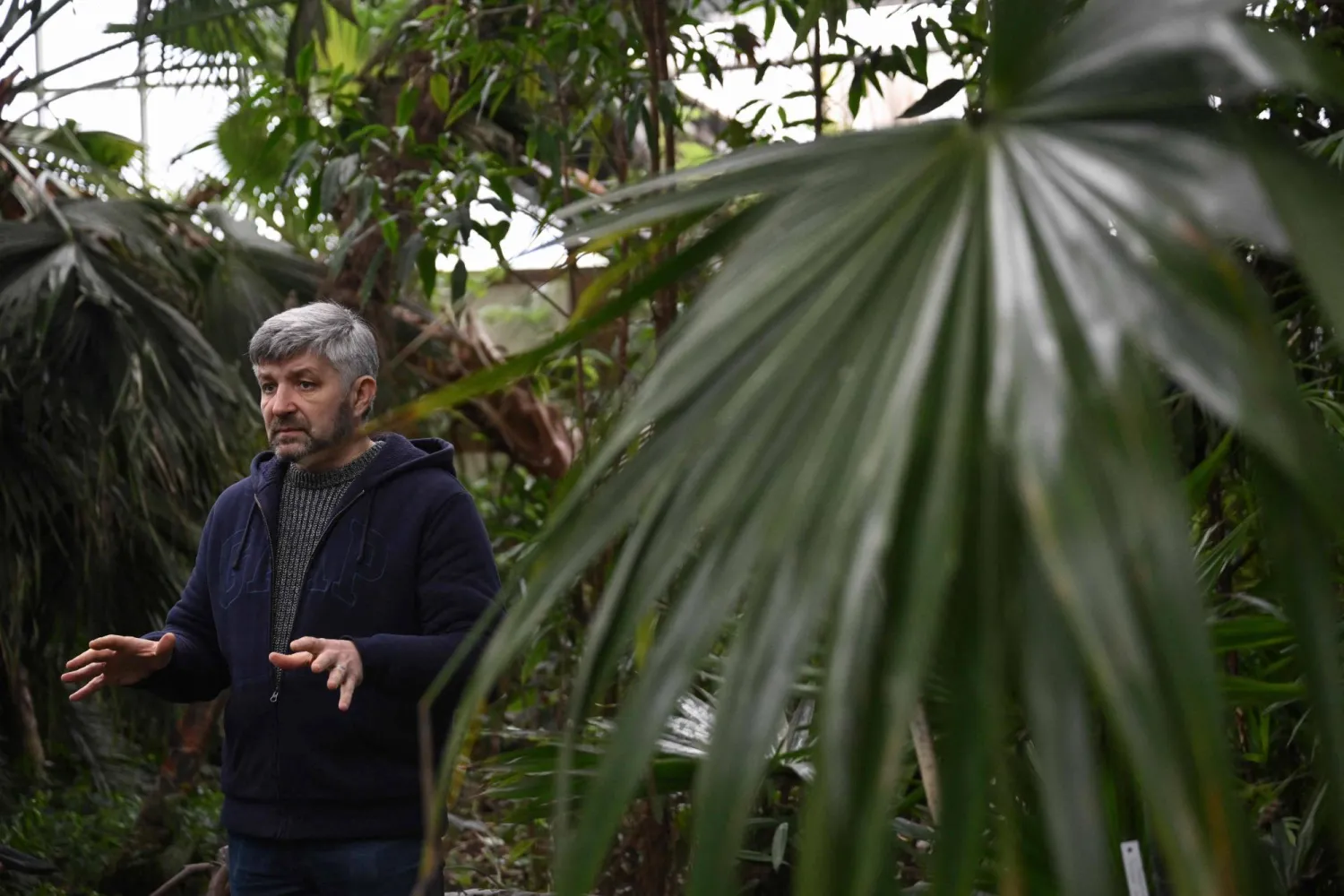
Doctor of Biological Sciences Roman Ivannikov, Head of the Department of Tropical and Subtropical Plants of the Gryshko National Botanical Garden of the National Academy of Sciences of Ukraine, speaks during an AFP interview in the garden's main greenhouse in Kyiv on February 11, 2026. (Photo by Genya SAVILOV / AFP)
TT

Kyiv Botanical Garden's Plants Wither Due to Frost, Power Cuts

Doctor of Biological Sciences Roman Ivannikov, Head of the Department of Tropical and Subtropical Plants of the Gryshko National Botanical Garden of the National Academy of Sciences of Ukraine, speaks during an AFP interview in the garden's main greenhouse in Kyiv on February 11, 2026. (Photo by Genya SAVILOV / AFP)

Roman Ivannikov has spent around 30 years pampering orchids, azaleas and figs at Ukraine's National Botanical Garden, but power cuts triggered by Russian strikes are threatening to freeze his cherished collection of tropical plants.

Moscow has been pummeling Ukrainian energy sites with drones and missiles, plunging thousands of households into darkness during the harshest winter since it started its invasion four years ago.

The almost-daily barrages, paired with the cold snap, have put lives at risk and created an unprecedented threat for Ivannikov's pride and joy: a collection of almost 4,000 species.

"Our children grew up on the paths of this garden. We have poured our lives into this," Ivannikov, 51, told AFP, struggling to fight back tears.

The temperature in the garden's main greenhouse was 12C.

"It's not even the lower bound of normal," Ivannikov said.

The temperature dipped even lower on four nights over recent weeks, when the heating cut off entirely.

Wearing a thick navy jacket over a wool sweater, Ivannikov, the head of the department of tropical and subtropical plants, picked up a leaf that had just come rustling down.

"You can see how many fallen leaves there are... Perfectly healthy leaves that could have kept feeding the plant and functioning for months are falling down," he said.

The plant, he explained, was optimizing energy needs and shedding part of its leaves in the lower tiers so it can keep the leaves at the top and "survive in these conditions".

He, fellow staff and scores of volunteers were shuffling between tasks like firing up stoves and spreading protective covers on a collection of smaller plants, like orchids.

Volodymyr Vynogradov, 66, has signed up to help cut firewood used to heat the greenhouses.

"There needs to be heating for the azaleas," he told AFP, his cheeks rosy from cold and a pile of split logs scattered around.

"Physically, it's a little bit of a warm-up... That's why I decided to help somehow. For myself and for the sake of flowers."

The garden's collection has been laboriously reassembled after it had perished during World War II -- through decades of purchases, exchanges and numerous scientific missions that took Ivannikov's senior colleagues across several continents.

They "used to go to places and bring back plants from areas where those forests are no longer there", making those replanted at the Kyiv garden susceptible to "irrecoverable losses".

"Those plants have been preserved with us, and that underscores their uniqueness: if we lose them, we won't be able to restore them," Ivannikov said.

Individual specimens have already wilted, but the scale of damage is impossible to assess -- the destructive impact of the cold could only start to show in weeks or even months to come.

"Flowering intervals will change, plants will bloom but won't be able to set seed for a year or two. Or, for example, they'll set seed, but it won't be viable -- it will be dead," Ivannikov, who is trying to stay hopeful, said.

"We just have to hold on until summer, until spring -- make it through however many days are needed."

His dream, he said, is to create a "large national bonsai collection", something he had already begun laying the groundwork for.

The institution meanwhile offers organized tours and works with military servicemen and displaced Ukrainians who find solace in gardening work.

"They feel alive and want to see what comes next. They see a future, they want to keep living -- and that's our mission."


Sunbed Ads Spreading Harmful Misinformation

Cancer charities and doctors say sunbeds are linked to higher rates of melanoma and other skin cancers (Getty images) 
TT

Sunbed Ads Spreading Harmful Misinformation

Cancer charities and doctors say sunbeds are linked to higher rates of melanoma and other skin cancers (Getty images) 

Harmful misinformation claiming sunbeds offer health benefits in winter is being spread by tanning companies on social media, the BBC has found.

BBC identified hundreds of adverts on TikTok, Instagram and Facebook saying sunbeds can boost energy and treat skin conditions or mental health problems.

One suggested that going on a sunbed for “eight minutes” could prevent colds and flu, while another claimed that UV rays could “stimulate the thyroid gland” to help someone lose weight.

Claims like these are “irresponsible” and “potentially dangerous,” the government told BBC - while an NHS dermatologist described the amount of sunbed misinformation on social media as “genuinely terrifying.”

The findings come after the Advertising Standards Authority (ASA) banned six tanning adverts for making irresponsible health claims or suggesting sunbeds were safe.

Cancer charities and doctors are clear about the risks of using sunbeds - and say the machines are linked to higher rates of melanoma and other skin cancers.

Using a bed before the age of 35 increases the risk of melanoma by 59% later in life, according to the World Health Organization (WHO).

The Sunbed Association, which represents half the UK's tanning shops, says the ASA and WHO are using “outdated data,” but encourages its members not to use medical claims in advertising.

Young people are by far the biggest sunbed users in the UK - about one in seven 18-to-24-year-olds say they used one in the past year, double the average for all age groups, according to a 2025 YouGov survey.

Other data suggests nearly a quarter of under-25s wrongly believe sunbeds actually reduce the risk of getting skin cancer.


Rain Further Batters Storm-Hit Portugal, Thousands Evacuated

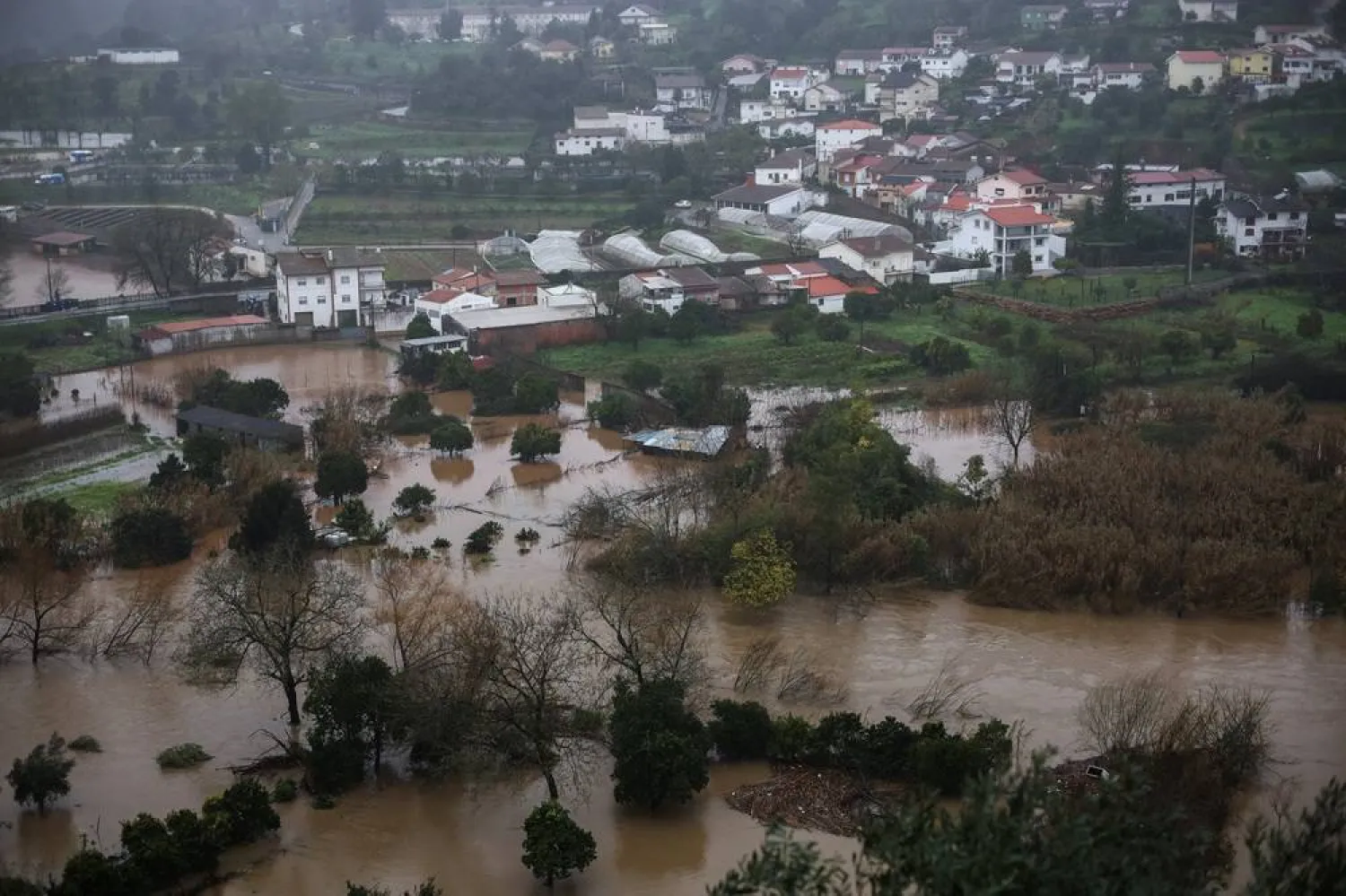
 A flooded area in Ceira, Coimbra, Portugal, February 11, 2026. (Reuters)
A flooded area in Ceira, Coimbra, Portugal, February 11, 2026. (Reuters)
TT

Rain Further Batters Storm-Hit Portugal, Thousands Evacuated

 A flooded area in Ceira, Coimbra, Portugal, February 11, 2026. (Reuters)
A flooded area in Ceira, Coimbra, Portugal, February 11, 2026. (Reuters)

More ‌heavy rain flooded several rural areas in the north of storm-battered Portugal on Wednesday, leaving levees at risk of bursting around the medieval city of Coimbra and forcing authorities to evacuate about 3,000 residents as a precaution.

A succession of deadly storms has hammered mostly central and southern parts of the country since late January, blowing roofs off houses, flooding several towns and leaving hundreds of thousands without electricity for days. At least 15 people have died as a consequence of the storms, including indirect ‌victims.

As the ‌storms let up this week, a weather ‌phenomenon ⁠known as an "atmospheric river" - ⁠a wide corridor of concentrated water vapor carrying massive amounts of moisture from the tropics - brought new downpours, affecting the north to a greater extent.

RISK OF DAM OVERFLOWING

Municipal authorities in Coimbra ordered the precautionary evacuation late on Tuesday of around 3,000 people most at risk from the River Mondego bursting its banks, ⁠and the operation was still under way on ‌Wednesday, with police making door-to-door checks ‌and bussing residents to shelters.

Regional Civil Protection official Carlos Tavares ‌said on Wednesday the situation could worsen between late Wednesday ‌and midday Thursday, as the rain could cause the Aguieira dam, 35 km northeast of Coimbra, "to overflow, sweep away levees and trigger further flooding".

Part of Coimbra's ancient city wall, on a hillside in one ‌of Europe's oldest university towns and a UNESCO World Heritage site, collapsed, shutting the road below ⁠and forcing ⁠the closure of the municipal market, the city hall said.

Prime Minister Luis Montenegro was due in Coimbra to oversee the emergency response after Interior Minister Maria Lucia Amaral resigned following criticism from opposition parties and local communities over what they described as the authorities' slow and failed response to devastating Storm Kristin two weeks ago.

In central Portugal, just across the River Tagus from Lisbon, authorities evacuated the village of Porto Brandao due to the risk of landslides, and around 30 people were removed from their homes after a landslide in the neighboring beachside area of Caparica.