


Palestinian PM: Int’l Peace Conference Will Advance Political Process

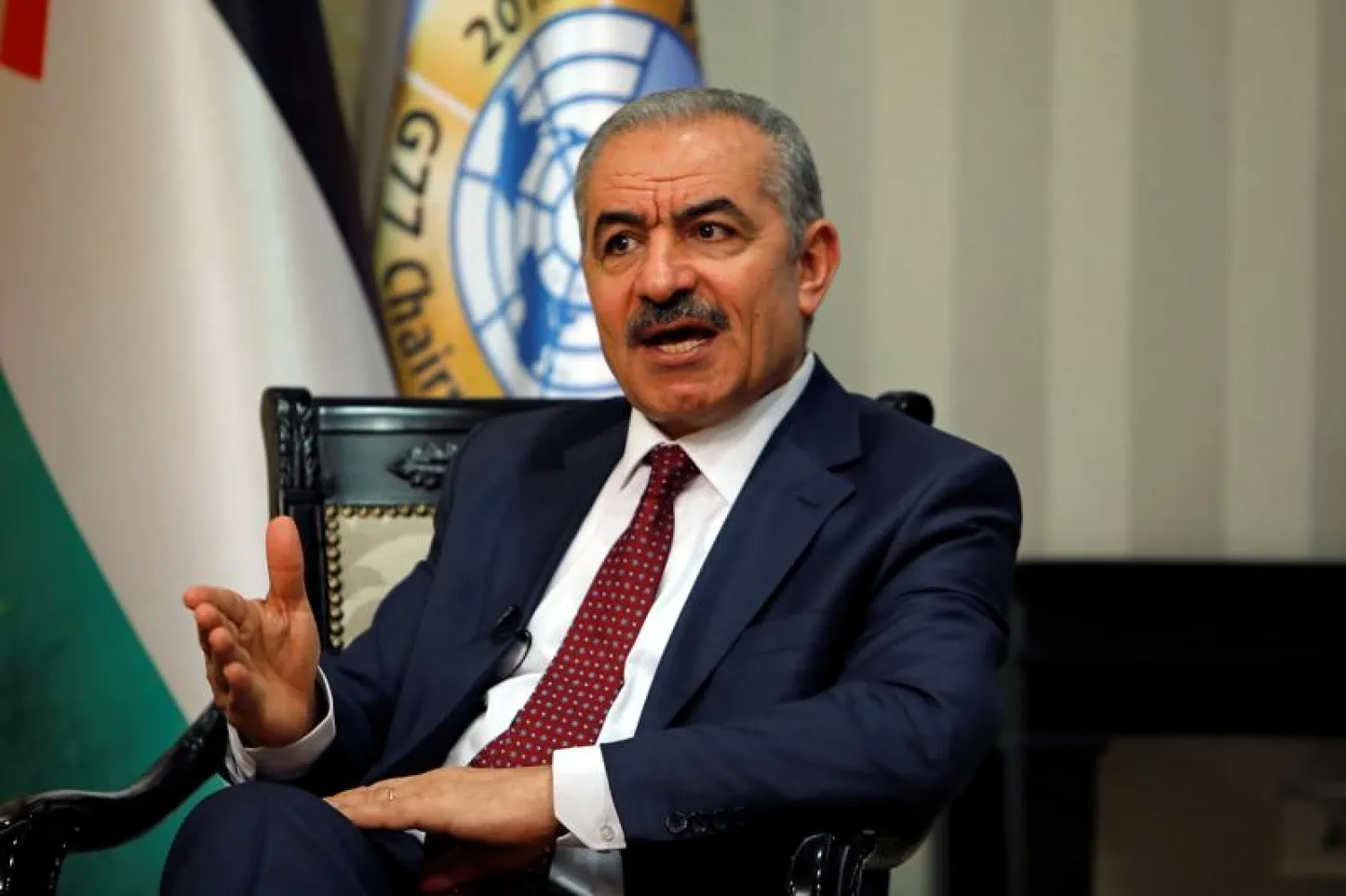
Palestinian Prime Minister Mohammad Shtayyeh in his office in Ramallah (Reuters)
TT

Palestinian PM: Int’l Peace Conference Will Advance Political Process

Palestinian Prime Minister Mohammad Shtayyeh in his office in Ramallah (Reuters)

The Palestinian leadership is looking forward to holding an international peace conference which would help establish a Palestinian state and advance the political process, said Prime Minister Mohammad Shtayyeh.

Speaking during a cabinet session, Shtayyeh explained that the government wants an international peace conference to achieve the two-state solution, end Israeli occupation, and ensure the independence of the Palestinian state with Jerusalem as its capital.

The PM stated that Palestinians look forward to this step after the US administration of President Donald Trump administration tried to divert away from the principles of international legitimacy.

Shtayyeh also rejected the new Sudan-Israel deal, saying it was “painful.”

He reiterated that any Arab relations with Israel should be based on the Arab peace initiative and the decisions of successive Arab summits, stressing that only Palestinians have the right to determine their fate.

Last month, Palestinian Authority (PA) President Mahmoud Abbas submitted a request to the UN Secretary-General, Antonio Guterres, to decide on initial steps and prepare an international peace conference.

The president tried to persuade multiple countries to adopt his position and call for an international peace conference.

The Palestinians want to launch an international conference attended by the Quartet and other countries to launch a multilateral mechanism to sponsor negotiations with the Israelis, based on Security Council Resolution 1515, which states that the Palestinian land is the occupied territories with 1967 borders.

In August, the PA informed the international Quartet of its intention to return to negotiations with the Arab peace plan as a reference.

In a letter addressed to the Quartet, the PA reiterated “we are ready to have our state with a limited number of weapons and a powerful police force to uphold law and order.”

The PA also indicated that it would accept an international force mandated by the UN to monitor compliance with any eventual peace treaty, hinting at NATO.

The text proposes minor amendments to the borders, provided that a bilateral agreement will be concluded regarding the borders of June 1967, the date on which Israel first occupied the West Bank.

The Quartet, comprised of the EU, Russia, US, and the UN was established in 2002 to facilitate the Middle-East Peace Process negotiations.

The Palestinians believe that this plan is the alternative to the US proposal, the so-called “deal of the century,” but sources told Asharq Al-Awsat that Washington refused it.

The Quartet asked the Palestinians to attend negotiations first, then suggest amendments to the “deal of the century", without proposing any new plans.

Russia supports the Palestinian proposal, according to Palestinian Ambassador to Russia Abdelhafiz Nofal, who said that Moscow supports Abbas’s initiative to hold an international peace conference.

Russia recognizes the crisis and its repercussions, as well as the need for the international community to take a decisive, clear and supportive stance for specific outcomes that put an end to this conflict, while affirming Palestinians' rights, according to Nofal.

He believes that any international conference in this regard must include the five countries, including the United States, which claims it can’t be involved because of the upcoming presidential elections.



EU Condemns Israel's West Bank Control Measures

The Israeli settlement of Har Homa, seen from the West Bank city of Bethlehem, Tuesday, Dec. 17, 2024. (AP)
TT

EU Condemns Israel's West Bank Control Measures

The Israeli settlement of Har Homa, seen from the West Bank city of Bethlehem, Tuesday, Dec. 17, 2024. (AP)

The European Union on Monday condemned new Israeli measures to tighten control of the West Bank and pave the way for more settlements in the occupied Palestinian territory, AFP reported.

"The European Union condemns recent decisions by Israel's security cabinet to expand Israeli control in the West Bank. This move is another step in the wrong direction," EU spokesman Anouar El Anouni told journalists.


Atrocities in Sudan's El-Fasher Were 'Preventable Human Rights Catastrophe'

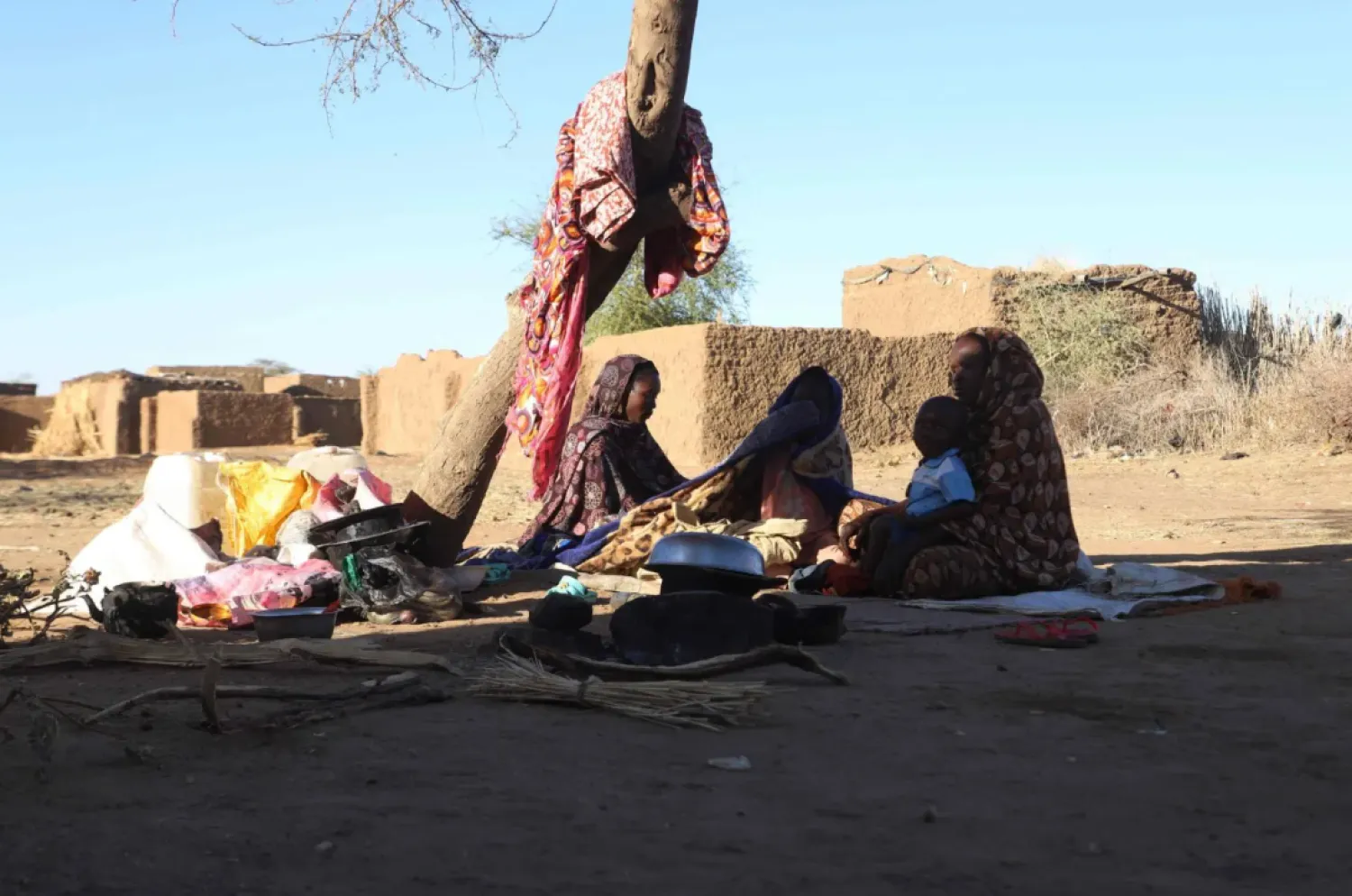
Sudanese displaced people who left El Fasher after its fall, sit in the shade in Tawila at the Rwanda camp reception point on December 17, 2025. (Photo by AFP)
TT

Atrocities in Sudan's El-Fasher Were 'Preventable Human Rights Catastrophe'

Sudanese displaced people who left El Fasher after its fall, sit in the shade in Tawila at the Rwanda camp reception point on December 17, 2025. (Photo by AFP)

The atrocities unleashed on El-Fasher in Sudan's Darfur region last October were a "preventable human rights catastrophe", the United Nations said Monday, warning they now risked being repeated in the neighbouring Kordofan region.


"My office sounded the alarm about the risk of mass atrocities in the besieged city of El-Fasher for more than a year ... but our warnings were ignored," UN rights chief Volker Turk told the Human Rights Council in Geneva.


He added that he was now "extremely concerned that these violations and abuses may be repeated in the Kordofan region".


Arab League Condemns Israel's Decisions to Alter Legal, Administrative Status of West Bank

A general view shows the opening session of the meeting of Arab foreign ministers at the Arab League Headquarters (Reuters)
TT

Arab League Condemns Israel's Decisions to Alter Legal, Administrative Status of West Bank

A general view shows the opening session of the meeting of Arab foreign ministers at the Arab League Headquarters (Reuters)

The General Secretariat of the Arab League strongly condemned decisions by Israeli occupation authorities to impose fundamental changes on the legal and administrative status of the occupied Palestinian territories, particularly in the West Bank, describing them as a dangerous escalation and a flagrant violation of international law, international legitimacy resolutions, and signed agreements, SPA reported.

In a statement, the Arab League said the measures include facilitating the confiscation of private Palestinian property and transferring planning and licensing authorities in the city of Hebron and the area surrounding the Ibrahimi Mosque to occupation authorities.

It warned of the serious repercussions of these actions on the rights of the Palestinian people and on Islamic and Christian holy sites.

The statement reaffirmed the Arab League’s firm support for the legitimate rights of the Palestinian people, foremost among them the establishment of their independent state on the June 4, 1967 borders, with East Jerusalem as its capital.