
In Beirut Port, All of Lebanon’s Ills are Laid Bare

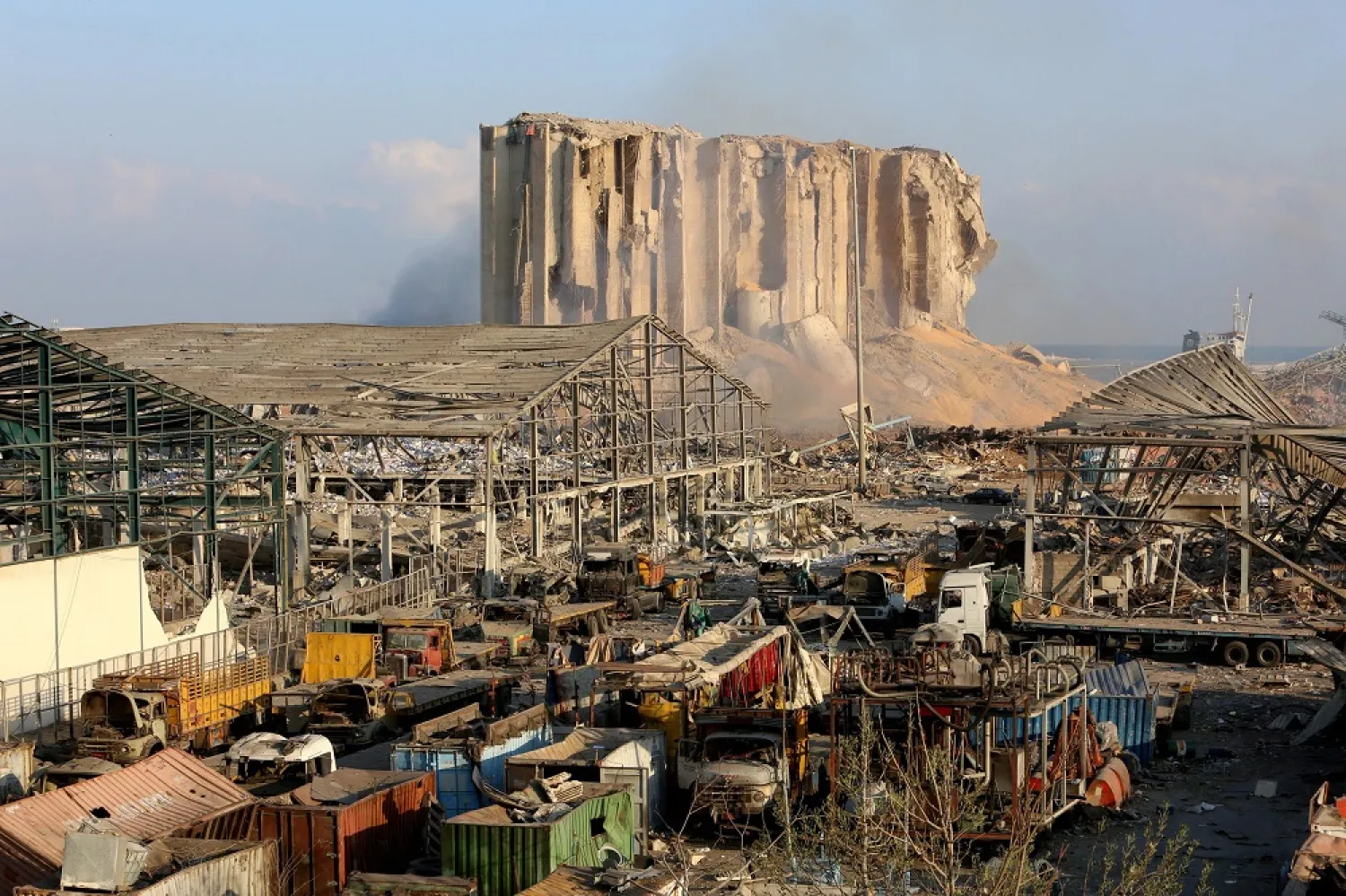
A view shows the grain silo that was damaged in the massive explosion at Beirut port. (Reuters)
TT

In Beirut Port, All of Lebanon’s Ills are Laid Bare

A view shows the grain silo that was damaged in the massive explosion at Beirut port. (Reuters)

The first of many warnings about a deadly cargo in Beirut’s port came in February 2014, about three months after its arrival. It was made by Colonel Joseph Skaf, described by his family as a diligent customs official.

Skaf, then the head of the anti-narcotics and money laundering division, informed the customs authority that the shipment of ammonium nitrate was “extremely dangerous” and posed a risk to the public.

In his handwritten letter, reviewed by Reuters and authenticated by a source familiar with the case, he urged that the ship, the Rhosus, be “moved away from the pier to the breakwater and if possible put under surveillance.”

Reuters couldn’t determine whether Skaf, who died in 2017, received a response to his letter or whether he followed up on his warning. The office of the customs director referred questions about the matter to the finance ministry. The ministry didn’t respond.

Skaf’s brother Elie recalls the colonel saying of the cargo, in 2014: “We will refuse to let them unload it.” Skaf’s son Michel says his father’s determination to keep the Rhosus out of the port was typical of a man who “didn’t let things pass” and challenged the wrongs he saw.

Skaf’s letter, dated Feb. 21, 2014, was the first of several warnings by port, customs and security officials about the ammonium nitrate on board the Rhosus. None were acted on.

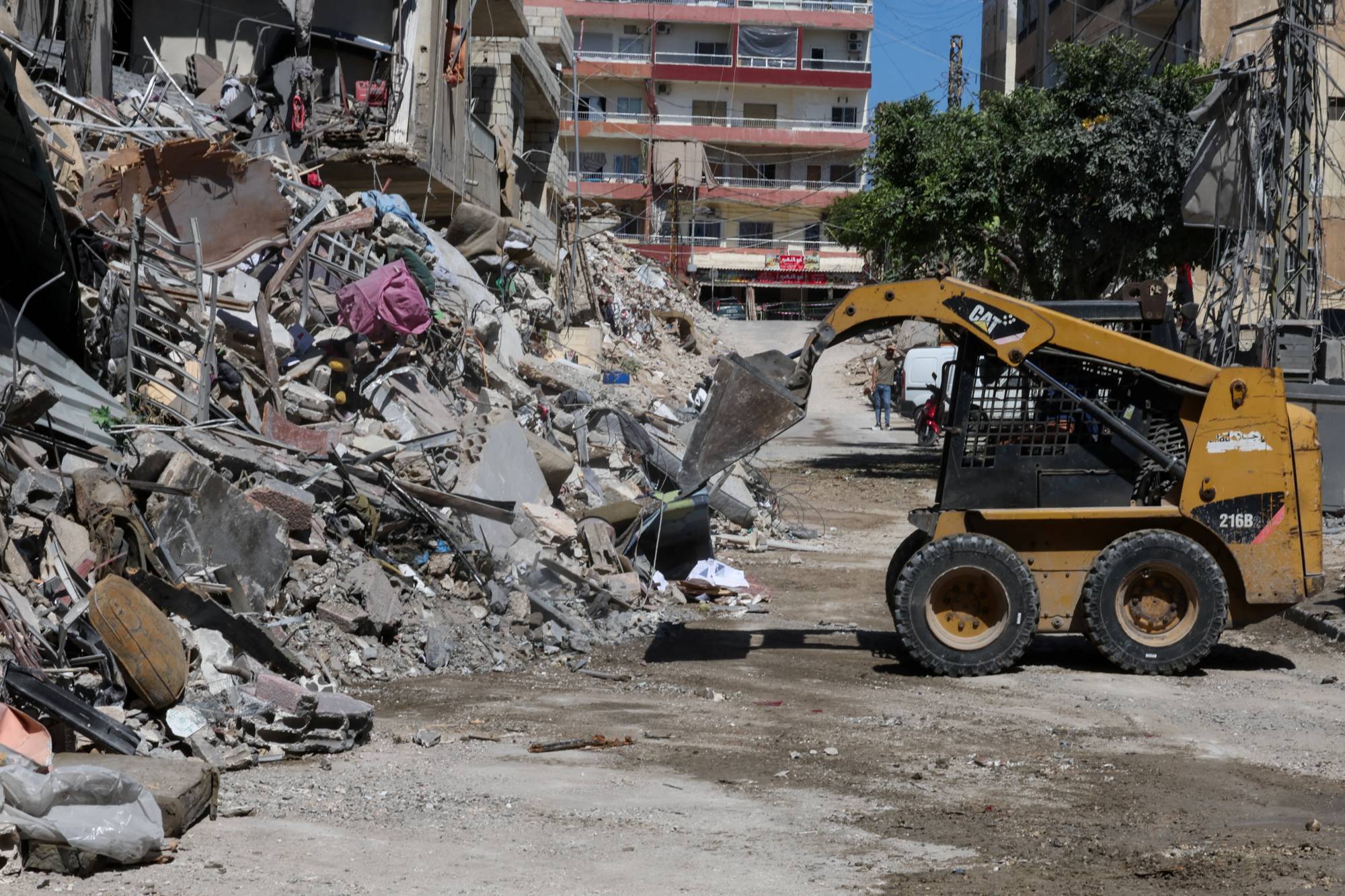
Skaf moved a few months later to a new job overseeing airport customs. Shortly afterwards, in late 2014, the Rhosus’ cargo was transferred to a dockside warehouse. It exploded on August 4 this year, destroying whole neighborhoods and killing nearly 200 people.

For the people of Lebanon, the wreckage of the port, and the failure to heed the warnings of Skaf and others, has a wider symbolism. Nearly three months on from the blast, they are still waiting for the results of an investigation their leaders promised would reveal the truth within days. Efforts to form a new, non-partisan government foundered on Lebanon’s sectarian politics. In this chaos, international aid money, contingent on a new government stamping out corruption, has yet to flow.

Skaf’s family believes his death in 2017 was murder, possibly connected to his long career as a customs officer fighting criminality and drug smuggling, or his recent entry into politics. The official medical report, produced in 2017, found Skaf died in a fall. A second report, commissioned by the family, concluded in 2018 that Skaf was attacked.

Corruption beyond imagination
The port, one of the busiest in the eastern Mediterranean, handling an estimated $15 billion of trade a year at its height, was rife with corruption, negligence and sectarian politics, according to nine people involved in shipping, clearance and administration. Their accounts were buttressed by import documents that one of the sources showed to Reuters.

The port mirrored the country at large, with jobs shared out along sectarian lines among mainly Muslim and Christian groups. It’s an arrangement that has governed Lebanon over the past three decades, and is blamed by many for plunging the country into financial ruin.

As one senior minister told Reuters: “The level of corruption in all layers of the state is beyond imagination. How much more corruption, like the port, is hidden beneath the cloaks of politicians?” He said he has received threats warning him “not to dig into corruption.” He didn’t elaborate.

After Lebanon’s 1975-1990 civil war, a transitional committee, representing the main sectarian political groups, was formed to manage Beirut’s port temporarily. The committee remains to this day.

Port chief Hassan Koraytem is widely seen as a loyalist of Prime Minister Saad Hariri, while customs boss Badri Daher’s nomination was backed by President Michel Aoun’s Free Patriotic Movement.

Koraytem and Daher have been detained in connection with the explosion on suspicion of criminal negligence. Koraytem’s lawyer, who says his client bears no responsibility for the blast, told Reuters political appointments are commonplace in Lebanon, not only at the port, and “that doesn’t mean every appointee is corrupt.” A lawyer for Daher said he couldn’t comment during an ongoing investigation.

Hariri’s office denied putting loyalists into key jobs. Aoun’s media office said appointments during the president’s term, including Daher’s, were made based on “competence and experience.”

Iran-backed group Hezbollah maintains an indirect presence at the port through merchant allies, three of the sources said. Hezbollah leader Hassan Nasrallah has denied it has any such influence.

With the port at the mercy of rival groups, decision-making was crippled, there was no oversight and a culture of impunity flourished, the nine sources told Reuters.

“This chaos suits everybody. It is very hard to crack,” said Lamia Bissat, head of Lebanon’s Institut des Finances Basil Fuleihan, an independent public body researching policy and governance.

According to a 2019 study by academics at Oxford University and Columbia University, 17 out of Lebanon’s 21 shipping line companies have links to politicians via their board members, managers or shareholders.

Lebanese analyst Sarkis Naoum estimates the state has missed out on billions of dollars in duty payments “because of the smuggling, under invoicing and theft that goes on” at the port. “Even warehouse guards have enriched themselves from bribes.”

Some importers have exploited duty exemptions for humanitarian and religious bodies as cover to import electronic items, construction materials, clothes, liquor, furniture and food, the sources said.

A clearing agent described paying $100 to a port inspector to get a container processed. Another showed Reuters two customs documents. In the first, his application to have his cargo cleared swiftly was rejected by customs officials. In the second, it was approved. The difference, he said, was that the second time he paid a bribe.

The sources said some porters were told to clear cargoes without checking them. Many scanners used to inspect goods didn’t work properly, said Fouad Bawarshi, Deputy CEO of Gezairi shipping agent. His account was confirmed by other shipping agents.

Under-invoicing - a ruse to avoid paying the full import duty - was routine. Merchants would pay bribes to politicians and their agents at the port to ensure cargoes were valued well below their worth, the sources said.

Bissat, the head of Institut des Finances Basil Fuleihan, who has done extensive work on customs systems, said efforts to reform the port by installing automated systems and bringing in processes to curb corruption were resisted by all sides, including by politicians, customs and port officials and businessmen.

“No one could change without changing the whole system,” she said. “There was a proposal for modernizing the port authority.” It didn’t go anywhere. Bissat didn’t elaborate further.

She said she and other researchers had provided port authorities with a manual on how to handle chemicals, including nitrate. “You could not imagine that some people would be that reckless. It is just beyond imagination.”

A family seeks answers
Skaf’s family say he dealt with many sensitive cases during his career as a customs official, including some involving drugs. Colleagues sometimes warned him to be careful because of the nature of his work, said the source familiar with the case.

In the early hours of one morning in March 2017, Skaf’s jeep was found parked with its light on near his apartment building. The colonel’s bloodied body lay at the bottom of a nearly 1.8m drop nearby.

He had recently retired and was running for parliament in his hometown in south Lebanon. He was 57.

Skaf’s brother Elie said the first forensic doctor to examine Skaf told him that marks on the colonel’s body suggested he had been attacked.

Two medical reports, reviewed by Reuters, found Skaf had a fractured skull and listed injuries including a swollen eye, a broken rib and bruising. The first of these documents was the official medical committee report of 2017. It concluded a fall led to a brain hemorrhage, causing Skaf’s death. It made no mention of an attack.

Unconvinced, Elie hired a forensic expert to review the case file. This doctor concluded, in the second report, dated 2018, that Skaf’s injuries suggested he was “subjected to a sudden, aggressive act that led to his fall.” The report said Skaf suffered “a strong punch to his left eye” and a “very strong kick to the bottom of his rib cage.”

Elie appointed a lawyer who asked Lebanese authorities to re-examine the case. A spokesman for Lebanon’s Internal Security Forces, which Elie said was overseeing the case, didn’t respond to a request for comment. Questions to the interior ministry were referred to the ISF.

“It’s been about a year since then, and we don’t know anything,” said Elie. “They don’t tell us anything.”

The family’s struggle to get answers has struck a chord in a country where officials are rarely held to account.

In a Facebook post soon after the port blast, Skaf’s son Michel wrote: “A crime was committed in March 2017. My father did not slip and fall. He was brutally assaulted and murdered in front of his own house. The case was never closed and our family has been waiting for 3 years for a serious investigation, as his case sits on some desk gathering dust. We want a true investigation, we want justice and the truth for Colonel Joseph Skaf.”

A Look at the Long, Fraught Timeline of Iran Nuclear Tensions as Talks with US Loom 

A veiled Iranian woman walks past an anti-US mural in Tehran, Iran, 23 February 2026. (EPA)
TT

A Look at the Long, Fraught Timeline of Iran Nuclear Tensions as Talks with US Loom 

A veiled Iranian woman walks past an anti-US mural in Tehran, Iran, 23 February 2026. (EPA)

Iran and the United States are due to hold new talks in Geneva on Thursday over Tehran's nuclear program.

The talks come as America has assembled the largest fleet of warplanes and aircraft in the Middle East in decades as part of President Donald Trump's efforts to force Iran into a deal after it saw nationwide protests against its theocracy.

Here's a timeline of the tensions over Iran's atomic program:

Early days

1967 — Iran takes possession of the Tehran Research Reactor supplied by America under the “Atoms for Peace” program.

1979 — US ally Shah Mohammad Reza Pahlavi, fatally ill, flees Iran as popular protests against him surge. Khomeini returns to Tehran and the revolution sweeps him to power. Students seize the United States Embassy in Tehran, beginning the 444-day hostage crisis. Iran’s nuclear program goes fallow under international pressure.

August 2002 — Western intelligence services and an Iranian opposition group reveal Iran’s secret Natanz nuclear enrichment facility.

June 2003 — Britain, France and Germany engage Iran in nuclear negotiations.

October 2003 — Iran suspends uranium enrichment under international pressure.

February 2006 — Iran announces it will restart uranium enrichment following the election of hard-line president Mahmoud Ahmadinejad. Britain, France and Germany walk out of stalled negotiations.

June 2009 — Iran’s disputed presidential election sees Ahmadinejad reelected despite fraud allegations, sparking protests known as the Green Movement and a violent government crackdown.

October 2009 — Under US President Barack Obama, the US and Iran open a secret back-channel for messages in the sultanate of Oman.

July 2012 — US and Iranian officials hold secret face-to-face talks in Oman.

July 2015 — World powers and Iran announce a long-term, comprehensive nuclear agreement that limits Tehran's enrichment of uranium in exchange for the lifting of economic sanctions.

In this photo released by the Iranian Foreign Ministry, Iranian Foreign Minister Abbas Araghchi, center, heads to the venue for talks between Iran and the US, in Muscat, Oman, Friday, Feb. 6, 2026. (Iranian Foreign Ministry via AP, File)

The nuclear deal collapses

May 8, 2018 — Trump unilaterally withdraws the US from the nuclear agreement, calling it the “worst deal ever.” He says he’ll get better terms in new negotiations to stop Iran’s missile development and support for regional militias. Those talks don’t happen in his first term.

May 8, 2019 — Iran announces it will begin backing away from the accord. A series of regional attacks on land and at sea blamed on Tehran follow.

Jan. 3, 2020 — A US drone strike in Baghdad kills Gen. Qassem Soleimani, the architect of Tehran’s proxy wars in the Middle East.

Jan. 8, 2020 — In retaliation for Soleimani’s killing, Iran launches a barrage of missiles at military bases in Iraq that are home to thousands of American and Iraqi troops. More than 100 US service members suffer traumatic brain injuries, according to the Pentagon.

As Iran braces for a counterattack, the Revolutionary Guard shoots down a Ukrainian passenger plane shortly after takeoff from Tehran’s international airport, reportedly mistaking it for a US cruise missile. All 176 people on board are killed.

July 2, 2020 — A mysterious explosion tears apart a centrifuge production plant at Iran’s Natanz nuclear enrichment facility. Iran blames the attack on archenemy Israel.

April 6, 2021 — Iran and the US under President Joe Biden begin indirect negotiations in Vienna over how to restore the nuclear deal. Those talks, and others between Tehran and European nations, fail to reach any agreement.

April 11, 2021 — A second attack within a year targets Iran’s Natanz nuclear site, again likely carried out by Israel.

April 16, 2021 — Iran begins enriching uranium up to 60% — its highest purity ever and a technical step from weapons-grade levels of 90%.

Feb. 24, 2022 — Russia launches its full-scale invasion of Ukraine. Moscow ultimately will come to rely on Iranian bomb-carrying drones in the conflict, as well as missiles.

July 17, 2022 — An adviser to Iran’s supreme leader, Kamal Kharrazi, says Iran is technically capable of making a nuclear bomb, but has not decided whether to build one.

In this photo released by the Iranian Presidency Office, President Masoud Pezeshkian, second right, listens to the head of Atomic Energy Organization of Iran Mohammad Eslami as he visits an exhibition of Iran's nuclear achievements, in Tehran, Iran, on April 9, 2025. (Iranian Presidency Office via AP, File)

Middle East wars rage

Oct. 7, 2023 — Hamas fighters from the Gaza Strip storm into Israel, killing around 1,200 people and taking 251 others hostage, beginning the most intense war ever between Israel and Hamas. Iran, which has armed Hamas, offers support to the movement. Regional tensions spike.

Nov. 19, 2023 — Yemen’s Houthi militants, long supported by Iran, seize the ship Galaxy Leader, beginning a monthslong campaign of attacks on shipping through the Red Sea corridor that the US Navy describes as the most intense combat it has seen since World War II. The attacks mirror tactics earlier used by Iran.

April 14, 2024 — Iran launches an unprecedented direct attack on Israel, firing over 300 missiles and attack drones. Israel, working with the US, intercepts much of the incoming fire.

April 19, 2024 — A suspected Israeli strike hits an air defense system by an airport in Isfahan, Iran.

July 31, 2024 — Ismail Haniyeh, a Hamas leader, is assassinated during a visit to Tehran after the inauguration of reformist President Masoud Pezeshkian. Israel later takes responsibility for the assassination.

Sept. 27, 2024 — An Israeli airstrike kills Hezbollah leader Hassan Nasrallah in Lebanon.

Oct. 1, 2024 — Iran launches its second direct attack on Israel, though Israel shoots down most of the missiles.

Oct. 16, 2024 — Israel kills Hamas leader Yahya Sinwar in the Gaza Strip.

Oct. 26, 2024 — Israel openly attacks Iran for the first time, striking air defense systems and sites associated with its missile program.

A satellite image shows un‑buried tunnel entrances at Isfahan nuclear complex, in Isfahan, Iran, November 11, 2024. (Vantor/Handout via Reuters)

Trump returns and reaches out

Jan. 20, 2025 — Trump is inaugurated for his second term as president.

Feb. 7, 2025 — Iran's Supreme Leader Ali Khamenei says proposed talks with the US are “not intelligent, wise or honorable.”

March 7, 2025 — Trump says he sent a letter to Khamenei seeking a new nuclear deal with Tehran.

March 15, 2025 — Trump launches intense airstrikes targeting the Houthis in Yemen, the last members of Iran's self-described “Axis of Resistance” capable of daily attacks.

April 7, 2025 — Trump announces the US and Iran will hold direct talks in Oman. Iran says they'll be indirect talks, but confirms the meeting.

April 12, 2025 — The first round of talks between Iran and the US take place in Oman, ending with a promise to hold more talks after US Mideast envoy Steve Witkoff and Iranian Foreign Minister Abbas Araghchi “briefly spoke” together.

April 19, 2025 — The second round of talks between the US and Iran are held in Rome.

April 26, 2025 — Iran and the US meet in Oman a third time, but the negotiations include talks at the expert level for the first time.

May 11, 2025 — Iran and the US meet in Oman for a fourth round of negotiations ahead of Trump's trip to the Middle East.

May 23, 2025 — Iran and the US meet in Rome for a fifth round of talks, with Oman saying the negotiations made "some but not conclusive progress."

Israeli soldiers search through the rubble of residential buildings destroyed by an Iranian missile strike in Bat Yam, central Israel, June 15, 2025. (AP)

The Iran-Israel war begins

June 9, 2025 — Iran signals it won't accept a US proposal over the nuclear program.

June 12, 2025 — The Board of Governors at the International Atomic Energy Agency finds Iran in noncompliance with its nuclear obligations. Iran responds by announcing it has built and will activate a third nuclear enrichment facility.

June 13, 2025 — Israel launches its war against Iran. Over 12 days, it hits nuclear and military sites, as well as other government installations.

June 22, 2025 — The US intervenes in the war, attacking three Iranian nuclear sites.

June 23, 2025 — Iran responds to the US attack by targeting a military base in Qatar used by American troops, causing limited damage.

June 24, 2025 — Trump announces a ceasefire in the war.

July 25, 2025 — Iranian and European diplomats hold talks in Istanbul over Iran's nuclear program.

Aug. 8, 2025 — France, Germany and the United Kingdom warn Iran in a letter that it will reimplement UN sanctions if there is no “satisfactory solution” to the nuclear standoff by Aug. 31.

Aug. 28, 2025 — France, Germany and the United Kingdom say they've started the process to “snapback” UN sanctions on Iran.

Sept. 9, 2025 — Iran and the International Atomic Energy Agency reach a deal over potentially starting inspections, but questions remain over its implementation.

Sept. 19, 2025 — UN Security Council declines to stop “snapback” sanctions on Iran.

Sept. 26, 2025 — UN Security Council rejects China and Russia's last-minute effort to stop “snapback.”

Sept. 28, 2025 — UN reimposes “snapback” sanctions on Iran barring any last-minute diplomacy.

In this handout photograph released by the US Navy on February 6, 2026, Nimitz-class aircraft carrier USS Abraham Lincoln (CVN 72) sails alongside Arleigh Burke-class guided-missile destroyer USS Frank E. Petersen Jr. (DDG 121) and Lewis and Clark-class dry cargo ship USNS Carl Brashear (T-AKE 7) in the Arabian Sea, on February 6. (AFP / US Navy/ Mass Communication Specialist 1st Class Jesse Monford)

New protests roil Iran

Dec. 28, 2025 — Protests break out in two major markets in downtown Tehran after the Iranian rial plunges to a record low — 1.42 million rials to one US dollar — compounding inflationary pressure and pushing up the prices of food and other daily necessities.

Jan. 3, 2026 — Khamenei says “rioters must be put in their place,” in what is seen as a green light for security forces to begin more aggressively putting down the demonstrations.

Jan. 8, 2026 — Following a call from Iran’s exiled crown prince, a mass of people shout from their windows and take to the streets in nationwide protests. The government responds by blocking the internet and international telephone calls in a bid to cut off the country of 85 million from outside influence. An ensuing security force crackdown kills thousands and sees tens of thousands detained.

Jan. 13, 2026 — Trump says he has called off any meetings with the Iranians and promises that unspecified “help is on its way.”

Jan. 26, 2026 — The aircraft carrier USS Abraham Lincoln and three accompanying warships arrive in the Middle East amid Trump’s threats to attack.

Feb. 3, 2026 — A US Navy fighter jet shoots down an Iranian drone approaching the Lincoln in the Arabian Sea. Iranian fast-attack boats attempt to stop a US-flagged ship in the Strait of Hormuz.

Feb. 6, 2026 — Iran and the US hold indirect nuclear talks in Oman, with the head of the US military's Central Command also coming.

Feb. 17, 2026 — Iran and the US hold talks in Geneva while Tehran says it has temporarily closed the Strait of Hormuz, the narrow mouth of the Gulf through which a fifth of all oil traded passes.

Feb. 26, 2026 — Iran and the US are due to hold another round of talks in Geneva after Washington assembles the largest fleet of warplanes and aircraft in the Middle East in decades.


Where Do Ukraine and Russia Stand After Four Years of War? 

A person walks alongside The Wall of Remembrance of the Fallen for Ukraine in Kyiv on February 23, 2026, as the conflict with Russia reaches its four-year mark. (AFP)
TT

Where Do Ukraine and Russia Stand After Four Years of War? 

A person walks alongside The Wall of Remembrance of the Fallen for Ukraine in Kyiv on February 23, 2026, as the conflict with Russia reaches its four-year mark. (AFP)

Russia launched its full-scale invasion of Ukraine on February 24, 2022, unleashing the deadliest war in Europe since World War II.

As the conflict reaches its four-year mark, AFP looks at the state of the conflict and some of the consequences for both countries:

- Destruction -

The war has resulted in widespread destruction in Ukraine.

Entire cities in Ukraine's east and south, among them Bakhmut, Toretsk and Vovchansk, have been reduced to rubble by fighting.

The World Health Organization has verified more than 2,800 attacks on healthcare facilities since 2022, while Russian attacks on energy infrastructure have cut heating and power to millions.

Around a fifth of Ukraine is contaminated by mines or unexploded ordnance, according to the UN's Mine Action Service.

The total cost of reconstruction in Ukraine is estimated at around $588 billion over the next decade, the World Bank reported Monday.

- Death -

The United Nations has verified over 15,000 civilian deaths in Ukraine since 2022, although it says the actual number is likely considerably higher as it has no access to areas under Russian occupation, like the port city of Mariupol where thousands are reported to have died in a Russian siege.

Ukrainian retaliatory attacks on Russian border regions have also killed hundreds.

Around 20,000 children have been forcibly displaced or kidnapped from Russian-occupied Ukrainian land, according to estimates by Kyiv.

Forced to flee when Russia invaded, around 5.9 million Ukrainian refugees live outside the country and another 3.7 million are displaced internally, the UN Refugee Agency says.

Neither side releases reliable data on military casualties.

Ukrainian President Volodymyr Zelensky said earlier this month 55,000 of his soldiers had been killed -- a toll widely believed to be an underestimate.

Russia has not given an official update on losses since September 2022.

The BBC and Mediazona, an independent Russian site, have verified the deaths of at least 177,000 Russian soldiers through public obituaries and announcements by family and local officials -- a toll also believed to be below the real number.

The Center for Strategic and International Studies (CSIS) think tank estimates as many as 325,000 Russian soldiers may have been killed since 2022, while putting the number of Ukrainian soldiers killed at 100,000-140,000.

- Frontline and diplomacy -

Moscow occupied around 19.5 percent of Ukraine as of mid-February, according to data from the Institute for the Study of War (ISW).

Around seven percent -- the Crimean peninsula and part of the eastern Donbas region -- was already occupied before the invasion.

Moscow's advances were the biggest since 2022 last year, although they have slowed considerably since the opening months of its campaign, according to ISW data.

The Kremlin is pushing for full control of Ukraine's eastern Donetsk region and a ban on Western military support for Kyiv.

Ukraine says giving in would leave it vulnerable to future attack, is constitutionally impossible, and unacceptable to much of Ukrainian society.

Since Donald Trump returned to the White House, several rounds of talks -- in Istanbul, Abu Dhabi and Geneva -- have failed to secure a deal.

- Economy -

The war has decimated Ukraine's economy and put Russia's under massive strain.

After growing strongly on the back of massive military spending -- up to nine percent of GDP -- Russia's economy has slowed, posting just a one percent expansion last year.

Oil and gas revenues -- which provide roughly a quarter of state budget income -- fell to a five-year low last year, as a wave of Western sanctions and Ukrainian attacks on oil facilities crimped exports.

Ukraine's economy shrank by almost a third in the year after Russia's invasion. It has clawed a little of that back, but its government now depends on the International Monetary Fund and other foreign lenders to cover day-to-day spending.

- Politics and society -

The war has had a deep impact on politics and society in both countries.

Ukraine has suspended elections due to martial law and lately been rocked by a corruption scandal in the war-battered energy sector.

In Russia, authorities have orchestrated a domestic crackdown on dissent unprecedented since the Soviet era.

Russian prosecutors have opened more than 10,000 cases against people accused of criticizing its armed forces, Russian news site Mediazona reported in 2024.

Returning veterans in Russia, many of them former convicts recruited to fight, have been blamed for an increase in violent crime.

- Allies -

Ukraine is heavily dependent on Western weapons, intelligence and finance.

Europe has delivered 201 billion euros in aid since 2022, according to figures from Germany's Kiel Institute.

The United States has supplied $115 billion in total, but Trump has partially suspended arms deliveries and is pushing Europe to pick up the tab.

North Korea sent thousands of soldiers to fight with the Russian army and is widely reported to have sent millions of artillery shells to Moscow.

Iran has supplied drone technology to Moscow, and China has become its vital economic partner, accused in the West of helping the Kremlin avoid sanctions.


What Does Trump Want in Iran? 

An anti-US mural on a building in Tehran, Iran, January 24, 2026. Majid Asgaripour/WANA (West Asia News Agency) via Reuters
TT

What Does Trump Want in Iran? 

An anti-US mural on a building in Tehran, Iran, January 24, 2026. Majid Asgaripour/WANA (West Asia News Agency) via Reuters

President Donald Trump's threats to attack Iran provide little detail on what the long-term US goal would be in the event of a sustained or even brief conflict.

Trump sent warships and dozens of fighter planes to the Middle East and has several options to choose from that could destabilize the region.

Will Trump order surgical strikes targeting Iran's Revolutionary Guard Corps, the backbone of the clerical regime in power, try to take out its missile program -- as Israel wants him to do -- or even try to force regime change in Tehran?

Iran has threatened severe reprisal if it is attacked.

- What are the options? -

Trump said Thursday he would decide in 10 or 15 days whether to order strikes on Iran if no nuclear deal is reached.

The news outlet Axios has reported that Trump was presented with an array of military options that include a direct attack on Iran's supreme leader, Ali Khamenei.

Trump has said many times he prefers a diplomatic route leading to an agreement that addresses not only Iran's nuclear program but also its ballistic missile capability and its support for armed groups such as Hezbollah and Hamas. Iran has said no to making such concessions.

The United States and Iran recently held two rounds of indirect talks, in Oman and Switzerland. They have not brought the two sides' position closer, with talks set to resume Thursday in Switzerland.

Trump is "surprised" that Iran has not "capitulated" given the massive US military buildup, his envoy Steve Witkoff has said.

"The Trump administration most likely aims for a limited conflict that reshapes the balance of power without trapping it in a quagmire," said Alex Vatanka, an analyst at the Middle East Institute in Washington.

Vatanka said Iran is now expecting "a short, high-impact military campaign that would cripple Iran's missile infrastructure, undermine its deterrent, and reset the balance of power after the 12-day war with Israel in June 2025."

- What is the justification? -

Trump has insisted US forces destroyed Iran's nuclear program in attacks targeting uranium enrichment facilities.

Things changed with the January protest movement in Iran that security forces put down with huge loss of life.

Trump threatened several times to intervene to "help" the Iranian people, but did not act.

Trump boasts often of having brought peace to the Middle East, citing the oft-violated ceasefire he engineered in Gaza between Hamas and Israel.

And he has argued that regime change in Iran would strengthen what he calls a dynamic toward peace in the region.

But opposition Democrats are worried that Trump is leading America into a violent mess and demanding that he consult Congress, the only body in the United States with the authority to declare war.

- US firepower in the region? -

The US military now has 13 warships stationed in the Middle East: the aircraft carrier USS Abraham Lincoln, which arrived late last month, nine destroyers and three frigates.

More warships are on the way. The world's largest vessel, the US aircraft carrier USS Gerald Ford, was photographed sailing through the Strait of Gibraltar to enter the Mediterranean on Friday.

Besides the many planes parked on the aircraft carriers, the United States has sent a powerful force of dozens of warplanes to the Middle East, and tens of thousands of US troops are stationed across the Middle East.

These are potential targets for attack by Iran.

- To what end? -

Richard Haas, the former president of the Council on Foreign Relations, said it is not clear what impact a conflict of any duration and scale would have on Iran's government.

"It could just as easily strengthen it as weaken it. And it is impossible to know what would succeed this regime if it were to fall," Haas wrote recently on Substack.

Secretary of State Marco Rubio told a Senate hearing late last month that no one really knows what will happen if Iran's Supreme leader falls "other than the hope that there would be some ability to have somebody within their systems that you could work towards a similar transition."

Mona Yacoubian, of the Center for Strategic and International Studies, recently told AFP that Iran is much more complex than Venezuela, which the United States attacked January 3 as it captured its leader Nicolas Maduro.

She said Iran has more diffuse centers of power and a "decapitation strike" could end up "really unleashing a mess inside of Iran."