


Stocks Sweat on US Election Race, Safe-Haven Bonds Gain

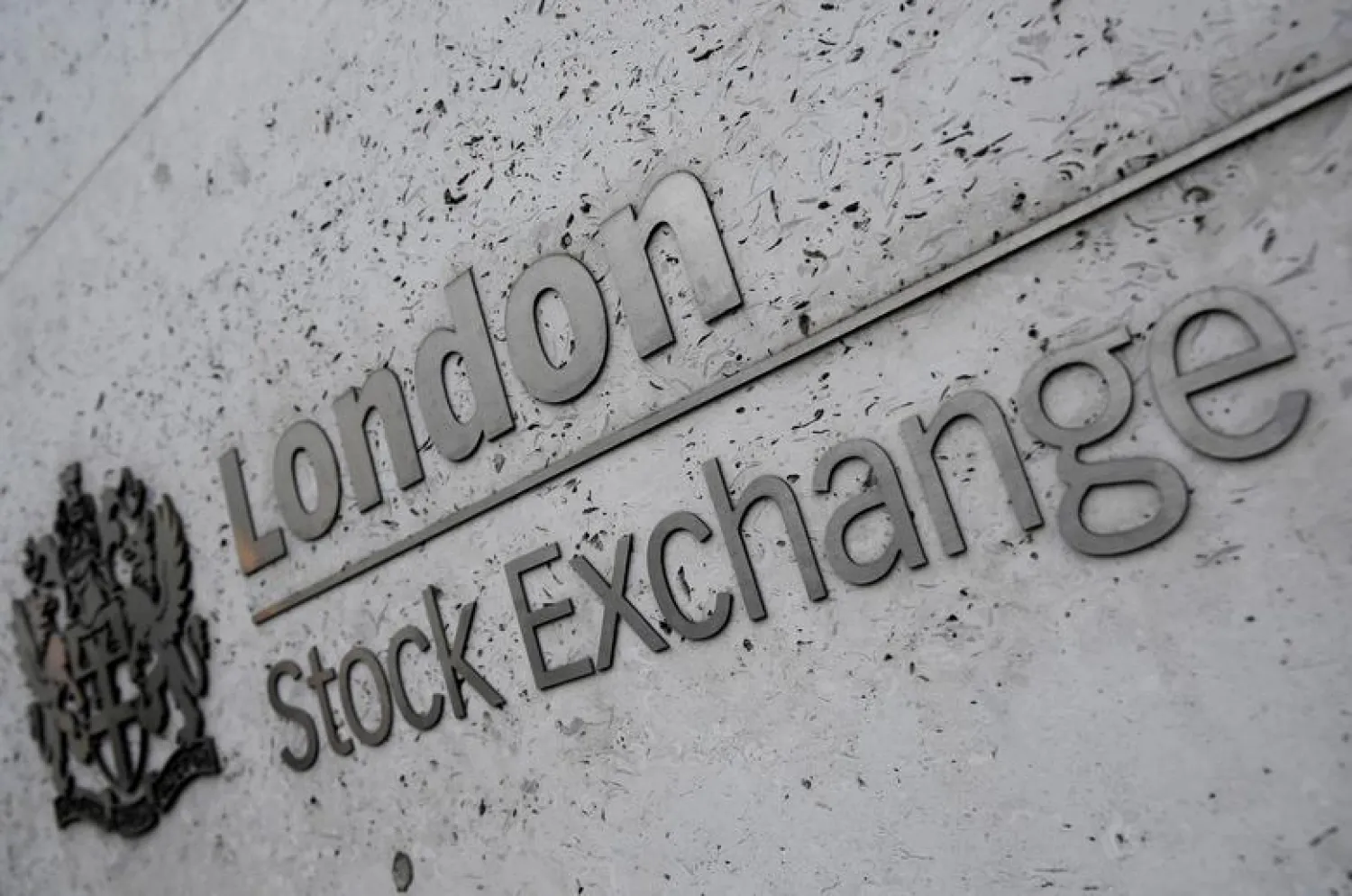
The London Stock Exchange Group offices are seen in the City of London, Britain, December 29, 2017. REUTERS/Toby Melville/File Photo
TT

Stocks Sweat on US Election Race, Safe-Haven Bonds Gain

The London Stock Exchange Group offices are seen in the City of London, Britain, December 29, 2017. REUTERS/Toby Melville/File Photo

Share markets were whipsawed, while bonds and the dollar gained on Wednesday as results from the US presidential election proved far closer than polls had predicted, potentially leaving the outcome in doubt for days or weeks.

Democratic contender Joe Biden took to the air to declare he was optimistic about winning and called for all votes to be counted, no matter how long it took.

President Donald Trump responded by saying he had won, that "they" were trying to steal the election, and that he would go to the US Supreme Court to fight for victory if necessary.

Investors initially wagered that a possible Democratic sweep by Biden could ease political risk and provide a huge boost to fiscal stimulus.

But the mood quickly changed as Trump snatched Florida and ran much closer in other battleground states than polls predicted.

US equity futures went on a wild ride, rising then falling, climbing again as the voting seemed to favor Trump only to sag once more as the president vowed to make a Supreme Court challenge.

The prospect of a drawn out and bitter fight ahead meant Europe's main bourses in London, Paris, and Frankfurt fell a modest 0.1%-0.8% as they opened as investors factored in the uncertainty ahead.

"It means possibly quite a lot of volatility," said AXA Group's Chief Economist Gilles Moec in London.

"As it is not clear, markets are going to overreact to every tiny piece of news," such as any further talk from Trump or Biden about legal fights.

Dealers said investors could be thinking a status quo result would lessen political uncertainty and remove the risk a Biden administration would roll back corporate tax cuts.

The technology sector saw reason for gains, with NASDAQ futures rising 2.4%. E-Mini futures for the S&P 500 dropped 1% after Trump signaled his intention to go to the Supreme Court but clawed higher again in early European dealing.

Andrew Brenner, head of international fixed income at NatAlliance Securities, said the move in techs appeared to be a play on the Senate potentially staying Republican.

Brenner said that under a Biden win tech stocks were seen faring worse, partly due to Democrats going after the sector in hearings and because a potential rise in capital gains tax would hit tech stocks harder.

Stéphane Monier, CIO at Lombard Odier said a divided Congress would have "far-reaching implications for markets, mostly because it means that any kind of pandemic recovery package is still tough to approve."

Japan's Nikkei was ahead by 1.7%, while MSCI's broadest index of Asia-Pacific shares outside Japan edged up 0.2%.

Chinese blue chips rose 0.7%, with markets uncertain how Sino-US relations would develop from here.

Some investors hedged against the risk of a contested election or at least a drawn-out process as mail-in ballots were counted.

"It's a wait-and-see," said Matt Sherwood, head of investment strategy at Perpetual in Sydney.

"I think the odds of a clean (Democrat) sweep are diminishing, almost by the minute. That reduces the possibility, or the likelihood at least of a large stimulus programme being agreed to in the first days of a Biden administration."

That saw 10-year Treasury yields fall all the way back to 0.81%, having been at a five-month top of 0.93%.

The US dollar had a roller-coaster session, reversing early losses to be last up 1% on a basket of currencies at 93.902. The euro fell back hard to $1.1650 and away from a top of $1.1768.

The chance of a Trump victory saw the dollar jump 2% against the Mexican peso on the assumption US trade policies would continue to favor tariffs. Norway's crown, Australia's risk-sensitive dollar, and Britain's pound all tumbled too.

Going the other way, the dollar eased nearly 1% at one point to the Russian rouble, which had been one of the hardest fallers in the run up to the election, though the move seemed to lose traction in European trading.

STILL TO COME

Investors are awaiting the outcome of US Federal Reserve and Bank of England meetings this week, which are expected to at least give a nod to further stimulus.

The Reserve Bank of Australia on Tuesday cut interest rates to near zero and boosted its bond-buying program, adding to the tidal wave of cheap money flooding the global financial system.

Gold had been buoyed by the extensive liquidity but ran into profit-taking on Wednesday, losing 0.6% to $1,896 an ounce.

Oil prices held gains made after industry data showed crude inventories in the United States dropped sharply.

Dealers said a returned Republican administration would likely be more positive for the oil industry than the Democrats that favor renewable technology.

US crude futures were up 25 cents at $37.86 a barrel, with Brent crude futures gaining 22 cents to $39.94.



Saudi Arabia Records Highest Quarterly Non-Oil Exports Since 2017

 Jeddah Islamic Port (SPA) 
 Jeddah Islamic Port (SPA) 
TT

Saudi Arabia Records Highest Quarterly Non-Oil Exports Since 2017

 Jeddah Islamic Port (SPA) 
 Jeddah Islamic Port (SPA) 

Saudi Arabia recorded its highest quarterly level of non-oil exports since 2017 in the fourth quarter of 2025, highlighting a significant structural shift in the Kingdom’s trade dynamics.

Data from the General Authority for Statistics (GASTAT) showed that the merchandise trade surplus rose 26.3 percent year on year in the fourth quarter, driven by strong growth in non-oil exports, which are playing an increasingly pivotal role in strengthening Saudi Arabia’s external balance.

Non-oil exports, including re-exports, climbed a record 18.6 percent to SAR 97 billion ($25.8 billion), marking their highest quarterly level in eight years. These exports covered 39.4 percent of total imports during the period. As a result, the trade surplus widened to SAR 52.5 billion (about $14 billion), its highest level in three years.

Re-exports were the standout performer, surging 67.4 percent to SAR 40 billion ($10.6 billion). The sharp increase was largely fueled by growth in machinery, electrical equipment and appliances, which expanded 79.2 percent and accounted for roughly half of total re-exports.

Overall merchandise exports reached SAR 300 billion ($80 billion) in the fourth quarter, up 7.9 percent compared with the same period in 2024. Oil exports rose 3.5 percent year on year to SAR 203 billion ($54.1 billion). Imports also increased, rising 4.7 percent to SAR 248 billion ($66.1 billion)

Trade data underscored the depth of Saudi Arabia’s commercial ties with major global economies. China remained the Kingdom’s largest trading partner, accounting for 13.1 percent of total exports and 27.2 percent of imports.

The United Arab Emirates ranked second among export destinations, receiving 11.2 percent of Saudi exports.

Other leading export markets included Japan (9.9 percent), followed by India, South Korea, the United States, Bahrain, Egypt, Singapore and Poland. Collectively, these ten countries accounted for 70.9 percent of total Saudi exports.

On the import side, the United States ranked second after China, representing 8.7 percent of total imports. It was followed by the UAE (5.7 percent), Germany, India, Japan, Italy, France, Switzerland and Egypt. Together, these ten countries accounted for 67 percent of the Kingdom’s total imports.

Vision 2030 Driving Diversification

The record performance reflects the goals of Saudi Vision 2030, which aims to position the Kingdom as a global logistics hub linking three continents. The exceptional expansion in re-exports and greater reliance on advanced air cargo infrastructure point to tangible progress in building a platform capable of attracting and redistributing high-tech goods and electrical equipment worldwide.

The figures also demonstrate growing economic resilience. Oil exports accounted for 67.5 percent of total exports in the fourth quarter of 2025, down from 70.4 percent a year earlier. This gradual diversification of the export base has helped reinforce trade stability, supporting the highest surplus recorded in three years.


Gold Ticks Up on Safe‑haven Bids; Markets Eye US-Iran Talks

Gold items are displayed at a jewelry shop in Hanoi, Vietnam, 26 February 2026.  EPA/LUONG THAI LINH
Gold items are displayed at a jewelry shop in Hanoi, Vietnam, 26 February 2026. EPA/LUONG THAI LINH
TT

Gold Ticks Up on Safe‑haven Bids; Markets Eye US-Iran Talks

Gold items are displayed at a jewelry shop in Hanoi, Vietnam, 26 February 2026.  EPA/LUONG THAI LINH
Gold items are displayed at a jewelry shop in Hanoi, Vietnam, 26 February 2026. EPA/LUONG THAI LINH

Gold prices edged up on Thursday as uncertainty over US tariff policy boosted the metal's safe-haven appeal, while investors awaited further details on US-Iran talks later in the day.

Spot gold was up 0.4% at $5,190.01 per ounce, as of 0816 GMT. Bullion had hit a more-than-three-week high on Tuesday.

US gold ‌futures for April ‌delivery were down 0.4% at $5,206.80, said Reuters.

The US dollar ‌eased, ⁠making dollar-denominated commodities more ⁠affordable for holders of other currencies.

"Iran-US persisting tensions and the uncertainty surrounding the global economy with (President Donald) Trump's tariffs are a bullish catalyst," said Carlo Alberto De Casa, external analyst at banking group Swissquote.

US envoy Steve Witkoff and Trump's son-in-law Jared Kushner are due to meet an Iranian delegation for ⁠a third round of nuclear talks later in the ‌day in Geneva.

Trump briefly ‌laid out his case for a possible attack on Iran in his ‌State of the Union speech on Tuesday, saying ‌he would not allow a country he described as the world's biggest sponsor of terrorism to have a nuclear weapon.

Non-yielding gold is seen as a safe store of value during times of geopolitical and ‌economic uncertainty.

The US tariff rate for some countries will rise to 15% or higher from ⁠the newly ⁠imposed 10%, US Trade Representative Jamieson Greer said on Wednesday, without naming any specific trading partners or giving further details.

Gold prices scaled a record high of $5,594.82 on January 29 and were up 20% so far this year.

"The global gold rush does not seem to be over... Overall the sentiment remains positive with strong buys coming from Asia and from Central Banks," De Casa said.

On the data front, investors await the weekly US jobless claims data, due later in the day.

Spot silver fell 1.4% to $88.18 per ounce. Spot platinum added 0.9% to $2,308.11 per ounce, while palladium rose 0.3% to $1,800.14.


IMF Unlocks Around $2.3 Billion for Egypt

Thousands of Muslim students break their fast during the Muslim holy fasting month of Ramadan, at a free meal distributing point in Al-Azhar mosque in Cairo, Egypt, Wednesday, Feb. 25, 2026. (AP Photo/Ahmed Yosri )
TT

IMF Unlocks Around $2.3 Billion for Egypt

Thousands of Muslim students break their fast during the Muslim holy fasting month of Ramadan, at a free meal distributing point in Al-Azhar mosque in Cairo, Egypt, Wednesday, Feb. 25, 2026. (AP Photo/Ahmed Yosri )

The International Monetary Fund (IMF) has unlocked around $2.3 billion for Egypt after its latest program reviews, it said on Wednesday.

Egypt secured an expanded $8 billion package over nearly four years from the IMF in March 2024, contingent on a series of economic reforms.

In March last year, the global lender approved a new loan worth $1.3 billion for Egypt.

After completing the fifth and sixth reviews of the Extended Fund Facility, the IMF said on Wednesday around $2 billion will be unlocked for Egypt.

It will be able to draw an extra $273 million under the Resilience and Sustainability Facility (RSF) after the first review was completed, the IMF said in a statement.

"Egypt's macroeconomic situation has improved amid sustained stabilization efforts," it said. "A broad-based economic recovery has lifted real GDP growth to 4.4 percent in FY2024/25 while inflation declined markedly to 11.9 percent in January 2026, supported by tight monetary and fiscal policies."

"The current account deficit narrowed further to 4.2 percent of GDP, reflecting strong remittances and tourism receipts, while market confidence continued to improve, as evidenced by successful external issuances, foreign direct investment inflows, and record nonresident inflows into domestic debt markets."

"Tight monetary and fiscal policies together with exchange rate flexibility have helped restore macroeconomic stability, reduce inflation, and strengthen the external position."

But the IMF warned that structural reforms under the program have been "uneven.”

"Efforts to reduce the state's footprint, particularly progress on the divestment agenda, have been slower than envisaged, while high public debt and elevated gross financing needs continue to constrain fiscal space and weigh on medium-term growth prospects," the IMF added.