Protester Killed in Southern Iraq as Tensions Flare Again

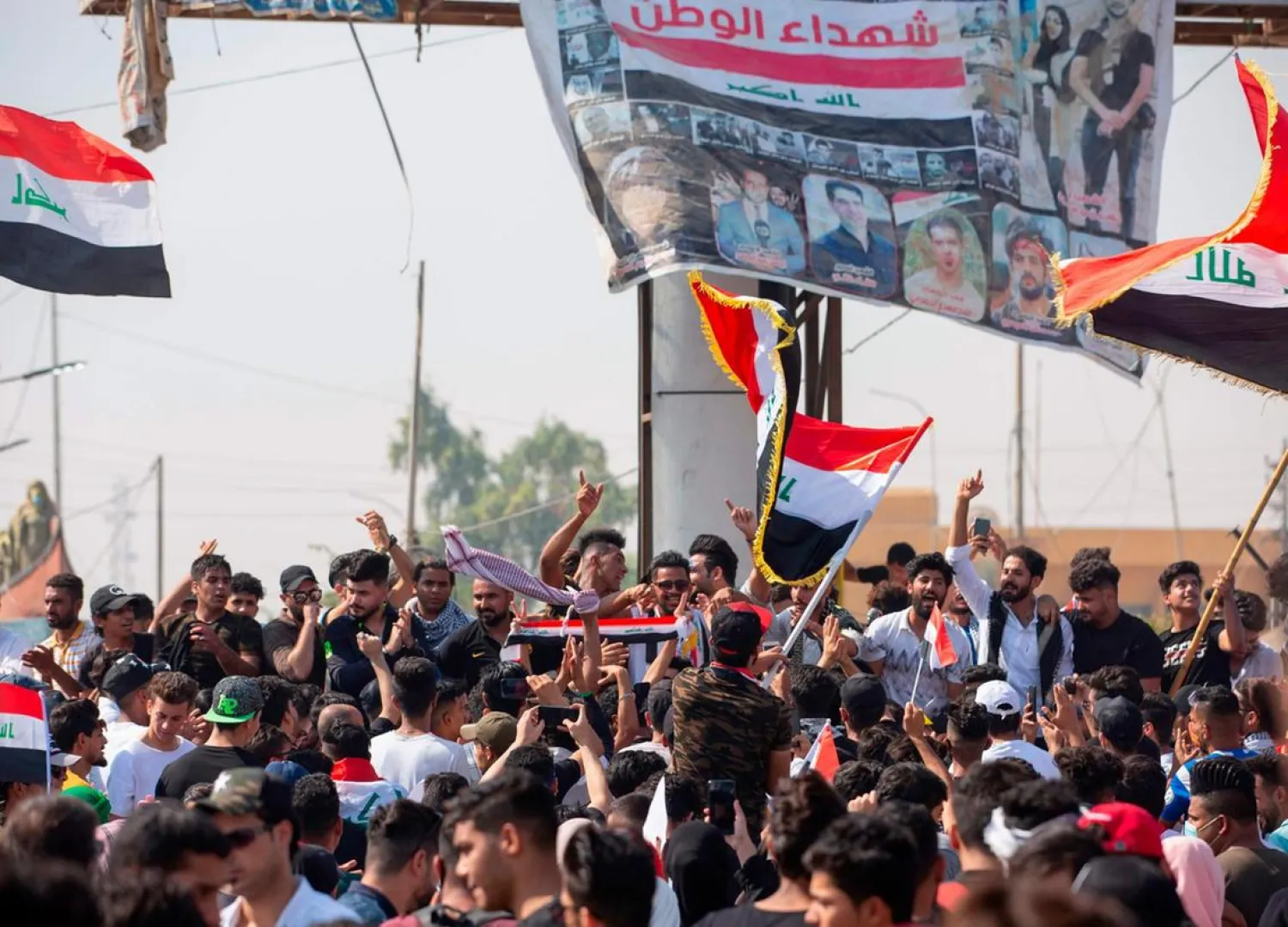
Iraqi demonstrators wave flags as they gather near the local administration building in the southern city of Basra. (AFP)
TT

Protester Killed in Southern Iraq as Tensions Flare Again

Iraqi demonstrators wave flags as they gather near the local administration building in the southern city of Basra. (AFP)

Iraqi security forces opened fire during clashes with hundreds of protesters in the southern city of Basra on Friday, killing one demonstrator and wounding several others as tensions flared once again, hospital officials said.

The clashes erupted after some of the protesters tried to set up tents in a public square, a week after similar, previously erected protest tents in Basra and Baghdad had been removed.

Dozens of young Iraqis were seen running away in panic after the shots were fired in Basra. The slain protester was identified as Omar al-Thiabi, a 29-year-old unemployed Iraqi.

Last Saturday, Iraqi forces cleared out sit-in tents from Baghdad's central Tahrir Square that had been the epicenter of anti-government mass protests that erupted last year. They also removed tents in Basra's Bahriya Square and in other southern cities that have seen major protests throughout the past year.

The removal of the tents has led to tensions and protesters in Basra have been trying to erect them again, holding demonstrations in the city for the past three days. They are also demanding the sacking of the governor and an investigation into previous killings of protesters.

The hospital officials said seven protesters were wounded in Friday's clashes. They spoke on condition of anonymity in line with regulations.

More than 500 people were killed during the months-long protest movement that began in October 2019 in Baghdad and across the mainly Shiite south, many of them demonstrators shot by Iraqi security forces.

Despite reaching unprecedented numbers in late 2019 and successfully mounting pressure on the country's elites, the anti-government protests have been largely dormant in the wake of the coronavirus pandemic. Activists also blamed the drop in numbers on a violent crackdown by Iraqi security forces and militia groups, as well as kidnappings and targeted assassinations.


Talabani Deepens Dispute with Barzani as Settlement Appears out of Reach

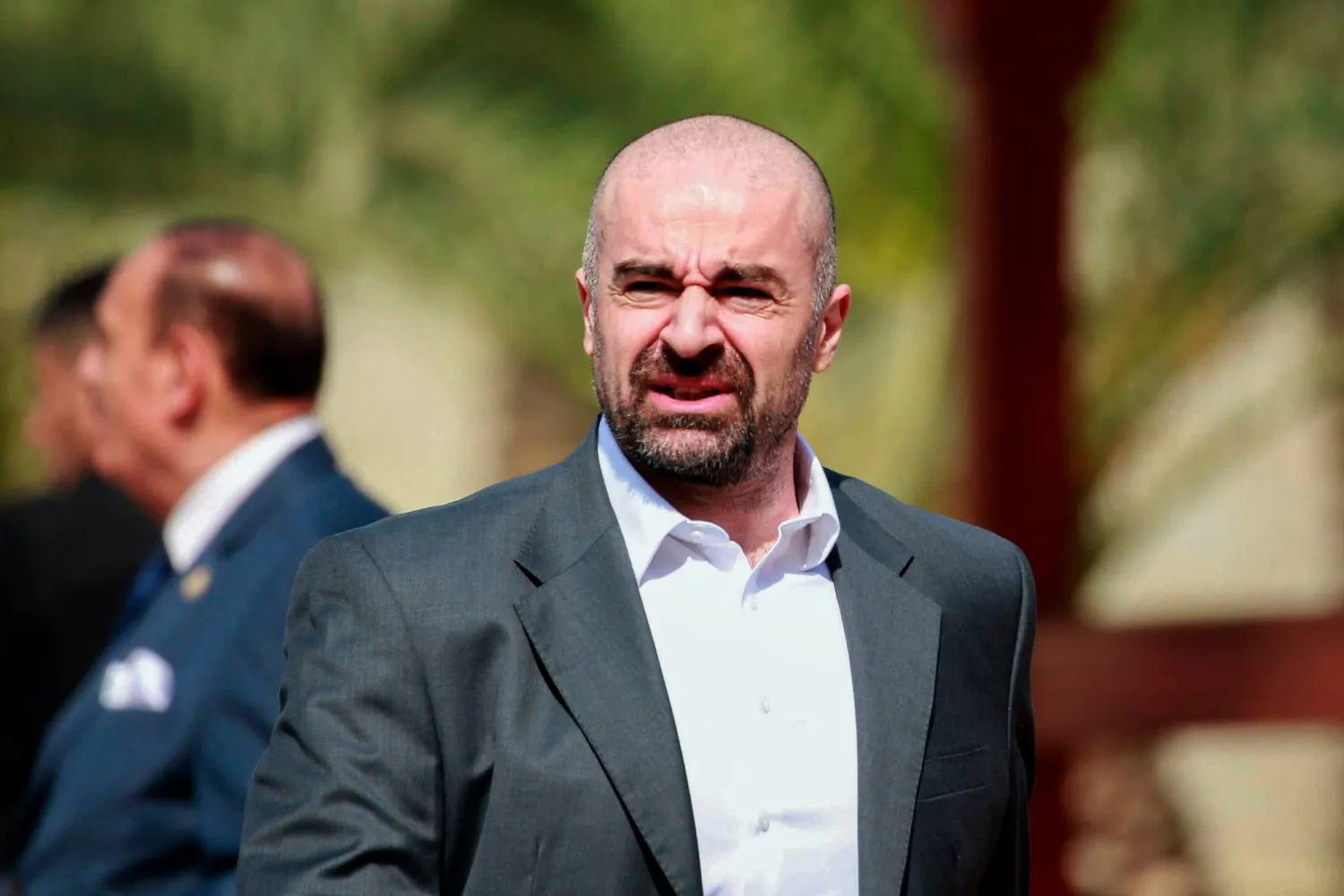
Bafel Talabani, the leader of the Patriotic Union of Kurdistan (PUK), and son of the former Iraqi president Jalal Talabani, attends the inauguration and handover ceremony for the new Iraqi president at al-Salam Palace in Baghdad, Oct. 17, 2022. (AP)
TT

Talabani Deepens Dispute with Barzani as Settlement Appears out of Reach

Bafel Talabani, the leader of the Patriotic Union of Kurdistan (PUK), and son of the former Iraqi president Jalal Talabani, attends the inauguration and handover ceremony for the new Iraqi president at al-Salam Palace in Baghdad, Oct. 17, 2022. (AP)

Patriotic Union of Kurdistan (PUK) leader Bafel Talabani deepened his criticism of the Kurdistan Democratic Party (KDP), two days after KDP President Masoud Barzani called on Kurdish forces to engage in dialogue to resolve disputes between the two main parties, amid growing signs of political and administrative division between Erbil and Sulaymaniyah.

Speaking at the Sulaymaniyah Strategic Forum on Thursday, Talabani described the KDP’s actions in the Kurdistan Region parliament as a "political collapse in the history of Kurdistan," saying that shuttering the parliament prompted the PUK to no longer recognize the current legislature.

He added that the region is experiencing the reality of two governments and two administrations, accusing a minority within the KDP of rejecting any settlement that fails to meet its demands - even going so far as to block a meeting solely intended for a photo opportunity.

For his part, PUK senior official Mahmoud Khoshnaw told Asharq Al-Awsat that tensions between the two main parties "have begun to intensify day by day."

He added that hopes pinned on restoring ties following the regional parliament's November 4 session have dissipated, pushing both sides gradually toward a rift.

Khoshnaw said that Talabani’s positions, voiced on multiple occasions, are "conditional" and reflect, in his words, a commitment to safeguarding the region's entity, its constitutional rights, and the gains of the Kurdish experience.

He stressed that the current parliamentary makeup does not represent the entirety of Kurdish forces, but rather reflects the KDP's presence at a time when major Kurdish factions remain outside the legislature.

Nevertheless, he said the path to a settlement "is still not completely closed."

Criticism of US role

Among the issues raised by Talabani was his criticism of US envoy Tom Barrack's “intervention” in Kurdish disputes, stating that he disagrees with him and that the Kurdistan Region requires a fundamental resolution to its problems.

Talabani called on the US administration to understand the nature of the situation in the region, or to step back and leave the political forces in Kurdistan and Iraq to resolve their differences on their own.

He also rejected accusations that he is "under Iranian control," stating, "I am not in anyone's pocket, and I never will be," while adding that he is well-received whenever he visits the US.

Talabani praised Iraqi Prime Minister Ali al-Zaidi, describing him as a young man with a businessman's mindset who is seeking to correct Iraq's course.

Settlement still possible

Political science professor at Mustansiriyah University Essam al-Faili told Asharq Al-Awsat that the crisis remains manageable, pointing out that Talabani favored a peaceful resolution while Barzani called for dialogue between the two sides.

He noted that Baghdad does not want the fragmentation of the region's administration.

The US is also engaged in the crisis, he remarked, saying that these factors keep the prospects for a settlement alive despite the sharp rhetoric between the two sides.

He explained that a core aspect of the dispute revolves around the distribution of sovereign posts within the region's institutions and presidencies, noting that both parties hold leverage over this file, which makes it amenable to a compromise between them.

On talk of the possibility of forming a separate Kurdish region comprising the Sulaymaniyah and Halabja governorates, constitutional and legal expert Dr. Saif al-Saadi told Asharq Al-Awsat that such a scenario is constitutionally unfeasible.

Journalist Montadhar Nasser told Asharq Al-Awsat that the internal dispute is deeply entrenched in the Kurdish political landscape, exposing a failure of institutional governance in the region as decades of efforts to unify the two administrations have fallen short.

He added that talk of establishing two separate regions may be premature, although he argued that such an outcome would better reflect reality on the ground and could resolve the ongoing debate over the nature of relations between the two parties.

Nasser suggested that this scenario could prove advantageous for Baghdad, as it would allow the federal government to deal with two regions separately, while giving both parties greater leeway to forge alliances with other political forces in the capital without being bound by conditions or restrictions imposed by one upon the other.


IMF Says Its Staff in Lebanon to Discuss Banking Restructuring Strategy

A man sits at the entrance of a money transfer company office in Beirut on November 10, 2026. (AFP)
TT

IMF Says Its Staff in Lebanon to Discuss Banking Restructuring Strategy

A man sits at the entrance of a money transfer company office in Beirut on November 10, 2026. (AFP)

The ‌International Monetary Fund has begun a staff mission to discuss the country's strategy for restructuring the banking sector, IMF spokeswoman Julie Kozack said on Thursday, declining to say whether a preliminary agreement was imminent.

Kozack told reporters that the IMF's staff ‌mission in ‌Beirut was under way ‌as ⁠part of a ⁠close discussion with Lebanese authorities to underpin a comprehensive reform program to restore financial stability and support an economic recovery.

She said IMF staff would ⁠communicate at the end ‌of the mission ‌with any relevant updates.

Lebanese media ‌quoted Lebanese Finance Minister Yassine Jaber ‌telling reporters this week that the IMF mission would continue through Friday, adding his hope that ‌a preliminary agreement could be reached this week.

IMF Managing Director ⁠Kristalina ⁠Georgieva last month said there were "intense" discussions under way on support for Lebanon reflecting significant progress towards a loan program.

"We have made significant progress towards the program. We have still a bit more work to do together, and I'm confident we will be successful," she said at the time.


Libya's Dbeibah, Erdogan Discuss Bilateral Agreements, Cooperation

Libya's Dbeibah meets Turkish President Tayyip Erdogan on the sidelines of the Antalya summit on Thursday (Dbeibah's Office)
TT

Libya's Dbeibah, Erdogan Discuss Bilateral Agreements, Cooperation

Libya's Dbeibah meets Turkish President Tayyip Erdogan on the sidelines of the Antalya summit on Thursday (Dbeibah's Office)

Turkish President Tayyip Erdogan and Libyan Prime Minister Abdulhamid Dbeibah discussed ways to strengthen cooperation and the latest political and security developments in Libya on Thursday on the sidelines of the COP31 World Leaders Climate Summit in the Turkish city of Antalya.

Dbeibah's media office said the meeting covered bilateral relations and prospects for expanding cooperation in various fields, particularly the economy, investment, security and defense, as well as progress in implementing agreements and memorandums of understanding signed by the two countries.

The talks also addressed efforts to support stability and unify Libya's institutions, alongside continued coordination on regional and international issues.

Erdogan reaffirmed Türkiye's continued support for Libya's stability, stressing that "any initiative not embraced by Libyans will have no impact on the ground."

On the sidelines of the climate summit, Dbeibah also met UN Secretary-General Antonio Guterres to discuss developments in Libya's political process and efforts by the UN mission to support stability.

Dbeibah reaffirmed his government's readiness to continue coordinating with the mission to help it fulfill its mandate, praising UN envoy Hanna Tetteh's efforts to facilitate dialogue and bridge differences among Libyan factions.

He also welcomed the "4+4 agreement" and called for building on its outcomes to end the transitional periods and pave the way for elections.

Representatives of Dbeibah's government and the eastern-based General Command signed the 4+4 agreement on Aug. 30 to break the political deadlock and create conditions for presidential and parliamentary elections within 24 months, through unified institutions and a single executive authority.

Dbeibah's meetings in Antalya on Thursday also included talks with Sudan's Transitional Sovereignty Council Chairman General Abdel Fattah al-Burhan, focusing on developments in Sudan, ways to strengthen economic and trade cooperation, facilitate the movement of citizens and coordinate on security and border issues.

Dbeibah reiterated Libya's support for Sudan's unity, sovereignty and territorial integrity, rejecting any attempts to divide the country or undermine its national institutions.

He stressed the need to intensify regional and international efforts to secure a ceasefire and ensure humanitarian aid reaches those affected by the conflict.

Dbeibah attended the summit's opening on Wednesday. The event, hosted by Antalya on Nov. 11-12 under Erdogan's chairmanship, brought together Guterres and around 102 leaders and senior representatives from 95 countries and seven international organizations.

Discussions focused on climate finance, the energy transition and strengthening international cooperation to achieve sustainable development goals.

The meetings come amid renewed momentum in Libyan-Turkish relations after Libya's House of Representatives ratified a maritime memorandum of understanding signed in 2019 between Ankara and Libya's former Government of National Accord.

Contacts and consultations between Libya's rival factions and Turkish officials have intensified recently.

On Wednesday, Turkish Ambassador Guven Begenc met General Salahuddin al-Namroush, chief of the general staff under Dbeibah's interim Government of National Unity, to discuss developing military relations in ways that serve the two countries' mutual interests.

Meanwhile, General Khaled Haftar, chief of the general staff under the eastern-based General Command, arrived in the Turkish capital Ankara on Thursday for an official visit lasting several days.