



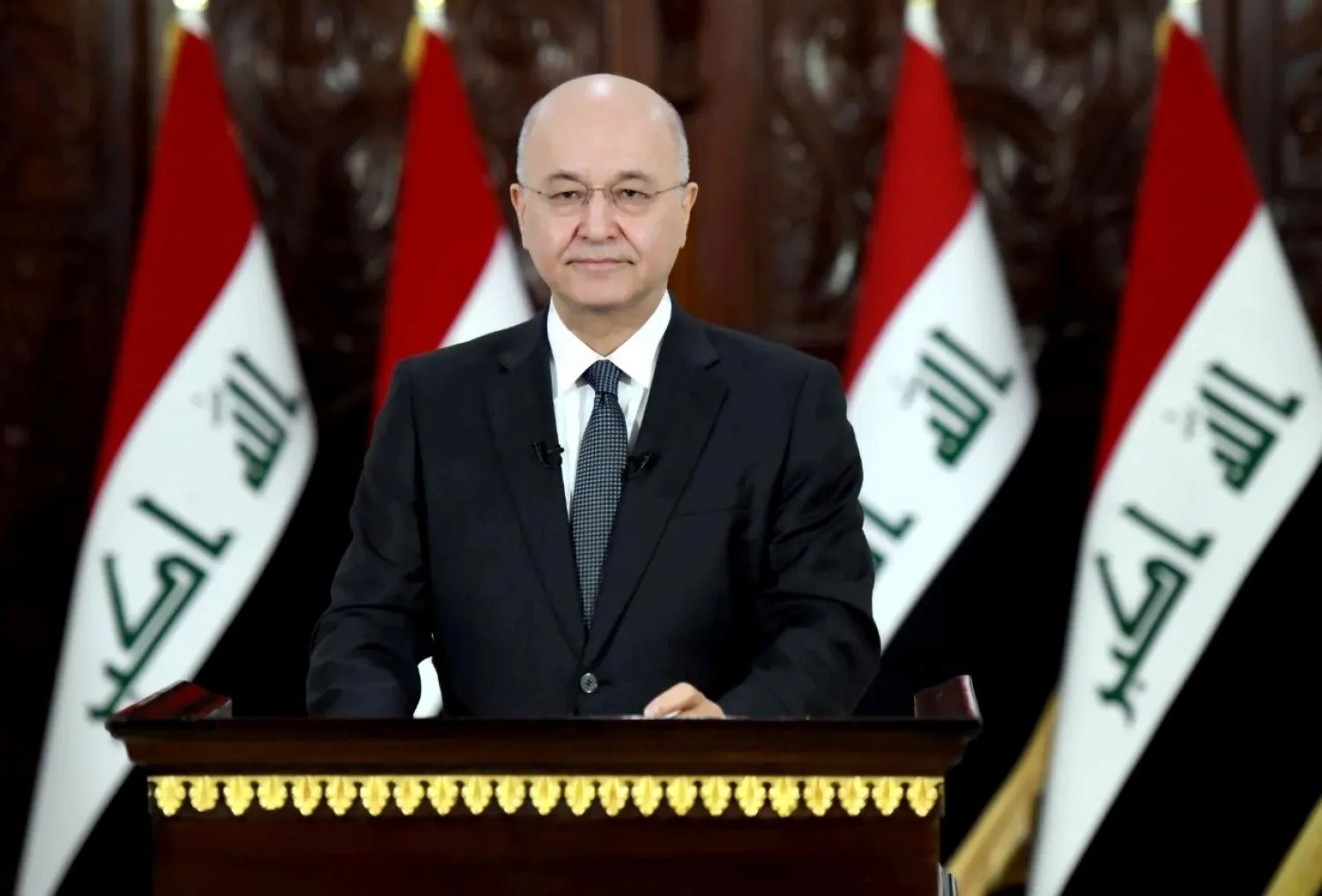

Iraqi President Barham Salih approved on Thursday the new parliamentary elections law despite his reservations on some of its articles, but stressed the need to fulfil the requirements of holding early polls.
"In compliance with my constitutional duty, I approved the election law, in preparation for holding early, fair, and just elections," Salih said in a televised speech after signing the law.
He said that reforming the law aims to guarantee the right of Iraqis to elect their representatives by securing free and fair polls away from intimidation and fraud.
"Electoral corruption is dangerous because it threatens societal peace and economic integrity, as the electoral corruption and financial corruption are interlinked, inseparable, and destructive," Salih said.
He pointed out that the previous legislative elections after 2003 witnessed many challenges regarding fraud and suspicion, which were the main reason for the citizens' reluctance to vote, and undermined their confidence in the legitimacy of the existing regime and the entire electoral process.
Salih stressed the need "to enable a new political generation to realize the desired reform project in response to the blood that has been shed to reform and change.”
He also acknowledged the reservations that some politicians had on the electoral law which has been passed recently by parliament, saying: "This law does not represent everything we aspire to, but at the same time, it represents a development for the better and a path to reform."
Defending the new election law, Iraqi lawmaker Mohammed al-Karbouli said that it stems from important achievements that must be recognized within an integrated vision.
“The new law prohibits those sentenced in integrity-linked cases from running in the upcoming elections, even if they are covered by amnesty,” Karbouli told Asharq Al-Awsat.
“Election integrity is ensured by biometric voting cards. They will curb fraud which was otherwise popular in previous elections,” he added.
Karbouli also pointed to the significance of lowering the age requirement for candidates, saying it will increase youth participation.


