


Unsuited to New Era? Fate of Formal Fashion Hangs by a Thread

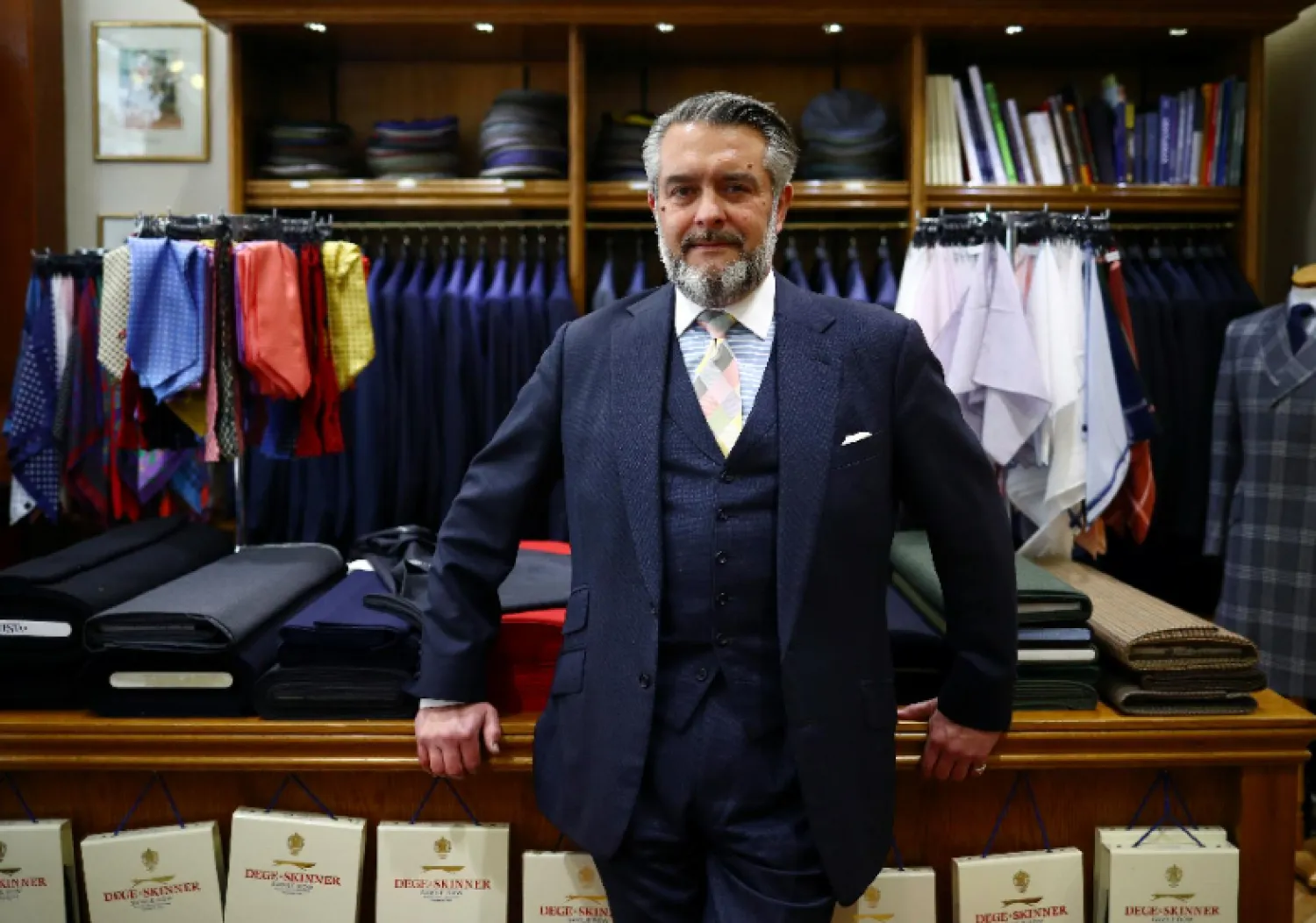
Dege & Skinner Managing Director William Skinner poses for a portrait in the Dege & Skinner tailors on Savile Row, amid the coronavirus disease (COVID-19) outbreak, in London, Britain October 7, 2020. Reuters
TT

Unsuited to New Era? Fate of Formal Fashion Hangs by a Thread

Dege & Skinner Managing Director William Skinner poses for a portrait in the Dege & Skinner tailors on Savile Row, amid the coronavirus disease (COVID-19) outbreak, in London, Britain October 7, 2020. Reuters

Italian luxury designer Brunello Cucinelli makes men’s suits that sell for up to 7,000 euros ($8,200). But even he - like most people across the globe - hasn’t worn a suit for months, let alone bought one.

“We’ve all been locked away at home, so this is the first jacket I have put on since March,” Cucinelli told Reuters in Milan as he presented his latest collection in September, wearing a light grey blazer.

Most people in “white-collar” jobs are working from home, with a newfound love of sweatpants, a trend that some experts expect to outlive the pandemic. And few, if any, weddings or parties are taking place.

This seismic shift in behavior is having profound repercussions across the supply chain for suits and formal wear, upending a sartorial sector spanning every continent.

In Australia, the world’s biggest producer of merino wool, prices have been in freefall, hitting decade lows. Many sheep farmers are in dire straits, storing wool in every available shed in the hope of a rebound.

In northern Italy, the wool mills that buy from the farmers and weave the fabric for high-end suits have seen their own orders from retailers nosedive.

In the United States and Europe, several retail chains specializing in business attire such as Men’s Wearhouse, Brooks Brothers and TM Lewin have closed stores or filed for bankruptcy over the past few months, and more could follow.

Players at all levels told Reuters they were being forced to adapt to survive, from farmers turning to other forms of agriculture to mills making stretchier fabrics for a new breed of suits that don’t crease easily and are more resistant to stains.

“People want to be more comfortable and are less inclined to wear a formal suit,” said Silvio Botto Poala, managing director of Lanificio Botto Giuseppe, a wool mill in Italy’s textile hub of Biella which counts Armani, Max Mara, Ralph Lauren and Hermes among its customers.

“With Zoom conferences and smart working, you’ll see men wearing a shirt, perhaps even a tie, but not many suits.”

Fine wool prices in Australia have more than halved during a tumultuous 18-month period, as usually healthy purchases of merino wool from Italian mills have almost ground to a halt.

The benchmark price for merino wool fell to A$8.58 ($6.1) per kg in early September, auction results show, down from A$20.16 in early 2019. It has since partly recovered to just over A$10.

Andrew Blanch, managing director of New England Wool in New South Wales, which sources wool from farms for Italian textile makers, said many buyers now had excess supplies.

“They’ve all got wool to get rid of before they even come back to the market here,” said Blanch, speaking on the phone from wool auctions in Sydney’s western suburbs.

“If the shops aren’t open, everything just backs up. A lot of the orders we had bought wool against just got cancelled by their clients in the US and around Europe.”

He said that China, which alongside Italy purchases most of Australia’s more than A$3 billion in annual wool exports, was now “the only show in town” even though Chinese buyers were also acquiring less wool.

Many merino sheep farmers are storing their wool in sheds or storage facilities; though some who are still emerging from a three-year drought are selling their bales into the weak market to stay financially afloat.

“Not everyone is big enough to hold on to their wool clip and wait for the price to change,” said Dave Young, a farmer near the New South Wales town of Yass. “We are in the position where we have to meet the market within a relatively short time after shearing.”

Young, who has about 4,500 sheep on his property, said he had re-focused some operations to provide lamb meat instead.

A jump up the food chain to northern Italy, and Botto Poala expects his mill’s sales to fall by 25% from 63 million euros last year and that they will take 2-3 years to recover.

However his business is insulated to a degree because it mostly makes womenswear fabric; others are more pessimistic.

“For some businesses, we are talking a 50%-80% plunge in sales,” said Ettore Piacenza, general manager of the Fratelli Piacenza wool mill, a centuries-old family business with an annual turnover of 52 million euros. He also heads the wool mills department of the local business association.

Botto Poala said more than 50% of his mill’s turnover now comes from wool that has been made stretchier by treating in a particular way or having lycra added to it.

This is because whatever demand is left for suits, it is more likely to be for fabrics that are more resistant to stains and don’t crease easily, while such cloth can also be used for casual wear, wool mills say.

Italian luxury label Etro, for example, has just launched a “24-hour jacket” made of jersey and mixing wool and cotton.

A gradual move towards casual wear has been going on for years. In 2019, even Goldman Sachs - a bastion of bespoke suits - relaxed the dress code for its staff. Not to mention the rise of the Silicon Valley hipster crowd.

But COVID has turbocharged that shift - boosting sales of comfort clothing and sportswear at the expense of business attire.

In the second quarter of this year, when much of the world was in lockdown, Nike was the hottest brand according to Lyst, a global fashion search platform that analyses the behavior of more than nine million online shoppers a month.

It was the first time since the Lyst Index began that a luxury fashion brand did not take the top spot.

Gap’s Athleta unit, which sells tights, jogging pants, sweats and workout tops, was its best-performing fashion line in the three months to Aug. 1. Sales rose 6%, compared with a 52% fall at Banana Republic, known for dressier attire.

Suits ranked among the highest-discounted and lowest-selling items in France, Italy and Germany in September, according to data compiled by StyleSage, which combs prices on websites.

Cheaper to mid-market labels including Asos, Topman, Guess and Hugo Boss had the steepest markdowns, at up to 50%.

The collapse in demand for office attire led storied US retailers, also including Jos. A. Bank and J. Crew, to file for bankruptcy over the summer and many more retailers face an uncertain future.

Retail consultancy Coresight Research forecasts that 20,000 to 25,000 US stores could close by year-end, compared with about 9,800 in 2019.

“I confess I have not purchased any office wear this year. I can tell you for a fact walking around the City, there are very few suits on display,” said James Whitaker, a partner at law firm Mayer Brown in London.

Indeed business has been “extremely slow” even since the end of lockdown for Jasper Littman, a tailor trained in Savile Row, the London street renowned for its bespoke tailoring for men.

Littman said his clients, mostly lawyers and bankers, “are sitting at home in their pyjamas”.

He usually makes about 200 suits a year, but has only made 63 so far in 2020.

Customers are reluctant to risk riding the train to pick up even the suits that are already made with a deposit paid.

“There’s no point in them doing that, because they’d be taking delivery of a suit they can’t wear.”



Pieter Mulier Named Creative Director of Versace

(FILES) Pieter Mulier attends the 2025 CFDA Awards at The American Museum of Natural History on November 03, 2025 in New York City. (Photo by Dimitrios Kambouris / GETTY IMAGES NORTH AMERICA / AFP)
TT

Pieter Mulier Named Creative Director of Versace

(FILES) Pieter Mulier attends the 2025 CFDA Awards at The American Museum of Natural History on November 03, 2025 in New York City. (Photo by Dimitrios Kambouris / GETTY IMAGES NORTH AMERICA / AFP)

Belgian fashion designer Pieter Mulier has been named the new creative director of the Milan fashion house Versace starting July 1, according to an announcement on Thursday from the Prada Group, which owns Versace.

Mulier is currently creative director of the French fashion house Alaïa, and was previously the right-hand man of fellow Belgian designer and Prada co-creative director Raf Simons at Calvin Klein, Jil Sander and Dior.

In his new role, Mulier will report to Versace executive chairman Lorenzo Bertelli, the designated successor to manage the family-run Prada Group. Bertelli is the son of Miuccia Prada and Prada Group chairman Patrizio Bertelli.

“We believe that he can truly unlock Versace’s full potential and that he will be able to engage in a fruitful dialogue,’’ The Associated Press quoted Lorenzo Bertelli as saying of Mulier in a statement.

Mulier takes over from Dario Vitale, who departed in December after previewing just one collection during his short-lived Versace stint.

Mulier was honored last fall by supermodel and longtime Alaïa muse Naomi Campbell at the Council of Fashion Designers of America for his work paying tribute to brand founder Azzedine Alaïa. Mulier took the creative helm in 2021, after Alaïa’s death.


Ralph Lauren’s Margin Caution Eclipses Stronger‑than‑expected Quarterly Results

Guests wait after viewing the latest Ralph Lauren collection in New York City, US, April 17, 2025. REUTERS/Caitlin Ochs/File photo
TT

Ralph Lauren’s Margin Caution Eclipses Stronger‑than‑expected Quarterly Results

Guests wait after viewing the latest Ralph Lauren collection in New York City, US, April 17, 2025. REUTERS/Caitlin Ochs/File photo

Ralph Lauren posted third-quarter results above Wall Street estimates on Thursday, but the luxury retailer's warning of margin pressure tied to US tariffs sent its shares down nearly 6.4% in premarket trading.

The company expects fourth-quarter margins, its smallest revenue period, to shrink about 80 to 120 basis points due to higher tariff pressure and marketing spend.

Ralph Lauren, which sources its products from regions such as China, India and Vietnam, has relied on raising prices and reallocating production to regions with lower duty exposure to offset US tariff pressures, Reuters reported.

"Ralph Lauren has been able to raise prices for some time now. There is some limit on how long it can continue to do this. I think (the company's) gross margins are near peak levels," Morningstar analyst David Swartz said.

The company, which sells $148 striped linen shirts and $498 leather handbags, has tightened inventory, lifted full-price sales and refreshed core styles, boosting its appeal among wealthier and younger customers, including Gen Z.

Higher-income households are still splurging on luxury items, travel and restaurant meals, while lower- and middle-income consumers are strained by higher costs for rents and food as well as a softer job market.

The New York City-based company saw quarterly operating costs jump 12% year-on-year as it ramped up brand building efforts through sports-focused brand campaigns such as Wimbledon and the US Open tennis championship.

The luxury retailer said revenue in the quarter ended December 27 rose 12% to $2.41 billion, above analysts' estimates of a 7.9% rise to $2.31 billion, according to data compiled by LSEG.

It earned $6.22 per share, excluding items, compared to expectations of $5.81, aided by a 220 basis points increase in margins and an 18% rise in average unit retail across its direct-to-consumer channel.

Ralph Lauren now expects fiscal 2026 revenue to rise in the high single to low double digits on a constant currency basis, up from its prior forecast of a 5% to 7% growth.


Saudi Fashion Commission, Kering Launch 'Kering Generation Award X MENA'

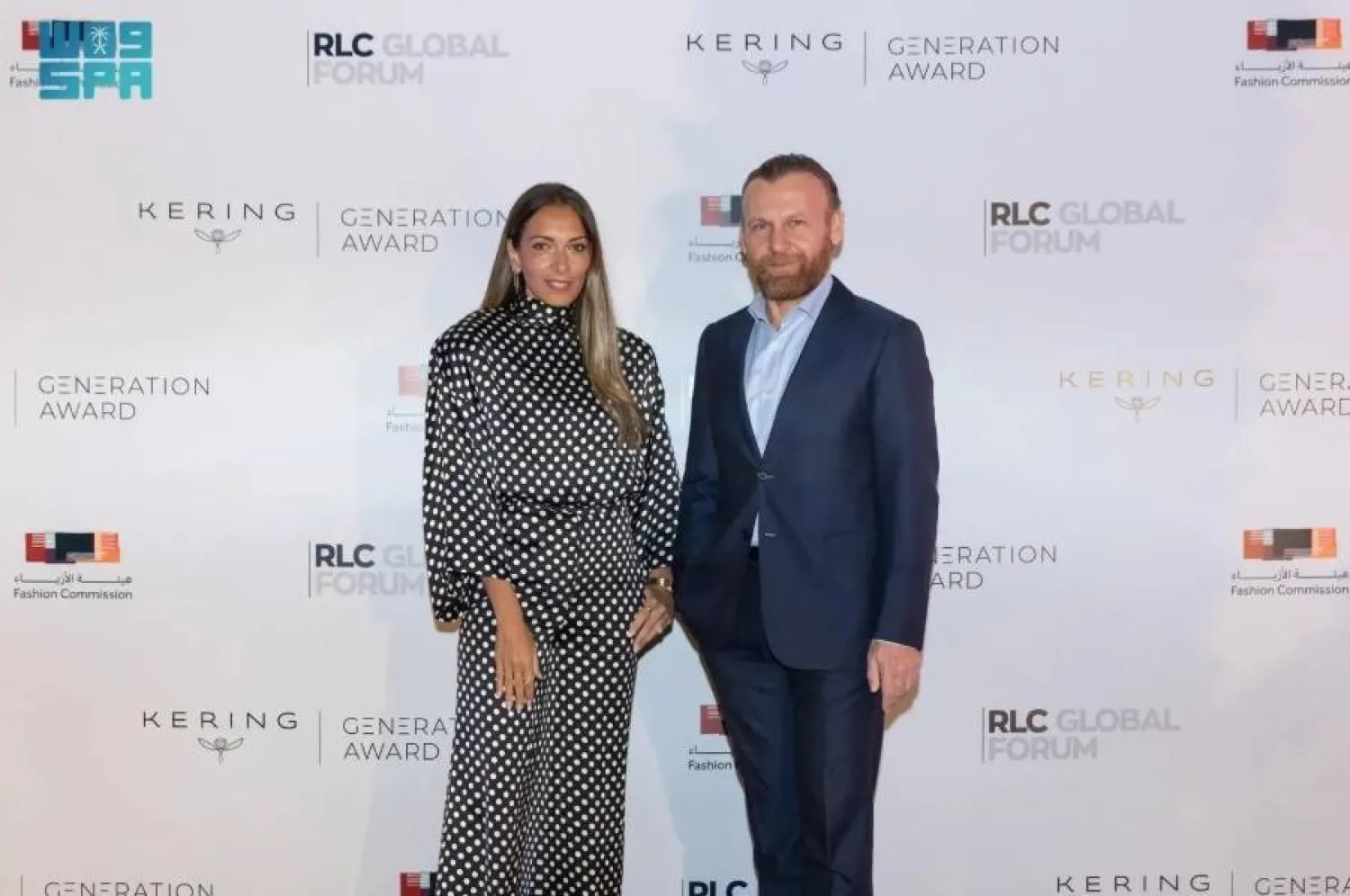
This year's award builds on the strong success of the 2025 award, which attracted more than 500 applications, shortlisted 21 finalists, and recognized three winners. SPA
TT

Saudi Fashion Commission, Kering Launch 'Kering Generation Award X MENA'

This year's award builds on the strong success of the 2025 award, which attracted more than 500 applications, shortlisted 21 finalists, and recognized three winners. SPA

Saudi Arabia’s Fashion Commission and global luxury group Kering have launched the "Kering Generation Award X MENA" across the Middle East and North Africa (MENA) for 2026.

The announcement was made on Tuesday during the opening of the RLC Global Forum, hosted at the French Embassy in Riyadh.

This year's award builds on the strong success of the 2025 award, which attracted more than 500 applications, shortlisted 21 finalists, and recognized three winners.

Participants benefited from mentorship programs, workshops, and opportunities to strengthen their global presence. Building on this momentum, the 2026 program seeks to expand its impact across the MENA region.

The 2026 award focuses on four key areas of sustainable fashion: innovation in regenerative materials and clean production, circular design and sustainable business models, nature conservation and animal welfare, and consumer awareness and cultural engagement.

The program targets startups across the MENA region that operate in, or positively influence, the sustainable fashion sector, provided they demonstrate innovation capabilities and the ability to deliver measurable sustainability outcomes.