Referees' Strict Rulings on Unseen Handball Microcrimes are Ruining Football

Referee Martin Atkinson reviews a goal by Aston Villa during an Arsenal-Aston Villa game, in London, Britain, Nov. 8, 2020. (AFP)
TT

Referees' Strict Rulings on Unseen Handball Microcrimes are Ruining Football

Referee Martin Atkinson reviews a goal by Aston Villa during an Arsenal-Aston Villa game, in London, Britain, Nov. 8, 2020. (AFP)

There was a chilling moment during BT Sport’s coverage of Chelsea v Rennes earlier this month. A laughably punitive penalty kick had just been awarded against Rennes defender Dalbert Henrique. In the same flourish, Henrique also received a second yellow card for the crime of existing near a football while in possession of standard human arms.

As Dalbert trudged off looking sad, Darren Fletcher expressed some reservations on commentary about the justice of all this. “You might not like it Darren,” former referee Peter Walton replied, with an air of calm, vengeful assurance. “But it’s the law.”

The words seemed to hang in the air, to echo along some fresh and vital faultline. Let’s be clear, and with all due deference to Peter Walton, it’s not actually the law. The laws of football, so prissily insistent on their status, are not laws in any meaningful sense of the word. They’re transient things conjured into existence to give temporary shape to a game of ball-kicking. They’re stuff that some blokes have written down.

This isn’t meant as a personal criticism of Walton, who comes across on TV as an agreeable, well-informed figure, delivering his pronouncements with the quietly haunted air of a minor civic official being held captive by off-screen assailants and forced at gunpoint to talk in a slow, steady voice about degrees of contact and the unnatural positioning of arms.

The point here is the weird fetishizing of the penalty kick itself, the insistence that every achievable penalty kick must be awarded, on a granular strict liability basis. And that this previously hidden river of evil – the unseen microfoul, the handball microcrime – must be purged from the sporting world by a new class of tooled-up refereeing superhero.

Penalties have become a problem. There are, simply, too many of them. 36 penalty kicks have been awarded in the Premier League. All things being equal this would lead to a total of 195 across the season, double the standard tally, and a ludicrous 103 more than last year. At the end of which one needs-must part of football, a tool to fix a problem, is threatening to overwhelm all the other working parts. The award, dispute, taking and retaking of penalties is the biggest growth area in the elite game. The penalty kick has won. It’s a star – something that is both tedious in practice and a symptom of more profound textural change elsewhere.

This is not about the handball law, which is poorly adapted to the new reality and continues to create weird outcomes. These can be fixed. Serie A also had a record 187 penalties last year. But dig down and, as in England, the key driver is stupid fiddly fouls, not the more headline-grabbing stupid fiddly handballs. The issue isn’t VAR either, which will solve itself, and whose future lies in refinement, AI and more competent human handlers. The problem, for now, is penalty dominance, penalty culture, the penalty supremacy. We just need fewer of them.

It is worth recalling the basic point of a penalty kick. Penalties are a piece of artifice, a quick fix for a glitch in the machine. Penalties are what happens when football runs out of things to say. Not only does a penalty kick have no textural relationship to every other part of football – one kick at goal, in the middle of all these moving variables – it often distorts rather than reflects the flow.

There are good penalties, those that arrive out of the natural justice of a hard-earned attacking overload. Equally there are penalties that divert or independently decide the outcome. We may remember here the late penalty awarded to Manchester United at Paris Saint-Germain in March 2019, where a hopeful shot struck a hand while the ball was heading wide of goal.

A penalty kick awarded for a non-crime that affected nothing turned a creditable away goals defeat into a miraculous United win. A false narrative of promise and progress was born. From there came the permanent hiring of a manager who won five of his next 24 games and still looks genuinely surprised to be asked questions about the internal workings of Manchester United FC each time he appears in public.

More alarming is the way penalty culture is changing the way the game is played. There are matches where trying to draw a trip or strike a hand feels like the simplest route to victory, players whose value has been significantly boosted by cleverly refined penalty winning skills.

So much attacking play feels stilted and loose. Watch as Player A slaloms his way across the penalty area, Maradona-style, while his opponents Michael-Flatley away from him. Is this authentic? Is a wonder goal really a wonder goal when skilled defenders are reduced to bouncing around with their arms behind their back like a troupe of skinheads dancing to Jimmy Cliff? Some will find this staccato, interventionist style more to their liking. Those who yearn for completeness and perfectibility will see it as progress. Others will see a tepid tyranny of detail.

My own dislike of video refereeing has always been an emotional, semi-rational thing, based in the idea that football is one of the last remaining free collective experiences, unfiltered through a screen, unmediated by invisible hands. Football is a real-time gymnastic art, not a tech-driven quest for deep refereeing truths.

What is certain is this is something different, a step-change as the sport adapts to its status as a purely televisual product. My own compromise would be a clearly defined stiffening of the weight of evidence required to award a penalty kick, a higher bar for the ultimate sanction of the law. Walton’s literal-minded bunker of truth is a powerful voice in this process. For now it has, without warning or discussion, become the defining one.

The Guardian Sport


Tottenham Hotspur Sack Head Coach Thomas Frank

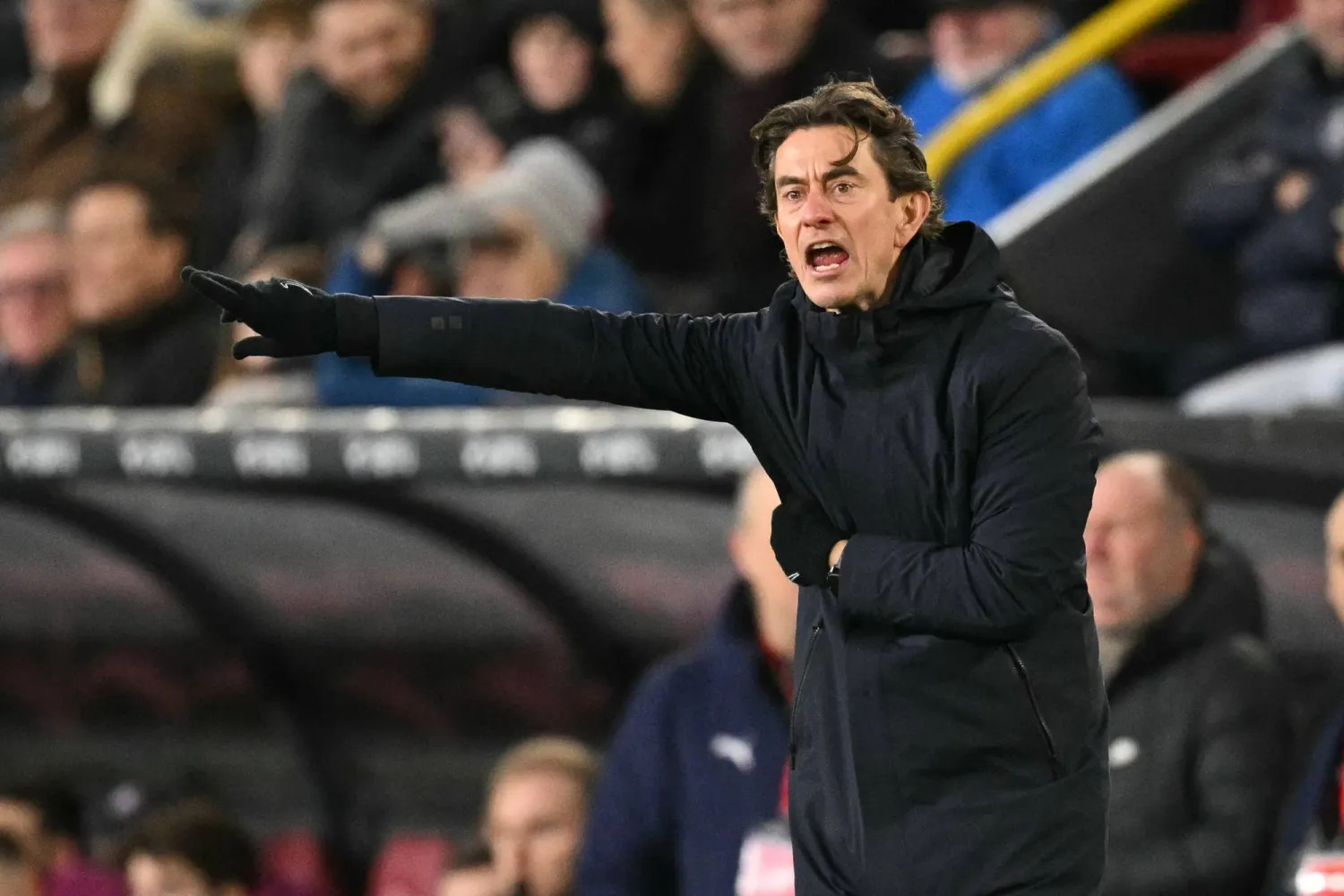
(FILES) Tottenham Hotspur's Danish head coach Thomas Frank gestures on the touchline during the English Premier League football match between Burnley and Tottenham Hotspur at Turf Moor in Burnley, north-west England on January 24, 2026. (Photo by Oli SCARFF / AFP)/
TT

Tottenham Hotspur Sack Head Coach Thomas Frank

(FILES) Tottenham Hotspur's Danish head coach Thomas Frank gestures on the touchline during the English Premier League football match between Burnley and Tottenham Hotspur at Turf Moor in Burnley, north-west England on January 24, 2026. (Photo by Oli SCARFF / AFP)/

Thomas Frank was fired by Tottenham on Wednesday after only eight months in charge and with his team just five points above the relegation zone in the Premier League.

Despite leading Spurs to the round of 16 in the Champions League, Frank has overseen a desperate domestic campaign. A 2-1 loss to Newcastle on Tuesday means Spurs are still to win in the league in 2026.

“The Club has taken the decision to make a change in the Men’s Head Coach position and Thomas Frank will leave today,” Tottenham said in a statement. “Thomas was appointed in June 2025, and we have been determined to give him the time and support needed to build for the future together.

“However, results and performances have led the Board to conclude that a change at this point in the season is necessary.”

Frank’s exit means Spurs are on the lookout for a sixth head coach in less than seven years since Mauricio Pochettino departed in 2019.


Marseille Coach De Zerbi Leaves After Humiliating 5-0 Loss to PSG 

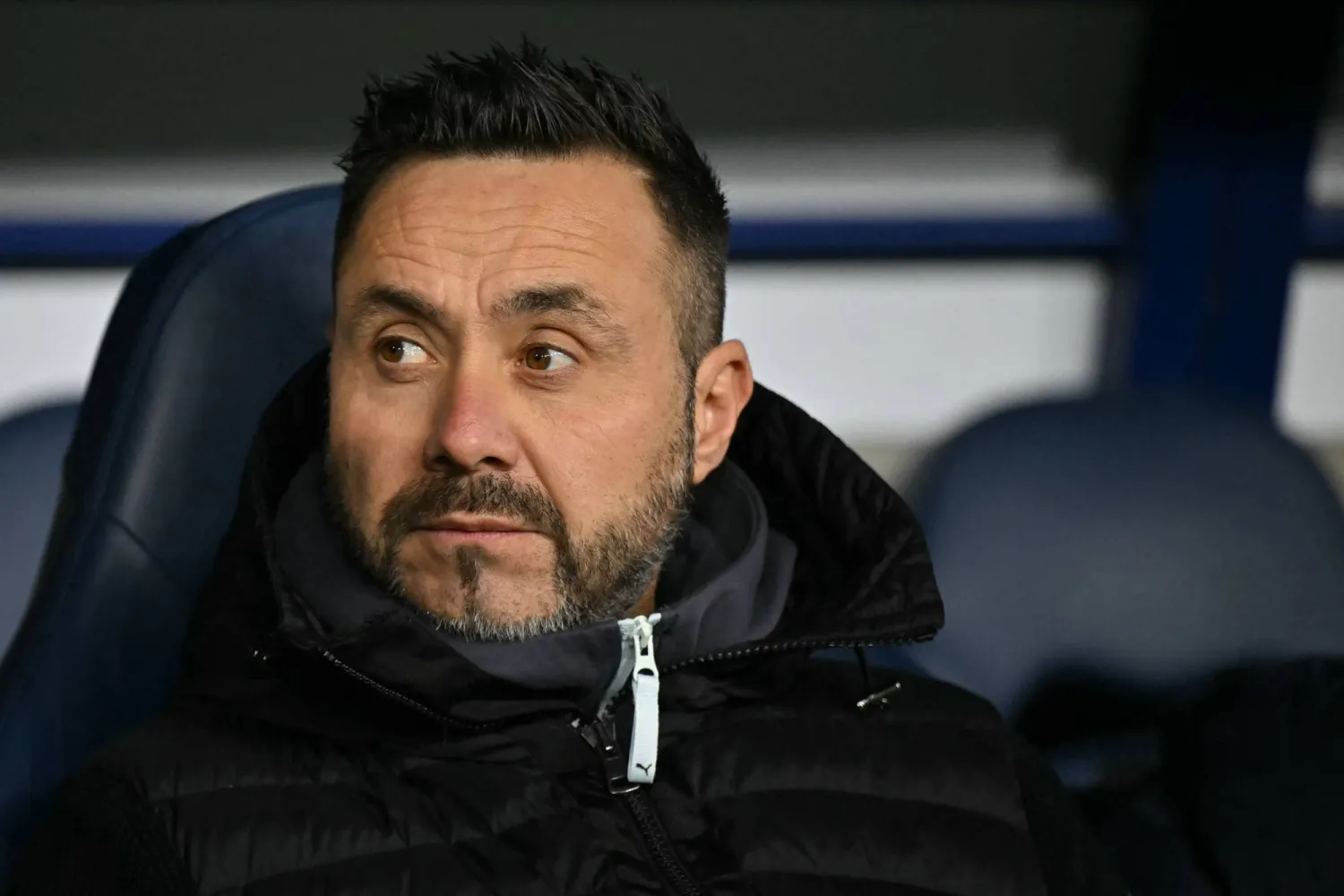
Marseille's Italian coach Roberto De Zerbi looks on from the technical area during the French Cup round of 32 football match between FC Bayeux and Olympique de Marseille (OM) at the Michel-d'Ornano Stadium in Caen on January 13, 2026. (AFP) 
TT

Marseille Coach De Zerbi Leaves After Humiliating 5-0 Loss to PSG 

Marseille's Italian coach Roberto De Zerbi looks on from the technical area during the French Cup round of 32 football match between FC Bayeux and Olympique de Marseille (OM) at the Michel-d'Ornano Stadium in Caen on January 13, 2026. (AFP) 

Marseille coach Roberto De Zerbi is leaving the French league club in the wake of a 5-0 thrashing at the hands of PSG in French soccer biggest game.

The nine-time French champions said on Wednesday that they have ended “their collaboration by mutual agreement.”

The heavy loss Sunday at the Parc des Princes restored defending champion PSG’s two-point lead over Lens after 21 rounds, with Marseille in fourth place after the humiliating defeat.

De Zerbi's exit followed another embarrassing 3-0 loss at Club Brugge two weeks ago that resulted in Marseille exiting the Champions League.

De Zerbi, who had apologized to Marseille fans after the loss against bitter rival PSG, joined Marseille in 2024 after two seasons in charge at Brighton. After tightening things up tactically in Marseille during his first season, his recent choices had left many observers puzzled.

“Following consultations involving all stakeholders in the club’s leadership — the owner, president, director of football and head coach — it was decided to opt for a change at the head of the first team,” Marseille said. “This was a collective and difficult decision, taken after thorough consideration, in the best interests of the club and in order to address the sporting challenges of the end of the season.”

De Zerbi led Marseille to a second-place finish last season. Marseille did not immediately announce a replacement for De Zerbi ahead of Saturday's league match against Strasbourg.

Since American owner Frank McCourt bought Marseille in 2016, the former powerhouse of French soccer has failed to find any form of stability, with a succession of coaches and crises that sometimes turned violent.

Marseille dominated domestic soccer in the late 1980s and early 1990s. It was the only French team to win the Champions League before PSG claimed the trophy last year. It hasn’t won its own league title since 2010.


Olympic Fans Hunt for Plushies of Mascots Milo and Tina as They Fly off Shelves 

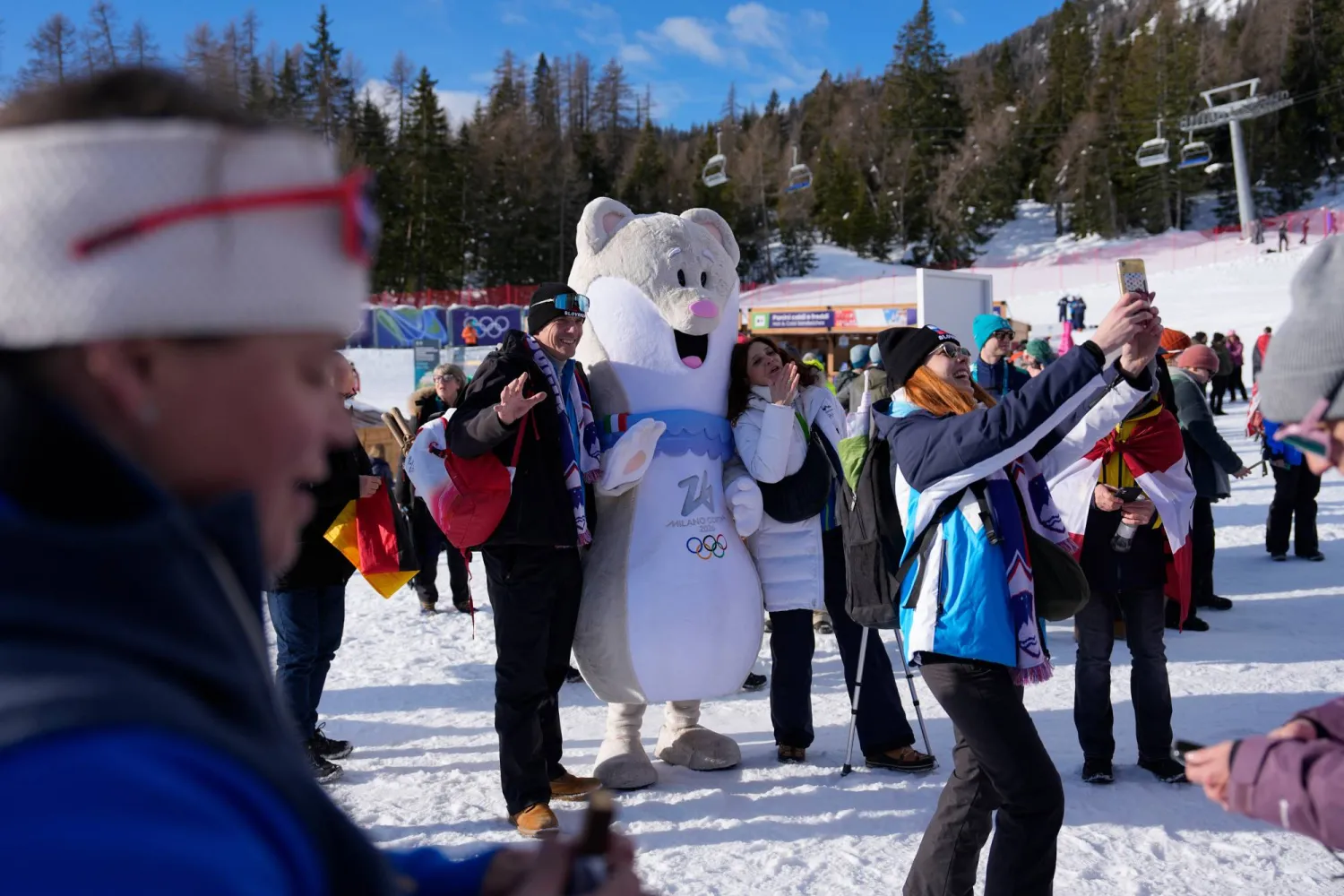
Fans take selfies with the Olympic mascot Tina at the finish area of an alpine ski, slalom portion of a women's team combined race, at the 2026 Winter Olympics, in Cortina d'Ampezzo, Italy, Tuesday, Feb. 10, 2026. (AP)
TT

Olympic Fans Hunt for Plushies of Mascots Milo and Tina as They Fly off Shelves 

Fans take selfies with the Olympic mascot Tina at the finish area of an alpine ski, slalom portion of a women's team combined race, at the 2026 Winter Olympics, in Cortina d'Ampezzo, Italy, Tuesday, Feb. 10, 2026. (AP)

For fans of the Milan Cortina Olympic mascots, the eponymous Milo and Tina, it's been nearly impossible to find a plush toy of the stoat siblings in Milan and Cortina d’Ampezzo.

Many of the official Olympics stores in the host cities are already sold out, less than a week into the Winter Games.

“I think the only way to get them is to actually win a medal,” Julia Peeler joked Tuesday in central Milan, where Tina and Milo characters posed for photos with fans.

The 38-year-old from South Carolina is on the hunt for the plushies for her niece. She's already bought some mascot pins, but she won't wear them on her lanyard. Peeler wants to avoid anyone trying to swap for them in a pin trade, a popular Olympic pastime.

Tina, short for Cortina, is the lighter-colored stoat and represents the Olympic Winter Games. Her younger brother Milo, short for Milano, is the face of the Paralympic Winter Games.

Milo was born without one paw but learned to use his tail and turn his difference into a strength, according to the Olympics website. A stoat is a small mustelid, like a weasel or an otter.

The animals adorn merchandise ranging from coffee mugs to T-shirts, but the plush toys are the most popular.

They're priced from 18 to 58 euros (about $21 to $69) and many of the major official stores in Milan, including the largest one at the iconic Duomo Cathedral, and Cortina have been cleaned out. They appeared to be sold out online Tuesday night.

Winning athletes are gifted the plush toys when they receive their gold, silver and bronze medals atop the podium.

Broadcast system engineer Jennifer Suarez got lucky Tuesday at the media center in Milan. She's been collecting mascot toys since the 2010 Vancouver Games and has been asking shops when they would restock.

“We were lucky we were just in time,” she said, clutching a tiny Tina. “They are gone right now.”

Friends Michelle Chen and Brenda Zhang were among the dozens of fans Tuesday who took photos with the characters at the fan zone in central Milan.

“They’re just so lovable and they’re always super excited at the Games, they are cheering on the crowd,” Chen, 29, said after they snapped their shots. “We just are so excited to meet them.”

The San Franciscan women are in Milan for the Olympics and their friend who is “obsessed” with the stoats asked for a plush Tina as a gift.

“They’re just so cute, and stoats are such a unique animal to be the Olympic mascot,” Zhang, 28, said.

Annie-Laurie Atkins, Peeler's friend, loves that Milo is the mascot for Paralympians.

“The Paralympics are really special to me,” she said Tuesday. “I have a lot of friends that are disabled and so having a character that also represents that is just incredible.”