


Houthis Force Closure of Major Bank in Yemen, 25 of its Branches

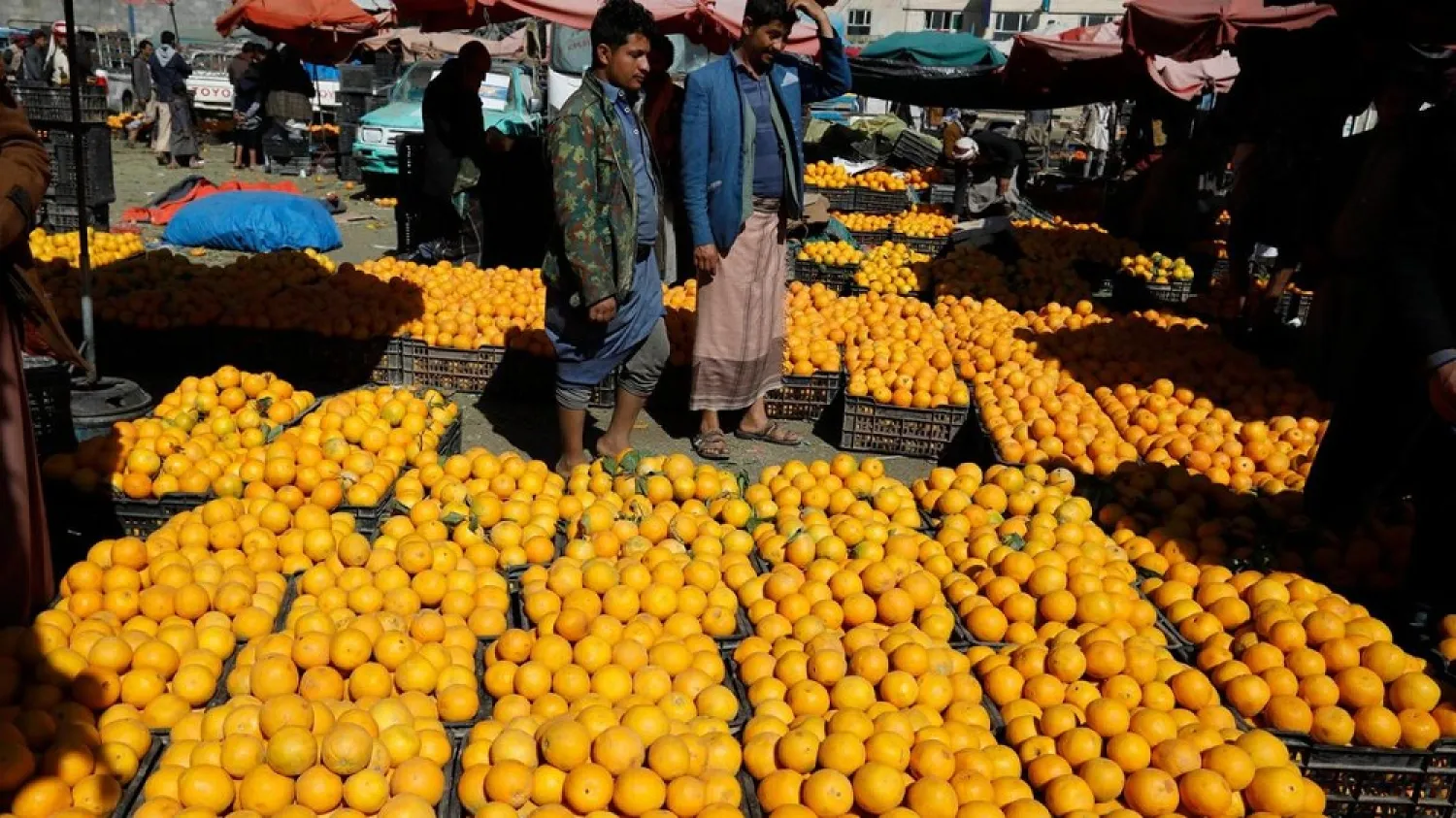
Yemenis shop for oranges at a wholesale market in Sanaa. (EPA)
TT

Houthis Force Closure of Major Bank in Yemen, 25 of its Branches

Yemenis shop for oranges at a wholesale market in Sanaa. (EPA)

The Iran-backed Houthi militias stormed and shut the headquarters and 25 branches of the Tadhamon International Islamic Bank (TIIB), one of the largest banks in Yemen and majority owned by the domestic trading group Hayel Saeed Anam.

TIIB clerks and employees said the Houthis plan to loot the bank’s assets and deposits.

The Houthis took over the TIIB’s servers and barred the bank from resuming operations at any of its branches.

TIIBB held the Houthis fully responsible for serious consequences of cessation of its operations.

The move marks a serious precedent in how the Houthis deal with the banking sector in the country, the bank said in a statement.

“It will affect the activities of humanitarian agencies that are partnering with us to deliver aid to the most vulnerable people,” it said, affirming that it always operates in accordance with local and international laws and standards.

Negative impacts of such practices will affect the whole banking system and could lead to the shutdown of all economic activities, the statement warned, criticizing the Houthis for pressuring banks in Sanaa.

The move against TIIB puts 1,520 bank employees out of work and freezes activities of some 30 local companies partnered with the bank, employees told Asharq Al-Awsat.

The militias claimed they shutdown TIIB because it was dealing with the Aden-based Central Bank of Yemen.

The TIIB released a statement detailing how Houthi intelligence officers stormed its headquarters in Sanaa on Wednesday morning, forced workers to evacuate the premise and ordered the management to shut down its main servers.

Houthi militants also confiscated CCTV footage that documented their break in.

The TIIB management, according to the statement, opened communication channels with Houthi leaders in order to investigate the incident and understand the motives behind its forced closure. It is also negotiating the prospects of reopening the bank.

More so, TIIB held the Houthi-controlled central bank in Sanaa responsible for its closure.


Lebanese, Syrian Talks in Damascus Tackle Border Security, Refugees

Syrian Foreign Minister Asaad Al-Shaibani and Lebanon's Deputy Prime Minister Tarek Mitri meet in Damascus. (Syrian Foreign Ministry)
TT

Lebanese, Syrian Talks in Damascus Tackle Border Security, Refugees

Syrian Foreign Minister Asaad Al-Shaibani and Lebanon's Deputy Prime Minister Tarek Mitri meet in Damascus. (Syrian Foreign Ministry)

Syrian Foreign Minister Asaad Al-Shaibani received on Monday a high-level Lebanese delegation led by Deputy Prime Minister Tarek Mitri in the Syrian capital, Damascus, for talks on outstanding issues between the neighboring countries.

Informed sources in Damascus told Asharq Al-Awsat that the Syrian side focused heavily on border control and joint security cooperation and coordination, while the Lebanese side focused primarily on the file of Syrian refugees in Lebanon.

A Syrian Foreign Ministry statement said: "The meeting discussed ways to strengthen bilateral relations between the two brotherly nations and develop joint coordination across various fields, primarily security cooperation and border control. This is in addition to expanding the horizons of partnership in the sectors of education, higher education, social affairs, and labor, as well as following up on the work of joint technical committees to serve mutual interests."

The Lebanese delegation's visit to Damascus comes within the context of strengthening bilateral relations, serving as a continuation of previous talks and a follow-up on the work of the joint committees established between the two sides to address shared files.

This follows an agreement reached by both countries last July to establish a joint higher committee to serve as an institutional framework for coordinating the work of the relevant ministries, developing economic, investment, and trade cooperation, and reinforcing security understandings.

According to informed sources in Damascus, the management of the Syrian–Lebanese border, traffic at border crossings, and security coordination to combat smuggling and infiltration topped the agenda of the talks.

The file of Syrian refugees and the status of residents in Lebanon, particularly those who entered covertly, was brought forward. The discussions sought to address the refugee issue from multiple dimensions, including social, security, and legal aspects. The situation of Syrian students in Lebanese schools was also raised.


Yemen Urges Int’l Pressure to Dry Sources of Houthi Funding, Weapons

Houthi supporters holding weapons during a protest in Sanaa, Yemen. (EPA file)
TT

Yemen Urges Int’l Pressure to Dry Sources of Houthi Funding, Weapons

Houthi supporters holding weapons during a protest in Sanaa, Yemen. (EPA file)

The Yemeni government is seeking to elevate its coordination with the United Kingdom beyond political and diplomatic support, pushing for more impactful measures to confront the terrorist Houthi militia.

These proposed actions include designating the group as a terrorist organization, choking off its financial and armament supply lines, and tightening restrictions on the dual-use technologies and components used to develop its military capabilities. This diplomatic push coincides with anticipated international efforts to mobilize economic and humanitarian assistance for Yemen.

These issues were at the forefront of a meeting between Chairman of the Presidential Leadership Council Dr. Rashad Al-Alim and British Minister of State for the Middle East Stephen Doughty. The two officials reviewed the latest developments in Yemen and examined the threats posed by the Houthis to regional security and international shipping lanes, alongside the ongoing preparations to convene an international support conference for Yemen at the end of this month.

Al-Alimi underscored that the safeguarding of international maritime navigation cannot be achieved without neutralizing the core sources of the Houthi threat.

He called for bolstering the capacities of the Yemeni state to defend its sovereign territory and territorial waters, stressing that political and legal declarations must be paired with concrete, practical measures targeting the financing, weaponization, and smuggling networks that sustain the group’s military apparatus.

He urged the UK to play a more effective role in mobilizing international support to designate the Houthis as a terrorist organization and ban the group in line with British law.

Continuing to address its threats without deterrent measures leaves the group's sources of strength outside the scope of targeting, he added.

Al-Alimi briefed the British minister on the scale of the Houthi escalation, pointing to the targeting of the civilian airports in Aden and Riyan, as well as the relentless attacks on the city of Taiz.

He highlighted the attacks endured by Taiz's residential neighborhoods, civilian facilities, markets, schools, and homes, in addition to the assaults on civilian targets in Saudi Arabia and the ongoing threats posed to waterways and international shipping lanes.

He linked regional security directly to the restoration of Yemeni state institutions' ability to extend their authority, maintaining that supporting the government in this direction represents the sole sustainable guarantee for protecting maritime corridors and regional stability.

Al-Alimi praised the British positions supporting Yemen, particularly London's role as the penholder on the Yemeni file in the UN Security Council.

He also lauded the Saudi support provided through the King Salman Humanitarian Aid and Relief Center and the Saudi Development and Reconstruction Program for Yemen, including the response to humanitarian needs in Taiz and other governorates.


UNRWA's Gaza Employees March Against Job Cuts

An amputee walks with crutches next to a girl carrying a pot with a meal from a charity kitchen past rubble in the Jabalia camp for Palestinian refugees in the northern Gaza Strip on October 24, 2026. (AFP)
TT

UNRWA's Gaza Employees March Against Job Cuts

An amputee walks with crutches next to a girl carrying a pot with a meal from a charity kitchen past rubble in the Jabalia camp for Palestinian refugees in the northern Gaza Strip on October 24, 2026. (AFP)

Employees of the UN agency for Palestinian refugees marched through Gaza's Nuseirat refugee camp on Monday to protest expected job cuts by the vital service provider, AFP journalists reported.

Dozens of men, women and children walked through the streets of the central Gaza camp, heading towards one of the agency's many schools in Gaza.

UNRWA, as the agency is known, is one of the Palestinian territory's largest service providers, offering healthcare and education, as well as crucial coordination for humanitarian relief since the start of the Israel-Hamas war in October 2023, making use of its thousands of staff and logistics networks.

"This march and this event are intended to make it clear that we oppose the dismissal of any employee, because dismissing employees means ending services for refugees and a decline in the quality of services," head of the staff union Mustafa al-Ghour told AFP.

Demonstrators including UNRWA beneficiaries held signs that read "No to job cuts" and "No to reducing refugee services".

"The agency has been experiencing unprecedented financial and operational difficulties for some time now and difficult decisions may be necessary in the near future," UNRWA spokesman Jonathan Fowler told AFP.

Fowler said that the matter was currently under review and that the agency could not comment in more detail for the time being.

UNRWA currently employs 10,500 people in Gaza, and 4,500 in the occupied West Bank.

In September, UNRWA's acting commissioner-general Christian Saunders had warned he would be forced to cut long-term services to refugees if his agency could not begin to bridge a $100 million shortfall in the next two months.

Israel has repeatedly accused UNRWA of providing cover for Hamas, claiming that some of its employees took part in the group's October 7, 2023 attack on Israel that sparked the war.

Legislation severing ties with the agency and banning it from operating on Israeli territory took effect in January 2025.

A series of investigations, including one led by France's former foreign minister Catherine Colonna, found some "neutrality-related issues" at UNRWA but stressed Israel had not provided conclusive evidence for its headline allegation.
