


Health Experts Clash Over Use of Certain Drugs for COVID-19

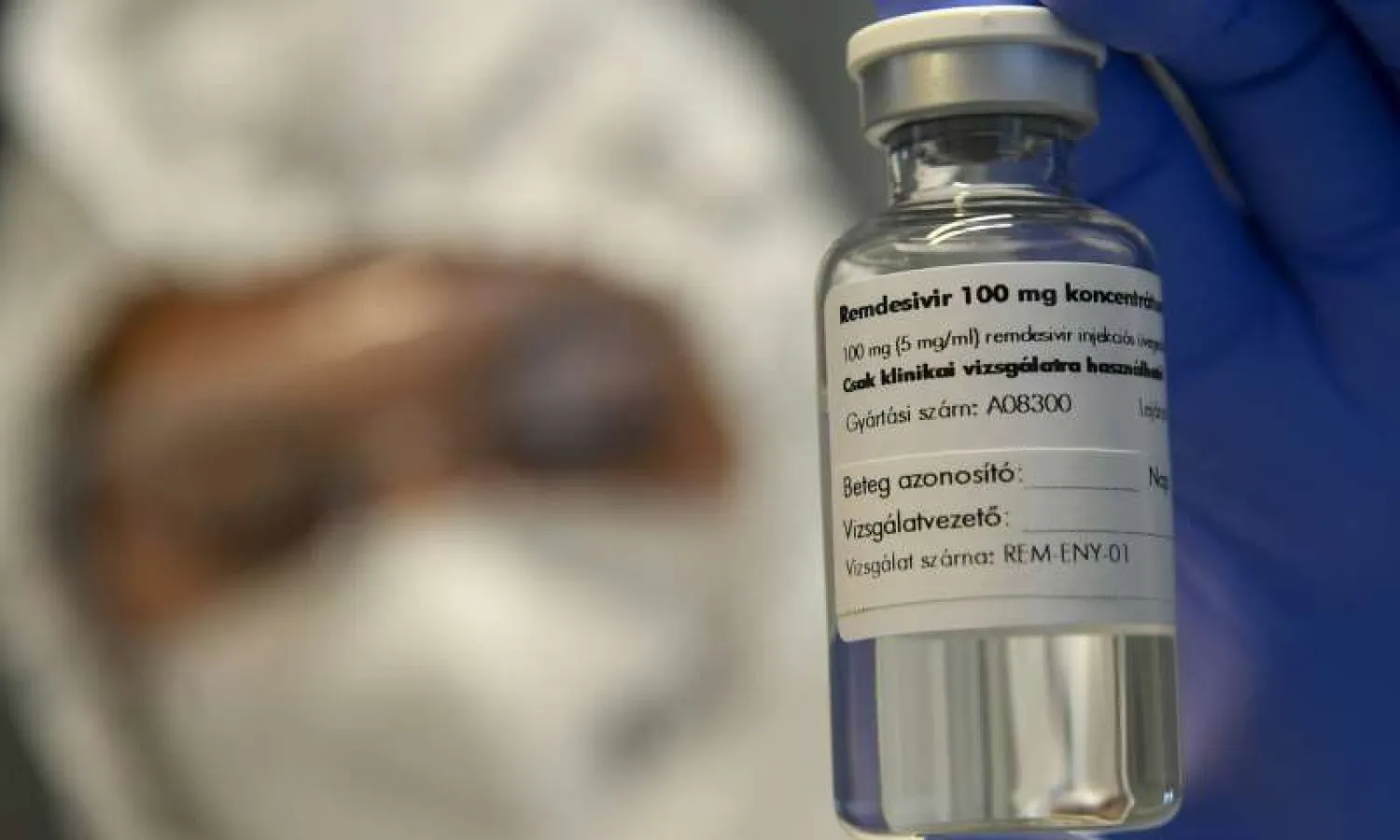
In this Thursday Oct. 15, 2020 file photo, a bottle containing the drug Remdesivir is held by a health worker at the Institute of Infectology of Kenezy Gyula Teaching Hospital of the University of Debrecen in Debrecen, Hungary. (Zsolt Czegledi/MTI via AP, File)
TT

Health Experts Clash Over Use of Certain Drugs for COVID-19

In this Thursday Oct. 15, 2020 file photo, a bottle containing the drug Remdesivir is held by a health worker at the Institute of Infectology of Kenezy Gyula Teaching Hospital of the University of Debrecen in Debrecen, Hungary. (Zsolt Czegledi/MTI via AP, File)

Health officials around the world are clashing over the use of certain drugs for COVID-19, leading to different treatment options for patients depending on where they live.

On Friday, a World Health Organization guidelines panel advised against using the antiviral remdesivir for hospitalized patients, saying there´s no evidence it improves survival or avoids the need for breathing machines.

But in the US and many other countries, the drug has been the standard of care since a major, government-led study found other benefits - it shortened recovery time for hospitalized patients by five days on average, from 15 days to 10.

Within the US, a federal guidelines panel and some leading medical groups have not endorsed two other therapies the Food and Drug Administration authorized for emergency use -- Eli Lilly´s experimental antibody drug and convalescent plasma, the blood of COVID-19 survivors. The groups say there isn't enough evidence to recommend for or against them.

Doctors also remain uncertain about when and when not to use the only drugs known to improve survival for the sickest COVID-19 patients: dexamethasone or similar steroids.

And things got murkier with Thursday´s news that the anti-inflammatory drug tocilizumab may help. Like the key WHO study on remdesivir, the preliminary results on tocilizumab have not yet been published or fully reviewed by independent scientists, leaving doctors unclear about what to do.

"It´s a genuine quandary," said the University of Pittsburgh´s Dr. Derek Angus, who is involved in a study testing many of these treatments. "We need to see the details."

Dr. Rochelle Walensky, infectious disease chief at Massachusetts General Hospital, agreed.

"It´s really hard to practice medicine by press release," she said on a podcast Thursday with a medical journal editor. Until the National Institutes of Health´s guidelines endorse a treatment, "I´m really reluctant ... to call that standard of care."

Angus said there are legitimate questions about all of the drug studies.

"It´s not unusual for professional guidelines to disagree with each other, it´s just that it´s all under the microscope with COVID-19," he said.

The rift over remdesivir, sold as Veklury, by Gilead Sciences Inc., is the most serious. The WHO guidelines stress that the drug does not save lives, based heavily on a WHO-sponsored study that was larger but much less rigorous than the US-led one that found it had other benefits.

The drug is given through an IV for around five days, and its high cost and lack of "meaningful effect" on mortality make it a poor choice, the WHO panel concluded.

Gilead charges $3,120 for a typical treatment course for patients with private insurance and $2,340 for people covered by government health programs in the US and other developed countries. In poor or middle-income countries, much cheaper versions are sold by generic makers.

This week, the Institute for Clinical and Economic Review, a nonprofit group that analyzes drug prices, said remdesivir should be priced around $2,470 for hospitalized patients with moderate to severe disease because of the cost savings from fewer days of care. However, it´s worth only $70 for patients hospitalized with milder disease, the group concluded.

Price also may be driving lower demand. In October, US health officials said that hospitals had bought only about one-third of the doses of remdesivir that they were offered over the previous few months, when the drug was in short supply. Between July and September, 500,000 treatment courses were made available to state and local health departments but only about 161,000 were bought.

In a separate development, the FDA on Thursday gave emergency authorization to use of another anti-inflammatory drug, baricitinib, to be used with remdesivir. Adding baricitinib shaved an additional day off the average time to recovery for severely ill hospitalized patients in one study.

Lilly sells baricitinib now as Olumiant to treat rheumatoid arthritis, the less common form of arthritis that occurs when a mistaken or overreacting immune system attacks joints, causing inflammation. An overactive immune system also can lead to serious problems in coronavirus patients.



Top Trump Iran Negotiator Says Visits US Aircraft Carrier in Middle East

US Special Envoy Steve Witkoff delivers a press conference upon the signing of the declaration on deploying post-ceasefire force in Ukraine, during the so-called "Coalition of the Willing" summit, at the Elysee Palace in Paris, France, January 6, 2026. (Reuters)
TT

Top Trump Iran Negotiator Says Visits US Aircraft Carrier in Middle East

US Special Envoy Steve Witkoff delivers a press conference upon the signing of the declaration on deploying post-ceasefire force in Ukraine, during the so-called "Coalition of the Willing" summit, at the Elysee Palace in Paris, France, January 6, 2026. (Reuters)

US President Donald Trump's lead Iran negotiator Steve Witkoff on Saturday said he visited the USS Abraham Lincoln aircraft carrier currently in the Arabian Sea, with Washington and Tehran due to hold further talks soon.

"Today, Adm. Brad Cooper, Commander of US Naval Forces Central Command, Jared Kushner, and I met with the brave sailors and Marines aboard the USS Abraham Lincoln, her strike group, and Carrier Air Wing 9 who are keeping us safe and upholding President Trump's message of peace through strength," said Witkoff in a social media post.

Iranian Foreign Minister Abbas Araghchi said on Saturday he hoped talks with the United States would resume soon, while reiterating Tehran's red lines and warning against any American attack.


Israel’s Netanyahu Expected to Meet Trump in US on Wednesday and Discuss Iran

Israeli Prime Minister Benjamin Netanyahu delivers a speech during a special session to mark the 77th anniversary of the Knesset's establishment and the 60th anniversary of the dedication of the current building at the Knesset, the Israeli parliament, in Jerusalem, 02 February 2026. (EPA)
TT

Israel’s Netanyahu Expected to Meet Trump in US on Wednesday and Discuss Iran

Israeli Prime Minister Benjamin Netanyahu delivers a speech during a special session to mark the 77th anniversary of the Knesset's establishment and the 60th anniversary of the dedication of the current building at the Knesset, the Israeli parliament, in Jerusalem, 02 February 2026. (EPA)

Israeli Prime Minister Benjamin Netanyahu is expected to meet US President Donald Trump on Wednesday in Washington, where they will discuss negotiations with Iran, Netanyahu's office said on Saturday.

Iranian and US officials held indirect nuclear ‌talks in the ‌Omani capital ‌Muscat ⁠on Friday. ‌Both sides said more talks were expected to be held again soon.

A regional diplomat briefed by Tehran on the talks told Reuters Iran insisted ⁠on its "right to enrich uranium" ‌during the negotiations with ‍the US, ‍and that Tehran's missile capabilities ‍were not raised in the discussions.

Iranian officials have ruled out putting Iran's missiles - one of the largest such arsenals in the region - up ⁠for discussion, and have said Tehran wants recognition of its right to enrich uranium.

"The Prime Minister believes that any negotiations must include limiting ballistic missiles and halting support for the Iranian axis," Netanyahu's office said in a ‌statement.


Italy FM Rules Out Joining Trump’s ‘Board of Peace’

Italy's Minister for Foreign Affairs Antonio Tajani speaks to the press during the EPP Leaders’ meeting, in Zagreb, Croatia, 30 January 2026. (EPA)
TT

Italy FM Rules Out Joining Trump’s ‘Board of Peace’

Italy's Minister for Foreign Affairs Antonio Tajani speaks to the press during the EPP Leaders’ meeting, in Zagreb, Croatia, 30 January 2026. (EPA)

Italy will not take part in US President Donald Trump's "Board of Peace", Italian Foreign Minister Antonio Tajani said Saturday, citing "insurmountable" constitutional issues.

Trump launched his "Board of Peace" at the World Economic Forum in Davos in January and some 19 countries have signed its founding charter.

But Italy's constitution bars the country from joining an organization led by a single foreign leader.

Prime Minister Giorgia Meloni, a Trump ally, last month noted "constitutional problems" with joining, but suggested Trump could perhaps reopen the framework "to meet the needs not only of Italy, but also of other European countries".

Tajani appeared Saturday to rule that out.

"We cannot participate in the Board of Peace because there is a constitutional limit," he told the ANSA news agency.

"This is insurmountable from a legal standpoint," he said, the day after meeting US Secretary of State Marco Rubio and US Vice President JD Vance at the Olympics in Milan.

Although originally meant to oversee Gaza's rebuilding, the board's charter does not limit its role to the Palestinian territory and appears to want to rival the United Nations.