Saudi Banks Reaffirm Overcoming Coronavirus Repercussions

Cars drive past the Kingdom Center Tower in Riyadh, Saudi Arabia, January 30, 2018. (Reuters)
TT

Saudi Banks Reaffirm Overcoming Coronavirus Repercussions

Cars drive past the Kingdom Center Tower in Riyadh, Saudi Arabia, January 30, 2018. (Reuters)

Saudi banks reaffirmed that the Kingdom’s banking sector had successfully overcome the bottleneck recession caused by the coronavirus pandemic which had hit world economies.

A major Saudi bank credited the recovery to prudent measures adopted by the Kingdom coupled with qualitative financial sector initiatives and the strength and durability of Saudi banking institutions.

Saudi banks had interacted positively with a host of initiatives centered on maintaining the sustainability of the productivity of national institutions and enterprises.

This was reiterated during the eighth panel discussion held under the Saudi Banks Diwaniya initiative, a program established by the Jeddah-based Media and Banking Awareness Committee for Saudi Banks.

The session was attended by Riyadh Bank’s CEO Tareq Alsadhan and Secretary-General of the Media and Banking Awareness Committee for Saudi Banks Talat Hafiz.

Alsadhan confirmed having an optimistic outlook on the banking sector’s ability to bounce back to early 2020 performance levels, especially that it is underpinned by state projects and reinforced spending.

Saudi-listed banks reported a 28% drop in aggregate net profit in the first nine months of 2020.

They recorded net gains of about SAR 25 billion (6.6 billion dollars), compared to SAR 34.7 billion (9.2 billion dollars) for the same period last year. The profits of banks in Q3 2020 decreased by 8.9%, compared to the same quarter in 2019.

Alsadhan stressed that banks, despite pandemic imposed repercussions, have continued serving clients without interruption, employing banking technology.

He reaffirmed the strength and standing of the Saudi banking sector, noting its high potential of being considered as one of the best in the world.

Speakers at the panel discussion tackled a host of issues related to the activities of the Kingdom’s banking sector.

The topics included credit facilities given to corporates, banking plans designed to back entrepreneurs, especially in terms of digital services, initiatives focused on promoting Micro, Small and Medium Enterprises MSMEs, and measures undertaken by banks during the pandemic.

Women empowerment in the banking sector and mergers were also discussed.


IMF and Arab Monetary Fund Sign MoU to Enhance Cooperation

The MoU was signed by IMF Managing Director Dr. Kristalina Georgieva and AMF Director General Dr. Fahad Alturki - SPA
TT

IMF and Arab Monetary Fund Sign MoU to Enhance Cooperation

The MoU was signed by IMF Managing Director Dr. Kristalina Georgieva and AMF Director General Dr. Fahad Alturki - SPA

The International Monetary Fund (IMF) and the Arab Monetary Fund (AMF) signed a memorandum of understanding (MoU) on the sidelines of the AlUla Conference on Emerging Market Economies (EME) to enhance cooperation between the two institutions.

The MoU was signed by IMF Managing Director Dr. Kristalina Georgieva and AMF Director General Dr. Fahad Alturki, SPA reported.

The agreement aims to strengthen coordination in economic and financial policy areas, including surveillance and lending activities, data and analytical exchange, capacity building, and the provision of technical assistance, in support of regional financial and economic stability.

Both sides affirmed that the MoU represents an important step toward deepening their strategic partnership and strengthening the regional financial safety net, serving member countries and enhancing their ability to address economic challenges.


Saudi Chambers Federation Announces First Saudi-Kuwaiti Business Council

File photo of the Saudi flag/AAWSAT
TT

Saudi Chambers Federation Announces First Saudi-Kuwaiti Business Council

File photo of the Saudi flag/AAWSAT

The Federation of Saudi Chambers announced the formation of the first joint Saudi-Kuwaiti Business Council for its inaugural term (1447–1451 AH) and the election of Salman bin Hassan Al-Oqayel as its chairman.

Al-Oqayel said the council’s formation marks a pivotal milestone in economic relations between Saudi Arabia and Kuwait, reflecting a practical approach to enabling the business sectors in both countries to capitalize on promising investment opportunities and strengthen bilateral trade and investment partnerships, SPA reported.

He noted that trade between Saudi Arabia and Kuwait reached approximately SAR9.5 billion by the end of November 2025, including SAR8 billion in Saudi exports and SAR1.5 billion in Kuwaiti imports.


Leading Harvard Trade Economist Says Saudi Arabia Holds Key to Success in Fragmented Global Economy

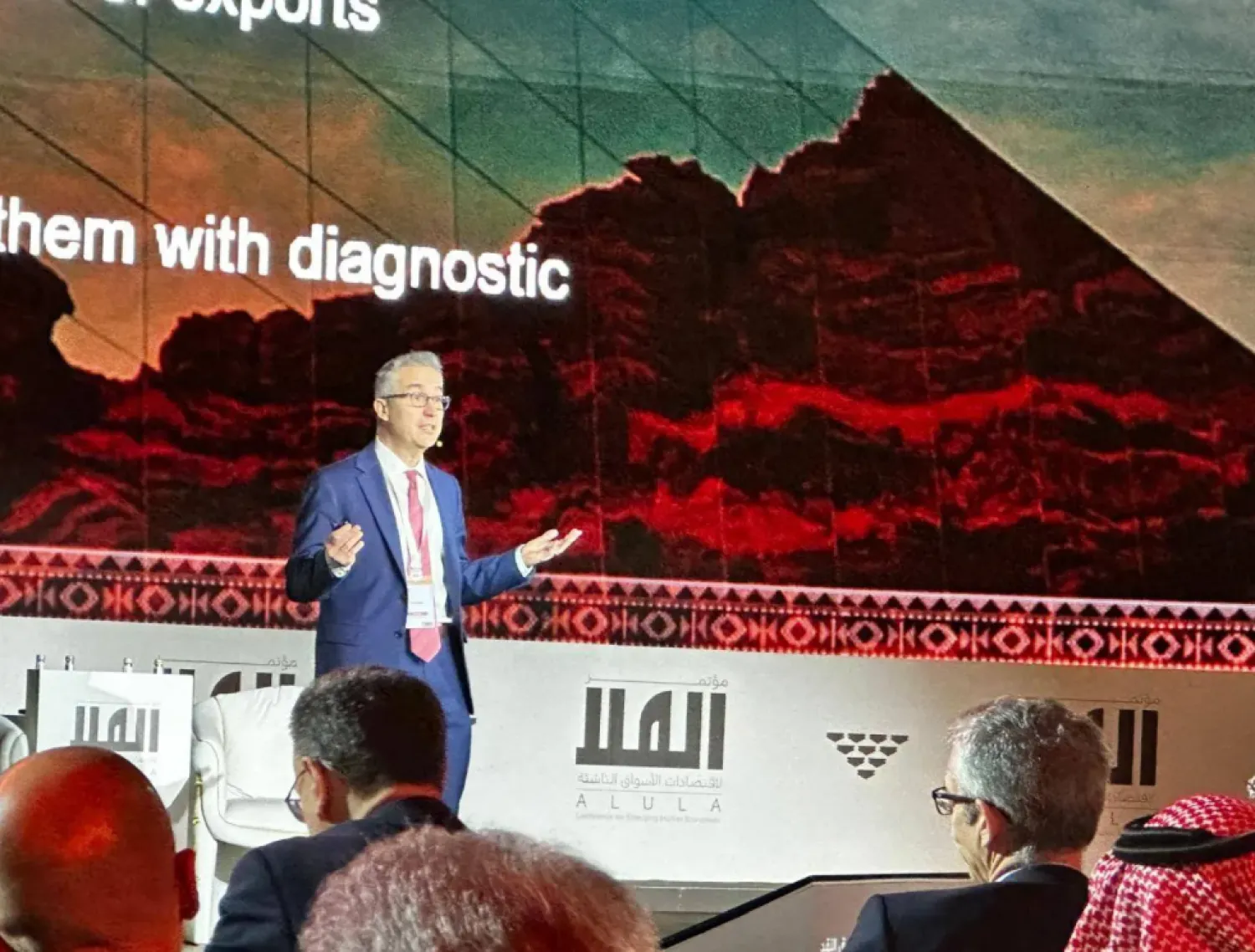
Professor Pol Antràs speaks during a panel discussion at the AlUla Conference for Emerging Market Economies (Asharq Al-Awsat).
TT

Leading Harvard Trade Economist Says Saudi Arabia Holds Key to Success in Fragmented Global Economy

Professor Pol Antràs speaks during a panel discussion at the AlUla Conference for Emerging Market Economies (Asharq Al-Awsat).

Harvard University economics professor Pol Antràs said Saudi Arabia represents an exceptional model in the shifting global trade landscape, differing fundamentally from traditional emerging-market frameworks. He also stressed that globalization has not ended but has instead re-formed into what he describes as fragmented integration.

Speaking to Asharq Al-Awsat on the sidelines of the AlUla Conference for Emerging Market Economies, Antràs said Saudi Arabia’s Vision-driven structural reforms position the Kingdom to benefit from the ongoing phase of fragmented integration, adding that the country’s strategic focus on logistics transformation and artificial intelligence constitutes a key engine for sustainable growth that extends beyond the volatility of global crises.

Antràs, the Robert G. Ory Professor of Economics at Harvard University, is one of the leading contemporary theorists of international trade. His research, which reshaped understanding of global value chains, focuses on how firms organize cross-border production and how regulation and technological change influence global trade flows and corporate decision-making.

He said conventional classifications of economies often obscure important structural differences, noting that the term emerging markets groups together countries with widely divergent industrial bases. Economies that depend heavily on manufacturing exports rely critically on market access and trade integration and therefore face stronger competitive pressures from Chinese exports that are increasingly shifting toward alternative markets.

Saudi Arabia, by contrast, exports extensively while facing limited direct competition from China in its primary export commodity, a situation that creates a strategic opportunity. The current environment allows the Kingdom to obtain imports from China at lower cost and access a broader range of goods that previously flowed largely toward the United States market.

Addressing how emerging economies should respond to dumping pressures and rising competition, Antràs said countries should minimize protectionist tendencies and instead position themselves as committed participants in the multilateral trading system, allowing foreign producers to access domestic markets while encouraging domestic firms to expand internationally.

He noted that although Chinese dumping presents concerns for countries with manufacturing sectors that compete directly with Chinese production, the risk is lower for Saudi Arabia because it does not maintain a large manufacturing base that overlaps directly with Chinese exports. Lower-cost imports could benefit Saudi consumers, while targeted policy tools such as credit programs, subsidies, and support for firms seeking to redesign and upgrade business models represent more effective responses than broad protectionist measures.

Globalization has not ended

Antràs said globalization continues but through more complex structures, with trade agreements increasingly negotiated through diverse arrangements rather than relying primarily on multilateral negotiations. Trade deals will continue to be concluded, but they are likely to become more complex, with uncertainty remaining a defining feature of the global trading environment.

Interest rates and artificial intelligence

According to Antràs, high global interest rates, combined with the additional risk premiums faced by emerging markets, are constraining investment, particularly in sectors that require export financing, capital expenditure, and continuous quality upgrading.

However, he noted that elevated interest rates partly reflect expectations of stronger long-term growth driven by artificial intelligence and broader technological transformation.

He also said if those growth expectations materialize, productivity gains could enable small and medium-sized enterprises to forecast demand more accurately and identify previously untapped markets, partially offsetting the negative effects of higher borrowing costs.

Employment concerns and the role of government

The Harvard professor warned that labor markets face a dual challenge stemming from intensified Chinese export competition and accelerating job automation driven by artificial intelligence, developments that could lead to significant disruptions, particularly among younger workers. He said governments must adopt proactive strategies requiring substantial fiscal resources to mitigate near-term labor-market shocks.

According to Antràs, productivity growth remains the central condition for success: if new technologies deliver the anticipated productivity gains, governments will gain the fiscal space needed to compensate affected groups and retrain the workforce, achieving a balance between addressing short-term disruptions and investing in long-term strategic gains.