


US to Impose Iran-related Sanctions on Russian, Chinese Entities

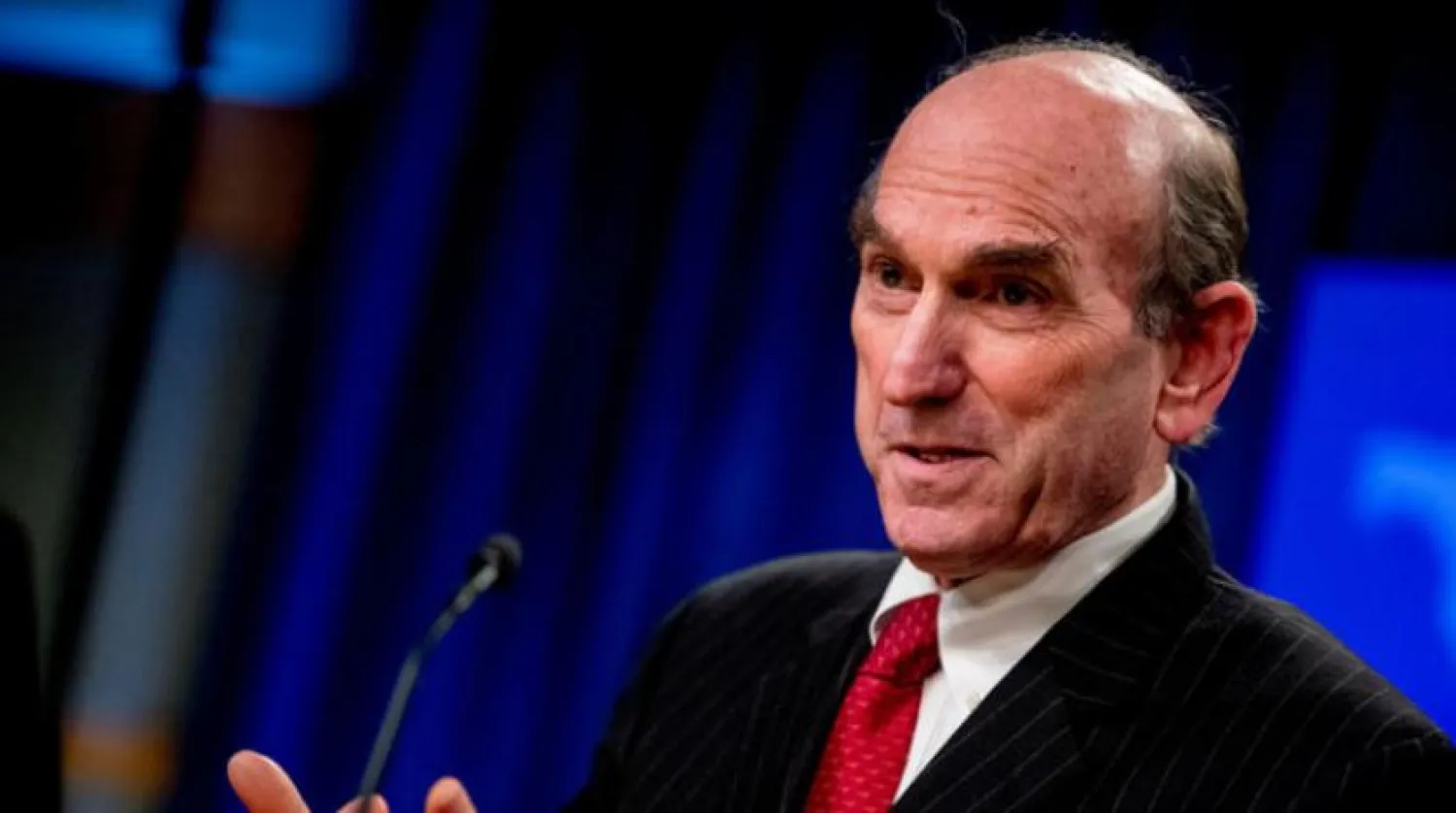
US Special Representative for Iran and Venezuela Elliott Abrams speaking at a press conference in Washington in March 2020. Reuters file photo
TT

US to Impose Iran-related Sanctions on Russian, Chinese Entities

US Special Representative for Iran and Venezuela Elliott Abrams speaking at a press conference in Washington in March 2020. Reuters file photo

The US Special Representative for Iran announced on Wednesday Iran-related sanctions on four entities in China and Russia, accusing them of activities promoting Tehran’s missile program.

The Trump administration plans further pressure on Tehran, with sanctions related to arms, weapons of mass destruction and human rights, Reuters quoted Elliott Abrams as saying.

Meanwhile, European powers are looking to President-elect Joe Biden’s administration to swiftly reduce nuclear tensions with Tehran but won’t press Washington to re-enter the 2015 nuclear accord with Iran quickly, according to senior diplomats.

Officials from France, Britain and Germany—countries that helped negotiate the accord—say a full return to the agreement might not be achievable or even desirable before Iran’s presidential elections in June, amid growing European concerns about Iranian nuclear research activities.

According to the Wall Street Journal, the diplomats urged Washington to agree to a speedy agreement once Biden takes office next spring, which requires offering some relief from comprehensive US sanctions on Tehran in exchange for Iran’s retreat from its increased nuclear activities.

Providing some tangible economic benefits to Iran before the June elections will serve as an incentive for the new Iranian government to follow up on diplomatic discussions, the sources noted, adding that this will require a quick cessation of some nuclear activities.

They, however, pointed out that Biden’s team has not announced its detailed plans for Iran nor yet shared future plans with European allies.

US Secretary of State Mike Pompeo has earlier said that he hopes the new administration would choose a different course.

“They took a very different view. They lived in a bit of a fantasy world. They led from behind,” he said in an interview with Fox News, stressing that 2020 is different from what it was in 2015.

“I hope they’ll see the things that we have done and how this has delivered greater peace in the Middle East, how it’s reduced risk, where we took down what was a very tense situation when we came into office.”

The US policy towards Iran compels the current administration to leave some troops in the Middle East to face any threats from Iran and its affiliated militias, calling on the next administration to benefit from the gains achieved by President Donald Trump’s administration.

Pompeo defended the maximum pressure strategy adopted by the US that has isolated Iran.

He pointed out that it deprived Iranians from tens of billions of dollars but in fact saved lots of lives and lots of American lives.

“Appeasing terrorists, appeasing those who have hegemonic desires, appeasing those who are underwriting militias all throughout the region and destabilizing the Middle East cannot possibly be the right course of action,” he stressed, adding that this would put them on a pathway to a nuclear weapon, and “we should never give Iran that chance.”



US Justice Department Opens Unredacted Epstein Files to Lawmakers

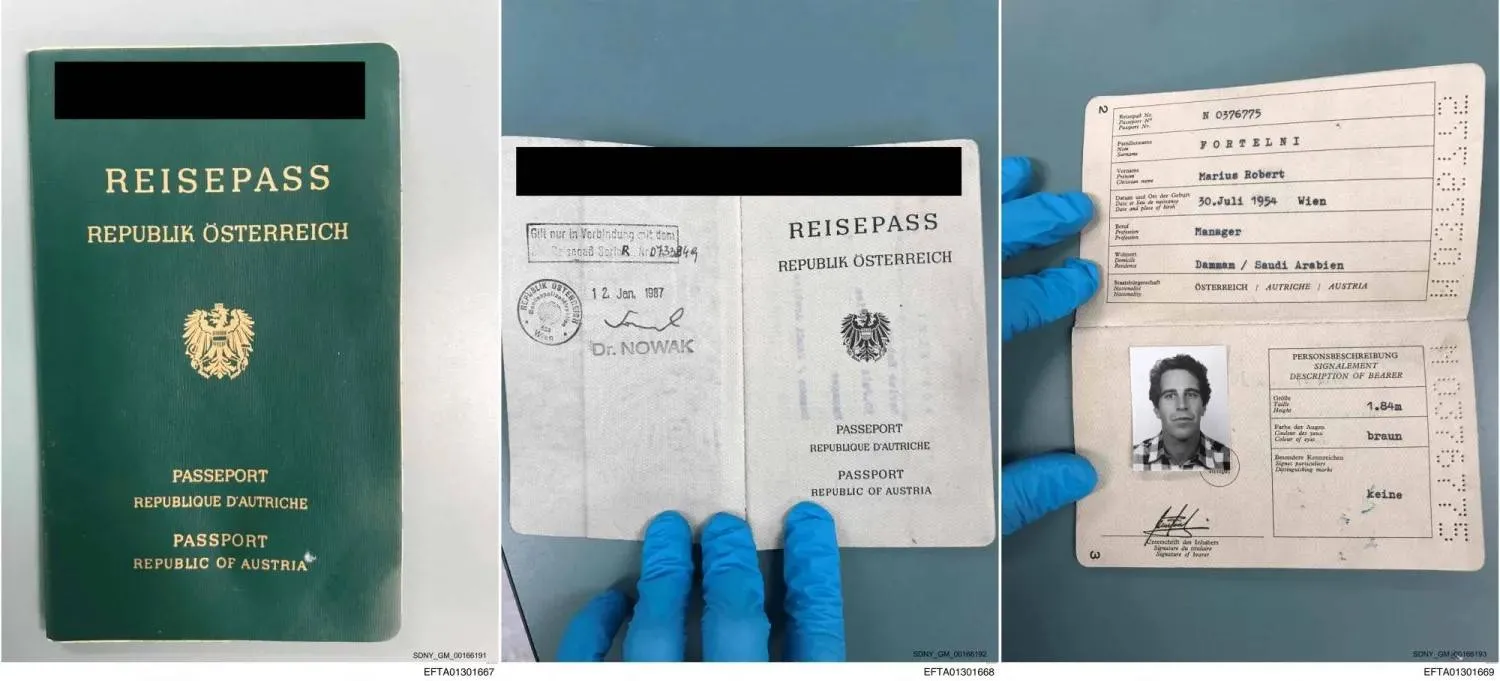
This combination of three undated pictures provided by the US Department of Justice on January 30, 2026 as part of the Jeffrey Epstein files show an Austrian passport Jeffrey Epstein used under the assumed name of Marius Robert Fortelni (AFP) 
TT

US Justice Department Opens Unredacted Epstein Files to Lawmakers

This combination of three undated pictures provided by the US Department of Justice on January 30, 2026 as part of the Jeffrey Epstein files show an Austrian passport Jeffrey Epstein used under the assumed name of Marius Robert Fortelni (AFP) 

The US Justice Department opened the unredacted Jeffrey Epstein files to review by members of Congress on Feb 9 as several lawmakers expressed concern that some names have been removed from the publicly released records, according to AFP.

The Epstein Files Transparency Act (EFTA), passed overwhelmingly by Congress in November, compelled the Justice Department to release all of the documents in its possession related to the convicted sex offender.

It required the redaction of the names or any other personally identifiable information about Epstein’s victims, who numbered more than 1,000 according to the FBI.

But it said no records could be “withheld, delayed, or redacted on the basis of embarrassment, reputational harm, or political sensitivity, including to any government official, public figure, or foreign dignitary.”

Representative Ro Khanna, a Democrat from California, is among the members of the House of Representatives questioning some of the redactions in the more than three million documents released by the Justice Department.

Khanna posted examples on his Facebook page. The name of the sender of a 17 January 2013 email to Epstein is blacked out in the released files.

“New Brazilian just arrived, sexy and cute. She is 9 years old,” the message said.

The name of the sender of a 11 March 2014 email to Epstein is also redacted. “Thank you for a fun night,” the message said. “Your littlest girl was a little naughty.”

Khanna said the names of the senders of the emails need to be revealed.

“Concealing the reputations of these powerful men is a blatant violation of the Epstein Transparency Act,” he said.

Epstein, who had ties to business executives, politicians, celebrities and academics, was found dead in his New York jail cell in 2019 while awaiting trial for sex trafficking minor girls.

Ghislaine Maxwell, Epstein's former girlfriend, is the only person convicted of a crime in connection with Epstein. She was convicted in 2021 of sex trafficking underage girls to the financier and is serving a 20-year prison sentence.

Republican committee chairman James Comer said Maxwell had invoked her right to not incriminate herself, guaranteed by the Fifth Amendment of the US Constitution.

“As expected, Ghislaine Maxwell took the fifth and refused to answer any questions,” Comer told reporters. “This is obviously very disappointing.”

“We had many questions to ask about the crimes she and Epstein committed as well as questions about potential co-conspirators,” he said.

Maxwell's lawyers told the House panel that the former British socialite was prepared to testify only if she was first granted clemency by President Donald Trump, Comer said.

The lawyers had pushed for Congress to grant her legal immunity in order to testify, but lawmakers refused.

Trump fought for months to prevent release of the vast trove of documents about Epstein – a longtime former friend – but a rebellion among Republicans forced him to sign off on the law mandating release of all the records.


Israel’s Netanyahu Is Meeting with Trump This Week to Push for a Far Broader Iran Deal

President Donald Trump answers a question from a reporter at the end of a news conference with Israel's Prime Minister Benjamin Netanyahu at Mar-a-Lago, Dec. 29, 2025, in Palm Beach, Fla. (AP)
TT

Israel’s Netanyahu Is Meeting with Trump This Week to Push for a Far Broader Iran Deal

President Donald Trump answers a question from a reporter at the end of a news conference with Israel's Prime Minister Benjamin Netanyahu at Mar-a-Lago, Dec. 29, 2025, in Palm Beach, Fla. (AP)

Prime Minister Benjamin Netanyahu is heading to Washington on Tuesday to encourage President Donald Trump to expand the scope of high-stakes nuclear talks with Iran. The negotiations resumed last week against the backdrop of an American military buildup.

Israel has long called for Iran to cease all uranium enrichment, dial back its ballistic missile program and cut ties to militant groups across the region. Iran has always rejected those demands, saying it would only accept some limits on its nuclear program in return for sanctions relief.

It's unclear if Iran's bloody crackdown on mass protests last month, or the movement of major US military assets to the region, has made Iran’s leaders more open to compromise, or if Trump is interested in broadening the already difficult negotiations.

Netanyahu, who will be in Washington through Wednesday, has spent his decades-long political career pushing for stronger US action toward Iran. Those efforts succeeded last year when the US joined Israel in 12 days of strikes on Iran's military and nuclear sites, and the possibility of additional military action against Iran is likely to come up in this week’s discussions.

Decisions are being made

Netanyahu's visit comes just two weeks after Trump’s special envoy Steve Witkoff and Jared Kushner, Trump’s son-in-law and Middle East adviser, met with the prime minister in Jerusalem. The US envoys held indirect talks in Oman with Iran's foreign minister on Friday.

“The Prime Minister believes that any negotiations must include limiting ballistic missiles and ending support for the Iranian axis,” Netanyahu's office said over the weekend, referring to Iran-backed armed groups like the Palestinian Hamas and Lebanon's Hezbollah.

Years of nuclear talks have made little progress since Trump scrapped a 2015 agreement with Iran, with strong encouragement from Israel. Iran has shown little willingness to address the other issues, even after suffering repeated setbacks. But the meeting with Trump gives Netanyahu an opportunity to shape the process and may also bolster his standing back home.

“Clearly these are the days when decisions are being made, America is expected to complete its force buildup, and it’s trying to exhaust the prospect of negotiations,” said Yohanan Plesner, head of the Israel Democracy Institute, a Jerusalem-based think tank.

“If you want to have influence on the process, only so much can be done via Zoom.”

Israel fears a narrow agreement

rump threatened a military strike against Iran last month over the killing of protesters and concerns of mass executions, moving a number of military assets into the region. Thousands were killed and tens of thousands detained at Iranian authorities crushed the protests over widespread economic distress.

As the protests largely subsided, Trump shifted his focus to Iran's nuclear program, which the US, Israel and others have long suspected is aimed at eventually developing weapons. Iran insists its program is entirely peaceful and says it has the right to enrich uranium for civilian purposes.

Sima Shine, an Iran expert formerly with Israel's Mossad spy agency who is now an analyst at Israel's Institute for National Security Studies, said Israel fears that the US might reach a narrow agreement with Iran in which it would temporarily halt uranium enrichment.

A deal in which Iran halts enrichment for several years would allow Trump to claim victory. But Israel believes any such agreement that does not end Iran's nuclear program and reduce its ballistic missile arsenal will eventually require Israel to launch another wave of strikes, she said.

Iran might be unable to enrich uranium after last year’s strikes, making the idea of a temporary moratorium more appealing.

In November, Iranian Foreign Minister Abbas Araghchi said Iran was no longer enriching uranium due to the damage from last year's war. The US and Israeli airstrikes killed nearly 1,000 people in Iran, while Iranian missile barrages killed almost 40 in Israel.

It's unclear how much damage was done to Iran's nuclear program. Inspectors from the International Atomic Energy Agency have been unable to visit the bombed nuclear sites. Satellite images show activity at two of them.

Netanyahu faces election this year

Netanyahu, who faces elections later this year, has long touted his close ties to world leaders, particularly Trump, who he has praised as the best friend Israel has ever had in the White House. This week's meeting allows Netanyahu to show Israelis he is a player in the Iran talks.

“The issue of relations between Netanyahu and Trump will be the issue of the campaign, and he is saying, ‘Only I can do this, it’s only me,’” Shine said.

Netanyahu is Israel's longest-serving prime minister, having held the office for a total of over 18 years. His government, the most nationalist and religious in Israel's history, is expected to survive until the election in October, or close to it.

Netanyahu was originally scheduled to visit Washington next week for the Feb. 19 launch of Trump's Board of Peace, an initiative that was initially framed as a mechanism for rebuilding Gaza after the Israel-Hamas war but has taken on a larger mandate of resolving global crises.

Netanyahu agreed to join the initiative, but is wary of it because it includes Türkiye and Qatar, countries he does not want to have a presence in postwar Gaza because of their relations with Hamas.

Moving the visit up could provide an “elegant solution” that allows Netanyahu to skip the launch without offending Trump, Plesner said. Netanyahu's office declined to comment.


France Accuses Iran of ‘Repression’ in Sentence for Nobel Laureate

People cross an intersection in downtown Tehran, Iran, Monday, Feb. 9, 2026. (AP)
TT

France Accuses Iran of ‘Repression’ in Sentence for Nobel Laureate

People cross an intersection in downtown Tehran, Iran, Monday, Feb. 9, 2026. (AP)

France accused Iran on Monday of "repression and intimidation" after a court handed Nobel Peace Prize laureate Narges Mohammadi a new six-year prison sentence on charges of harming national security.

Mohammadi, sentenced Saturday, was also handed a one-and-a-half-year prison sentence for "propaganda" against Iran's system, according to her foundation.

"With this sentence, the Iranian regime has, once again, chosen repression and intimidation," the French foreign ministry said in a statement, describing the 53-year-old as a "tireless defender" of human rights.

Paris is calling for the release of the activist, who was arrested before protests erupted nationwide in December after speaking out against the government at a funeral ceremony.

The movement peaked in January as authorities launched a crackdown that activists say has left thousands dead.

Over the past quarter-century, Mohammadi has been repeatedly tried and jailed for her vocal campaigning against Iran's use of capital punishment and the mandatory dress code for women.

Mohammadi has spent much of the past decade behind bars and has not seen her twin children, who live in Paris, since 2015.

Iranian authorities have arrested more than 50,000 people as part of their crackdown on protests, according to US-based Human Rights Activists News Agency (HRANA).