


Sudan Inflation Soars, Threatens Hyperinflation

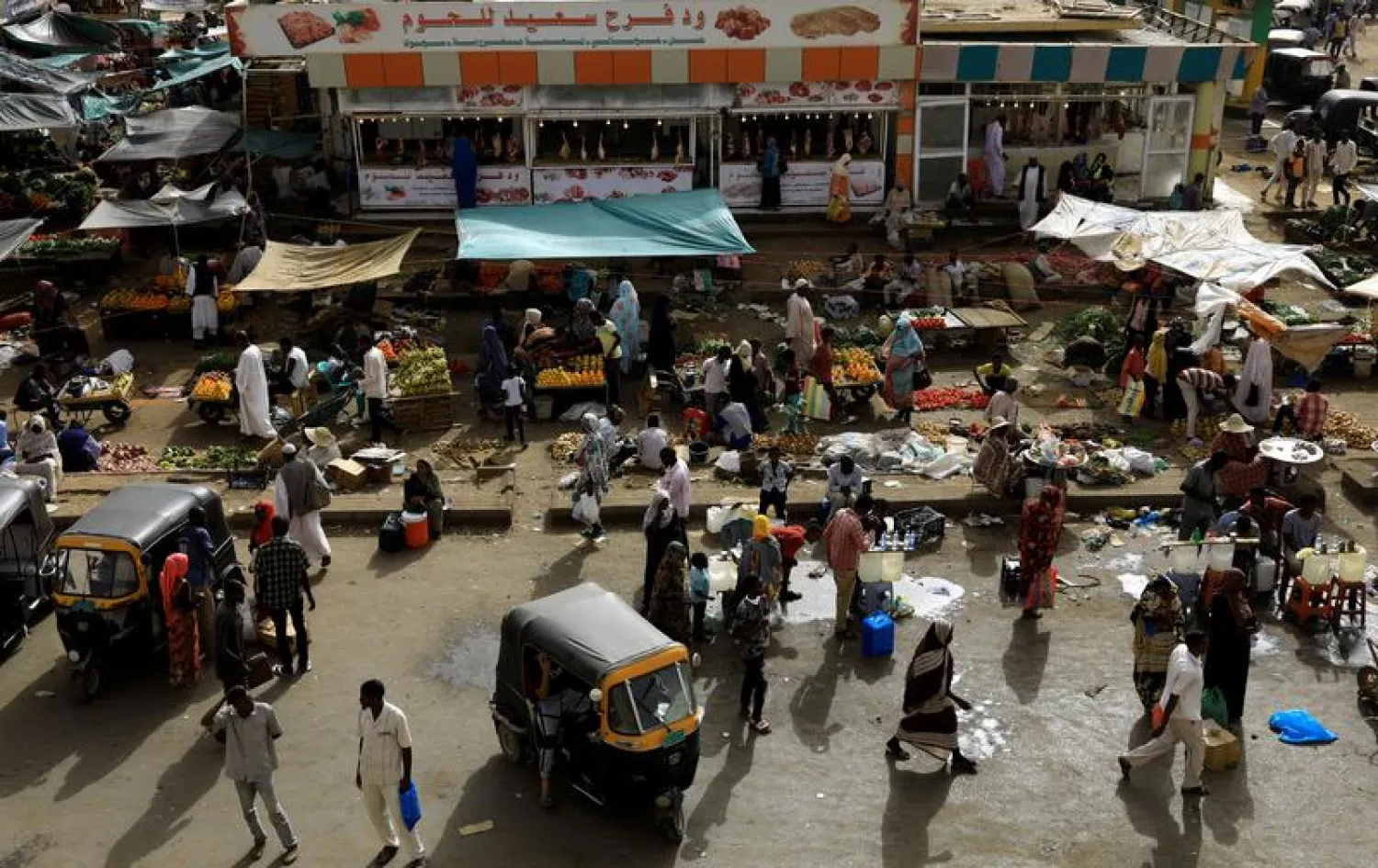
Sudanese residents shop in a bazaar in Khartoum, Sudan, May 4, 2019. REUTERS/Umit Bektas
TT

Sudan Inflation Soars, Threatens Hyperinflation

Sudanese residents shop in a bazaar in Khartoum, Sudan, May 4, 2019. REUTERS/Umit Bektas

Inflation in Sudan has risen to one of the highest levels in the world, and the country risks slipping into hyperinflation unless it gets its budget deficit and money supply under control, economists say.

The runaway prices have worsened an economic crisis for millions of ordinary Sudanese and imperiled a political transition under a military-civilian power sharing deal.

The government has run up enormous budget deficits by subsidizing the cost of fuel, it then financed the deficits by printing money.

This has debased the currency, weakening it against other currencies and driving inflation up to annual 230 percent in October, according to the state statistics bureau.

The skyrocketing prices have led many consumers to spend their salaries quickly, particularly on durable items that hold their value.

Reuters quoted Idrees Abdelmoniem, who works in marketing at an engineering company in Khartoum, as saying that he had snapped up car spare parts and furniture but was not as quick with food and drink, whose prices were not increasing as fast.

“If I have something I want to buy outside of the monthly house supplies, I buy it as soon as I get money, and I won’t even try to haggle because tomorrow it could be double the price,” he said.

Central bank figures show the scale of money printing by the authorities with the M2 money supply measure increasing by over 50 percent in the year to end-September. In September alone M2 rose by 7.13 percent.

Steve Hanke, a hyperinflation specialist at Johns Hopkins University, calculated that on a monthly basis, the inflation rate has accelerated to about 24 percent a month, dangerously high, but still below hyperinflation, generally defined as 50 percent a month.

He placed Sudan among the five countries with the highest inflation.

“It’s pretty scary,” he said, adding that it was hard to predict what direction inflation would go from here.

A US decision to remove Sudan from its list of state sponsors of terrorism has provided little immediate relief from the economic crisis and the country has turned to the International Monetary Fund (IMF) for help.

Sudan is counting on a reform program drawn up with the lender to help get control of the deficit, exacerbated by decades of US economic sanctions and by economic mismanagement under President Omar al-Bashir, who was ousted in a popular uprising in April 2019.

Gross domestic product (GDP) contracted by more than two percent in both 2018 and 2019 and is expected to shrink another 8.5 percent in 2020 after being walloped by the coronavirus pandemic, Sudan told the IMF in September.

The one-year staff-monitored program signed with the IMF commits the transitional government to reforming energy subsidies and reducing government borrowing from the central bank, among other reforms.

The program is designed to provide a track record that would qualify Sudan for debt relief from its official creditors.

“The issue of hyperinflation is real, and it requires serious attention,” said Ibrahim Elbadawi, who stepped down as Sudan’s finance minister in July.

“The starting point should be the subsidies because that will have unquestionable implications for the government’s finances.”

Fuel subsidies, which account for 71 percent of all subsidies, were equivalent to 10.6 percent of GDP in 2019, according to the IMF.

The government this year began allowing private companies to import petrol and diesel at near-market prices and has gradually reduced the number of stations where subsidized fuel is sold.

In October, it doubled the price of locally produced petrol to 56 Sudanese pounds per liter, still among the lowest levels in the world. It says it stopped subsidizing petrol and diesel altogether as of September.

The reforms should reduce fuel subsidies to 2.2 percent this year, the IMF said, but imported fuel will further stretch people’s resources as a collapsing currency pushes up its local price.

This week one US dollar bought 255 Sudanese pounds on the black market, up from about 85 pounds a year ago. At the official rate, a dollar fetches 55 pounds.



Aljadaan: Emerging Markets Account for 70% of Global Growth

Al-Jadaan speaking to the attendees at the "AlUla Conference for Emerging Market Economies" (Asharq Al-Awsat
TT

Aljadaan: Emerging Markets Account for 70% of Global Growth

Al-Jadaan speaking to the attendees at the "AlUla Conference for Emerging Market Economies" (Asharq Al-Awsat

Saudi Minister of Finance Mohammed Aljadaan stressed Sunday that the world economy is going through a “profound transition,” saying emerging markets and developing economies now account for nearly 60 percent of the global Gross Domestic Product (GDP) in purchasing power terms and over 70 percent of global growth.

In his opening remarks at the AlUla Conference for Emerging Market Economies, organized by the Saudi Ministry of Finance and the IMF in AlUla, the minister said these economies have become an increasingly important driver of global growth with their share of global economy more than doubling since 2010.

“Today, the 10 emerging economies in the G20 alone account for more than half of the world growth. Yet, they face a more complex and fragmented environment, elevated debt levels, slower trade growth and increasing exposure to geopolitical shocks.”

“Unfortunately, more than half of low income countries are either in or at the risk of debt distress. At the same time global trade growth has slowed at around half of what it was pre the pandemic,” Aljadaan added.

The Finance Minister stressed that the Saudi experience over the past decade has reinforced three lessons that may be relevant to the discussions at the two-day conference, which brings together a select group of ministers and central bank governors, leaders of international organizations, leading investors and academics.

“First, macroeconomic stability is not the enemy of growth. It is actually the foundation,” he said.

“Structural reforms deliver results only when institutions deliver. So there is no point of reforming ... if the institutions are unable to deliver,” he stated.

Finally, he said that “international cooperation matters more, not less, in a fragmented world.”


Georgieva from AlUla: Growth Still Lacks Pre-pandemic Levels

Kristalina Georgieva speaking to attendees at the second edition of the AlUla Conference for Emerging Market Economies (Asharq Al-Awsat)
TT

Georgieva from AlUla: Growth Still Lacks Pre-pandemic Levels

Kristalina Georgieva speaking to attendees at the second edition of the AlUla Conference for Emerging Market Economies (Asharq Al-Awsat)

International Monetary Fund (IMF) Managing Director Kristalina Georgieva said Sunday that world growth still lacks pre-pandemic levels, expressing concern as she expected more shocks amid high spending and rising debt levels in many countries.

Georgieva spoke at the AlUla Conference for Emerging Market Economies, organized by the Saudi Ministry of Finance and the IMF in AlUla.

The two-day conference brings together a select group of ministers and central bank governors, leaders of international organizations, leading investors and academics to deliberate on policies to global stability, prosperity, and multilateral collaboration.

Georgieva said that the conference was launched last year in recognition of the growing role of emerging market economies in a world of sweeping transformations.

“I came out of this gathering .... With a sense of hope for the pragmatic attitude and determination to pursue good policies and build strong institutions,” she said.

Georgieva stressed that “good policies pay off,” and said that growth rates across emerging economies reached four percent this year, exceeding by a large margin those of advanced economies that are around 1.5 percent.


Saudi Arabia’s flynas, Syrian Civil Aviation Authority Partner to Launch 'flynas Syria'

The new airline will operate commercial air transport services in accordance with approved regulations and standards (flynas)
TT

Saudi Arabia’s flynas, Syrian Civil Aviation Authority Partner to Launch 'flynas Syria'

The new airline will operate commercial air transport services in accordance with approved regulations and standards (flynas)

Saudi budget carrier flynas has signed an agreement with the Syrian General Authority of Civil Aviation and Air Transport to establish a new commercial airline under the name "flynas Syria," with operations scheduled to begin in the fourth quarter of 2026.

Saturday’s agreement comes within the framework of bilateral cooperation between Saudi Arabia and Syria, as well as the strategic investment agreements between the two countries, coordinated with the Saudi Ministry of Investment and the Syrian General Authority of Civil Aviation and Air Transport.

The new airline will operate commercial air transport services in accordance with approved regulations and standards, meeting the highest safety and aviation security requirements. All licensing and operational procedures will be completed in coordination with the relevant authorities.

The carrier will be established as a joint venture, with 51% ownership held by the Syrian General Authority of Civil Aviation and Air Transport and 49% by flynas.

The new airline will operate flights to several destinations across the Middle East, Africa, and Europe. This expansion aims to bolster air traffic to and from Syria, enhance regional and international connectivity, and meet growing demand for air travel.

"This step is part of our commitment to supporting high-quality cross-border investments. The aviation sector is a key enabler of economic development, and the establishment of 'flynas Syria' serves as a model for constructive investment cooperation,” said Saudi Minister of Investment Khalid Al-Falih.

“This partnership enhances economic integration and market connectivity and supports development goals by advancing air transport infrastructure, ultimately serving the mutual interests of both nations and promoting regional economic stability,” he added.

President of the Syrian General Authority of Civil Aviation and Air Transport Omar Hosari also stated that the establishment of flynas Syria represents a strategic step within a comprehensive national vision aimed at rebuilding and developing Syria's civil aviation sector on modern economic and regulatory foundations.

“This will be achieved while balancing safety requirements, operational sustainability, investment stimulation, and passenger services. The partnership reflects the state's orientation toward smart cooperation models with trusted regional partners, ensuring the transfer of expertise, the development of national capabilities, and the enhancement of Syria's air connectivity with regional and international destinations, in line with global best practices in the air transport industry."

flynas Chairman Ayed Al-Jeaid stated that the company continues to pursue strategies aimed at growth and international expansion, describing the agreement as a historic milestone in the company's journey and a promising investment model in partnership with Syria.

flynas CEO Bander Al-mohanna said the step represents a qualitative leap in the company's strategy and financial performance, highlighting the transfer of the company's low-cost aviation experience to the Syrian market to support regional and international air connectivity.

flynas currently operates 23 weekly flights from Riyadh, Jeddah, and Dammam to Damascus, including two daily direct flights from Riyadh, one daily flight from Jeddah, and two weekly flights from Dammam.

The airline made history on June 5, 2025, by adding the Syrian capital to its network, becoming the first Saudi carrier to resume scheduled flights to Damascus.