US Envoy Accuses Syrian Regime, Iran of Coordinating With ISIS East of Euphrates

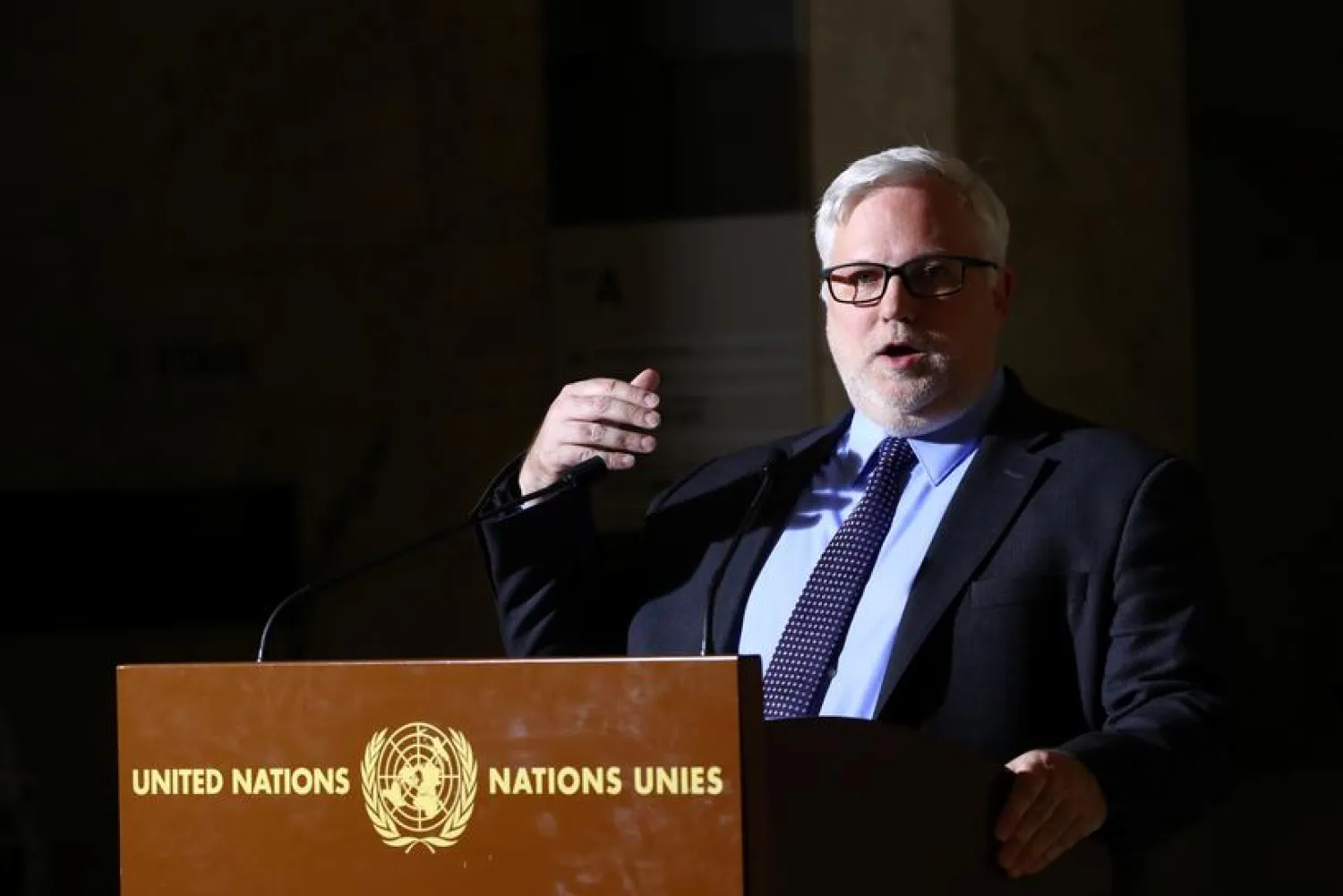
US deputy assistant secretary of state for Levant affairs and the special envoy for Syria, Joel Rayburn (Reuters)
TT

US Envoy Accuses Syrian Regime, Iran of Coordinating With ISIS East of Euphrates

US deputy assistant secretary of state for Levant affairs and the special envoy for Syria, Joel Rayburn (Reuters)

The United States has monitored efforts of Syrian President Bashar al-Assad and Iran to coordinate with ISIS to attack areas controlled by the Syrian Democratic Forces (SDF) and destabilize the region, leading to the withdrawal of US forces from the region, according to deputy assistant secretary of state for Levant affairs and the special envoy for Syria, Joel Rayburn.

Speaking during the hearing of the House Foreign Affairs Committee to evaluate US policy toward Syria, Rayburn said that he returned from an expanded tour that included several countries in the region, as well as northeastern Syria.

During his tour, the envoy discussed the efforts of President Donald Trump's administration to continue to implement its objectives to prevent ISIS resurgence, whether in Syria or Iraq.

Rayburn described the Syrian conflict as “one of the most dangerous crises in the world”, indicating that the Syrian civil society highly values the Caesar Act which was passed by Congress.

He emphasized that he held fruitful talks with SDF leaders and US allies.

The talks focused on the “withdrawal of all Iranian-commanded forces from Syria,” said Rayburn, stressing that all efforts of the enemies of the United States have so far failed to prevent the implementation of the strategy in this country.

He indicated that each of the US major goals in Syria is within reach, adding that adversaries have failed to achieve their goals.

“The strategic situation today is encouraging, and it attests to what can be done when diplomatic efforts are strongly backed by both this Congress and responsible members of the international community.”

The envoy stressed that political and economic pressures on the Assad regime and its enablers will continue until they are forced to stop their inhuman policies against the Syrian people and commit to a political solution in coordination with the Western allies.

Chairperson of the committee congressman Eliot Engel wondered why the Caesar Act had not included non-Syrians, in particular Russian entities.

Rayburn believes that the US will extend the Caesar Act designation to non-Syrians in the future because the Act had a “remarkable chilling effect” even outside Syria and the regime.

He explained that the designation is done in collaboration between the State Department and the Treasury Department to determine the most efficient sanction authorities.

“We need to continue to put accumulating pressure on the Assad regime and its backers in the future.”

Engel called on the administration of President-elect Joe Biden to remember the suffering of the Syrian people, saying that the Assad regime, supported by Russia and Iran, managed to recapture areas previously held by opposition factions, and carried out large-scale cleansing operations.

The congressman wondered what can be done to prevent them from continuing these policies, especially targeting civilians in Idlib.

“After many months of the Assad regime, with Russian and Iranian and Lebanese Hezbollah backing, being able to retake territories, we saw that come to halt when they ran up against Turkish military supporting Syrian armed opposition groups, in February and March of this year," explained Rayburn.

He noted no indications of the Syrian regime overcoming the military opposition from Turkey and Turkish-backed groups.

Rayburn stated that the US must continue to support the Syrian opposition in the areas it still controls, and provide assistance to the Free Syrian Army that cooperates with Turkey and supports Kurdish-Kurdish reconciliation efforts in those areas.


Jordan Stops Fighters Attempting to Enter from Syria, Armed Forces Say

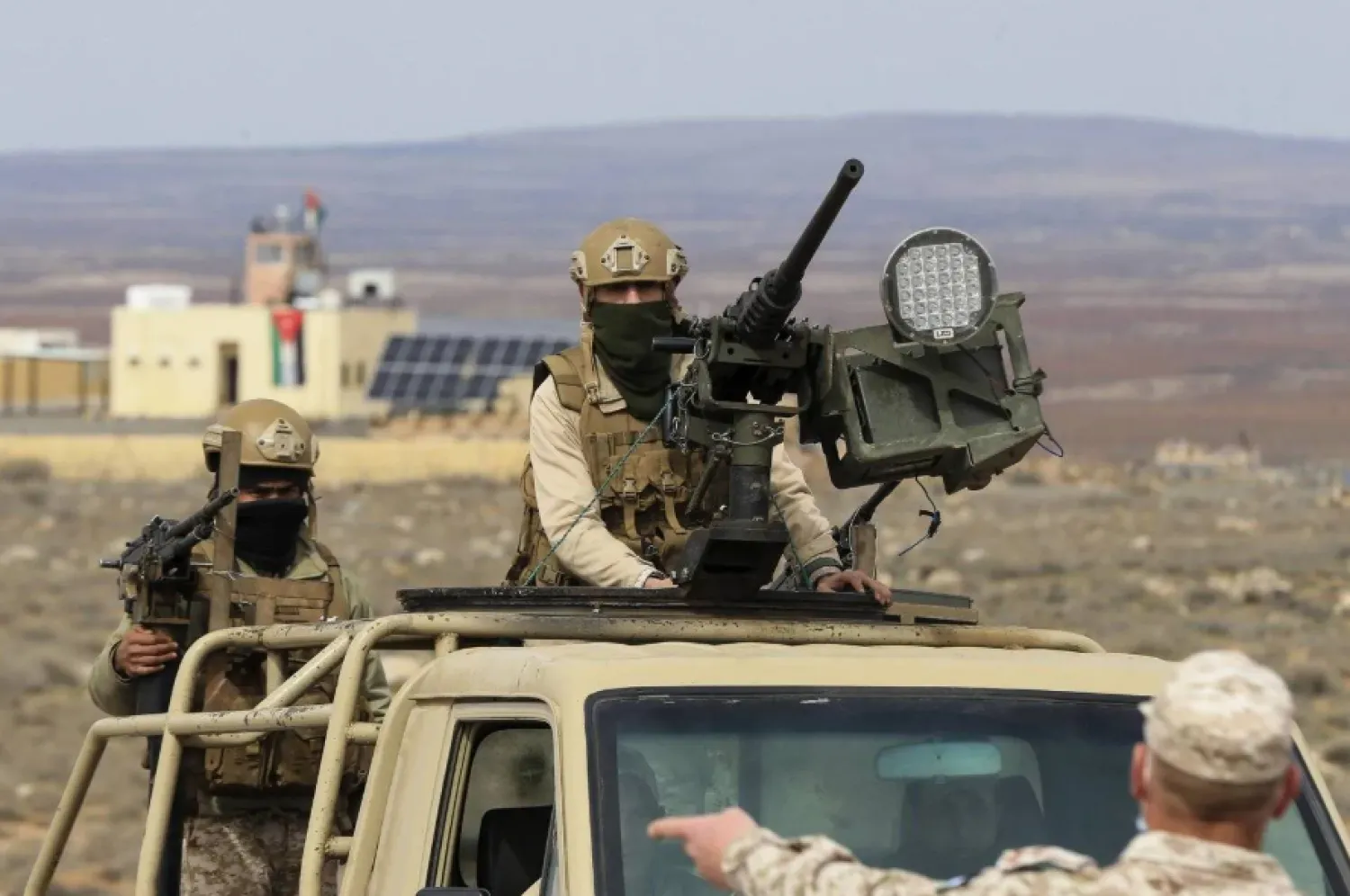
Jordanian soldiers on the border with Syria. (AP file)
TT

Jordan Stops Fighters Attempting to Enter from Syria, Armed Forces Say

Jordanian soldiers on the border with Syria. (AP file)

Jordanian border guards stopped a group of 14 armed individuals attempting to cross ‌into ‌northern Jordan from ‌Syria, ⁠the armed forces ⁠said in a statement on Saturday.

The group ⁠tried to ‌infiltrate on ‌Friday under ‌heavy ‌fire and direct engagement, causing numerous casualties ‌among the armed group, while ⁠the remaining ⁠members fled back into Syria, the armed forces said.

Tensions between the neighbors are high after Jordanian strikes in southern Syria in retaliation for a deadly church attack in the kingdom last week that Amman linked to militants operating across the border.

Syria said the strikes killed seven ⁠people, including three children and a woman. Jordan said it regretted the civilian casualties.


Egypt Fears Escalation in Iran War Would Be More Destructive, Foreign Minister Says

26 October 2026, Egypt, New Administrative Capital: Egypt's Foreign Minister Badr Abdelatty attends a press conference at the Egyptian Ministry of Foreign Affairs in the New Administrative Capital near Cairo. Photo: Michael Brandt/dpa
TT

Egypt Fears Escalation in Iran War Would Be More Destructive, Foreign Minister Says

26 October 2026, Egypt, New Administrative Capital: Egypt's Foreign Minister Badr Abdelatty attends a press conference at the Egyptian Ministry of Foreign Affairs in the New Administrative Capital near Cairo. Photo: Michael Brandt/dpa

Egypt's Foreign Minister Badr Abdelatty said on Saturday he was "extremely worried" that a new escalation in the war between the United States and Iran would be more destructive and have a major ‌impact.

He was ‌speaking at the ‌IISS ⁠Manama Dialogue security ⁠summit in Bahrain.

"The second round will be more dangerous, more destructive, and it will lead to nowhere. We have to draw lessons from the past," ⁠he said.

An interim agreement ‌reached in ‌June failed to secure a lasting ‌ceasefire in the Iran war ‌or restore normal shipping through the Strait of Hormuz. Iran has since proposed that Washington lift its ‌blockade of Iranian ports in exchange for Tehran reopening the ⁠disrupted ⁠waterway within seven days.

Qatari mediators returned to Tehran on Friday in a renewed effort to broker a deal, but the sides remain divided over whether nuclear negotiations or relief from the blockade and oil sanctions should come first.


Lebanon Draws Up Plan to Govern 12 Palestinian Refugee Camps

The Shatila Palestinian refugee camp in southern Beirut. (AFP file)
TT

Lebanon Draws Up Plan to Govern 12 Palestinian Refugee Camps

The Shatila Palestinian refugee camp in southern Beirut. (AFP file)

Lebanon has begun addressing the governance of its Palestinian refugee camps, seeking to establish a framework for security, administration and services in a system where responsibilities overlap among Palestinian factions, popular committees, state institutions and the UN agency for Palestinian refugees (UNRWA).

Prime Minister Nawaf Salam on Friday launched consultations on a plan prepared by the Lebanese-Palestinian Dialogue Committee, headed by Ambassador Ramez Dimashkieh, before its final version is submitted to the Cabinet.

Salam stressed that Palestinian refugee camps fall under Lebanese sovereignty and are subject to Lebanese law.

“The presence of state institutions in the camps must become clear and consistent,” he declared.

He linked the governance initiative to the National Accord Document, the state’s exclusive control over weapons and its sole authority to decide on war and peace.

Salam also referred to the understanding reached between Lebanese President Joseph Aoun and Palestinian President Mahmoud Abbas in May 2025, as well as steps already taken to address the issue of Palestinian weapons.

He stressed that the initiative would cover security, the rule of law, and social, economic and service-related conditions.

The prime minister revealed that a draft law was being prepared to regulate refugees’ rights and obligations, including employment and social security.

He reaffirmed Lebanon’s commitment to the Palestinian right of return and its rejection of permanent resettlement, stressing that UNRWA and the international community must continue to bear responsibility for refugee services, without the Lebanese state replacing the agency.

For his part, Dimashkieh described the launch of consultations on a national plan to govern Palestinian refugee camps as an unprecedented step toward establishing a unified Lebanese state vision for their management and administration.

The camps are located on Lebanese territory and fall under Lebanese sovereignty, and that any new arrangements would be developed through partnership and dialogue with all Palestinian groups, without exception, he stressed.

Speaking to Asharq Al-Awsat, Dimashkieh explained that the initiative could be the first of its kind in Lebanon’s history of dealing with Palestinian refugee camps.

“For the first time, consultations are being launched to develop a unified Lebanese state plan for managing and governing the camps, rather than having each institution continue to deal with the issue separately, according to its own area of responsibility,” he noted.

The main problem, according to Dimashkieh, has been the absence of coordination and a common vision among the institutions involved, including the security services and Lebanese Army, governorates and municipalities, the ministries of health and labor, and UNRWA.

“Each institution viewed conditions in the camps from its own perspective, without an overarching framework to organize responsibilities and mechanisms for addressing the various issues,” he explained.

Dimashkieh revealed that consultations would continue over the next six months, bringing together the relevant Lebanese and Palestinian parties to reach the best possible formula for governing the camps.

Discussions will cover security, administrative and legal matters, including the role of security forces, the possible adoption of community policing and issues falling within the jurisdiction of the Justice Ministry and other relevant institutions.

He stressed that Palestinians would be key partners throughout the process, with no group excluded.

“The aim is to listen to everyone and reach a formula that commands the broadest possible consensus.”

Dimashkieh further underscored the growing urgency of reorganizing camp administration, particularly as the demographic composition of some camps has changed considerably.

“In some camps, Palestinians now account for only around 30% of residents, compared with approximately 70% who are Syrians or people of other nationalities,” he pointed out.

These demographic shifts require both Lebanese and Palestinian authorities to reconsider how the camps are administered and how their circumstances are addressed, he explained.

As for the next steps, Dimashkieh said that the proposal agreed upon after consultations and the identification of mechanisms for addressing the issue would be submitted to the Lebanese Cabinet for a decision.

12 camps and a legacy dating back to the Cairo Agreement

Lebanon’s 12 official Palestinian refugee camps are spread across several regions.

Five are in the south: Ain al-Hilweh, Mieh Mieh, Rashidieh, Burj al-Shemali and Al-Buss.

Four are in Beirut and Mount Lebanon: Burj al-Barajneh, Shatila, Mar Elias and Dbayeh.

Two are in the north, Beddawi and Nahr al-Bared, while the Bekaa Valley hosts the Jalil camp in Baalbek.

The number of registered Palestinian refugees differs considerably from the number actually residing in Lebanon.

UNRWA had approximately 488,000 refugees registered as of June 2025, while a 2017 Lebanese-Palestinian census counted around 174,000 Palestinians living in camps and gatherings, using a different methodology.

The UN agency’s registration figures do not constitute a census of current residents.

The roots of the camps’ special security arrangements date to the 1969 Cairo Agreement, which the Lebanese parliament annulled in 1987.

Nevertheless, Palestinian popular committees and factions have continued to play roles in the camps.

In 2025, factions affiliated with the Palestine Liberation Organization handed over weapons to the Lebanese Army. However, the issue of arms held by all Palestinian organizations has yet to be fully resolved.