

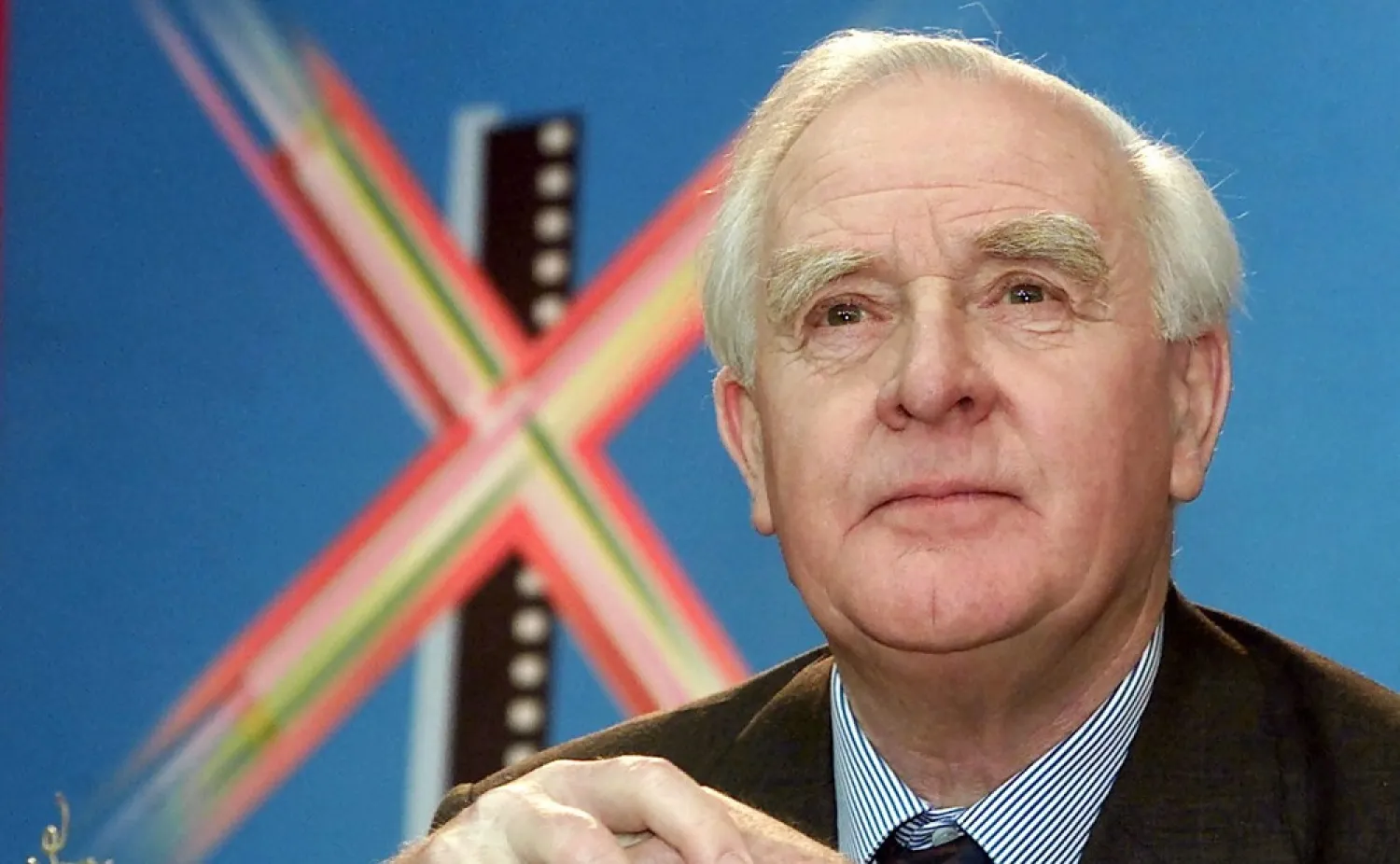

'Tinker Tailor Soldier Spy' Novelist John le Carre Dies Aged 89

John le Carre. (Reuters)
TT

'Tinker Tailor Soldier Spy' Novelist John le Carre Dies Aged 89

John le Carre. (Reuters)

“Tinker Tailor Soldier Spy” author John le Carre, who cast flawed spies on to the bleak chessboard of Cold War rivalry, has died aged 89.

His agent said in a statement that David Cornwell, known to the world as John le Carre, died after a short illness in Cornwall, southwestern England, on Saturday evening.

“His like will never be seen again, and his loss will be felt by every book lover, everyone interested in the human condition,” said Jonny Geller, CEO of The Curtis Brown Group.

Le Carre was survived by his wife, Jane, and four sons. The family said in a brief statement he had died of pneumonia.

By exploring treachery at the heart of British intelligence in spy novels, le Carre challenged Western assumptions about the Cold War by defining for millions the moral ambiguities of the battle between the Soviet Union and the West.

Unlike the glamour of Ian Fleming’s unquestioning James Bond, le Carre’s heroes were trapped in the wilderness of mirrors inside British intelligence which was reeling from the betrayal of Kim Philby who fled to Moscow in 1963.

“It’s not a shooting war anymore, George. That’s the trouble,” Connie Sachs, British intelligence’s resident alcoholic expert on Soviet spies, tells spy catcher George Smiley in the 1979 novel “Smiley’s People”.

“It’s grey. Half angels fighting half devils. No one knows where the lines are,” Sachs says in the final novel of Le Carre’s Karla trilogy.

Such a bleak portrayal of the Cold War shaped popular Western perceptions of the rivalry between the Soviet Union and the United States that dominated the second half of the 20th century until the collapse of the Soviet Union in 1991.

The Cold War, for le Carre, was “A Looking Glass War” (the name of his 1965 novel) with no heroes and where morals were up for sale - or betrayal - by spy masters in Moscow, Berlin, Washington and London.

Betrayal of family, lovers, ideology and country run through le Carre’s novels which use the deceit of spies as a way to tell the story of nations, particularly Britain’s sentimental failure to see its own post-imperial decline.

Such was his influence that le Carre was credited by the Oxford English Dictionary with introducing espionage terms such as “mole”, “honey pot” and “pavement artist” to popular English usage.

British spies were angry that le Carre portrayed the MI6 Secret Intelligence Service as incompetent, ruthless and corrupt. But they still read his novels.

Other fans included Cold War warriors such as former US President George H. W. Bush and former British Prime Minister Margaret Thatcher.

Soldier, spy
David John Moore Cornwell was born on Oct. 19, 1931 in Dorset, England, to Ronnie and Olive, though his mother, despairing at the infidelities and financial impropriety of her husband, abandoned the family when he was five years old.

Mother and son would meet again decades later though the boy who became le Carre said he endured “16 hugless years” in the charge of his father, a flamboyant businessman who served time in jail.

At the age of 17, Cornwell left Sherborne School in 1948 to study German in Bern, Switzerland, where he came to the attention of British spies.

After a spell in the British Army, he studied German at Oxford, where he informed on his left-wing students for Britain’s MI5 domestic intelligence service.

Le Carre was awarded a first-class degree before teaching languages at Eton College, Britain’s most exclusive school. He also worked at MI5 in London before moving in 1960 to the Secret Intelligence Service, known as MI6.

Posted to Bonn, then capital of West Germany, Cornwell fought on one of the toughest fronts of Cold War espionage: 1960s Berlin.

As the Berlin Wall went up, le Carre wrote “The Spy Who Came in from the Cold,” where a British spy is sacrificed for an ex-Nazi turned Communist who is a British mole.

By casting British spies as every bit as ruthless as their Communist foes, le Carre defined the dislocation of the Cold War that left broken humans in the wake of distant superpowers.

‘Moscow rules’
Now rich, but with a failing marriage and far too famous to be a spy, le Carre devoted himself to writing and the greatest betrayal in British intelligence history gave him material for a masterpiece.

The discovery, which began in the 1950s with the defection of Guy Burgess and Donald Maclean, that the Soviets had run spies recruited at Cambridge to penetrate British intelligence hammered confidence in the once legendary services.

Le Carre wove the story of betrayal into the Karla trilogy, beginning with the 1974 novel “Tinker Tailor Soldier Spy” and ending with “Smiley’s People” (1979).

George Smiley seeks to track down a Soviet mole at the top of Britain’s secret service and battles with Soviet spy master Karla, ultimate master of the mole who is sleeping with Smiley’s wife.

Smiley, betrayed in love by his aristocratic wife Ann (also the name of Cornwell’s first wife), traps the traitor. Karla, compromised by an attempt to save his schizophrenic daughter, defects to the West in the last book.

Absolute friends?
After the Soviet Union collapsed, leaving Russia’s once mighty spies impoverished, le Carre turned his focus to what he perceived as the corruption of the US-dominated world order.

From corrupt pharmaceutical companies, Palestinian fighters and Russian oligarchs to lying US agents and, of course, perfidious British spies, le Carre painted a depressing - and at times polemical - view of the chaos of the post-Cold War world.

“The new American realism, which is nothing other than gross corporate power cloaked in demagogy, means one thing only: that America will put America first in everything,” he wrote in the foreword to “The Tailor of Panama”.

He opposed the 2003 US-led invasion of Iraq and his anger at the United States was evident in his later novels, which sold well and were turned into popular films but did not match the mastery of his Cold War bestsellers.

But in a life of espionage how much was true?

“I am a liar,” le Carre was quoted as saying by his biographer Adam Sisman. “Born to lying, bred to it, trained to it by an industry that lies for a living, practiced in it as a novelist.”


Syrian Culture Minister Applauds Saudi Pavilion at Damascus Book Fair

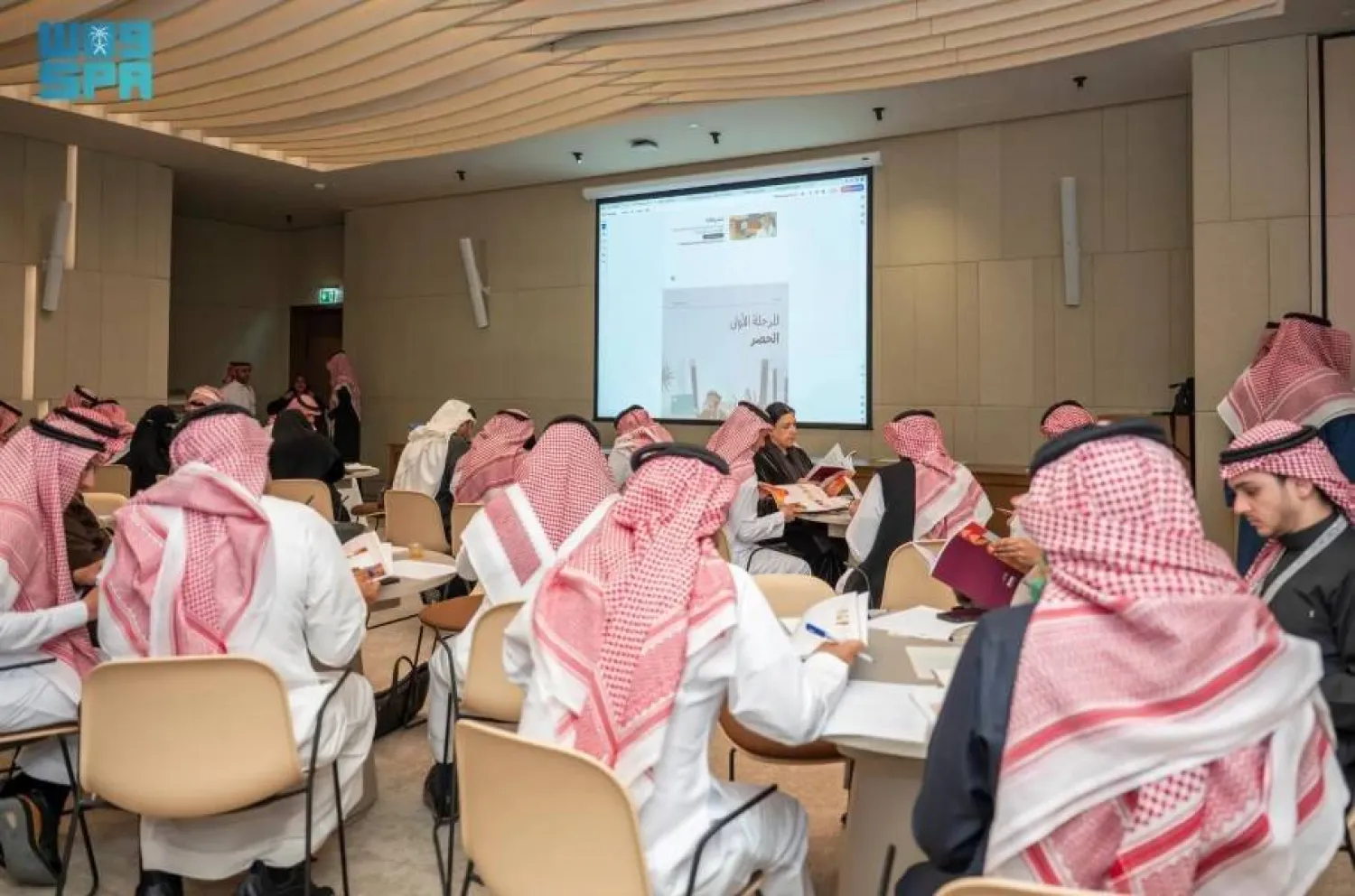
The 2026 Damascus International Book Fair is held from February 6 to 16 - SPA
TT

Syrian Culture Minister Applauds Saudi Pavilion at Damascus Book Fair

The 2026 Damascus International Book Fair is held from February 6 to 16 - SPA

Syrian Minister of Culture Mohammed Yassin Saleh visited the Kingdom’s pavilion at the 2026 Damascus International Book Fair, held from February 6 to 16, where the Kingdom is serving as the Guest of Honor.

He commended the efforts of the Literature, Publishing and Translation Commission in showcasing the rich diversity of the Saudi cultural and literary scene. The pavilion features exhibitions of manuscripts, a Saudi fashion corner, and archaeological replicas, SPA reported.

The minister reviewed the commission's Tarjim translation initiative and Saudi literature comics.

This participation at the 2026 Damascus International Book Fair showcases Saudi creativity and fosters cultural dialogue, supporting Saudi Vision 2030’s goals of knowledge exchange and cultural leadership.


Saudi Arabia, Syria Underline Depth of their Cultural Ties

Syrian President al-Sharaa receives the Saudi minister of culture and the accompanying delegation at the Conference Palace in Damascus on Thursday. (SPA)
TT

Saudi Arabia, Syria Underline Depth of their Cultural Ties

Syrian President al-Sharaa receives the Saudi minister of culture and the accompanying delegation at the Conference Palace in Damascus on Thursday. (SPA)

Saudi Arabia and Syria underlined the strength of their cultural relationship during high-level meetings held in Damascus on Thursday, on the sidelines of the opening of the Damascus International Book Fair 2026, where the Kingdom is participating as guest of honor.

Syrian President Ahmad al-Sharaa received Saudi Minister of Culture Prince Badr bin Abdullah bin Farhan at the Conference Palace in the capital.

Earlier the same day, Prince Badr met with his Syrian counterpart, Minister of Culture Mohammad Yassin Saleh, during an official visit to attend the fair. T

he Saudi minister congratulated Syria on hosting the exhibition and expressed his wishes for continued prosperity, progress, and stability for the Syrian government and people.

Both meetings highlighted the depth of cultural relations between the two countries, the importance of expanding joint cultural cooperation across various fields, and the alignment of positions on issues of mutual interest in a way that serves both nations.

The Saudi delegation included senior officials and advisers, among them representatives from the Royal Court, the Ministry of Culture, and the King Abdulaziz Public Library, reflecting broad institutional engagement in the visit.

In the evening, Prince Badr attended the opening ceremony of the fair’s special session, held under the patronage and in the presence of al-Sharaa. The event drew wide official and cultural participation, including Arab ministers, political and intellectual figures, and a distinguished group of writers and cultural figures.

In a post on the X platform, Prince Badr thanked “our brothers in Syria for their generous hospitality and their efforts in organizing the Damascus International Book Fair.”

The minister also inaugurated the Kingdom’s pavilion at the fair in the presence of the Syrian minister of culture and the Qatari minister of culture.

Saudi Arabia’s guest-of-honor participation continues until Feb. 16 and reflects its growing prominence and leadership in the Arab and global cultural landscape.

This participation aligns with Saudi Vision 2030, which places culture at the heart of national development, viewing it as a space for dialogue, a bridge for civilizational communication, and a tool for strengthening ties among Arab peoples.

The Saudi Literature, Publishing and Translation Commission is leading the Kingdom’s participation, highlighting the development of the cultural sector and reaffirming the central role of books as carriers of knowledge and awareness.

The Saudi pavilion boasts a comprehensive cultural program featuring intellectual seminars, poetry evenings, a manuscript exhibition, traditional Saudi fashion displays, hospitality corners, archaeological replicas, and performing arts that express the depth of the Kingdom’s cultural heritage.

On the sidelines of the visit, Prince Badr, accompanied by Minister Saleh, toured the National Museum of Damascus, which houses rare artifacts spanning prehistoric eras, ancient Syrian civilizations, classical and Islamic periods, as well as traditional and modern art.


UNESCO Honors Al-Bisht Al-Hasawi as Thousands Flock to Al-Ahsa Festival

Visitors can explore interactive displays, participate in live workshops, and witness the meticulous process of tailoring this iconic symbol of prestige - SPA
TT

UNESCO Honors Al-Bisht Al-Hasawi as Thousands Flock to Al-Ahsa Festival

Visitors can explore interactive displays, participate in live workshops, and witness the meticulous process of tailoring this iconic symbol of prestige - SPA

The third edition of Al-Bisht Al-Hasawi Festival is drawing thousands of regional and international visitors to Ibrahim Palace in historic Al-Hofuf.

Organized by the Heritage Commission, this year’s festival celebrates the inscription of the Bisht on UNESCO’s Representative List of the Intangible Cultural Heritage of Humanity.

The event showcases Al-Ahsa’s centuries-old tradition of hand-weaving and gold embroidery, a craft passed down through generations of local families, SPA reported.

Visitors can explore interactive displays, participate in live workshops, and witness the meticulous process of tailoring this iconic symbol of prestige.

With UNESCO's participation and representatives from six countries, the festival has evolved into a global platform for cultural dialogue, cementing the Bisht’s status as a world-class cultural treasure.