


Beirut Blast Probe Paused amid Political Pushback

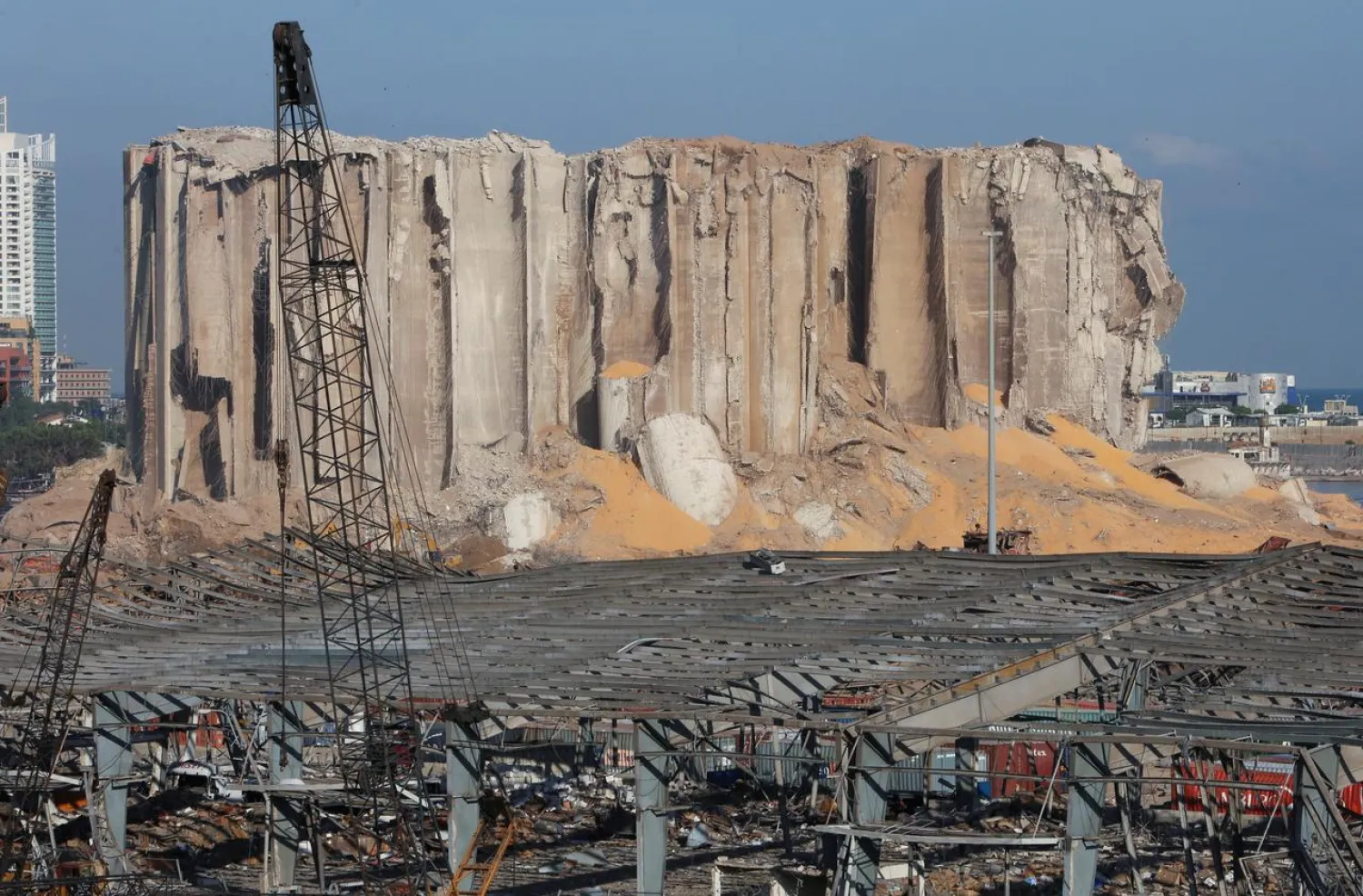
The destroyed grain silo at Beirut Port. Reuters file photo
TT

Beirut Blast Probe Paused amid Political Pushback

The destroyed grain silo at Beirut Port. Reuters file photo

Lebanon’s prosecutor investigating the deadly blast that rocked Beirut on August 4 has suspended the probe after two ministers he charged requested he be removed, judicial sources said Thursday.

The development, reported by Lebanon’s National News Agency, NNA, comes after a stormy week that cast doubt on the fate of the investigation into the blast that killed over 200 people.

Fadi Sawan on December 10 issued charges against caretaker Prime Minister Hassan Diab and three former ministers over the explosion that also destroyed the Lebanese capital’s port and devastated several districts.

The four were charged with "negligence and causing death to hundreds and injuries to thousands more" in one of the largest non-nuclear explosions in history.

Among them are former finance minister Ali Hassan Khalil and ex-public works minister Ghazi Zoaiter, who have since accused Sawan of violating the constitution.

They said Wednesday they had not been officially informed of the questioning session, which protocol demanded.

NNA reported that Sawan set a new date of Jan. 4 for the politicians to be questioned after their no-show on Wednesday. It said he heard testimony from a former top army officer, who was acting as a witness.

Lebanon's top Cassation Court is now expected to rule on the request of the former ministers for Sawan to be removed from his post.

"Until then, all investigation proceedings are suspended," a senior court judicial official told AFP on condition of anonymity.

Diab has also refused to appear in front of the judge on similar grounds.

Lebanon's politicians have rallied around the argument that the indictment of a minister should be submitted to a vote in parliament.

Diab, who resigned in the wake of the explosion, already testified before Sawan in September.

The huge stock of ammonium nitrate that ignited at Beirut port had been stored there for years when Diab took office almost exactly a year ago.

Most of Lebanon's political leadership and security agencies have said they knew of the stockpile. It remains unclear what sparked the ignition and why no one moved the stockpile from the waterfront overlooking a residential area and a cultural heartland of Beirut.

The fact that little light has been shed on the circumstances that led to Lebanon's worst peacetime disaster nearly four months after the blast has caused outrage, mainly among families of victims.

Politicians say Sawan has been selective and overstepped his powers, while the head of the Beirut Bar Association and others say the judge has shown courage.



Grundberg Urges Need to Keep Yemen out of Regional Escalation

Grundberg meets with Prime Minister and Minister of Foreign Affairs Shaya Zindani in Aden. (Yemeni government)
TT

Grundberg Urges Need to Keep Yemen out of Regional Escalation

Grundberg meets with Prime Minister and Minister of Foreign Affairs Shaya Zindani in Aden. (Yemeni government)

UN Special Envoy for Yemen Hans Grundberg concluded a visit to Aden, where he met with senior Yemeni government officials to discuss the implications of recent regional and national developments on prospects for peace in Yemen, and priorities for the political, economic and military/security tracks of the UN-led mediation process.

He met with Presidential Leadership Council Member Mahmood Al-Subihi and Prime Minister and Minister of Foreign Affairs Shaya Zindani.

Discussions focused on the regional escalation and its impact on Yemen, as well as on internal developments, including efforts to stabilize the situation in southern governorates. The envoy also briefed on the status of ongoing negotiations related to conflict-related detainees, said UN Office of the Special Envoy of the Secretary-General for Yemen in a statement.

The government’s economic priorities, including the adoption of the 2026 budget and strategic plan were at the center of Grundberg’s discussions with Minister of Finance Marwan Bin Ghanem, and Minister of Oil and Minerals Mohammed Bamaqa. The meetings focused on financial stabilization, including revenue and budgetary priorities, as well as advancing the resumption of fuel production and exports to support economic recovery.

Grundberg’s meeting with Minister of State for Women’s Affairs Ahed Jasoos, focused on the importance of inclusive participation, including the meaningful engagement of women in political, and public decision-making processes, as well as the economic empowerment of women and the need to strengthen social and legal protections.

The envoy also met with Central Bank of Yemen Governor Ahmed Ahmed Ghaleb, with discussions focusing on economic stabilization measures and the broader financial context, including monetary challenges and opportunities for advancing reforms.

In his meeting with Minister of State and Governor of Aden Abdulrahman Sheikh, Grundberg discussed local dynamics and ongoing efforts to support stability and service delivery in the governorate.

He met with members from civil society and media as part of the broader inclusion efforts of the Office.

In all his engagements, the envoy reiterated the importance of shielding Yemen from regional escalations, supporting economic stability, and preserving space for a Yemeni-led political process under UN auspices.


Indonesia Urges 'Thorough' Probe on Lebanon Peacekeeper Deaths

UNIFIL vehicles in southern Lebanon. (Reuters)
TT

Indonesia Urges 'Thorough' Probe on Lebanon Peacekeeper Deaths

UNIFIL vehicles in southern Lebanon. (Reuters)

Indonesia said Friday it had submitted a joint statement on peacekeeper security with dozens of allied nations to the United Nations after three of its blue helmets were killed in Lebanon.

In the joint statement, the countries urged the UN Security Council to conduct a thorough investigation into the incidents in Southern Lebanon that killed three Indonesian peacekeepers and wounded several others, including from France, Ghana, Nepal, and Poland, said AFP.

The Foreign Ministry in Jakarta said 73 countries and UN observer nations supported the statement, delivered by Indonesia's permanent representative to the UN, Umar Hadi, in New York.

"The safety and security of UN peacekeepers are non-negotiable. We urge the UN Security Council to use all available instruments to strengthen protection for peacekeeping forces amid an increasingly dangerous situation," the ministry quoted Umar as saying.

"Troop-contributing countries also call for an end to violence in Lebanon, de-escalation of tensions, and encourage all parties to return to the negotiating table to achieve a peaceful settlement," it added.

Three Indonesian peacekeepers died in two separate blasts in southern Lebanon in late March.

A third blast less than a week later -- inside a UN facility in southern Lebanon -- injured three more Indonesian soldiers.

The deadly incidents sparked calls from Indonesian authorities for an investigation and security guarantees for peacekeeping forces.

The Foreign Ministry has called the attacks "unacceptable".

It urged the UN Security Council "to immediately convene a meeting of troop-contributing countries to UNIFIL (the UN Interim Force in Lebanon) to conduct a review and take measures to enhance the protection of personnel serving with UN Interim Force in Lebanon".

President Prabowo Subianto has said he "strongly condemns every heinous act that undermines peace and causes the deaths of our nation's soldiers".


Worship Starts Again at Al-Aqsa Mosque, Israel Approves New Settlements

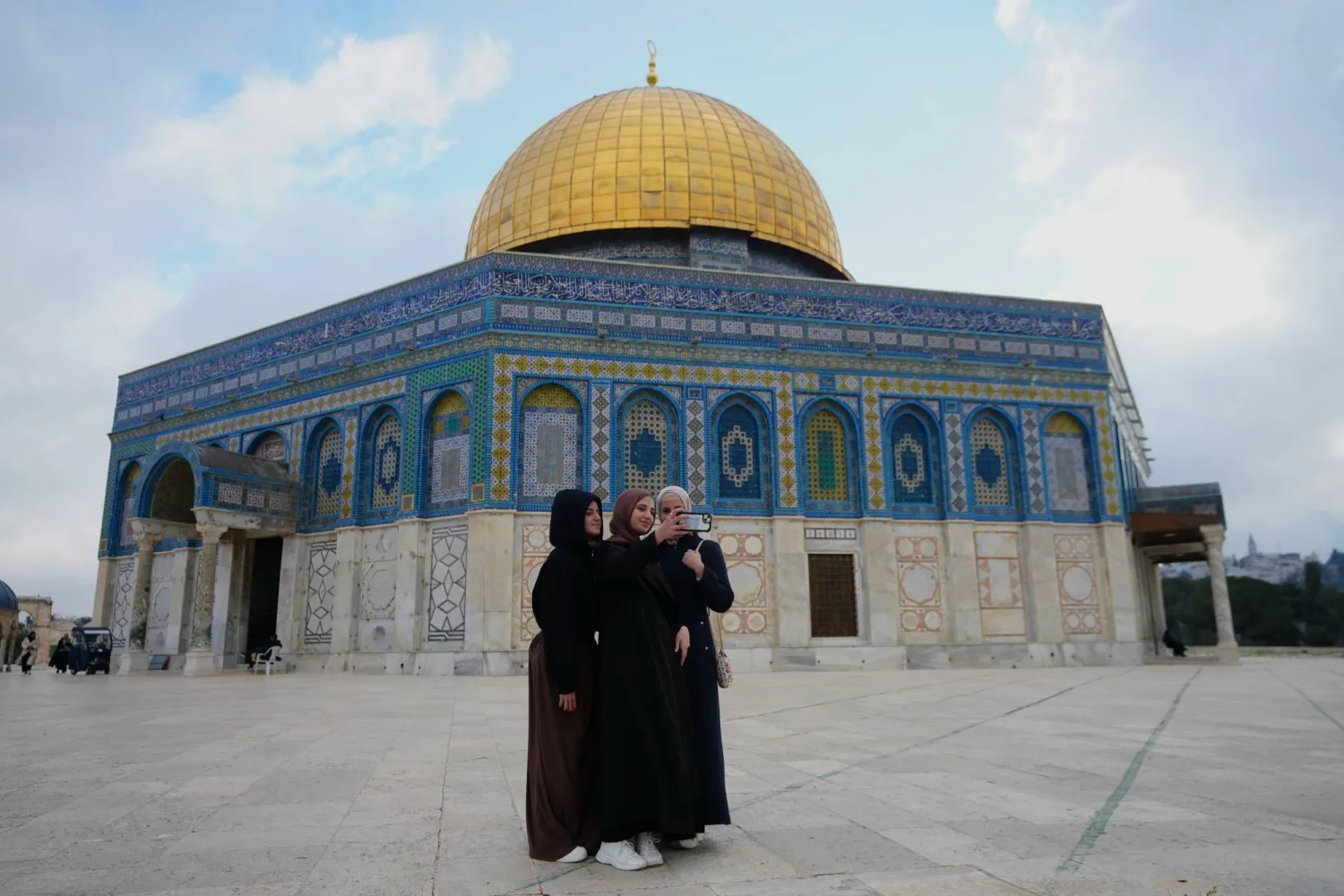
Muslim women take a selfie next to the Dome of Rock shrine at Al-Aqsa Mosque compound following a ceasefire reached between Iran, Israel and the United States. in Jerusalem's Old City, Thursday, April 9, 2026. (AP Photo/Mahmoud Illean)
TT

Worship Starts Again at Al-Aqsa Mosque, Israel Approves New Settlements

Muslim women take a selfie next to the Dome of Rock shrine at Al-Aqsa Mosque compound following a ceasefire reached between Iran, Israel and the United States. in Jerusalem's Old City, Thursday, April 9, 2026. (AP Photo/Mahmoud Illean)

Thousands of Palestinians prayed at the Al-Aqsa Mosque at dawn Thursday, according to Jerusalem’s Islamic Waqf, the Jordanian religious authority that administers the compound.

For the first time in 41 days, Muslim worshippers returned to Al-Aqsa, which had been shuttered since the start of the war sparked by the US-Israeli attack on Iran on February 28.

Jerusalem’s police said Wednesday that it would lift restrictions on all holy sites in Jerusalem’s Old City starting Thursday morning. It added that hundreds of officers and volunteers would be active in the city.

Access had been prohibited altogether, or restricted to a few dozen faithful, at Christian, Jewish and Muslim sites during the now-paused conflict, when missile attacks from Iran often sent Jerusalem residents into shelters.

The restrictions subdued Lent, Passover and Ramadan celebrations for many in some of the holiest sites for adherents of Christianity, Islam and Judaism.

But they’re lifted just in time for Orthodox Christians, who celebrate Easter (Pascha) on Sunday, a week after Catholic and Protestant observances.

Suzan Allam, who came with her husband and daughter, told AFP the return to Al-Aqsa was like "a party.”

Hamza al-Afghani, a young Palestinian, spoke of an "indescribable joy.”

"Al-Aqsa mosque is Jerusalem's soul," another worshipper, who declined to share his name for security reasons, said.

Meanwhile, Israel has approved the establishment of dozens of new Jewish settlements in the West Bank, an Israeli watchdog group said on Thursday.

Prime Minister Benjamin Netanyahu's government has not formally announced the establishment of the 34 new settlements, many of them outposts in far-flung areas of the mountainous territory, the Peace Now watchdog group said in a statement.

The decision, made by the Israeli cabinet on April 1, was reported widely on Thursday by Israeli media outlets, which said Israel's military censor had approved it for publication.

The Palestinian Presidency's office condemned the plan as a "flagrant violation of international law.”